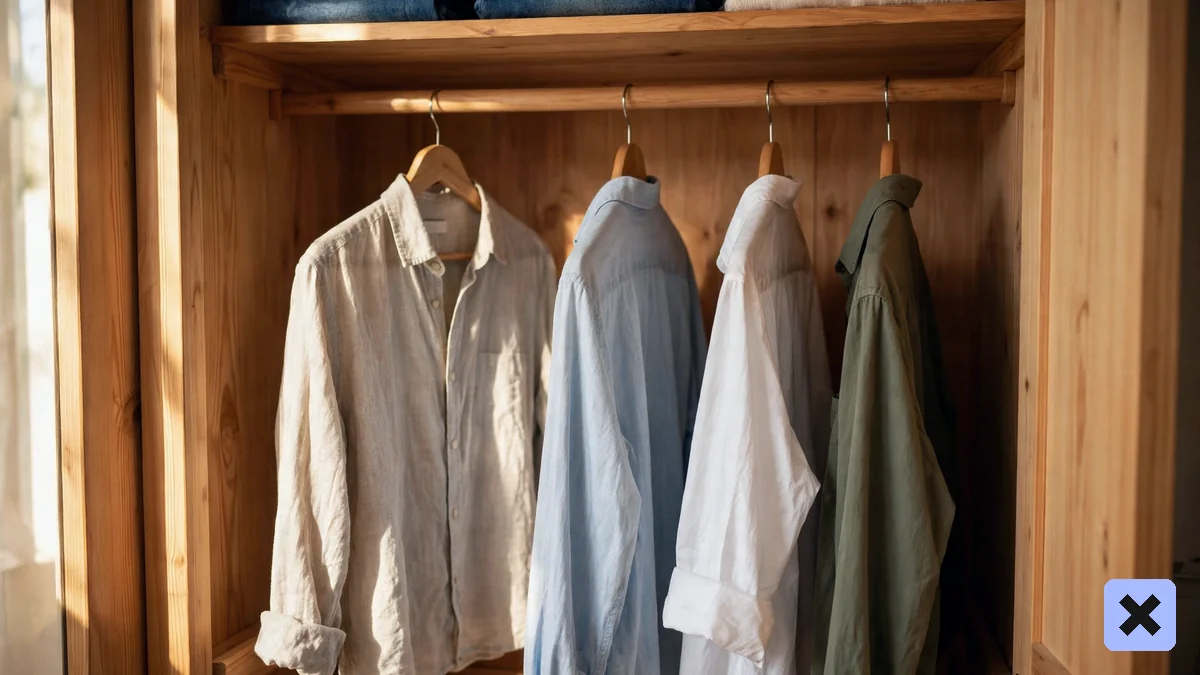
A clothes hanger is the smallest piece of furniture in your home, and one of the hardest working. It holds the shape of your shirts, keeps your jackets from creasing, and decides whether your closet looks calm or chaotic. Yet most of us use whatever hangers came free with the dry cleaning, or the cheapest pack from the supermarket, and then wonder why our shirts have pointed shoulders, our trousers slide to the floor, and our closet always feels cramped.
The best clothes hangers of 2026 match the garment they hold: wide, contoured shoulders for jackets, slim non-slip bars for trousers, and gentle curves that never stretch a collar. The worst are thin wire hangers that bend under a coat, plastic hangers that snap at the hook, and novelty hangers that promise to save space and instead tangle everything together. This comparison separates the hangers that protect your clothes from the ones that quietly ruin them.
Key Takeaways
- The best hangers match the garment: wide wood for coats and jackets, slim velvet for shirts and dresses, sturdy clip hangers for trousers and skirts.
- Shoulder shape matters most: a wide, contoured shoulder stops the pointed bumps that thin hangers leave in shirts and knitwear.
- Non-slip surfaces and a proper trouser bar keep clothes on the hanger instead of in a heap on the closet floor.
- Thin wire hangers are the worst of all: they bend, they rust, they tangle, and they leave marks on everything they hold.
- One type of hanger through the whole closet looks tidier, slides more easily, and makes it simpler to find what you want.
How This Comparison Was Judged
We judged hangers the way they are actually used: loaded with real clothes, hung on a real closet rail, and left there for weeks. So the judging started with the shoulder. Does the hanger support the garment the way a shoulder does, or does it poke points into the fabric? Does a heavy coat sit evenly, or does it slide to one side?
After the shoulder came the practical details: whether the hook turns smoothly, whether trousers stay on the bar, whether the hanger survives being pulled off a crowded rail, and whether it takes up more rail space than it needs to. We also paid attention to what happens over time, because a hanger that snaps, bends, or sheds flocking after a few months costs more than a good one that lasts for years. The best hangers here earn their place on fit and durability first; the worst fail on both.
The Best Clothes Hangers of 2026
The best hangers share a quality that is easy to miss until you open your closet: they make your clothes look like they belong there. Shirts hang straight, jackets keep their shape, and nothing ends up on the floor.
Wooden Hangers: The Best for Coats and Jackets
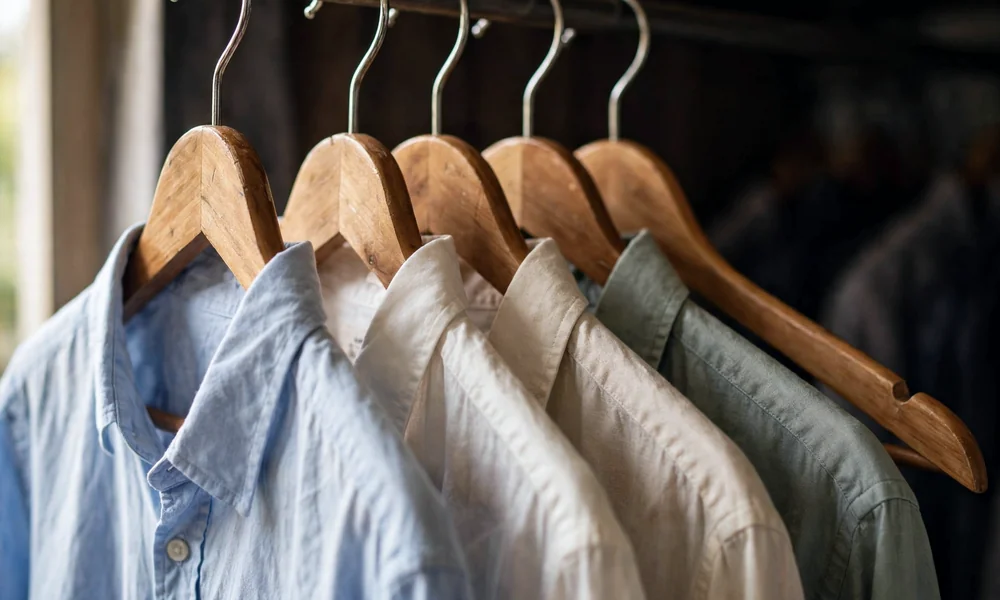
A good wooden hanger is still the best thing you can hang a coat or jacket on. Its wide, gently curved shoulders fill the shoulders of the garment, spreading the weight evenly instead of concentrating it on two points. The wood is smooth and sealed, so it never snags fabric, and the metal hook is strong enough for a heavy winter coat without bending. Good wooden hangers also have a trouser bar with a notch or grip, so trousers stay folded and straight. A suit hung on a proper wooden hanger keeps its shape for years; the same suit on a wire hanger will show pointed shoulders within a month.
Slim Velvet Hangers: The Best for Shirts and Dresses
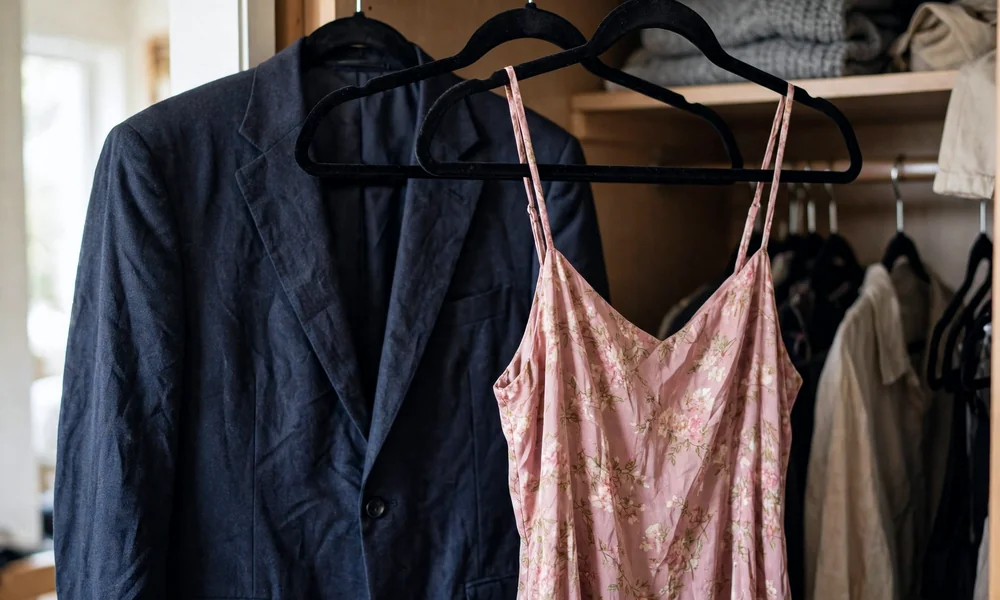
Slim velvet hangers are the best choice for most of the closet. Their thin profile means you can fit far more clothes on one rail, which matters in a small closet, and their soft, flocked surface grips fabric so silk blouses and camisoles do not slide off. The best ones have a sturdy plastic core under the flocking, a hook that turns a full circle, and a contoured shoulder that is wider than the cheapest versions. But for shirts, dresses, and light knitwear, a matching set of slim velvet hangers is the single biggest upgrade a crowded closet can get.
Clip Hangers for Trousers and Skirts
Trousers and skirts need a different hanger, and the best clip hangers do the job properly. Their clips grip the waistband firmly without leaving marks, hold the garment flat so it does not crease, and let you hang several pairs without them sliding. Look for clips with rubber padding inside the jaws, which grips without denting the fabric, and a sturdy bar that does not flex under the weight of heavy denim. Cheap clip hangers have weak springs that let trousers slip to the floor overnight, and plastic clips that crack in the cold. A good set keeps every pair hanging straight, which means less ironing and a closet that looks organised at a glance.
Matching Sets and Rail Space
One underrated advantage of the best hangers is that they match. A closet full of one type of hanger, all the same shape and height, looks tidier and works better: clothes slide along the rail without catching, the rail holds more, and you can see at a glance what you own. Mixed hangers of different heights and widths snag on each other, waste space, and make the closet feel crowded even when it is not. Buy one good type for shirts, one for coats, and one for trousers, and keep them consistent. Your closet will hold more, your clothes will look better, and getting dressed in the morning will take less time.
The Worst Clothes Hangers of 2026
The worst hangers are usually the ones you never chose: the wire hangers from the dry cleaner, the free plastic ones from a shop, the bulk pack that cost almost nothing. They look harmless, but they are the reason your favourite shirt has pointed shoulders, your trousers are always on the floor, and your closet rail is a tangled mess. These are the hangers to throw away, not to keep using because they were free.
Thin Wire Hangers
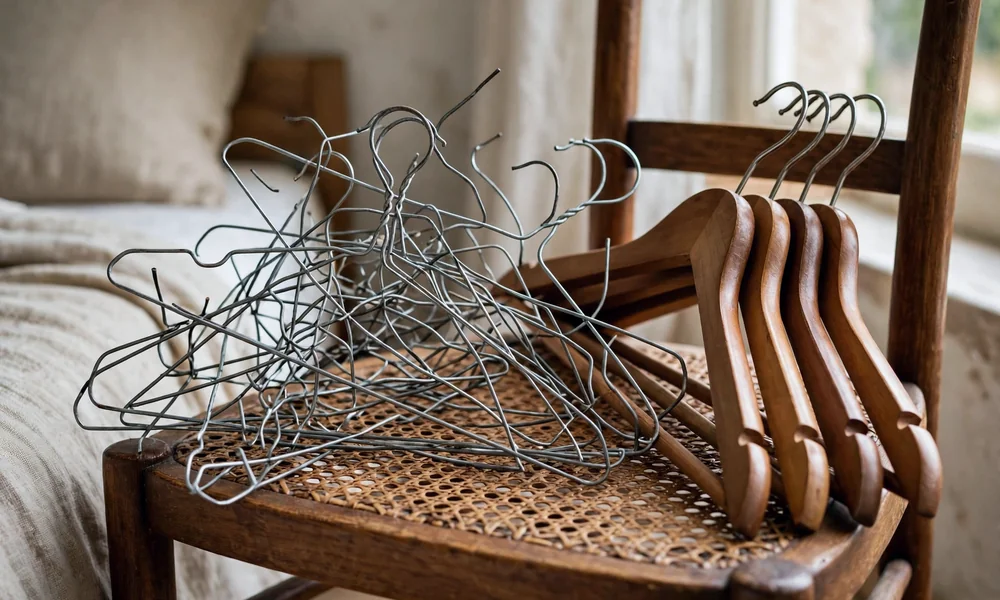
Wire hangers are the worst hangers you can own. They are too thin to support any garment properly, so they poke sharp points into the shoulders of shirts and leave rust marks on anything damp. They bend under the weight of a coat, twist when you pull them off a crowded rail, and tangle into a nest that takes ten minutes to undo. Dry cleaners give them away because they cost almost nothing, and that is exactly what they are worth. Even the cheapest plastic hanger is better than wire, and a good wooden or velvet hanger is in a different league entirely.
Flimsy Plastic Hangers
Thin plastic hangers are only slightly better than wire. Their shoulders are narrow and sharply angled, so they leave the same pointed bumps in knitwear and shirts, and their hooks are weak, bending or snapping when you hang a heavy jacket. Many are so smooth that silk and satin slide straight off them, and their trouser bars are too thin to hold a folded pair of trousers without it slipping. Worse, cheap plastic becomes brittle with age, especially in a cold closet, and snaps without warning, dropping a garment to the floor. A sturdier plastic hanger with a contoured shoulder can be perfectly good, but the thin, flat ones that come free with clothes are not worth keeping.
Space-Saving Gimmicks That Tangle
Then there are the gimmicks: hangers that fold, hangers that cascade in chains, hangers with six hooks, and hangers that promise to hold five garments in the space of one. Most of them fail in the same way: they tangle. Cascading hooks catch on each other, folding hangers collapse when you pull one garment out, and multi-hook designs make it impossible to reach the shirt at the back. They also hide clothes behind other clothes, so you forget what you own and wear the same few things on top. A slim velvet hanger saves more space than any of these, because it is thin and it works. The gimmicks save space on paper and waste it in practice.
Mismatched Hangers and Overloading
The last worst habit is not a type of hanger at all: it is the mismatched collection, and the overloaded rail. A rail crammed with different hangers, different heights, and too many clothes will damage garments whatever hangers you use, because clothes press against each other, crease, and pull at the shoulders. Overloading also bends hooks and snaps plastic. The fix is simple and costs nothing: thin out the closet, keep one hanger per garment, and leave a little air between clothes. If a hanger is bent, cracked, or missing its flocking, throw it away. A closet with fewer, better hangers holds clothes better than a closet stuffed with bad ones.
Best vs Worst at a Glance
Put side by side, the difference is simple. A good hanger is shaped like a shoulder, strong enough for the garment, and grippy enough to hold it. A bad hanger is thin, weak, and slippery, and it distorts the clothes it is supposed to protect. Good hangers cost more, but they last for years and they protect clothes that cost far more than the hangers do. Bad hangers are often free, and they cost you in ruined shoulders, creased trousers, and clothes that end up on the floor. If you own one good suit, one silk blouse, or one coat you love, it deserves a hanger that matches it.
How to Choose the Right Hangers
Start by sorting your clothes. Heavy coats and tailored jackets need wide wooden hangers. Shirts, blouses, and dresses need slim velvet hangers that grip without taking up rail space. Trousers and skirts need clip hangers with padded jaws. Knitwear, for the most part, should be folded rather than hung, because even a good hanger will stretch a heavy jumper over time. Buy one type for each category, in matching sets, and replace the wire and flimsy plastic hangers first. Check the hook: it should turn smoothly and be strong enough not to bend under a coat. And check the shoulder width against your own clothes; a hanger that is wider than the garment will poke out the sleeves, while one that is too narrow will leave points.
Once the hangers are sorted, the closet itself is the next thing to fix. Our guide to closet organizers that double your storage space in 2026 shows how to use the space around the rail, with a second rail, shelf dividers, and shoe storage. Shoes belong off the floor too, and shoe racks that keep your entryway tidy in 2026 cover the racks that work in a hallway or a closet. For everything that cannot hang, storage bins worth buying for a tidier home in 2026 compare the bins that stack neatly with the ones that crack and warp.
The Verdict
The best clothes hangers of 2026 are the wide wooden hangers for coats, the slim velvet hangers for shirts and dresses, and the padded clip hangers for trousers and skirts. The worst are the thin wire hangers and flimsy plastic hangers that bend, snap, tangle, and leave pointed shoulders on everything they hold. Replace the bad hangers, match the good ones to the garment, and your clothes will look better, last longer, and be easier to find. It is the cheapest upgrade a closet can get, and the one you will notice every single morning.


