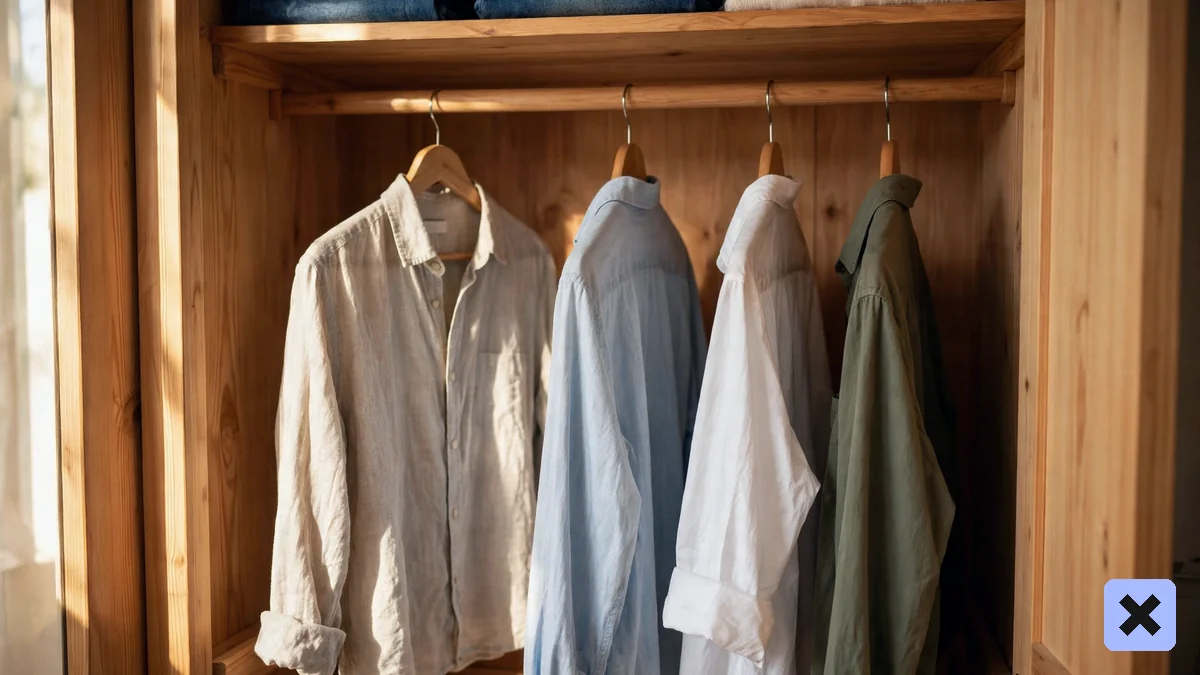
An ironing board has a modest job and a surprising amount of power over how your clothes look. It is the flat, steady surface that turns a wrinkled shirt into something you would happily wear to work, and the difference between a good board and a bad one shows up in the mirror, not in the shop. A good board holds still, stays level, and lets the iron glide. A bad one wobbles, sags in the middle, and turns a five-minute job into a fifteen-minute wrestling match.
The best ironing boards of 2026 are wide enough for a shirt, padded enough to press a crease properly, and stable enough that you can lean into a stubborn fold without the whole thing tipping. The worst are narrow, thin, and wobbly: they leave the iron’s mesh pattern pressed into your clothes, they rock every time you move the iron, and their covers slip and bunch. This comparison sorts the boards that make ironing quicker from the ones that make it a chore you keep putting off.
Key Takeaways
- The best ironing boards are wide, well padded, and rock steady, with a cover that stays put and lets steam pass through.
- Look for a sturdy scissor frame, a height adjustment that locks firmly, and a heat-resistant iron rest that actually fits your iron.
- A wide board saves real time: you press a shirt in two passes instead of four, and sleeves sit flat without constant repositioning.
- Cheap boards fail on stability first: thin legs, loose hinges, and a sagging mesh top that prints its pattern onto your clothes.
- Match the board to your space: a full-size board for regular ironing, a compact or tabletop board only if you iron rarely and store it away.
How This Comparison Was Judged
We judged ironing boards the way they are actually used: set up in a laundry corner, adjusted to a comfortable height, and worked over with a hot steam iron on real clothes. So the judging started with stability. Does the board stay put when you press firmly, or does it rock and walk across the floor? Does it hold its height when you lean on it, or slowly sink?
After stability came the pressing surface itself: how wide and long it is, how thick the padding feels, whether the cover stays smooth or bunches under the fabric, and whether steam passes through or gets trapped and dampens the clothes underneath. We also weighed storage and setup, because a board that fights you every time you fold it out will spend its life behind a door.
The Best Ironing Boards of 2026
The best ironing boards share a quality that is easy to overlook until you have used a bad one: they disappear into the job. They simply give you a firm, flat, heat-proof surface at the right height, and let the iron do its work.
Wide, Well-Padded Boards: The Everyday Winners
The best everyday board is wider than the cheap standard, usually around 38 to 45 centimetres across, with thick felt or foam padding under a smooth cotton cover. That width matters more than any feature on the box. A shirt body fits across it in one pass, so you are not constantly shuffling the fabric, and the wide nose lets you press sleeves and shoulders without folding them into creases you did not want. Thick padding cushions the iron, holds heat evenly, and stops the mesh of the board showing through onto delicate fabrics. If you iron more than once a week, this is the board to buy, and it will quietly cut your ironing time by a third.
Heavy Frames That Stay Put
Stability comes from weight and from the frame. The best boards have a proper scissor frame in thick tubular steel, with feet that grip the floor and a height adjustment that locks with a firm lever rather than a flimsy pin. Pick one up and it feels solid; set it down and it does not rock on uneven tiles. Some of the best add a wider foot spread, which sounds like a small detail until you press a heavy linen shirt and the board stays exactly where you put it. Cheap boards save money by thinning the steel and shrinking the feet, and you feel it the first time you press firmly.
Boards With a Proper Iron Rest
A good iron rest is a small platform at the wide end of the board, heat resistant and big enough for a full-size steam iron to sit on safely. The best ones are metal, ventilated so the iron cools without scorching the rest, and positioned so the iron is within easy reach but never in the way of the fabric. It sounds basic, yet many boards either skip the rest entirely or fit a flimsy plastic tray that warps under a hot iron. If you have ever balanced a hot iron on a chair while you repositioned a shirt, you know why this matters. A proper rest keeps the iron safe and keeps the whole routine moving.
Steam-Friendly Covers and Tops
The best boards are built for steam. Their tops are perforated metal mesh that lets steam pass through the fabric and out the other side, instead of trapping it underneath where it condenses and leaves the far side of the shirt damp. Their covers are cotton or a cotton blend, smooth, snug, and easy to remove for washing, with a drawstring or elastic that keeps them taut. Some add a silicone or metallised layer that reflects heat back up into the fabric, so you effectively press from both sides at once. That is a genuine time saver on thick cotton and linen.

The Worst Ironing Boards of 2026
The worst ironing boards look almost identical to the good ones in a photograph. Same shape, same grey cover, same promise on the box. The difference shows up the first time you use them: the legs flex, the top sags, the cover slips, and the iron leaves the faint grid of the mesh pressed into a white shirt. These are the boards to avoid, whatever the price tag says.
Narrow, Wobbly Boards
The worst offender is the narrow, lightweight board, often sold as a budget or space-saving option. It is barely wider than a shirt sleeve, so every garment needs constant repositioning, and its thin legs flex under the weight of a steam iron. Press a collar firmly and the whole board rocks; press a heavy pair of trousers and it slowly sinks an inch. Some of these boards have legs that splay unevenly on a hard floor, so they wobble even before you start. Ironing is already a chore for most people, and a board that fights you at every pass is the fastest way to make sure the pile of unironed clothes keeps growing.
Thin Covers Over Bare Mesh
A close second is the board with almost no padding: a thin cotton cover stretched over bare metal mesh, with nothing in between. The iron presses the mesh pattern straight into the fabric, leaving a faint grid on light-coloured clothes that only shows up in daylight, when it is far too late. Steam has nowhere to go either, so it condenses under the shirt and leaves damp patches that need drying before the clothes can go away. Padding is not a luxury on an ironing board; it is the whole point of the thing.
Flimsy Folding Frames and Loose Locks
The folding frame is where cheap boards cut corners hardest. Thin steel tubes, plastic hinge caps, and a height lock that is little more than a bent wire soon wear loose, and a loose lock is a board that collapses or sinks mid-press. A board should open with one smooth motion, lock with a confident click, and stay locked until you release it. If the frame feels flimsy in the shop, it will feel worse after a year of weekly use, and a board that cannot be trusted to stay up is a board that belongs in the bin.
Gimmick Boards That Solve Nothing
Then there are the gimmicks: boards with built-in fans, boards with folding sleeves that never sit flat, boards with clip-on attachments that fall off, and tabletop boards so small that ironing a shirt takes longer than doing it on a towel on the bed. The worst of these cost more than a good plain board and do the basic job worse. Unless you have a very specific need, such as pressing sleeves all day for a sewing hobby, a simple, wide, well-padded board beats every gadget on the market.
Best vs Worst at a Glance
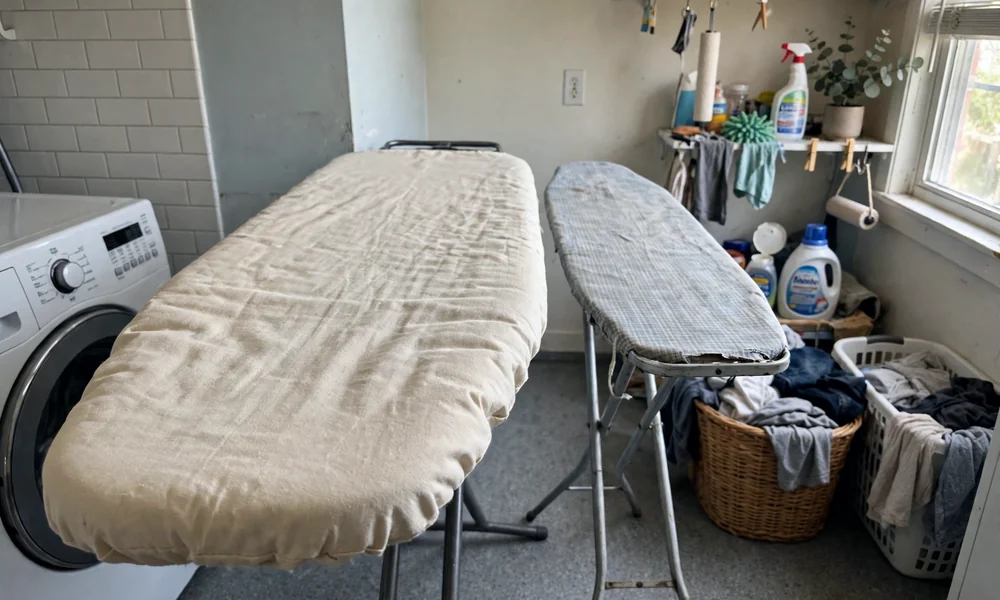
Put side by side, the difference is simple. A good board is wide, thickly padded, heavy-framed, and steady; a bad board is narrow, thinly covered, light-framed, and wobbly. The bad board costs less and then costs you time, ruined shirts, and a replacement within a year or two. If you iron regularly, the good board pays for itself in a few months of saved time alone. If you iron rarely, a decent mid-range board is still a better buy than the cheapest one on the shelf, because even occasional ironing deserves a surface that stays still.
How to Choose the Right Board
Start by measuring your space and your ironing habit. If you iron weekly, buy the widest board you can store, with thick padding and a proper iron rest. Lift the board and feel the frame; if it flexes in your hands, it will flex under the iron. Look at the cover: it should be smooth, snug, and removable for washing, with padding you can feel through it. And check the feet, which should grip a hard floor rather than slide on it.
If space is tight, a compact board can work, but choose one with the same priorities: a sturdy frame, decent padding, and a cover that stays taut. Avoid tabletop boards unless you genuinely only iron the odd collar or cuff; for a full shirt they are slow and awkward. Whatever you buy, replace the cover when it scorches or thins, because a worn cover turns a good board into a bad one. A little care keeps a good board pressing well for a decade.
For the rest of the laundry routine, the right detergent makes as much difference as the right board: our guide to the best laundry detergents for sensitive skin in 2026 covers what to wash clothes in before they ever reach the board. Drying matters too, and why dryer balls beat dryer sheets in 2026 explains how to cut drying time and static without chemicals. And if your laundry corner needs warming up, our best vs worst towel warmers for 2026 compare the warmers worth buying with the ones that are barely warm at all.
The Verdict
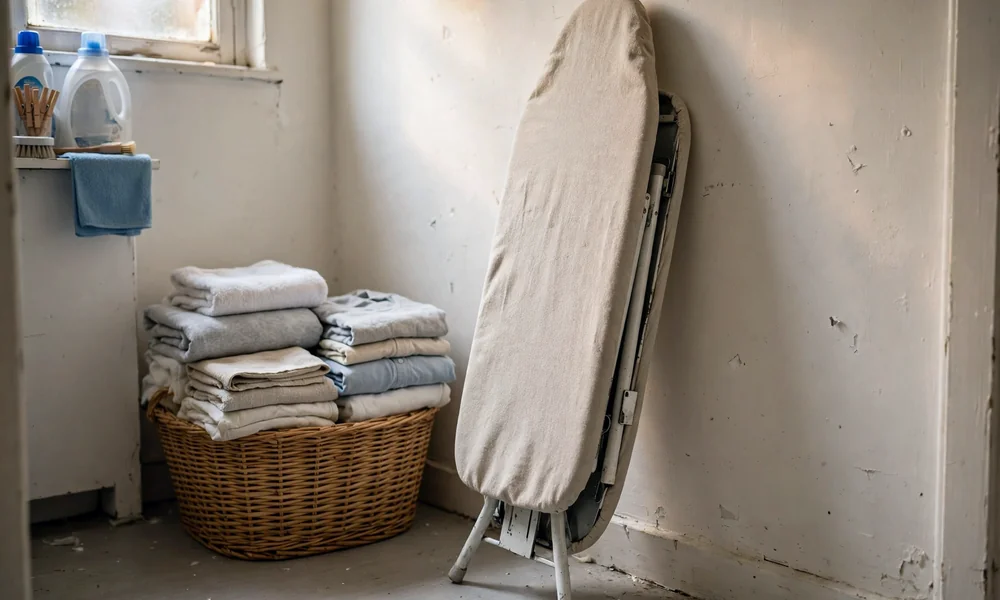
The best ironing boards of 2026 are the wide, well-padded, heavy-framed ones: they press faster, hold still, and leave no marks on your clothes. The worst are the narrow, thin, wobbly boards that leave mesh patterns, slip covers, and a pile of clothes you never get round to ironing. Spend a little more on width, padding, and a solid frame, and ironing stops being a chore you dread and becomes a five-minute job you barely notice. That is what a good board buys you, and it is worth every penny.