
A kids snowsuit is the simplest answer to a cold morning. It is one piece, head to ankle, with no gap at the waist for snow to creep in and no separate jacket riding up while a child tumbles in the snow. The best kids snowsuits of 2026 keep a child warm and dry for hours of play, let them move freely, and survive being dragged through slush, sat on, and washed again and again. The worst ones look warm in the shop and give up the first time a child sits down in wet snow.

What Makes a Snowsuit Different From a Coat
A winter coat covers the top half and leaves the rest to trousers, base layers and luck. A snowsuit covers everything in one piece, and that single fact changes how it works. There is no waistband gap, no jacket riding up when a child falls over, and no snow working its way down the back of the neck during a snowball fight. For younger children especially, that coverage matters more than any single fabric specification, because a cold, wet middle ends play faster than cold hands ever will.
The trade-off is convenience. A one-piece suit takes longer to put on and take off, and toilet trips are slower, which matters with a three-year-old in a hurry. A coat and separate trousers win on speed. If your child is old enough to manage a zip and a bathroom trip on their own, the snowsuit still wins for full-day snow play, and our guide to the best kids winter coats of 2026 covers the separate-coat option for days when a full suit is more than you need. For sledging, skiing and hours in deep snow, though, one piece is the warmer, drier choice.
How to Choose: Warmth First
Start with warmth, and think about how your child actually plays. A child who sits in the snow building things needs more insulation than one who runs around and generates their own heat. Most good kids snowsuits use synthetic insulation, measured in grams, with lighter suits around 100 grams for milder days and active children, and heavy suits around 200 grams or more for deep cold and children who sit still. A suit that is too warm is almost as bad as one that is too cold, because a sweating child cools down fast the moment they stop moving.
Waterproofing and Breathability
Warmth means nothing if the suit soaks through. Look for a waterproof rating on the label, and treat it as a rough guide rather than a promise. A rating of 5,000 millimetres will handle light snow and a dry day. A rating of 10,000 millimetres or more will handle wet snow, sledging and a child who sits in slush. Sealed seams matter just as much as the fabric number, because water finds every unsealed stitch, especially at the knees and the seat.
Fit: Room to Grow, Not Room to Trip
Fit is where most snowsuit purchases go wrong. Parents buy big so the suit lasts two winters, and the child ends up tripping over extra-long legs and sleeves that cover their gloves. A good fit has a little growing room, around one size up, but no more. The cuffs should sit at the wrist bone, the leg hems should sit just over the boot, and the child should be able to raise both arms above their head without the crotch pulling tight.
Look for grow-with-me features. Extendable cuffs and hems, adjustable waist tabs inside the suit, and a hood that can be tightened around the face all add months of use. Try the suit on over the clothes your child will actually wear underneath it, including a jumper, not over a T-shirt. A suit that fits over a T-shirt in a warm shop will be too tight over proper winter layers on a cold morning.
The Best Kids Snowsuits by Age
For toddlers aged two to three, simplicity and coverage matter most. The suit should be easy to get on, with a long front zip, a chin guard so the zip does not catch the skin, and built-in mittens or fold-over cuffs that cover small hands. A suit with feet, or with stirrups that hold the legs down over boots, stops the legs riding up while the child crawls. Choose a bright colour, because a small child in a white suit disappears into the snow, and because bright colours are easier to spot on a busy slope.
For children aged four to seven, durability takes over. These are the years of daily sledging, falling over, and climbing everything, so reinforced knees and a tough seat matter more than extra insulation. The child will want a say in the colour, and that is worth allowing, because a child who likes their suit will wear it without an argument. Pockets become useful at this age, for a snack, a small toy, and the inevitable collection of stones and snowballs.
Zips, Hoods, Cuffs and the Small Details
The small details are what separate a good snowsuit from a frustrating one. The zip should be large, glove-friendly and run smoothly in one pull, with a storm flap behind it to block wind and a chin guard at the top. A zip that snags, sticks or needs two hands is a zip that will be left half done, and a half-done zip is an open door for snow.
The hood should fit over a hat and under a helmet, and it should tighten around the face so it stays put in wind. A hood that flops over the eyes will be pushed back and left down, which defeats the purpose. Cuffs should be elastic or adjustable, with thumb holes or inner gaiters that keep sleeves inside gloves. Leg cuffs should have snow gaiters or stirrups that sit over the boot, because snow up the trouser leg is the fastest route to cold feet.

Layering Underneath the Suit
A snowsuit is only as warm as what is worn underneath it. The best setup is three layers: a moisture-wicking base layer next to the skin, a warm middle layer such as fleece, and the snowsuit itself on top. Cotton is the enemy here, because it holds sweat and stays wet. A thin synthetic or wool base layer keeps a child far warmer than a thick cotton jumper ever will.
Gloves, Hats and Boots: The Rest of the Kit
A snowsuit keeps the body warm, but the extremities decide whether a child stays outside. Gloves need to be warm, waterproof and easy to put on, and they need to stay on, so a long cuff that tucks under the suit sleeve helps. Our guide to the best kids gloves of 2026 looks at the pairs that actually survive a morning of snowball making without soaking through.
A hat should fit under the hood without bunching, and a scarf should be short enough not to catch on anything. A snood or neck warmer is often a better choice than a long scarf for a young child, though a soft scarf tucked inside the suit works well too, and our guide to the best kids scarves of 2026 covers the warmest options. Boots need to be waterproof, warm and easy to walk in, with a grip that holds on ice and packed snow.
What to Avoid When Buying a Kids Snowsuit
Avoid suits with no waterproof rating and no sealed seams, however cheap they are. A suit that soaks through in half an hour will sit in a cupboard for the rest of the winter, and the money saved will be spent on the replacement. Check the label before you check the price, and be suspicious of any suit that does not state a waterproof rating at all.
Avoid suits that are too big by more than one size. Extra fabric bunches at the knees, catches on boots, and makes a child clumsy on snow, which means more falls and more tears. A suit should last one full winter comfortably, and possibly a second with the cuffs let down, but a suit bought two sizes too big will be miserable for the whole of the first winter.
Setting It Up on Day One
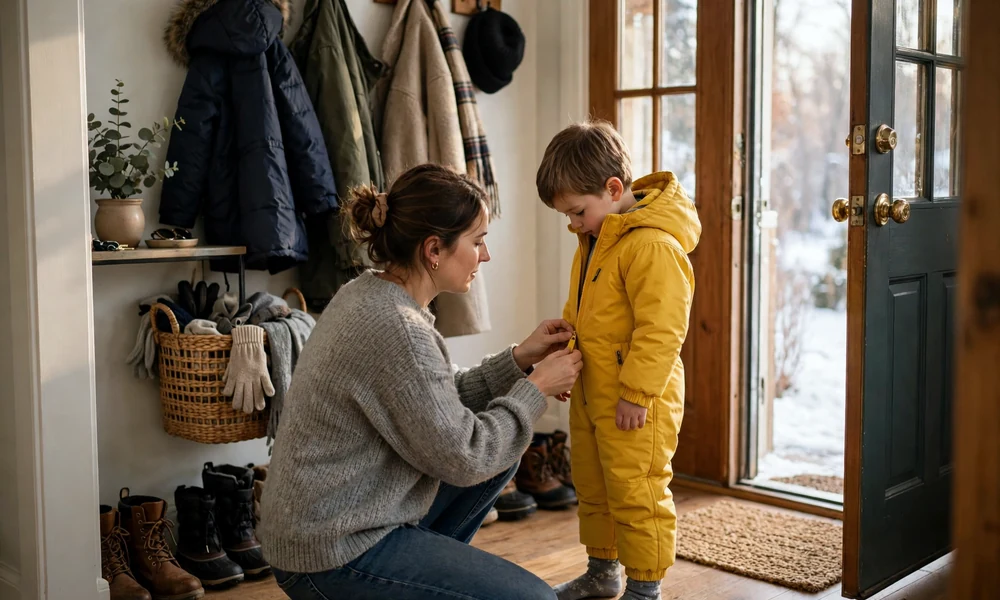
Try the suit on at home, over full winter layers, before the first snow day. Check the zip, the hood, the cuffs and the leg gaiters, and let the child walk, squat and raise their arms in it. Check that they can get it on and off with minimal help, and show them how the zip and the hood adjusters work. A suit that is tried on properly at home will not cause a crisis at the bottom of a snowy hill.
Teach the routine together. Suit on, zip up, hood adjusted, gloves on, boots done up, and then out the door. A child who knows the routine will be ready faster, and a child who helped choose the suit will be far more willing to wear it. Keep a spare pair of gloves and a dry hat by the door, because wet gloves are the most common reason a snow day ends early.
Care, Washing and Making It Last
Snowsuits get filthy, and that is a sign they are being used properly. Shake off loose snow and mud outside, then wash the suit on a gentle cycle with a mild detergent, and never use fabric softener, which damages waterproof coatings. Reproof the fabric once or twice a season with a wash-in or spray-on treatment, especially on the seat and knees, and the suit will stay waterproof far longer.
Dry the suit by hanging it in the air, away from radiators and tumble dryers, which can damage the membrane. Check the zip and the seams at the end of each season, and repair small tears early with an iron-on patch before they grow. A well-cared-for snowsuit can be handed down to a younger child, and a suit that has survived two children has earned its price many times over.
Frequently Asked Questions
Is a one-piece snowsuit warmer than a coat and trousers? In most cases, yes, because there is no gap at the waist for cold air and snow to get in. A good coat and trouser set can be just as warm for an older child who moves well and keeps their layers tucked in, but for younger children and for full days in deep snow, the one-piece suit is warmer in practice.
How do I know the size is right? The suit should fit over winter layers with a little room to grow, the cuffs should reach the wrists, and the child should be able to move freely. If the child cannot raise their arms or squat comfortably, it is too small, and if the legs pool over the boots or the sleeves cover the hands, it is too big.
The best kids snowsuit is the one that fits your child, matches your winters, and gets worn without a fuss. Choose a waterproof shell, warm insulation, a smooth zip and a bright colour, and the suit will be out in the snow all winter. Choose on price alone, and you will be choosing again far sooner than you planned.


