
What Is the Best Snow Boot for Deep Snow and Icy Streets in 2026?
The best snow boot for deep snow and icy streets in 2026 is the boot that keeps your feet warm, dry and upright when winter does its worst. It needs insulation that holds heat in, a waterproof shell that keeps slush out, a tall shaft that stops snow pouring in over the top, and a sole that grips ice instead of sliding across it. Get any one of those wrong and a winter walk turns into a cold, wet, cautious shuffle.
Most people buy snow boots for the wrong conditions. They pick a stylish pair that handles a light dusting and then discover it soaks through in real snow, or they buy a heavy expedition boot for a city commute and end up sweating through every bus ride. This guide compares the seven strongest snow boot styles of 2026, matches each to the winter it suits, and ends with a shop checklist.
Key takeaways
- Warmth comes from insulation plus a waterproof shell, not from thickness alone: a thin boot with good insulation beats a bulky boot without it.
- A tall shaft is the single most useful feature in deep snow, because it keeps snow out of the boot.
- Deep, widely spaced lugs shed snow instead of packing with it, which is what keeps your grip on icy streets.
- Rubber that stays flexible in the cold grips far better than rubber that hardens when the temperature drops.
- Try snow boots on with your thickest winter socks, and leave room for your toes to wiggle.
How we judged the best snow boots
Every boot here was judged on the same five points. First, warmth: does the insulation keep feet comfortable in freezing weather, and does it hold up over hours outdoors? Second, waterproofing: does the shell keep slush and deep snow out, including at the seams? Third, grip: does the sole hold on ice, packed snow and slushy pavements? Fourth, comfort and fit: is the boot easy to walk in, does it support the ankle, and can you wear it for hours without sore feet? Fifth, practicality: is it easy to get on and off, does it dry quickly, and is it worth what it costs?
The best snow boots at a glance
| Boot | Best for | Warmth | Shaft | Approx. price |
|---|---|---|---|---|
| Classic insulated pac boot | Deep snow and cold | Down to -30°C | High | $130–$220 |
| Waterproof winter hiker | Walking and trails | Down to -15°C | Mid | $120–$200 |
| Tall rubber snow boot | Slush and wet snow | Down to -10°C | High | $90–$160 |
| Lightweight city snow boot | Commuting and errands | Down to -10°C | Mid | $100–$180 |
| Insulated slip-on boot | Quick trips outside | Down to -15°C | Mid | $80–$150 |
| Extreme cold expedition boot | Severe cold and storms | Down to -40°C | High | $180–$300 |
| Everyday waterproof ankle boot | Light snow and icy streets | Down to -5°C | Low | $90–$170 |
Classic insulated pac boot
The pac boot is the traditional answer to deep snow, and it is still the best one for genuinely cold, snowy winters. A waterproof rubber lower keeps slush out, a tall leather or nylon upper keeps snow from pouring in over the top, and a thick removable liner traps warm air around your foot. If your winter means unploughed paths, deep drifts and hours outdoors, this is the boot to buy.
The trade-off is weight and bulk. A pac boot is heavier than a city boot, and it can feel clumsy on a cleared pavement. The removable liner is a real advantage: take it out overnight and the boot is dry again by morning. Buy a half size up for thick socks and air: a boot packed tight is colder than a roomy one. For wet days without snow, our guide to the best rain boot for muddy days covers the lighter option.
Waterproof winter hiker
A winter hiker is a walking boot built for cold weather. It has the ankle support and grippy lugged sole of a hiking boot, plus insulation and a waterproof membrane, which makes it the best choice if your winter involves walking any real distance. It handles snowy trails, icy pavements and slushy streets without the bulk of a pac boot, and it is comfortable enough to wear all day.
What it cannot do is wade through deep snow. The mid-height shaft stops a lot, but in drifts above the ankle, snow will find its way in unless you wear gaiters. For most people in most winters, it is the most versatile boot here. The same fit rules apply on snowy ground as on summer trails, as our guide to the best hiking boots of 2026 explains.

Tall rubber snow boot
A tall rubber boot is the simplest answer to slush. The seamless rubber lower is completely waterproof, the tall shaft keeps splashes and wet snow out, and the whole boot can be hosed clean at the door. If your winter is more wet than cold, with melting snow, puddles and gritty slush rather than deep powder, this is the practical choice.
The weakness is warmth. Rubber does not insulate, so these boots rely on a fleece or felt lining, and they are not the warmest option in a real cold snap. They are also among the cheapest boots here, dry fast, and last for years. For anyone who mostly needs to stay dry rather than stay warm, they are hard to beat.
Lightweight city snow boot
City snow boots are built for the commute: cleared pavements, gritted streets, buses and offices, with the occasional unploughed stretch. They look like ordinary boots, weigh far less than a pac boot, and still offer waterproofing, insulation and a grippy sole. If you walk to work through a city winter, this is the boot you will actually wear every day.
Be honest about your winter before choosing one. A city boot will not cope with knee-deep drifts or hours standing in snow, and its lower shaft lets snow in faster than a tall boot. It also needs a sole that grips ice, not just snow: look for deep lugs and cold-weather rubber. Pick the right one and it disappears into your daily routine.
Insulated slip-on boot
Slip-on snow boots are for the short trips that make up most of winter life: taking the bins out, walking the dog, clearing the drive, fetching something from the car. They go on in seconds, keep feet warm and dry for half an hour outside, and come off just as fast at the door. A good pair has a secure fit despite having no laces, and a sole that grips on icy steps.
The catch is the same as with any slip-on: without laces you cannot adjust the fit, so the size has to be right. Try them with thick socks, walk up and down stairs, and check that your heel stays put. For quick trips they are the easiest boots you will own, but not a substitute for a laced boot on a long walk.
Extreme cold expedition boot
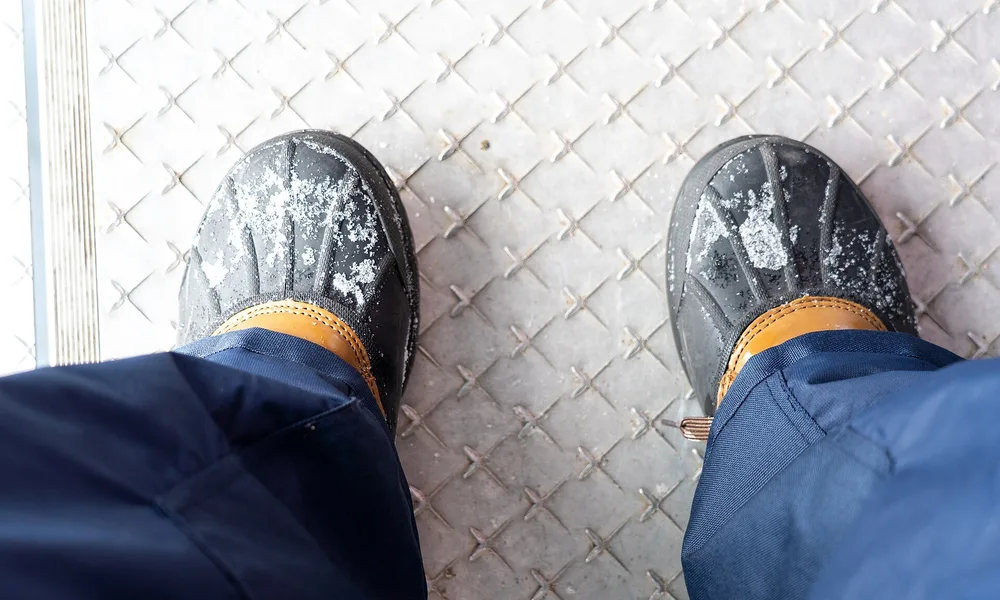
Expedition boots exist for winters that most people never experience: temperatures far below freezing, driving snow, and hours outdoors with no warm building in sight. They have the thickest insulation, the tallest shafts, and soles built to grip ice at temperatures where ordinary rubber turns hard and slippery. If you live somewhere with a genuinely severe winter, this is the boot that keeps you safe.
For everyone else, they are overkill. They are heavy, expensive and far too warm for a mild day, so they stay in the cupboard. Buy the boot for the winter you actually have, not the one you imagine. If your coldest days rarely drop far below freezing, a lighter boot will serve you better.
Everyday waterproof ankle boot
An ankle boot is the lightest option here, and the right one if your winter is mostly light snow and icy streets rather than deep drifts. It looks like a normal boot, pairs with everyday clothes, and still offers waterproofing, a warm lining and a grippy sole. For city dwellers who face a few snowy weeks a year, it is often all they need.
Its limit is obvious: a low shaft cannot keep deep snow out. Step into a drift and snow pours in over the top. It is also the least warm boot here. Choose it for light snow and short walks, and keep a taller boot for deeper days. Warm socks make a real difference at this height, as our guide to wool socks that keep feet warm without the itch explains.
Staying upright on ice
No boot grips black ice perfectly, and anyone who promises otherwise is selling something. What a good snow boot does is stack the odds in your favour: deep lugs bite into packed snow, a soft cold-weather rubber compound stays flexible enough to grip, and a wide, stable sole keeps you balanced.
For the worst ice, add traction aids. Slip-on crampons and microspikes fit over most snow boots, cost little, and turn a slippery pavement into a confident walk. Keep them by the door from the first frost.

Snow boot checklist
- Try boots on with your thickest winter socks, and leave room to wiggle your toes.
- Check the shaft height against the snow depth you actually face.
- Press the sole: it should flex at the ball of the foot, not in the middle.
- Look for deep, widely spaced lugs that shed snow instead of packing with it.
- Walk on a smooth floor to test grip and heel lift before you buy.
- Ask whether the liner comes out for drying, and how the boot dries overnight.
Frequently asked questions
How warm should snow boots be?
Down to minus ten suits most city winters; rural and northern winters need minus twenty or colder.
Are snow boots fully waterproof?
Good snow boots are waterproof up to the shaft, but no boot is waterproof over the top. In deep snow, a tall shaft matters as much as the membrane.
Can I wear snow boots all day indoors?
You can, but you will be warm and your feet will sweat, which makes them colder when you go back outside. If you spend the day indoors, change into dry shoes and let the boots dry by the door.
How do I dry snow boots overnight?
Remove the insoles or liners, stuff the boots loosely with newspaper, and leave them somewhere warm and ventilated, away from direct heat. Never dry them on a radiator, which can crack leather and warp soles.
Do I need microspikes as well as snow boots?
For icy streets, they help a lot. A good snow boot grips snow well, but black ice is a different problem, and slip-on spikes are the cheapest way to walk confidently on it.
What is the difference between snow boots and winter hiking boots?
Snow boots prioritise warmth and waterproofing with a tall shaft, while winter hiking boots prioritise walking comfort and ankle support. Choose snow boots for deep snow and standing around, and winter hikers for covering distance.
The bottom line
The best snow boot for deep snow and icy streets in 2026 is the one matched to your winter: a tall insulated pac boot for deep snow, a waterproof winter hiker for long walks, and a lightweight city boot for the daily commute. Prioritise warmth, waterproofing and grip on ice, try them on with thick socks, and keep traction aids by the door. Winter is much easier to enjoy when your feet are warm, dry and sure of their footing.


