The best rain boot for muddy days in 2026 is the boot that keeps your feet completely dry, grips slippery ground, and is easy to pull on and kick off at the door. This guide compares the strongest rain boots of 2026 for muddy days, from tall rubber wellingtons to short ankle boots, and explains how to choose the right pair for your garden, your dog walks and your daily commute.
We judged every boot style on waterproofing, grip on wet mud and slick pavements, calf and foot fit, ease of putting on and taking off, weight, warmth and durability. A rain boot is not a hiking boot: it is a waterproof boot built for wet, muddy ground, and the best rain boots of 2026 are the ones that do that one job brilliantly. Whether you are digging in a wet garden, walking the dog through a flooded field, or crossing a muddy car park in a downpour, the right rain boot turns a miserable chore into a dry, easy walk.
Key Takeaways
- A tall shaft is the single most useful feature on a muddy day, because it keeps splashes and deep puddles out of the boot.
- Deep, widely spaced lugs shed mud instead of clogging with it, which is what keeps your grip on wet, slippery ground.
- Natural rubber is the most waterproof and flexible choice; cheap PVC boots crack in cold weather and split at the seams.
- Buy rain boots a half size larger than your normal shoes so thick socks fit and your feet stay warm.
- An adjustable calf strap or buckle stops the boot flapping on your leg and keeps rain from running down inside.
What Makes a Great Rain Boot
A great rain boot does three things at once: it seals water out, it grips mud, and it stays comfortable while you work. The seal matters most, because a boot that leaks is worse than no boot at all. A one-piece moulded rubber upper with no seams below the calf is the gold standard, since seams are where water gets in. Vulcanised rubber, where the layers are bonded under heat, is tougher and more flexible than glued PVC, and it stays supple in cold weather when cheaper boots turn stiff and crack.
Grip is the second job, and it is the one most buyers underestimate. A good rain boot sole has deep lugs, at least five millimetres, spaced widely enough for mud to fall out as you walk, and a heel that catches on slopes. If the lugs clog, the sole becomes a smooth slab, and you will slide.

Height and Shaft Fit
Height is the first choice to make, and it depends on how deep the mud and water you face really are. Tall boots, reaching to just below the knee, are the best choice for deep puddles and muddy fields. Mid-calf boots suit lighter rain and garden work. Ankle rain boots are only useful for shallow puddles, because any splash above the ankle goes straight in.
Shaft fit matters as much as height. A calf that is too wide lets rain run down your leg and into the boot, and it flaps as you walk. A calf that is too tight will not close over your trousers. Many of the best rain boots of 2026 have an adjustable buckle or strap at the top of the shaft.
Best Rain Boots for Muddy Days Compared
The table below compares the main rain boot styles of 2026 so you can see the trade-offs at a glance.
| Boot Style | Best For | Waterproofing | Grip | Typical Price |
|---|---|---|---|---|
| Tall natural rubber boot | Deep mud, flooded paths, farm work | Excellent | High | $80–$180 |
| Tall PVC boot | Occasional rain, light garden work | Good | Moderate | $25–$60 |
| Mid-calf rubber boot | Gardening, dog walks, wet commutes | Excellent | High | $60–$140 |
| Insulated rain boot | Cold, wet winters, long outdoor days | Excellent | High | $90–$200 |
| Ankle rain boot | Shallow puddles, quick trips, city rain | Good | Moderate | $40–$90 |
| Neoprene-lined boot | Cold mud, fishing, long standing | Excellent | Moderate | $100–$220 |
Price is a rough guide, not a rule. A good natural rubber boot that lasts five winters is far cheaper per wear than a cheap PVC pair that cracks after one season. Judge by the material, the tread and the fit, not the label, and remember that a boot that leaks is worth nothing, whatever it cost.
Natural Rubber vs PVC: Which Material Wins
Natural rubber is the best material for a rain boot, and it has been for more than a century. It is fully waterproof, flexible in cold weather, and comfortable to walk in, because it bends with your foot instead of fighting it. A well-made rubber boot has a one-piece upper with no seams to leak, and it can be repaired with a simple patch if it is punctured. Its weakness is weight: rubber boots are heavier than PVC, and they cost more to make.
PVC boots are lighter and cheaper, but they stiffen in cold weather, which makes them uncomfortable and prone to cracking, and they are usually made in panels with glued seams, which are the first places to leak. PVC is fine for occasional light rain, but if you will be out in the mud for hours, natural rubber is the better investment. A hiking boot with a waterproof membrane is a different tool altogether: it keeps rain out of a walking boot, but it is not designed to stand in deep mud and water, and our guide to the best hiking boots of 2026 explains exactly where that line falls.

Grip on Mud: Tread, Lugs and Self-Cleaning
Grip on mud is about the tread: depth and spacing. Deep lugs bite into soft ground, while wide spacing lets the mud fall out as you lift your foot. A sole with shallow, closely spaced lugs clogs within minutes on wet clay, and once it clogs it is no better than a smooth sole. Run your thumb across the tread before you buy: you should feel distinct, chunky lugs with clear gaps between them.
Some of the best rain boots of 2026 also have a slightly raised arch and a shank in the midsole, which stops the boot twisting on uneven ground and keeps your foot stable when the mud shifts under you. If you work in the garden in all weathers, the same grip principles apply to everything you use out there, and our guide to the best garden hoses of 2026 is a useful companion for the rest of your wet-weather garden kit.
Warmth, Comfort and All-Day Wear
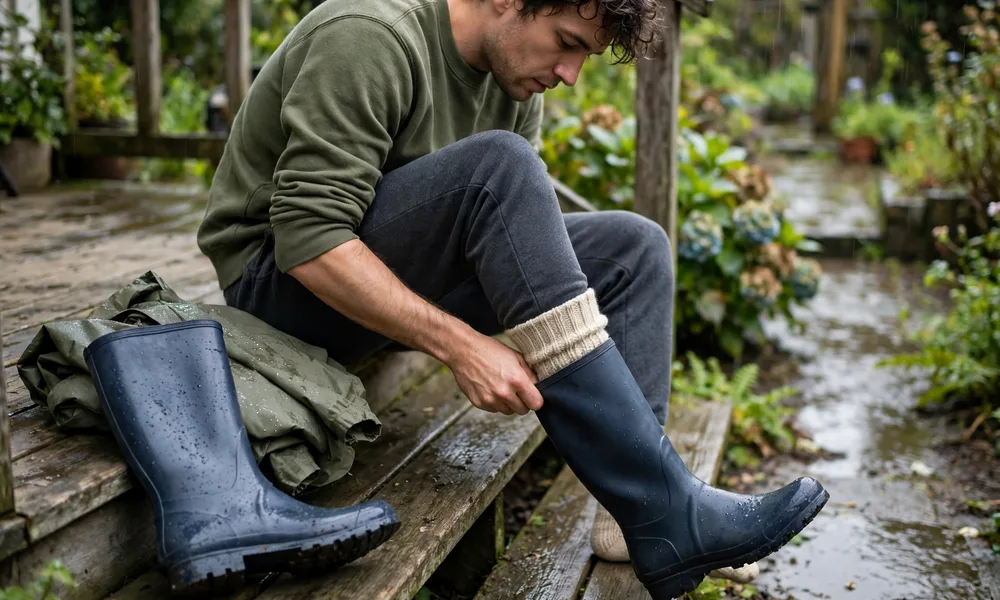
Rain boots are not famous for comfort, but the best ones are far better than their reputation. The first rule is to buy a half size larger than your normal shoes, because rain boots have no laces to adjust and thick socks are the only way to keep your feet warm and to stop them sliding around inside the boot. A boot that is too tight will rub your toes and chill your feet, while a boot that is too loose will blister your heels. Try boots on with the thickest socks you will actually wear in them.
Warmth comes from insulation and from fit. An unlined rubber boot is fine for mild, wet days, but in cold weather your feet will chill quickly. Insulated boots have a fleece or neoprene lining that traps warmth, and a cushioned insole is a cheap upgrade that turns a stiff boot into a comfortable one.
How to Choose the Best Rain Boot in 2026
Start with the mud you actually face. If your worst day is a flooded field or a deep puddle on a country lane, you need a tall natural rubber boot with deep lugs and an adjustable calf. If your worst day is a wet garden and a muddy dog walk, a mid-calf rubber boot will do the job and be easier to live with. If your worst day is a rainy city commute, an ankle boot is lighter and smarter, and it will not look out of place at the office door.
Next, think about the cold. In winter, insulation matters more than anything else, because cold feet will end your day long before wet feet do. In mild weather, weight matters more, and an unlined boot will keep you comfortable. Store tall boots upright with the shafts open so they dry inside.
Common Mistakes When Buying Rain Boots
The first mistake is buying the wrong size. Rain boots have no laces, so the size you buy is the fit you get, and too many people buy their normal shoe size and then find thick socks do not fit. The second mistake is choosing PVC to save money, and then finding the boots crack in the first cold snap. The third is ignoring the tread, when grip is what keeps you upright on a muddy slope. Finally, do not forget to clean your boots: mud left to dry on the shaft cracks the rubber. For a sense of how rain boots compare with other outdoor boots, our comparison of the best vs worst hiking boots of 2026 shows where a waterproof boot ends and a walking boot begins.
Rain Boot Buying Checklist
- Choose a tall shaft for deep mud and puddles, a mid-calf boot for garden work, and an ankle boot only for shallow water.
- Pick natural rubber over PVC for cold weather, long days and a boot that will last several winters.
- Check the tread: deep, widely spaced lugs that shed mud, with a defined heel for slopes.
- Buy a half size larger than your normal shoes so thick socks fit comfortably.
- Look for an adjustable calf strap or buckle to stop rain running down inside the boot.
- Rinse mud off after use and store the boots upright in a dry, airy place.
Frequently Asked Questions
What is the best rain boot for muddy days?
A tall natural rubber boot with deep, widely spaced lugs is the best rain boot for muddy days, because it keeps deep water and splashes out, grips slippery ground, and stays flexible in cold weather.
Are rain boots the same as hiking boots?
No. A rain boot is a fully waterproof boot designed to stand in water and mud, while a hiking boot is a walking boot with a waterproof membrane that keeps rain out but is not designed to be submerged.
Should rain boots be a size bigger?
Yes, buy rain boots a half size larger than your normal shoes. Rain boots have no laces to adjust, and the extra space lets thick socks fit and stops your toes rubbing.
How do I stop my rain boots slipping on mud?
Choose boots with deep, widely spaced lugs that shed mud instead of clogging, and a defined heel edge for slopes. Worn, smooth soles are the most common cause of slipping.
Are expensive rain boots worth the money?
Usually, yes. A well-made natural rubber boot costs more than a PVC pair, but it lasts several winters, stays flexible in the cold, and does not leak at the seams.
How do I clean and store rain boots?
Rinse mud off with cold water after use, wipe the shafts dry, and store the boots upright in a dry, airy place with the shafts open so the inside dries.
The Bottom Line
The best rain boot for muddy days in 2026 is a tall natural rubber boot with deep, self-cleaning lugs, a half size larger than your normal shoes, and an adjustable calf strap to keep the rain out. Buy for the mud you actually face, keep the boots clean and dry between uses, and they will keep your feet dry through the wettest days of the year.