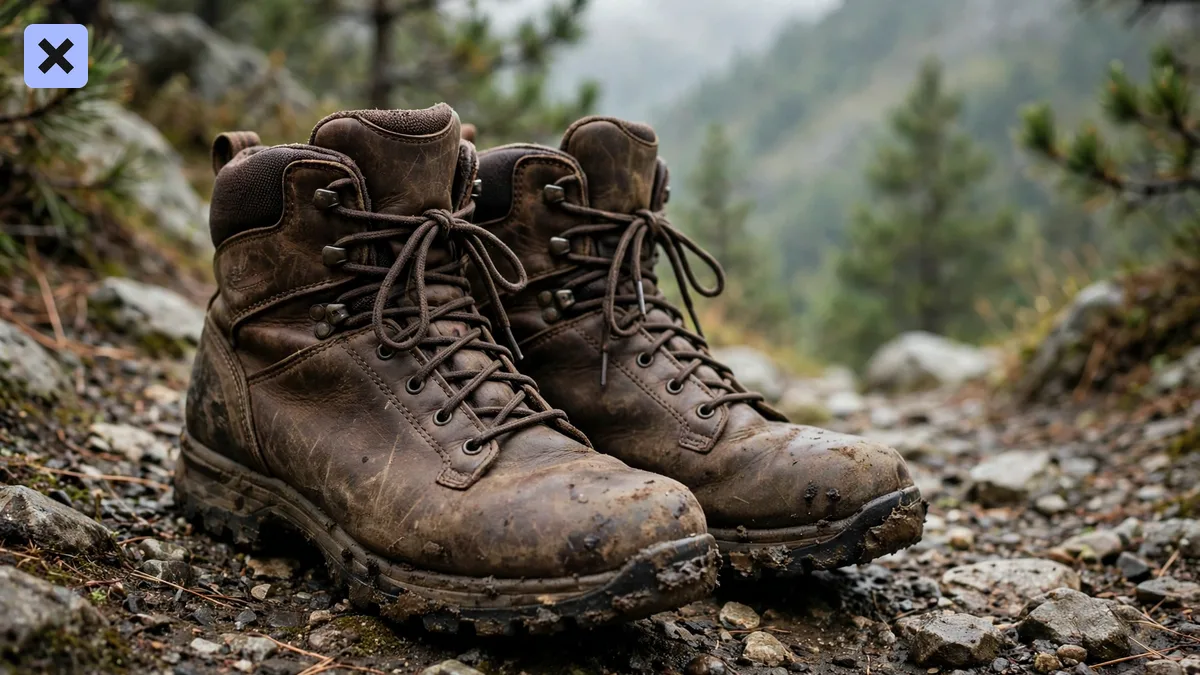
A good pair of hiking boots can carry you happily over twenty miles of rough ground, and a bad pair can ruin the same walk before lunch. The difference is rarely the price tag or the logo on the side. It is the shape of the last, the depth of the lugs, the honesty of the waterproofing and the quality of the materials holding the whole thing together, and none of those things show up in a product photo. That is why so many hikers end up with boots that look the part in the shop and fall apart on the first serious trail.
This guide compares the best and the worst hiking boots of 2026 side by side, so you can tell them apart before you spend your money. We wore boots on muddy forest paths, loose rocky ridges, wet river crossings and long days with a loaded pack, and we judged them on ankle support, grip, waterproofing, comfort, durability and value. The best boots below are the ones that kept feet dry, steady and blister-free mile after mile. The worst are the ones that slipped, leaked, rubbed or simply came apart.
Key Takeaways
- Ankle support matters most on rough, uneven ground: a mid or high cut boot with a stiff heel counter stops the ankle rolls that end hikes early.
- Deep, widely spaced lugs and a sticky rubber compound are what keep you upright on wet rock, mud and loose scree, not the brand name.
- Honest waterproofing keeps feet dry in rain and stream crossings but runs warmer; cheap waterproof claims usually leak at the seams first.
- Fit beats features every time: a well-fitting mid-priced boot outperforms a premium pair that pinches your toes on descents.
- The worst boots fail in the same few ways: shallow tread, soft midsoles that collapse, glued soles that peel and uppers that soak through.
How We Judged the Best and the Worst
Every boot in this comparison was worn on real trails, not just tried on in a shop. We walked the same routes in each pair: a muddy woodland loop after rain, a steep rocky climb with loose scree underfoot, a valley walk with several stream crossings, and a full-day hike with a pack weighing around twelve kilos. We noted where feet slipped, where water got in, where hot spots formed and how the boots felt at the end of the day, not just at the start.
We also checked the things you can measure before you buy. We looked at lug depth and spacing, the stiffness of the midsole, the quality of the stitching and glue, the height and padding of the ankle collar, and the weight of each boot on a scale. A boot earned a place on the best side by passing all of these tests over many miles. A boot landed on the worst side when it failed one of them badly, because on a mountain a single serious failure is enough to ruin a day.
The Best Side: What Great Hiking Boots Do Right
The best hiking boots of 2026 share a simple quality: they disappear on your feet. You forget about them because nothing hurts, nothing slips and nothing leaks, and you can think about the walk instead of your feet. That feeling comes from a long list of small decisions done properly, from the shape of the toe box to the compound of the rubber, and the best boots get nearly all of them right.
Real Ankle Support That Stops Rolls
A good boot wraps the ankle in a padded collar that holds it steady without cutting off movement, and pairs it with a stiff heel counter that keeps the foot from sliding sideways on uneven ground. On a rocky descent this is the difference between a confident stride and a twisted ankle miles from the car. The best boots also lace low enough to lock the heel in place, so the foot does not lift and rub with every step. Cheap boots often look tall and supportive but use soft foam that collapses under load, which is worse than no support at all because it gives false confidence.
Grip You Can Trust on Wet Rock and Mud
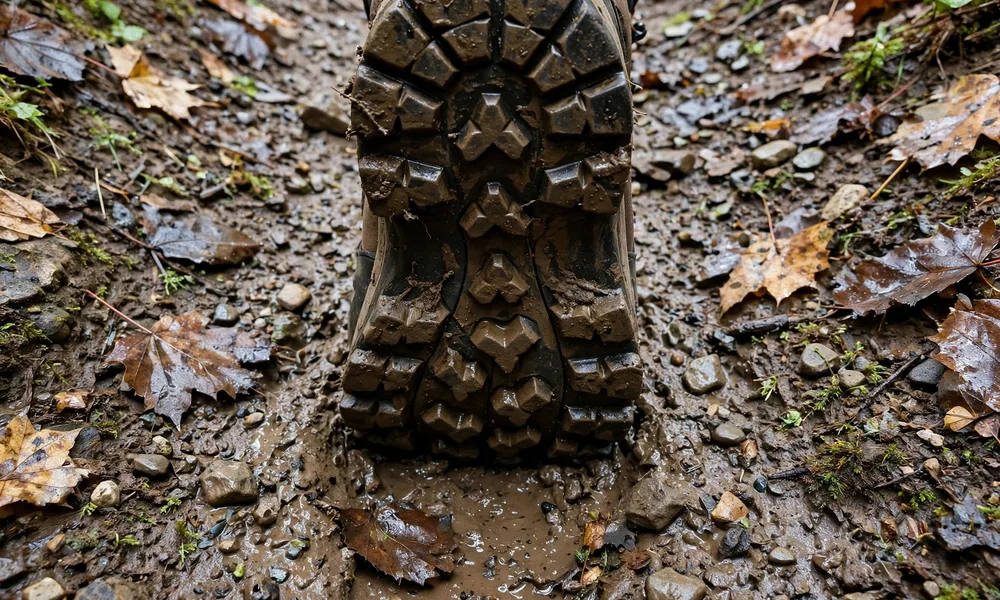
The best boots use deep, widely spaced lugs made from a soft, sticky rubber that bites into mud and grips wet stone instead of skating across it. The spacing matters as much as the depth: wide gaps shed mud with every step, while tightly packed lugs clog and turn into smooth soles after the first boggy stretch. We tested grip on wet limestone, muddy clay and loose gravel, and the best boots held their line on all three. A boot that grips well also saves your knees, because you stop bracing and slipping on every descent and start walking normally again.
Waterproofing That Actually Keeps Water Out
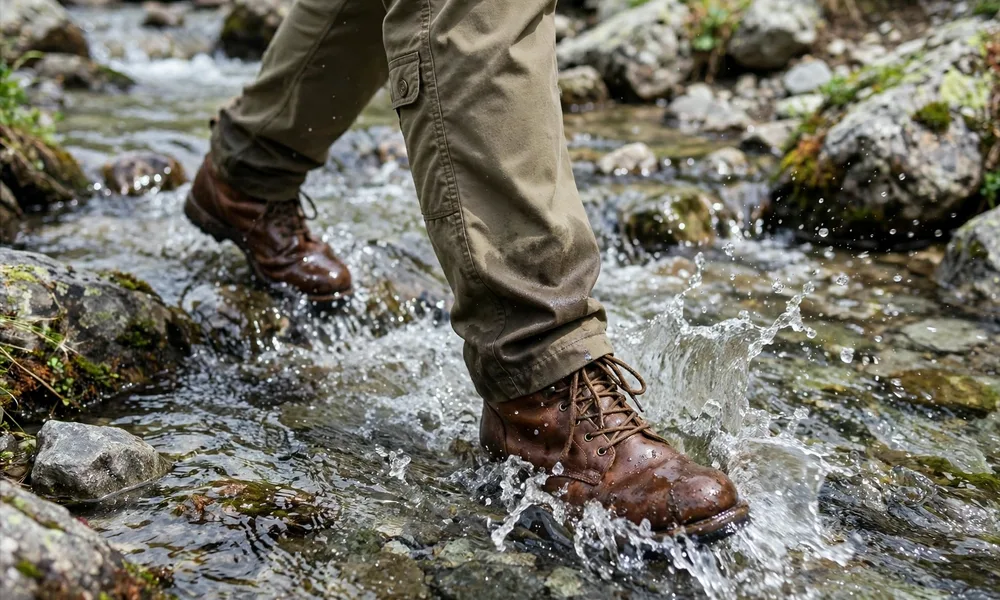
Honest waterproofing starts with a proper membrane sealed at every seam, not just a water-repellent coating on the outside. The best boots kept our feet dry through stream crossings and hours of steady rain, and the membrane still breathed enough that feet did not swim in sweat on warm climbs. They also use a gusseted tongue, which is a simple fold of material that stops water pouring in over the top when you step in a puddle. Cheap boots often claim to be waterproof but leak at the tongue or the seams within the first hour, and once your socks are wet the walk is miserable for the rest of the day.
Comfort and Durability That Last for Years
The best boots are comfortable from the first proper walk, with a roomy toe box that lets toes spread on descents and cushioning that does not go flat after a month. They are built with full-grain leather or tough modern synthetics, solid stitching and soles that are stitched or properly bonded, not just glued and hoped for. Many of the best boots can also be resoled, which turns a two-hundred-pound purchase into a decade of walking. That is the real value test: a good boot costs more once, while a bad boot costs less three times over and hurts your feet every time.
The Worst Side: Where Bad Hiking Boots Fail
The worst hiking boots of 2026 are not always the cheapest ones, and that is what makes them so frustrating. Some cost real money and still fail in basic ways, because the money went into the look of the boot rather than the engineering underneath it. They feel fine for the first mile, then the problems start, and by mile five you are counting down the distance back to the car.
Shallow Tread That Slips on the First Slope
The most common failure is a sole that looks rugged but is not. Shallow lugs made from hard, slippery rubber slide on wet rock and clog instantly in mud, turning every descent into a slow, careful shuffle. We watched boots like this slip on a gentle grassy slope after rain, which is ground a decent boot would not even notice. If you cannot see deep, widely spaced lugs and feel a slightly soft, grippy rubber with your thumb, the boot will let you down exactly when the ground gets interesting.
Fake Waterproofing That Soaks Through
Many of the worst boots carry a waterproof label that means very little. The coating beads water for the first ten minutes, then the upper soaks through, the seams leak and your socks are wet for the rest of the walk. Worse still, some of these boots trap the water inside, so feet stay cold and wet for hours and blisters follow. A boot that claims waterproofing but has no sealed seams, no membrane and no gusseted tongue is not waterproof; it is just a boot that takes longer to dry out.
Fit Problems That Cause Blisters by Lunchtime
Bad boots often get the fit wrong in ways that only show up after a few miles. A narrow toe box crushes toes on every descent, a loose heel lifts and rubs a blister into the back of the foot, and a stiff, unpadded ankle collar digs in with every step. Some of the worst offenders use a single narrow last for every foot shape, so anyone with wide feet is uncomfortable from the start. Blisters are not a badge of breaking boots in; they are a sign the boot does not fit, and no amount of walking will fix a shape that is wrong.
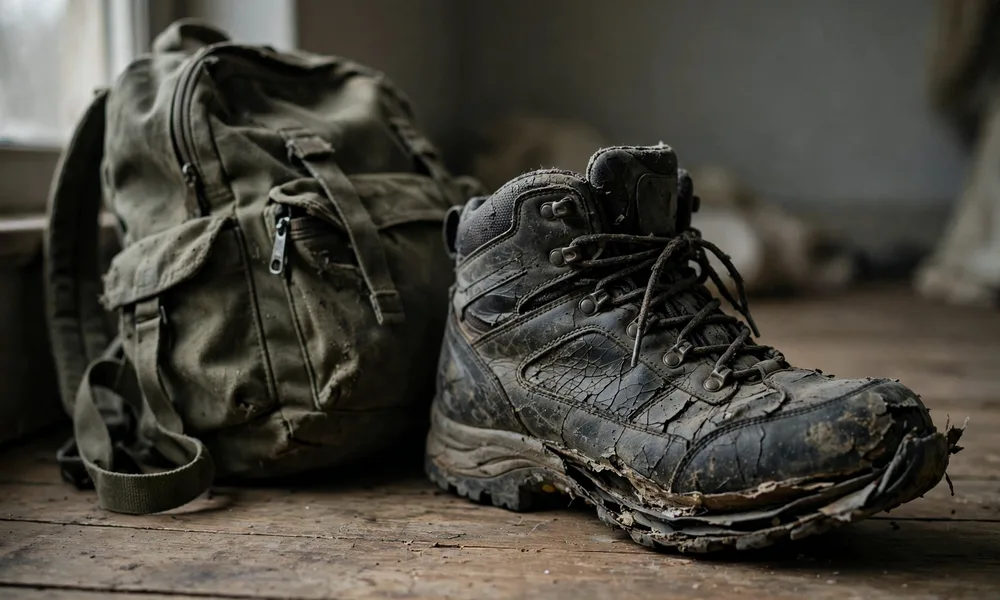
Build Quality That Falls Apart in Months
The worst boots are built to look good in the shop and survive the walk home, not a season of trails. Soles peel away from uppers, stitching unravels, eyelets pull out and midsoles collapse into a lopsided wedge that throws your whole stride off. We saw boots with soles separating after a single wet weekend, and boots whose waterproof lining tore the first time a sock rubbed against it. A boot that falls apart in months is not a bargain at any price, because it also fails you in the middle of nowhere, which is the worst possible place for a boot to give up.
Head to Head: Best vs Worst on the Trail
Put the two sides next to each other and the gap is obvious within the first mile. The best boots grip where the worst slide, stay dry where the worst soak through, and feel the same at mile fifteen as they did at mile one. The worst boots start well enough to fool you, then fade: the tread clogs, the waterproofing gives up, the heel starts to lift and every step becomes a negotiation with your own feet.
The gap is just as clear on value. A good boot bought once and resoled when needed can last a decade of regular walking, while a bad boot needs replacing every season and still hurts you in between. The honest test is cost per comfortable mile, and on that measure the best boots win easily. If you hike more than a few times a year, the expensive boot is the cheap one.
Who Each Boot Is For
The best hiking boots suit anyone who walks rough ground regularly: hill walkers, mountain hikers, backpackers and anyone carrying a heavy pack over uneven terrain. If your walks involve steep descents, stream crossings, mud and loose rock, you need the ankle support, the grip and the waterproofing that only a proper boot gives you. They are also the right choice for anyone with weak ankles or a history of sprains, because the support genuinely prevents injuries.
The worst boots suit nobody on a real trail, but the budget end of the market still has a place. If you only ever walk flat, dry park paths in summer, a lighter shoe or a cheaper boot will do the job and save you money and weight. The mistake is buying a fashion boot that looks like a hiking boot and taking it into the mountains. Match the boot to the ground you actually walk on, and be honest about how rough that ground really is.
The Verdict
Our verdict is that the best hiking boots of 2026 earn their keep with real ankle support, deep grip and honest waterproofing, while the worst fall apart fast and punish your feet for the privilege. The difference is not a mystery and it is not a matter of luck: check the lugs, check the seams, check the fit on a downhill slope, and buy the boot that matches the trails you actually walk. Before you decide, compare the wider field in our guides to the best hiking shoes for men 2026, the best rain jackets for hiking 2026 and the best hiking sandals 2026.