
A kids ski helmet is not a small adult ski helmet, and it is certainly not a bike helmet with a different label. It is a different piece of kit with a different job: it has to keep a child warm, sit comfortably for a whole morning on the slopes, work with goggles without leaving a gap of cold skin on the forehead, and stay put when a young skier tumbles in soft snow. The best kids ski helmets of 2026 do all of that without feeling heavy or awkward, and the worst ones fail on fit long before a child ever notices how they look.
What Makes a Kids Ski Helmet Different
A bike helmet and a ski helmet are built for different kinds of falls, and the difference matters. A bike helmet is designed around open-air riding, with large vents and a light shell. A ski helmet is built for cold weather and snow: it has ear pads that keep out wind, a smoother shell that slides rather than catches, and vents that can often be opened or closed as the day warms up. It is also shaped to sit neatly with ski goggles, so the two pieces of kit meet in the middle instead of leaving a bare strip of forehead that freezes on the chairlift.
The other difference is insulation. A child who is cold stops enjoying skiing very quickly, and a cold child stops learning. Kids ski helmets use soft linings and covered ears to hold warmth, and many have a dial or pads at the back that let the fit be adjusted as a child grows or as a thicker hat goes underneath. That adjustability is one of the most useful features a kids ski helmet can have, because children grow fast and a helmet that only fits for one season is poor value, however good it looks in the shop.
How to Choose: Fit Comes First
Fit is the single most important thing about a kids ski helmet, and it is the thing most often got wrong. A helmet that is too big will slide down over the eyes or tip backwards, and a helmet that is too small will press on the forehead and give a child a headache before the first run is over. Neither is safe, and neither is comfortable, so a child will find a reason to take it off. Start by measuring around the head, just above the eyebrows and ears, with a soft tape. Match that number to the size guide for the helmet you are considering, and remember that sizes vary between makers, so a medium in one brand can feel very different from a medium in another.
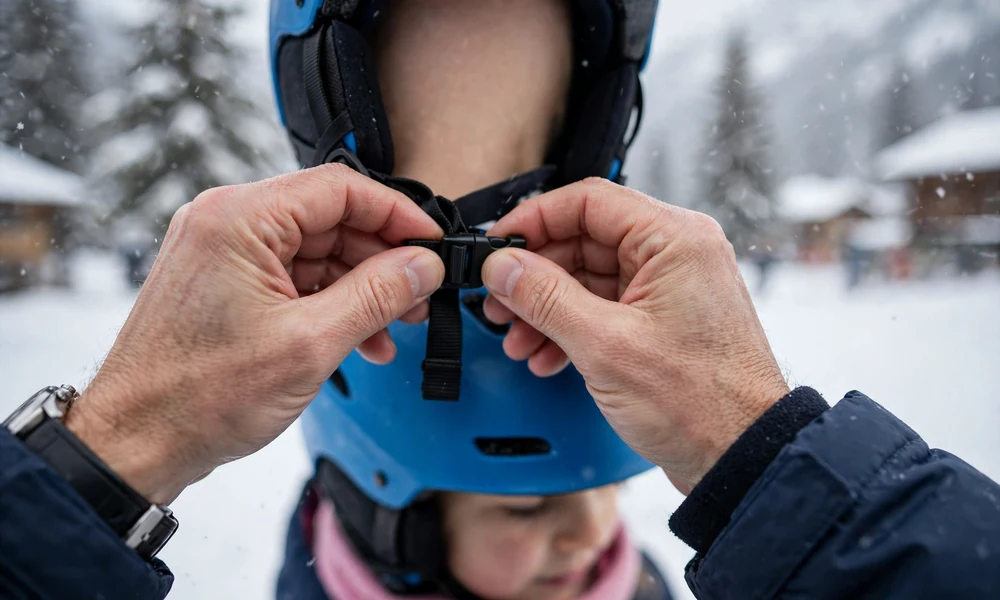
Once the helmet is on, check three things. First, it should sit level, about two fingers above the eyebrows, and it should not rock from side to side when your child shakes their head gently. Second, the chin strap should be snug enough that you can fit two fingers between the strap and the chin, and no more. Third, the ear pads should cover the ears without pressing hard, and the helmet should feel snug all round rather than tight in one spot and loose in another. If it passes all three checks, it fits. If it fails any of them, try a different size before you try a different helmet.
The Best Kids Ski Helmets of 2026
Our top pick overall is the classic all-rounder: a mid-weight helmet with an adjustable fit dial, ear pads that can be removed on warmer days, and vents that open and close with a simple slider. It suits children from about five to twelve, it works with most goggles, and it comes in bright colours that are easy to spot. It is not the cheapest helmet you can buy, and it is not the lightest, but it is the one that gets the basics right for the most children, and that is what an overall winner should do.
For first-timers, the best choice is a soft, light helmet with a simple fit and no fiddly parts. A child who is skiing for the first time has enough to think about without a helmet that needs adjusting every ten minutes, so look for one that goes on easily, stays put, and feels comfortable from the first minute. A dial at the back that a parent can turn with gloves on is a real advantage here, and so is a chin strap with a buckle that does not pinch. This is the helmet to buy when you are not yet sure whether skiing will become a regular hobby.
The best budget pick proves that a good kids ski helmet does not have to cost a fortune. It is a straightforward helmet with a hard shell, fixed vents and a simple sizing system based on head measurement, and it does the job well. What it gives up is adjustability: there is no dial to fine-tune the fit, so getting the size right matters even more. Measure carefully, try it on with goggles, and if the fit is right, there is no need to spend more for a first season.
Finally, the best helmet for goggle wearers is one designed with a goggle clip at the back and a shape that meets the top of the goggles without a gap. Try the helmet and the goggles together before you buy, because a gap between the two lets in cold air and snow, and goggles that do not sit flat against the helmet will fog up. Our guide to the best kids ski goggles of 2026 covers goggles made for young faces, and it is worth reading alongside this guide if you are buying both pieces at once.
Goggles, Hats and the Rest of the Kit
A helmet only works as part of a system. The goggles should meet the helmet with no gap, the neck warmer or balaclava should sit neatly under the ear pads without bunching, and there should be no thick hat underneath that changes the fit. If your child wears a hat under the helmet, try the combination on together and re-check the fit, because a hat that is fine on its own can make a well-fitting helmet too tight. In most cases a thin balaclava works better than a bulky beanie.
Safety: Wear It Every Run
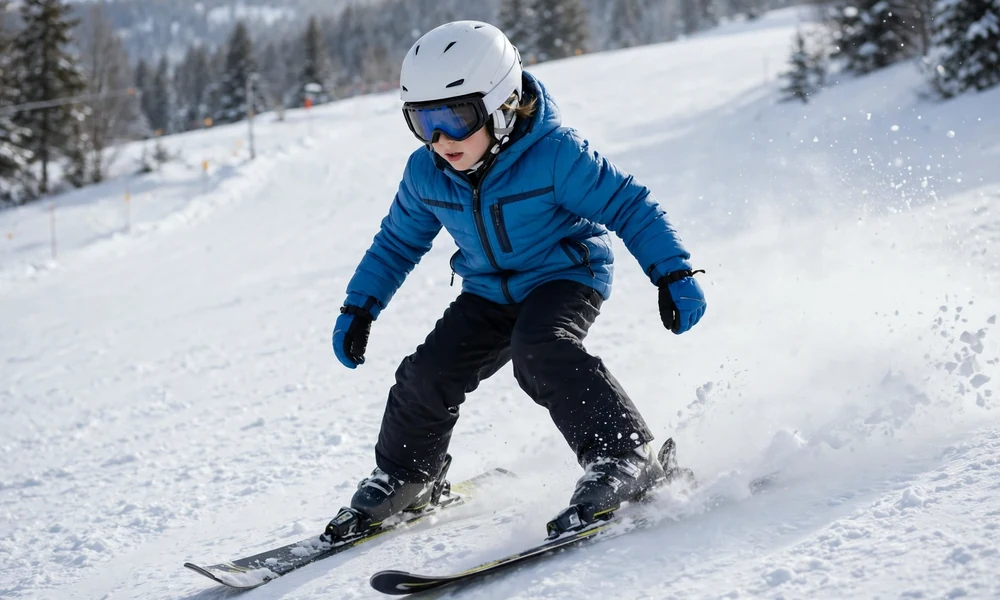
The most important safety rule is also the simplest: the helmet goes on for every run, including the easy ones. Most falls happen on gentle slopes, when a child is relaxed, tired, or showing off for a friend, and a short easy run is still a run. Make the helmet part of getting dressed for skiing, like boots and gloves, rather than something that is only worn on difficult slopes. Children accept rules they do not have to think about, and a helmet that is simply always on is easier to accept than one that is argued about run by run.
Replace the helmet after a hard impact, even if it looks fine from the outside. A helmet is designed to absorb a heavy knock once, and the damage that matters is often inside the shell, where it cannot be seen. If your child has a hard fall and hits their head, take the helmet out of use and replace it. The same applies to a helmet that has been dropped hard onto concrete or run over in a car park. When in doubt, replace it: the cost of a new helmet is small compared with the job it does.
How Long Should a Kids Ski Helmet Last?
With normal use, a kids ski helmet should last several seasons, but children usually outgrow it before it wears out. The adjustable fit systems in the best helmets help here, because they give an extra season of growth, but there is a limit: a helmet that has been adjusted to its largest setting and still feels tight is finished, however new it looks. Handing a helmet down to a younger sibling is fine as long as it has never had a hard impact, the strap and buckle work properly, and it fits the younger child. Never hand down a helmet that has been in a crash, and never buy a second-hand helmet unless you know its full history.

What to Avoid
Avoid buying a helmet to grow into. A helmet that is too big now will not protect properly now, and a child who spends a season in a helmet that slides around will learn to dislike wearing one. Buy the size that fits today, and use the adjustable fit to cover growth, rather than buying a size up and hoping. The same applies to buying adult helmets for children: an adult helmet in the smallest size is still shaped for an adult head, and it will not fit a child as well as a helmet designed for children.
Avoid bike helmets, skate helmets and climbing helmets on the slopes. Each is designed for a different kind of impact and a different environment, and none of them has the insulation, ear coverage or goggle fit of a ski helmet. The general guide to best kids helmets of 2026 covers helmets for bikes and scooters, and it is useful for those sports, but those helmets belong on wheels, not on snow. On the slopes, a ski helmet is the right tool.
Finally, avoid choosing on looks alone. A helmet with a favourite character or a striking pattern is a fine thing if it also fits, but a good-looking helmet that is the wrong size or shape is worse than a plain one that fits well. Let your child choose the colour, by all means, because a child who likes their helmet will wear it happily. But keep the choice of size and fit in adult hands, and be ready to say no to a helmet that looks wonderful and fits badly.
Our Verdict
The best kids ski helmet of 2026 is the one that fits your child, works with their goggles, and gets worn on every run without complaint. That sounds simple, and it is, but it is also the reason so many parents end up buying twice: the first helmet was chosen for price or appearance, and the second one is chosen for fit. Start with fit, measure the head, try the helmet on with goggles, and check the strap. Then let your child pick a colour they love, and you will have a helmet that does its job for seasons to come. For the rest of the kit, our guide to the best ski goggles of 2026 is a good next read, and it will help you put together a set-up that works as a whole rather than as a collection of separate pieces.
Skiing with children is at its best when the kit disappears into the background and the day is about snow, speed and hot chocolate at lunchtime. A good helmet helps that happen, because it keeps a child warm, comfortable and protected without demanding attention. Choose carefully, check the fit, wear it every run, and replace it after a hard knock. Do that, and the helmet will do its quiet job while your child gets on with the fun part.


