A skincare fridge is a small, quiet fridge made for one job: keeping your creams, serums and masks cool. It is not a kitchen fridge in miniature, and it is not a gimmick for people with too much shelf space. For the right products, a little cold makes a real difference. A chilled eye cream feels better on tired skin in the morning, a cool sheet mask is more soothing after a long day, and some ingredients simply last longer when they are kept away from heat and light. The best skincare fridges of 2026 do this job simply and well: they hold a steady cool temperature, they run quietly enough for a bedroom, and they fit neatly on a vanity or a bathroom shelf without taking over the room.

What a Skincare Fridge Actually Does
A skincare fridge keeps products cool, usually somewhere between about 10 and 18 degrees Celsius, which is cooler than a warm bathroom but warmer than a kitchen fridge. That range matters. It is cold enough to feel refreshing and to slow down the way some ingredients break down in heat, but it is not so cold that creams turn stiff or serums separate. Most models use a small thermoelectric cooling unit rather than a compressor, which is why they are light, quiet and cheap to run. They have no freezer compartment, and they are not meant for food or drinks, even though a bottle of water would fit.
What Belongs in a Skincare Fridge
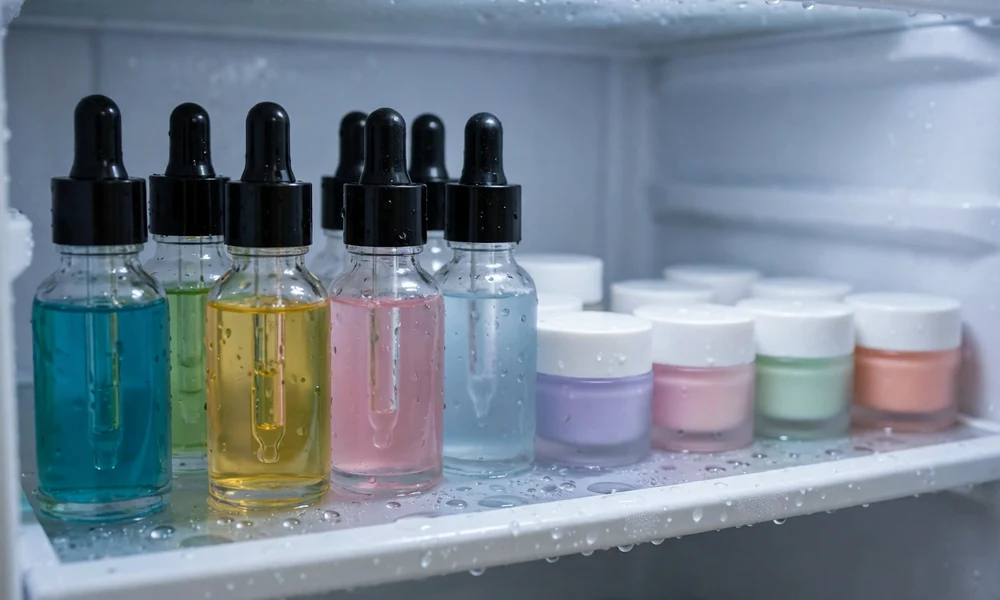
Serums are the best candidates. Vitamin C serums, in particular, are famous for changing colour and losing strength when they sit in a warm room, and a fridge slows that down. Retinol products benefit too, as do any serums that come in clear bottles or that the maker tells you to store in a cool place. Eye creams and gels are the most satisfying things to chill, because the cold adds to the de-puffing effect when you put them on in the morning. Sheet masks feel far better cold, and so do gel masks, mists and toners that you spray on through the day.
What Does Not Belong in a Skincare Fridge
Not everything improves with cold. Oil-based products can go cloudy or thick when they get too cold, and some will not pour properly until they warm up again. Thick balms and heavy night creams can turn so stiff that they are hard to use, and clay masks can dry out or change texture in the cold. Powder products, including loose powder and powder blush, should never go in a fridge, because the damp air can make them clump. Sunscreen is another one to leave out: most sunscreens are tested and stored at room temperature, and chilling them can change how they spread.
The Main Types of Skincare Fridge
The most common size is around 4 litres, which holds roughly a dozen small bottles and jars. It is the right size for one person’s daily routine: a serum or two, an eye cream, a moisturiser, a few sheet masks and a roller. It fits on a vanity, a desk or a bathroom shelf, and it is light enough to move when you rearrange the room. If your routine is small, this size is enough, and a bigger fridge will only waste space and electricity.
How to Choose the Right One
Start with temperature. A good skincare fridge should hold a steady temperature and keep it there, not swing up and down through the day. Look for a model that states its cooling range and that has a simple control, even if it is only a dial with a few settings. A fridge that cannot get cool enough on a hot day is useless, so check reviews from people who used it in summer, not just in a cool room. If you live somewhere hot, a model with a fan-assisted design will cope better than a basic one.
Think about size and shape before you fall for a pretty colour. Measure the space where the fridge will go, including the height, because a tall serum bottle may not fit under a fixed shelf. Check whether the shelf comes out, whether the door has storage, and whether the fridge opens in the direction that suits your space. A fridge with a reversible door is useful in a tight bathroom, and a model with a carry handle is easier to move when you clean. Colour is the last thing to decide, not the first: white, pink, mint and black are all common, and the right one is the one that suits your room.
Skincare Fridges Versus Mini Fridges
A skincare fridge and a mini fridge look similar, and a mini fridge can hold skincare, but they are built for different jobs. A mini fridge is designed to keep drinks and snacks cold, usually at a lower temperature than a skincare fridge, and it is often bigger, heavier and noisier. It may also have a small freezer compartment, which a skincare fridge never needs. If you only want to chill a few products, a dedicated skincare fridge is quieter, prettier and better sized for the job. Our guide to the best mini fridges of 2026 covers the larger models, which make sense if you want one fridge for drinks, snacks and skincare together, or if you need the extra space for a shared room.
Where to Put Your Skincare Fridge
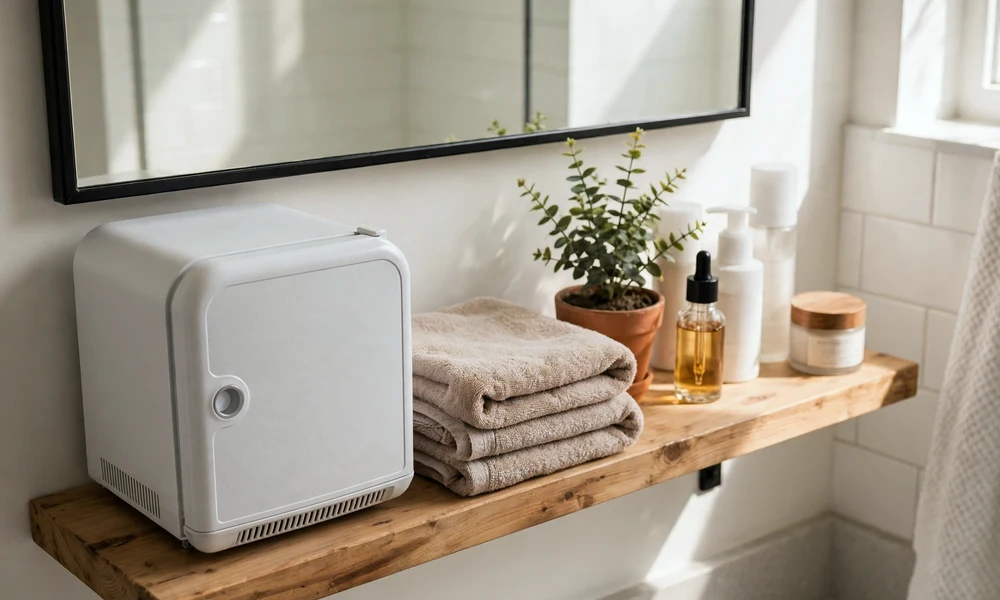
The best place is where you do your skincare: on the vanity, on a bathroom shelf, or on a dressing table. That way the cold products are within reach when you need them, and you are more likely to use them every day. Keep the fridge out of direct sunlight, because sun warms the outside and makes the cooling unit work harder, and leave a little space around it so air can move. Do not push it hard against a wall or into a closed cupboard, because the fan needs air to do its job.
Our Picks by Need
For a small routine, pick the smallest fridge that fits your daily products and nothing more. A 4-litre model with a removable shelf will hold your serum, eye cream, moisturiser, a few sheet masks and a roller, and it will sit happily on a vanity without crowding out everything else. Choose a quiet model with a simple dial, and do not pay extra for features you will never use, such as a warming mode or a built-in mirror.
For a bigger collection, pick a model around 10 litres with adjustable shelves and a door that holds small bottles. The extra space means you can keep your whole routine cold, including the products you only use a few times a week, without stacking jars on top of each other. A glass door helps here, because you can see what is inside without opening it and letting the cold out, but only if the fridge sits out of direct sunlight.
Looking After Your Skincare Fridge
A skincare fridge needs very little care, but it does need some. Wipe the inside with a damp cloth once a week, and dry it properly before you put products back, because damp shelves encourage mould. Check the door seal now and then, and wipe it clean so it closes tightly. If the fridge starts to smell, take everything out, wipe it with a little baking soda and water, and leave the door open for an hour to air out.
Mistakes to Avoid
The most common mistake is buying too big. A large fridge with three products rattling around inside is a waste of money and space, and it costs more to run than a small one. Buy for the routine you actually have, not the collection you imagine having one day. The second mistake is buying on colour alone. A pretty pink fridge that is noisy, warm or badly sized is a bad fridge, however good it looks in a photograph.
The third mistake is treating the fridge as a cure-all. Cold will not fix a product that has gone off, it will not make a cheap cream work like an expensive one, and it will not replace a good routine. It is a small improvement to products that are already good, and it is most noticeable for eye creams, sheet masks and vitamin C serums. If you buy a fridge expecting a transformation, you will be disappointed. If you buy one expecting cold products every morning, you will be happy.
Skincare Fridges and the Rest of Your Routine
A skincare fridge sits in the middle of a morning routine that includes other small tools, and it works best when the rest of the routine is organised too. A bathroom that is tidy and well lit makes the routine easier, and a small set of reliable tools, kept in the same place every day, means you never have to hunt for what you need. Our guide to the best bathroom scales of 2026 covers another small bathroom tool that, like a skincare fridge, works best when it lives in the same spot and gets used every day. The same rule applies to both: pick one that suits your space, keep it where you use it, and let the habit do the work.
It is also worth thinking about what else in your home keeps things at the right temperature. A kitchen fridge keeps food fresh, a wine fridge keeps bottles at the right temperature for drinking, and a skincare fridge keeps your products at the right temperature for your skin. Each one does a narrow job well, and none of them is a substitute for the others. Our guide to the best refrigerators of 2026 covers the full-size models, which are built for food and for a family, not for a vanity shelf. The skincare fridge is the smallest member of that family, and the one that lives closest to you.
The Bottom Line
The best skincare fridge of 2026 is the one that fits your routine, your space and your budget. For most people, that means a quiet 4-litre model with a removable shelf, a simple temperature control and a door that closes firmly. If your collection is bigger, go up to around 10 litres with adjustable shelves. If you share a bathroom, choose a solid door and sturdy shelves. Keep serums, eye creams, sheet masks and rollers inside, leave oils, balms, powders and sunscreen out, and put the fridge where you do your routine, out of direct sunlight, with room for air to move.
Buy it for the cold, not for the colour. Check the temperature range, the noise level and the shelf layout before you buy, and read reviews from people who used it in a bedroom in summer. Then fill it with the products you use every day, wipe it out once a week, and enjoy the small pleasure of cold skincare every morning. It is a simple tool, and when it is the right size and in the right place, it does its simple job very well.