
You land after a long flight, your phone is at four percent, and the socket on the wall looks nothing like the plug in your hand. That is the moment a travel adapter either saves your evening or ruins it. A good adapter turns a foreign socket into a non-event: it slides in firmly, stays put, and charges everything you own at full speed.
This comparison puts the best travel adapters of 2026 head to head against the worst, judging them the way you would actually use them on a real trip: plug coverage across the countries you visit, charging speed for phones and laptops, how firmly they sit in loose hotel sockets, and whether they are safe to leave plugged in overnight. The best travel adapters of 2026 show what a good adapter looks like when it is chosen carefully, and this guide holds every adapter to that standard, then shows exactly where the bad ones fail.
Key Takeaways
- A good travel adapter covers every country on your itinerary, not just your first stop, and its plug pins lock firmly into place instead of sliding back under pressure.
- Look for at least one fast USB-C port of 30W or more, so the same adapter can charge a phone quickly and keep a laptop topped up.
- An adapter only changes the shape of the plug, it does not change voltage, so your devices must be dual-voltage before you plug them in abroad.
- Cheap adapters usually fail at the socket: loose pins, wobbly bodies, and no grip, so they fall out of the wall and stop charging halfway through the night.
- Buy your adapter before you fly, because airport and hotel adapters cost several times more and are often the worst of the lot.
How We Judged the Best and the Worst
We judged travel adapters on the things that decide whether a trip runs smoothly or falls apart at the worst possible moment. Plug coverage came first, because an adapter that does not fit the country you are in is not an adapter, it is a paperweight. Good adapters cover the main plug types used across Europe, North America, Asia, and Australasia, with pins that slide out and lock with a firm click, and a body that is clearly marked so you can tell at a glance which setting you have chosen.
Next we looked at charging, because a modern adapter is really a charger as well. The best models include at least one fast USB-C port, and the strongest add a second USB-C port and a USB-A port, so one small cube can charge a phone, a pair of earbuds, and a laptop at the same time.
Finally, we tested fit and safety in real sockets, including the loose, worn sockets you find in old hotels, where a heavy adapter can slowly slide out of the wall under its own weight. The best adapters are compact and balanced, so they sit flat against the socket and stay put, and they include safety shutters, surge protection, and a fuse, so a dodgy hotel supply does not pass straight through to your devices.
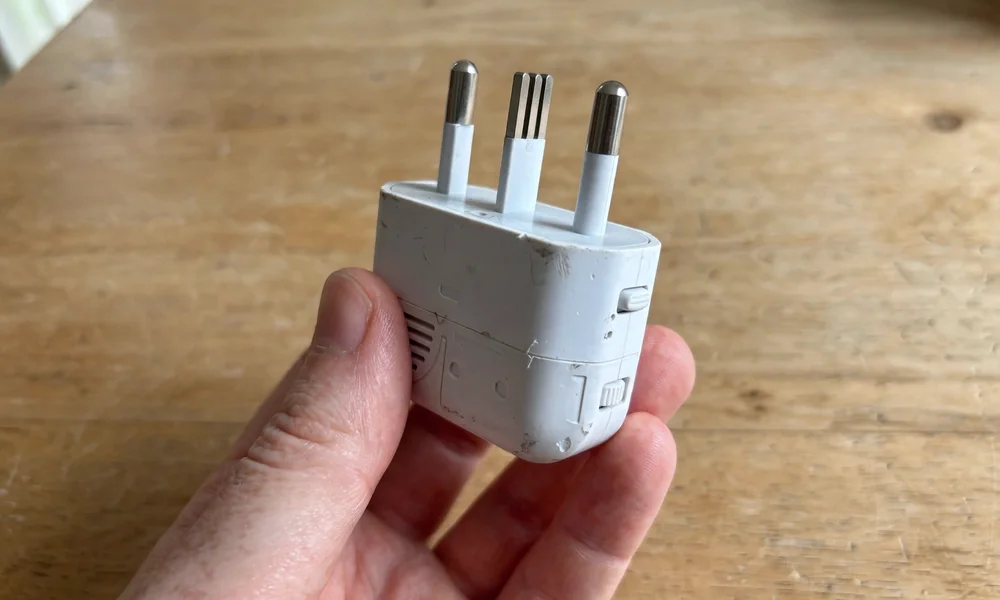
The Best Travel Adapters of 2026
The best travel adapters share a simple quality: they are built around the realities of travel, not the look of the device in a product photo. Their makers spend the money where it shows up on a trip, on solid plug mechanisms, honest charging power, and a body that stays in the socket. You pay a little more, but the adapter lasts for years of trips instead of one holiday.
Plug Coverage That Follows Your Itinerary
On the best adapters, every plug type you are likely to meet is covered, and switching between them is a simple, mechanical action that locks with a satisfying click. The pins slide out smoothly, they lock firmly in the extended position, and they do not retract when you push the adapter into a tight socket.
A good universal adapter handles the round pins of continental Europe, the three square pins of the United Kingdom and Ireland, the flat blades of North America and Japan, and the angled pins of Australia and New Zealand, all in one compact cube. If your trip is to one country only, a simple single-region adapter can be lighter and cheaper, and our guide to the best travel adapters for Europe in 2026 covers that choice in detail, but for most travellers, the universal adapter is the one that earns its place in the bag.
Fast Charging That Keeps Up With Your Devices
The best adapters are really fast chargers with a plug adapter built in, and the difference shows the moment you plug in a laptop. The best models deliver that power honestly, with the wattage printed clearly on the body, and they share it sensibly when several devices are plugged in, rather than dropping everything to a trickle.
Port choice matters too. Two USB-C ports and one USB-A port is the sweet spot for most travellers in 2026, because it covers a laptop, a phone, and an older device or a pair of earbuds at the same time, without needing a second charger.
A Body That Stays in the Socket
The best adapters are compact, light, and balanced, so they sit flat against the wall and stay put, even in a loose socket, even with two cables hanging from them. That balance is a matter of design: the weight sits close to the wall, the plug pins are the right length, and the body is no bigger than it needs to be. It is the difference between waking up to a fully charged phone and waking up to an adapter on the floor and a dead battery.

The Worst Travel Adapters of 2026
The worst travel adapters look convincing in a product photo. They promise the whole world in one small cube, they cost less than a coffee, and they arrive in a cheerful box. Then you use one abroad, and the problems start. The pins do not lock, the body falls out of the socket, the charging is slow, and the adapter gets hot. By the end of the trip, you are buying a replacement at the airport for five times the price.
Loose Pins and Bodies That Fall Out
Cheap adapters usually fail at the socket, and the failure is mechanical. The sliding pins are held in place by a weak spring or a flimsy plastic catch, so they slide back into the body the moment you push the adapter into a tight socket, and you end up holding the adapter in with one hand while you try to plug in a cable with the other. The pins themselves are often too short or too thin, so they make poor contact, and the connection flickers every time the cable moves.
Slow Charging and Overheating
The charging on cheap adapters is where the bargain really falls apart. The USB ports are often labelled with optimistic numbers that the adapter cannot deliver, and the real output is a fraction of what is printed on the box. A phone that should fast-charge in an hour takes three, a laptop barely holds its charge while you work, and plugging in a second device slows everything to a crawl. If you are relying on that adapter to keep your devices alive on a travel day, that slowness is not an inconvenience, it is a missed connection, a lost map, and a dead phone in a foreign city.
A few cheap adapters have no fuse and no surge protection at all, so a spike in the hotel supply passes straight through to whatever is plugged in. That is a risk no saving is worth taking, and it is the reason the cheapest adapters are the most expensive ones in the long run.
Coverage That Misses the Country You Are In
The other classic failure of cheap adapters is coverage. They are often sold as universal, but the word is doing a lot of work: they cover the most common plug types and quietly miss the rest. The United Kingdom, with its three square pins, is a frequent omission, as is Australia, and some cheap sets include a plug type you will never use while missing the one you need. The result is an adapter that works perfectly in the first country on your trip and is useless in the second, which is exactly when you discover the gap, in a hotel room, late at night, with a dying phone.
For the power bank that pairs with your adapter on long travel days, our guide to the best and worst portable chargers of 2026 covers the same trade-off between honest power ratings and cheap promises.
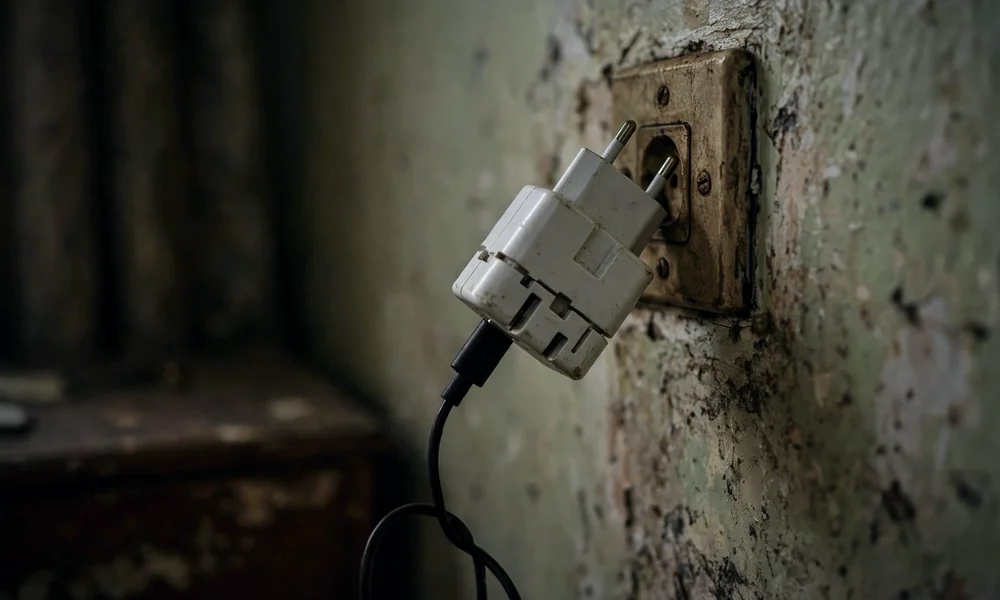
Best vs Worst Side by Side
Put a good adapter and a bad adapter side by side and the difference is obvious before you plug either of them in. The good one feels solid and compact, its pins slide out and lock with a click, and its ports are clearly marked with honest wattages. The bad one feels light and rattly, its pins slide back under pressure, and its labelling is vague or optimistic. Plug them both into the same socket and the gap widens: the good adapter sits flat and stays put, charging at full speed, while the bad one wobbles, charges slowly, and starts to warm up.
The Verdict
The verdict is clear: buy one good universal travel adapter, and buy it before you fly. Look for plug pins that lock firmly, at least one USB-C port of 30W or more, a compact body that sits flat against the socket, and safety features you can verify: shutters, a fuse, and surge protection. Check that it covers every country on your itinerary, not just the first stop, and check that your devices are dual-voltage, because an adapter changes the shape of the plug, not the voltage behind it.
The best travel adapters are not a luxury, they are the cheapest way to make sure your trip stays connected, and once you have used a good one, you will never trust a bargain adapter again.
Who Each Is For
Good universal adapters are for anyone who travels abroad more than once or twice a year, and especially for multi-country travellers, business travellers who need a laptop charged every night, and anyone who carries more than one device. They are also ideal for families, because one adapter with three ports can charge the whole family’s phones from a single socket, which matters in hotel rooms that often have only one socket free.
And if you never travel abroad at all, you do not need a travel adapter, you need a good fast charger at home, which is a different purchase entirely.
Whichever you choose, the rule is the same: the adapter should disappear into your routine, sitting quietly in the socket, charging everything you own, and never making you think about it. Choose the one that disappears, and your travels will stay charged, connected, and calm.


