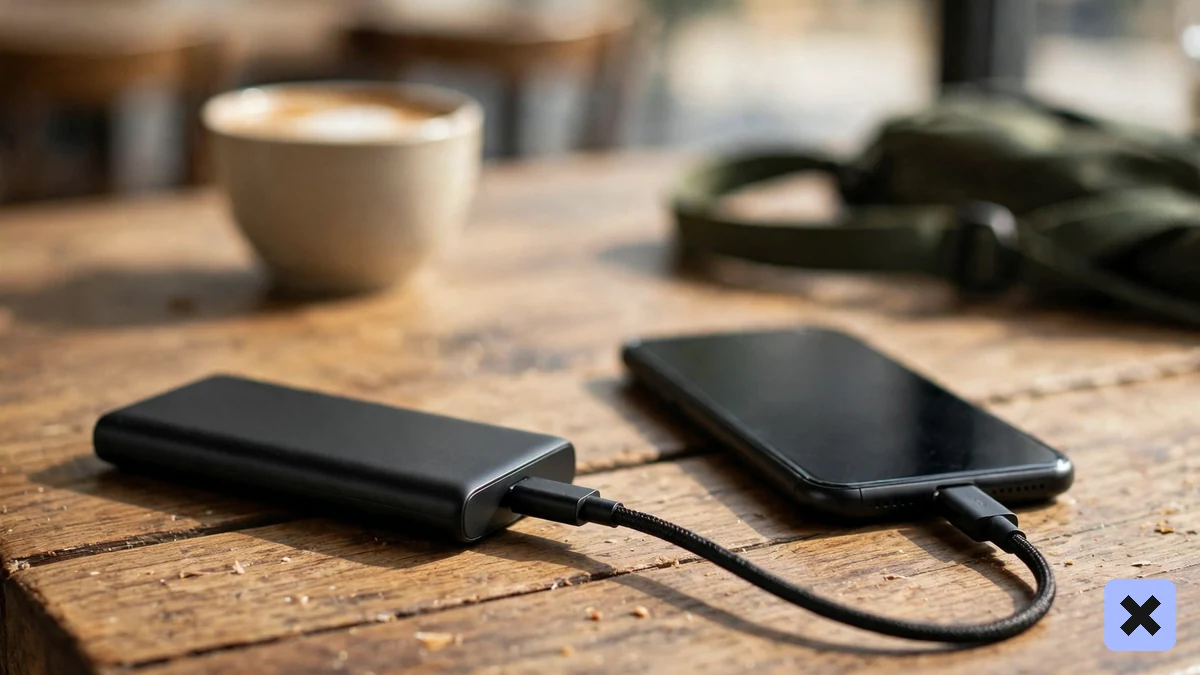
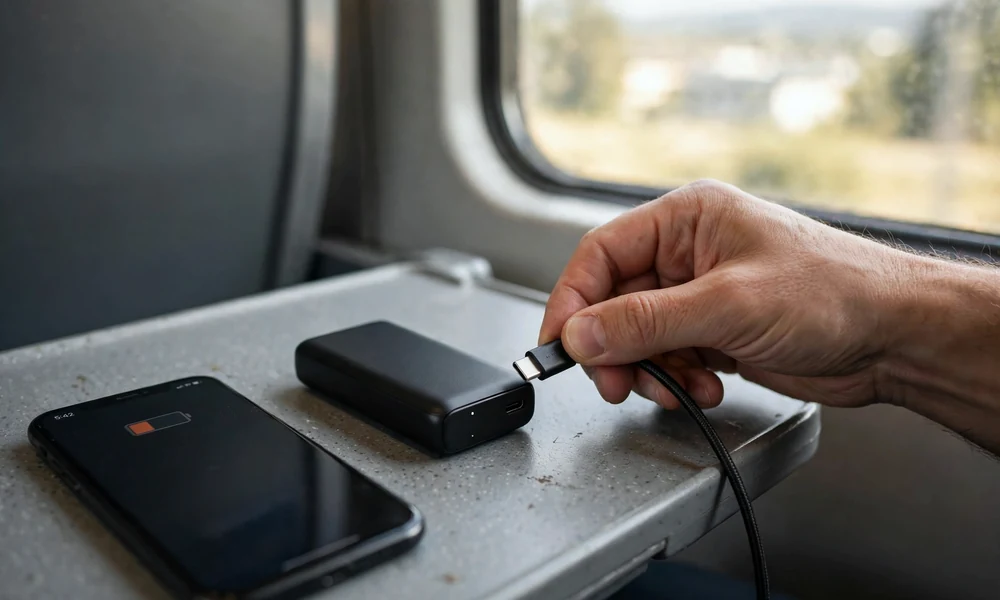
A portable charger is the one gadget you only notice when it fails. Your phone hits five percent on a train, in an airport or halfway through a long day, and the little brick in your bag is supposed to save you. The best portable chargers of 2026 do exactly that: they charge fast, hold their charge for weeks, and survive life in a bag. The worst promise the same and deliver almost nothing, leaving you with a dead phone and a warm, useless brick. This guide puts the best and the worst head to head, so you can tell them apart before you pay.
We judged every charger on the same five things: how much power it really delivers, how fast it charges, how long it holds a charge in storage, how well it is built, and how it behaves over months of use. The winners pass all five. The losers fail at least two. If you already own a portable charger and wonder whether it is holding you back, the worst-side checklist below will tell you in five minutes.
Key Takeaways
- The best portable chargers deliver close to their labelled capacity; the worst often deliver half of it.
- Look for at least 20W through USB-C Power Delivery for a modern phone.
- A 10,000mAh charger gives most phones about two full charges; 20,000mAh covers tablets and multi-day trips.
- Swelling, overheating and loose ports are faults, not quirks: stop using a charger that shows them.
- A good charger should still work well after a year in your bag; a bad one usually shows its faults in the first month.
How We Judge a Portable Charger
A portable charger has one job: to move stored energy into your devices, quickly and safely. Capacity is the first test, and it is where the exaggeration usually starts. A real 10,000mAh charger holds roughly enough energy for two full phone charges, once you allow for energy lost as heat. A real 20,000mAh charger is noticeably heavier and thicker, because that much energy needs that much battery. If a charger is small, light and cheap yet claims a capacity that should belong to a much bigger pack, the label is lying.
Speed is the second test. Modern phones expect at least 20W through USB-C Power Delivery, which can take a phone from empty to about half full in roughly half an hour. A charger that still delivers only 5W or 10W in 2026 feeds a modern phone so slowly that the phone can use almost as much power as the charger supplies, especially if the screen is on or maps are running.
Build quality is third. A charger lives in a bag, gets dropped, and gets sat on. The best have a solid shell, ports that grip a cable firmly, and a button that works every time. The worst have loose ports and a cable that frays at the strain relief within weeks. Safety is fourth: a good charger stays cool in use. If a charger gets hot, swells, smells strange or has a loose port, it is not a minor fault. Stop using it.
The Best Side: What the Best Portable Chargers Get Right
The best portable chargers share a simple quality: they work when you need them. You plug in your phone, the charging icon appears, and the percentage climbs at the speed you expect. There is no wiggling the cable, no wondering whether the charger itself is charged, no heat building up in your pocket. The best models do this on every kind of trip, from a commute to a long-haul flight, and they do it for years rather than months.
What sets them apart is honesty. A good charger delivers close to the capacity on its label, sustains the wattage it advertises, and recharges itself overnight rather than taking all day. The ports are tight, the shell is solid, and the battery holds its charge in storage, so a charger you last used a month ago is still ready when you grab it. These are not glamorous features, but they are the difference between a tool you trust and one you stop carrying.
Best for Everyday Carry: Compact 10,000mAh Chargers
For daily use, the sweet spot is a compact 10,000mAh charger with 20W USB-C Power Delivery. It is small enough to slip into a jacket pocket, light enough to carry every day, and powerful enough to recharge a phone about twice. The best of these are barely bigger than a phone, weigh around 200 grams, and recharge themselves in a few hours through the same USB-C port, so one cable serves everything. If you only buy one portable charger, buy this kind. For the full picture, our guide to the best portable chargers of 2026 ranks the leading models by size, speed and price.
Best for Travel: 20,000mAh Multi-Device Chargers
Travel asks more of a charger. You may need to top up a phone, a tablet and a pair of earbuds in one day, with no wall socket in sight. The best travel chargers hold 20,000mAh, offer two or three ports, and deliver at least 20W to the main port while a second device charges alongside. They are heavier, around 400 grams, but that weight buys real capacity: enough for a phone several times over, or a tablet once. Keep capacity at or below 27,000mAh so the charger stays within airline carry-on rules. Our guide to the best power banks of 2026 covers the larger end of this market in detail, including laptop-capable models that the pocket-sized chargers in this guide do not try to match.
Best for Convenience: Magnetic and Built-In Cable Chargers
Some chargers trade a little capacity for a lot of convenience. Magnetic chargers snap onto the back of a phone and charge without a cable, which is ideal for a pocket or a small bag. Built-in cable chargers have a short USB-C cable that folds away into the body, so you never have to remember a separate lead. The best of both kinds are well made: the magnet is strong enough to hold through a walk, and the built-in cable is thick and well anchored. The convenience is real, but only when the charger is well made. A weak magnet or a thin built-in cable turns the whole charger into a waste of money, as the worst-side section below explains.
The Worst Side: What the Worst Portable Chargers Get Wrong
The worst portable chargers do not look bad in a product photo. They look neat, light and modern, with a clean shell and a reassuring row of little lights. The faults show up in use. The capacity is half what the label claims. The charging speed drops the moment the battery warms up. The port loosens until the cable falls out. None of this is obvious in the shop. All of it becomes obvious on the first long day you actually need the charger.
The worst models also fail quietly. They do not stop working all at once. They lose a little capacity each month, charge a little slower each trip, and hold a little less charge in storage, until one day they manage a single partial phone charge and then die. If your charger used to give you two full charges and now gives you one, it is the battery inside the charger wearing out, usually because it was a cheap cell to begin with.

Worst Fault 1: Inflated Capacity Claims
Inflated capacity is the most common fault in cheap chargers, and the easiest to fall for. A charger that is small, light and cheap yet claims a capacity that should belong to a much bigger pack is almost certainly exaggerating. You discover the truth on your first long day, when it manages one partial phone charge and then dies, even though the label promised three. A real 10,000mAh charger should manage about two full charges; if yours manages one, the label is fiction. For the full catalogue of chargers to avoid, our guide to the worst portable chargers of 2026 lists the failure patterns in detail.
Worst Fault 2: Slow Charging and Shared Ports
Slow charging is the second great fault. A charger that delivers only 5W or 10W was acceptable years ago, when phones had smaller batteries and nobody expected a quick top-up. In 2026 it is a trap. A 5W charger feeds a modern phone so slowly that the phone can use almost as much power as the charger supplies, especially if the screen is on. Shared ports make it worse: a charger that advertises 20W in total may deliver only 10W to each device when two are plugged in, and the label never says so.
Worst Fault 3: Weak Magnets, Built-In Cables and Swollen Batteries
The third fault is a group of design shortcuts. A magnetic charger with a weak magnet slides off the phone the moment you move, so it only works on a flat table. A built-in cable that is thin or badly anchored frays at the base, and when it fails, the whole charger is dead, because the cable cannot be replaced. Worst of all is a battery that swells, gets hot or smells chemical. That is a safety fault, not a performance fault. Take the charger out of service at once, do not charge it, and do not leave it in a bag or a car. A good charger should never do any of these things, and a charger that does them was badly made from the start.
Best vs Worst: Head to Head
Put the two sides together and the difference is not about size or looks. It is about honesty. A good charger delivers what its label promises, at the speed it promises, for as long as it promises. A bad one promises everything and delivers a fraction of it. That gap is what costs you: a missed call because your phone died, a missed map because the charger gave up halfway, a missed flight connection because the one device you counted on was the one that failed.
The comparison comes down to five rows. Capacity: close to the label against half the label. Speed: a sustained 20W or more against a 5W trickle. Ports: tight and honest against loose and shared. Storage: holding a charge for weeks against going flat in days. And safety: staying cool against swelling and overheating. If a charger you own fails two or more of these rows, it belongs on the worst side, whatever it cost.
Who Each Side Is For
The best portable chargers are for anyone who leaves the house with a phone. Commuters should choose a compact 10,000mAh model with 20W USB-C. Travellers should choose a 20,000mAh model with two or three ports, and keep it under the airline limit.
The worst portable chargers are for nobody, but they end up in the hands of people who buy on price alone, or who grab the cheapest option at a market stall or a petrol station. If that is you, the honest advice is to pause and spend a little more on a model from a maker with a real reputation, with a USB-C port, a clear capacity rating and a warranty worth something.

The Verdict
The verdict is clear. The best portable chargers of 2026 win on every measure that matters: honest capacity, fast sustained charging, solid build and safe batteries. The worst lose on all of them, and they lose at the worst possible moment, when your phone is dying and there is no socket in sight. If you rely on your phone, buy the best charger you can afford, match the capacity to your day, and test it in its first week. A charger you trust is one of the cheapest pieces of peace of mind you can own.