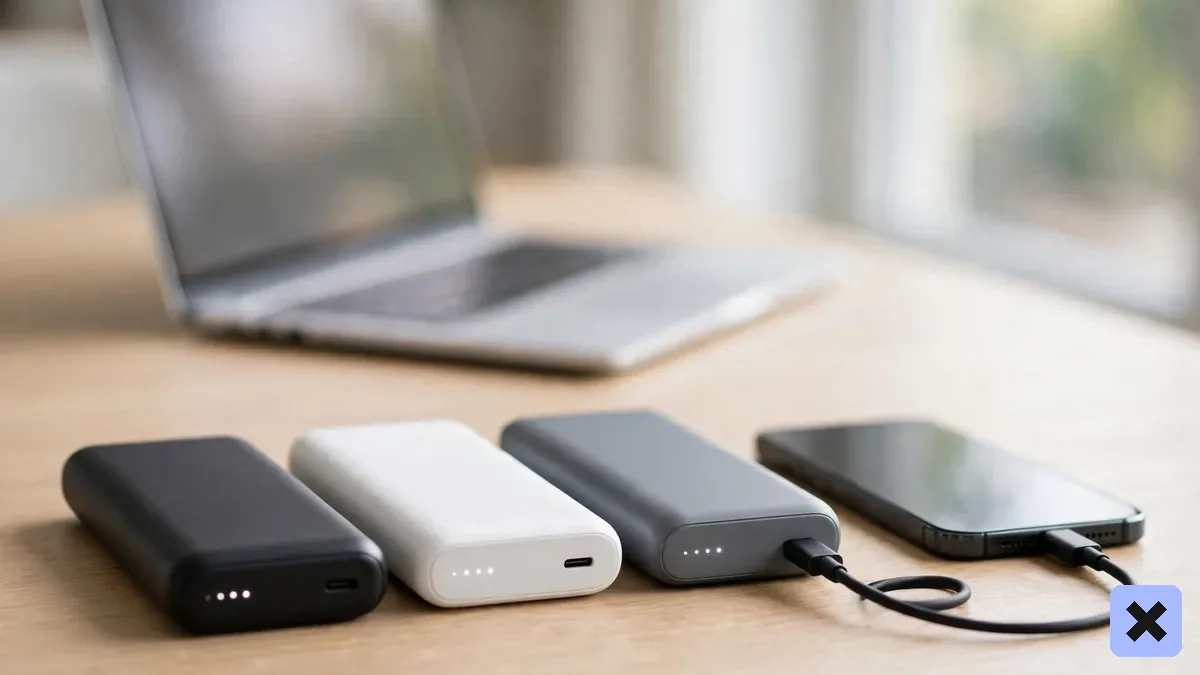
A dead battery used to mean finding a wall socket and waiting. The best power banks of 2026 have changed that bargain completely. A modern power bank is no longer just a brick that slowly refills a phone; the newest models charge laptops, top up tablets and earbuds at the same time, and do it fast enough that a coffee break becomes a full recharge. The difference between a good power bank and a great one now comes down to watts, not just milliamp-hours.
That shift matters because our devices have grown hungrier. Phones charge at 25W or more, laptops expect 45W to 100W over USB-C, and tablets and handheld consoles sit somewhere in between. A power bank that was perfect three years ago may now charge your phone at half speed and refuse to wake your laptop at all. Picking the right power bank in 2026 means matching its output to the devices you carry, not just buying the biggest number on the box.
This guide ranks the best power banks of 2026 by wattage class and real use, from pocket-sized phone rescuers to laptop-capable bricks, so you can match the bank to your devices instead of guessing.
Key Takeaways
- Match watts to your hungriest device: 20W is enough for phones, 45W or more is needed for most laptops.
- A 10,000mAh power bank gives most phones about two full charges, while 20,000mAh or more covers tablets, laptops, and multi-day trips.
- USB-C Power Delivery is the standard that matters in 2026; avoid power banks that still rely on USB-A or Micro-USB.
- Pass-through charging lets a power bank charge your devices while it recharges itself, which is ideal for overnight hotel stays.
- Keep capacity at or below 27,000mAh so the power bank stays within airline carry-on rules.
What Makes a Great Power Bank in 2026
The best power banks of 2026 share a short list of qualities, and output power sits at the top of it. A bank that delivers 20W charges a modern phone to half full in about half an hour, while a 65W or 100W model can keep a laptop running through a full work session. The wattage on the box is the ceiling, not a promise: a two-port bank often splits its output when both ports are in use. Check the per-port output, not just the total.
Capacity is the second number that matters, measured in milliamp-hours, or mAh. A 10,000mAh bank recharges most phones about twice, while a 20,000mAh model handles a phone several times over or a tablet once. Conversion losses mean roughly 85 to 90 percent of the rated capacity reaches your device. Watt-hours, or Wh, are the more honest measure for laptops, because they account for voltage as well as capacity. Our guide to the best portable chargers of 2026 covers the pocket-sized end of this market in detail, while this guide covers the full power bank range, including laptop-class models.
The Best Power Banks of 2026
The power bank market splits cleanly by wattage, and the right pick depends on the most demanding device you own.
Best Overall Power Bank: 10,000mAh, 20W USB-C PD
The best overall power bank in 2026 is a 10,000mAh model with at least 20W USB-C Power Delivery output and two ports. It fits in a jacket pocket, charges a phone twice, and recharges itself overnight without fuss. This is the sweet spot for most people: enough capacity for a heavy day, fast enough to matter, and light enough to carry every day.
Best Laptop Power Bank: 20,000mAh, 65W or Higher
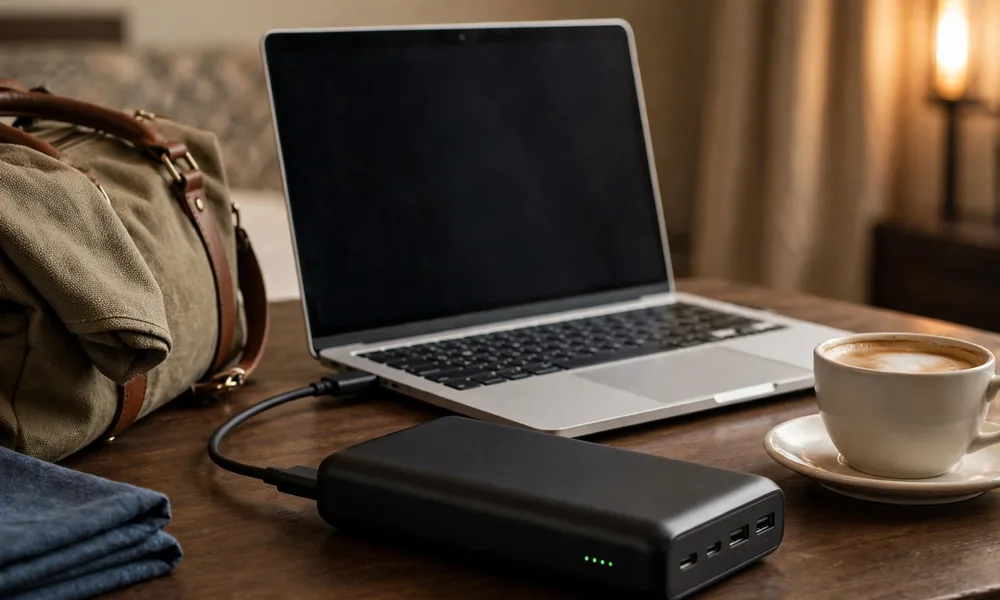
The best laptop power bank is a 20,000mAh model with 65W or higher USB-C PD output. It charges a slim laptop to about half full in an hour and keeps it running through a long meeting or flight. These banks are heavier, usually around 350 to 450 grams, but that weight buys real freedom from wall sockets. Choose a model with at least two ports, and check that the 65W output is available on a single port rather than split across both.
Best Compact Power Bank: 5,000mAh Slim
The best compact power bank is a slim 5,000mAh model thin enough to slip into a shirt pocket or a small bag. It holds roughly one full phone charge, which is enough to rescue a dying battery and get you through the evening. Compact banks shine as everyday carry, because a small bank you always have beats a big bank you left at home.
Best Wireless Power Bank: Magnetic Charging
The best wireless power bank snaps onto the back of a compatible phone and charges it without a cable, usually at 7.5W to 15W. Wireless charging is slower than a cable, so magnetic banks are best as a top-up tool rather than a fast rescue. The convenience is real: no cable to untangle, and the phone stays usable while it charges. Many magnetic banks also include a USB-C port for a second device. Our guide to the best wireless chargers of 2026 covers desk and bedside options that pair well with a magnetic travel bank.
Best Rugged Power Bank: Outdoor and Travel
The best rugged power bank is built for the outdoors, with a tough shell and resistance to dust and splashes. These models suit hikers, campers, and festival-goers who need power far from a socket. Some include a flashlight or a slow solar panel for emergency top-ups, though solar charging is far too slow to rely on as a primary source.
Power Bank Comparison
Capacity, wattage, and size pull in different directions.
| Type | Capacity | Typical Output | Best For |
|---|---|---|---|
| Everyday | 10,000mAh | 20W USB-C PD | Daily carry, two phone charges |
| Laptop-class | 20,000–27,000mAh | 65–100W USB-C PD | Laptops, tablets, work travel |
| Compact | 5,000mAh | 20W USB-C PD | Pocket backup, one full charge |
| Magnetic wireless | 5,000–10,000mAh | 7.5–15W wireless | Cable-free top-ups on the go |
| Rugged outdoor | 10,000–20,000mAh | 20W USB-C PD | Hiking, camping, festivals |
Watts, Watt-Hours, and mAh: Reading the Numbers
Power bank packaging throws three numbers at you, and only one tells you how fast your device charges. Watts measure speed: a 20W bank delivers energy four times faster than an old 5W bank, but only up to the limit your device accepts. A phone that tops out at 25W will not charge faster from a 100W bank, though the 100W bank will still be useful for a laptop.
Milliamp-hours measure capacity, but they hide a detail: a bank rated at 10,000mAh at 3.7 volts holds about 37 watt-hours of energy. Watt-hours are the number airlines care about, and the honest way to compare banks of different voltages. A 20,000mAh bank holds roughly 74Wh, comfortably under the 100Wh airline limit.
Recharge speed matters too, and it is easy to overlook. A 20,000mAh bank with a slow 10W input can take eight hours or more to refill, while a model with 30W or 45W input recharges in about three hours. Pass-through charging lets the bank charge your phone while the bank itself charges from the wall, turning a hotel nightstand into a single charging station.
How to Pick the Right Power Bank for Your Devices
Start with your devices, not with the power bank. List everything you carry that charges over USB, and buy for the hungriest one.
For Phones Only
A 10,000mAh bank with 20W USB-C PD covers almost every phone-only user. It delivers about two full charges, fits in a pocket, and costs far less than a laptop-class model. Pairing a good power bank with the best wireless earbuds of 2026 makes a complete travel audio setup that runs for days without a wall socket, since earbuds sip power and can be topped up many times from even a small bank.
For Laptops and Tablets
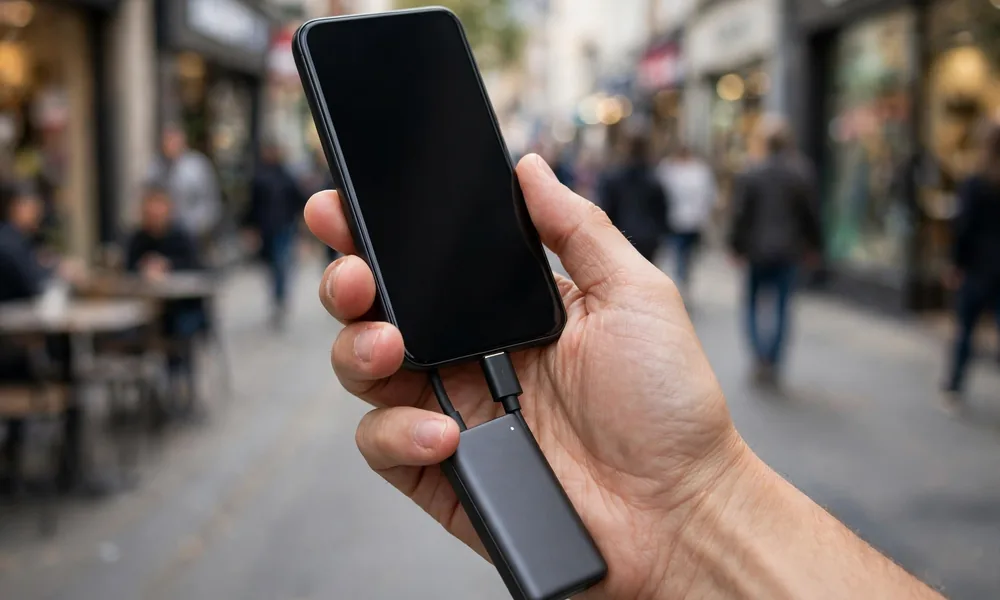
Laptops change the maths completely. Most slim laptops need 45W to charge at a useful speed, and larger models want 65W or 100W. Buy a bank rated at or above your laptop charger wattage, with the full output available on a single USB-C port. A 20,000mAh bank holds enough energy for roughly one full laptop charge, while a 27,000mAh bank stretches that further and still flies without special approval.
For Travel and the Outdoors
Travel banks need to balance capacity, weight, and recharge speed. A 20,000mAh bank with 30W output and 30W input is the practical travel pick: enough energy for two days of phone use, fast enough to matter, and quick to refill overnight. For the outdoors, add a rugged shell and sealed ports, and accept the extra weight.
Power Banks and Air Travel
Power banks belong in your carry-on bag, never in checked luggage. Airlines require lithium batteries to travel in the cabin, and most cap power banks at 100 watt-hours without special approval. That limit covers banks up to about 27,000mAh, so every mainstream model is fine to fly with. Keep your bank easy to reach at security, because some airports ask travellers to remove power banks for screening.
Mistakes to Avoid When Buying a Power Bank
The most common mistake is buying on capacity alone. A huge number on the box means nothing if the bank is slow, heavy, and awkward to carry, and many buyers end up leaving their oversized bank at home. The second mistake is ignoring the ports: a bank with only USB-A output is a poor buy in 2026, when phones, earbuds, and tablets all charge over USB-C. The third is trusting a bargain that seems too good to be true, since very cheap banks often use low-quality cells and lack basic safety protections.

Power Bank Buying Checklist
Run through this checklist before you buy.
- Output matches your hungriest device: 20W for phones, 45W or more for laptops.
- Capacity matches your use: 5,000mAh for emergencies, 10,000mAh for daily carry, 20,000mAh or more for travel and laptops.
- USB-C input and output with Power Delivery, so one cable handles the bank and your devices.
- At least two ports, so a phone and a second device can charge at the same time.
- Pass-through charging, so the bank charges your devices while it recharges itself overnight.
- Certified cells with overcharge, short-circuit, and temperature protection, from a brand you can actually contact.
Frequently Asked Questions
How many times will a 10,000mAh power bank charge my phone?
About twice for most modern phones. A phone battery holds roughly 4,000 to 5,000mAh, and conversion losses mean about 85 to 90 percent of the bank rated capacity reaches your device.
Can a power bank charge a laptop?
Yes, if it delivers enough watts over USB-C. Most slim laptops need 45W, and larger models need 65W or 100W. A 20W phone bank will not charge a laptop at a useful speed. Check your laptop charger wattage and match it.
What is the difference between a power bank and a portable charger?
Very little: the terms describe the same device. Portable charger is the more common name for small, phone-sized models, while power bank is often used for larger, higher-wattage models.
Are power banks allowed on planes?
Yes, in carry-on luggage only. Most airlines cap power banks at 100 watt-hours without special approval, which covers models up to about 27,000mAh.
How long does a power bank take to recharge?
It depends on its input wattage. A 10,000mAh bank with 20W input refills in about two hours, while a 20,000mAh bank with 30W input takes around three hours.
Do power banks lose capacity over time?
Yes, slowly. Lithium cells typically keep about 80 percent of their capacity after 500 full charge cycles, which for most people means several years of regular use. Heat is the main enemy: avoid leaving a power bank in a hot car or in direct sunlight.
The Bottom Line
The best power bank of 2026 is the one matched to your hungriest device. For most people, that is a 10,000mAh bank with 20W USB-C PD: pocketable, fast, and cheap enough to own without thinking twice. If a laptop travels with you, step up to a 20,000mAh bank with 65W or more. Buy for watts first, capacity second.


