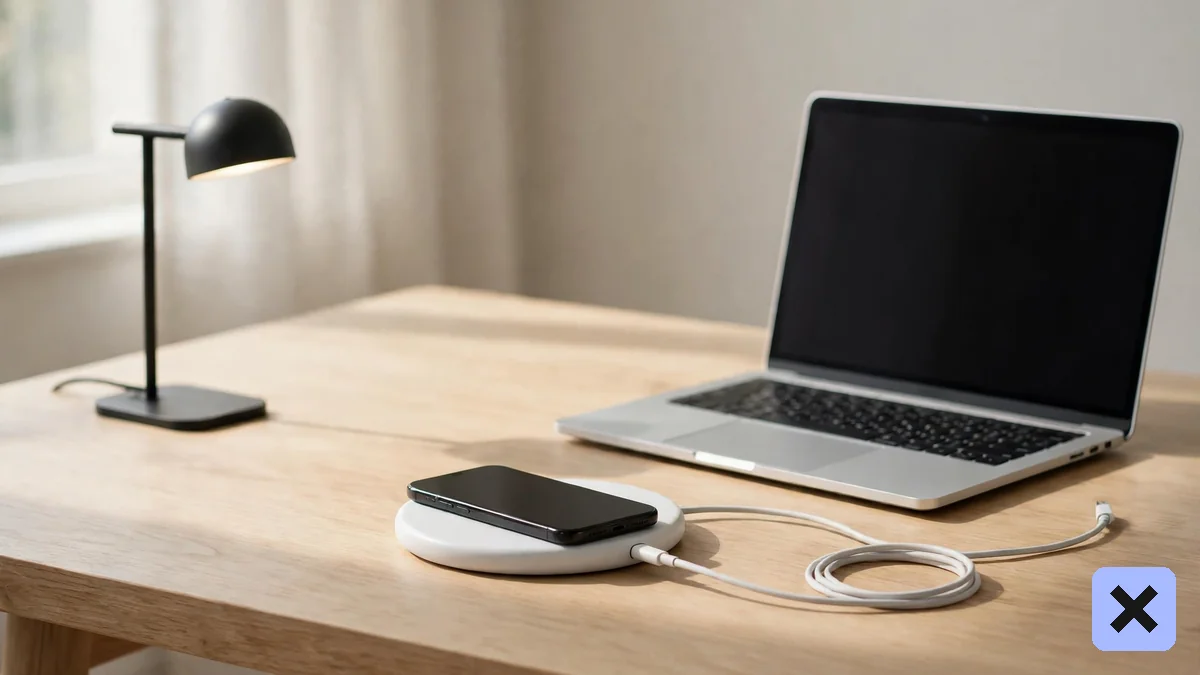
The best wireless chargers 2026 offer have finally caught up with the promise wireless charging made years ago. Charging is faster, cases get in the way less often, and the best pads and stands now work quietly in the background instead of demanding that you line your phone up perfectly every time. If you have ever woken up to a phone that barely charged overnight because it slipped a few millimetres off the coil, you know why choosing the right charger matters.
This guide looks at what actually makes a wireless charger worth buying in 2026, from charging speed and magnetic alignment to the design details that decide whether it becomes part of your daily routine. We cover single pads, magnetic chargers, stands, multi-device stations and travel chargers.
Every charger type below has a clear strength and a clear trade-off, and the right choice depends on your phone, your setup, and whether you also charge a watch or earbuds. Read the comparison table first, then use the sections below to narrow the list down.
Key takeaways
- Choose a charger that matches your phone: magnetic chargers suit recent iPhones, while Qi2 pads are the safer all-round choice for most Android phones in 2026.
- Real charging speed depends on the adapter, the case and the alignment, not just the wattage printed on the box.
- A 3-in-1 station is the best choice if you charge a phone, watch and earbuds every night.
- Stands are better than flat pads for desks, because you can see notifications and take calls while charging.
- For travel, a slim foldable pad beats a bulky station, and a good cable still matters more than a fancy charger.
How Wireless Charging Works in 2026
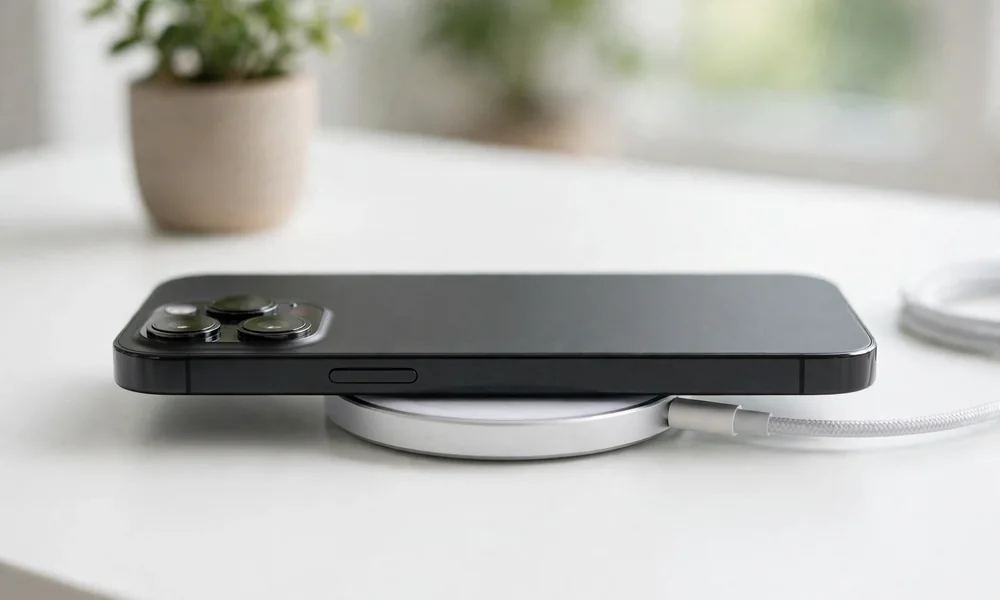
Wireless charging works through induction. A coil inside the charger creates a magnetic field, and a coil inside your phone turns that field back into electrical power. The phone and charger need to sit close together and reasonably well aligned, which is why older flat pads could be fussy. Magnetic alignment changed that, because magnets in the phone and charger snap the two together in exactly the right place.
The Qi2 standard has made this magnetic approach common across brands in 2026, delivering up to 15 watts to compatible phones, which is fast enough for overnight charging and daytime top-ups. Heat is the other factor that matters: wireless charging creates more heat than a cable, and heat slows charging down, so the best chargers ease the power back when the phone gets warm.
Qi, Qi2 and MagSafe Explained
Qi is the original wireless charging standard, and almost every modern phone supports it. Qi2 adds magnetic alignment and faster speeds, and it is the standard to look for in 2026. MagSafe is Apple’s magnetic system for iPhones. If you own an iPhone, a MagSafe or Qi2 magnetic charger is the obvious choice. If you own an Android phone, a Qi2 pad or stand is usually the best fit, and some Android phones need a magnetic case to snap into place.
What to Look For Before You Buy
The best wireless charger for you is the one that fits your phone, your space and your habits. A bedside charger needs a dim status light, a desk charger needs to hold the phone at a readable angle, and a travel charger needs to fold flat.
Charging Speed and the Adapter
Always check what adapter the charger needs. A 15-watt Qi2 charger usually needs a USB-C adapter rated at 20 watts or more, while a 3-in-1 station may need 30 watts or more. If the adapter is not included, factor its cost into the price. Case thickness also affects speed: a slim case is usually fine, but a thick wallet case or a case with a metal plate can block the field.
Design, Size and Noise
A wireless charger sits on your desk or bedside table every day, so its design matters. Look for a stable base that does not slide around and a cable that exits at the back. A charger with a fan may charge faster, but the fan can hum at night, so a silent fanless design is usually better for a bedroom.
The Best Wireless Chargers of 2026
The chargers below cover the main types worth buying in 2026, grouped by the job they do best, because a charger that is perfect on a desk is not always right for a bedside table or a suitcase.
| Charger type | Best for | Typical speed | Devices at once |
|---|---|---|---|
| Single Qi2 pad | Bedside and general use | Up to 15W | 1 |
| Magnetic MagSafe charger | iPhone owners | Up to 15W | 1 |
| Charging stand | Desks and video calls | Up to 15W | 1 |
| 3-in-1 station | Phone, watch and earbuds | Up to 15W per phone | 3 |
| Foldable travel pad | Trips and small bags | Up to 15W | 1 to 2 |
| Budget pad | Spare rooms and guests | 7.5W to 10W | 1 |
Best Overall: A Single Qi2 Pad
A single Qi2 pad is the best wireless charger for most people in 2026. It is simple, reliable and affordable, and the magnetic ring holds the phone in place, so you do not wake up to a dead battery. Look for a non-slip base and a clear status light. A cheap charger can still disappoint, and the worst chargers and cables that fail show how quickly a bargain can turn into a dead phone.
Best for iPhone: A Magnetic Charger
iPhone owners get the most from a magnetic charger, because the magnets line up exactly and hold the phone firmly in place. You can pick the phone up, use it, and set it back down without thinking about alignment. A magnetic puck is small enough to carry in a bag. Check that it supports the full 15-watt MagSafe speed rather than a slower fallback.
Best for Desks: A Charging Stand
A charging stand is the best wireless charger for a desk, because it holds your phone upright where you can see it. Notifications, timers and video calls stay visible while the phone charges, and you can tap the screen without lifting it off. Look for a stable base and a viewing angle that suits your chair height.
Best Multi-Device: A 3-in-1 Station
If you charge a phone, a smartwatch and wireless earbuds every night, a 3-in-1 station is the best wireless charger you can buy. It replaces three cables and three plugs with one tidy station. Check the watch charger carefully, because some stations use a slower one, and check that the earbud spot fits your case.
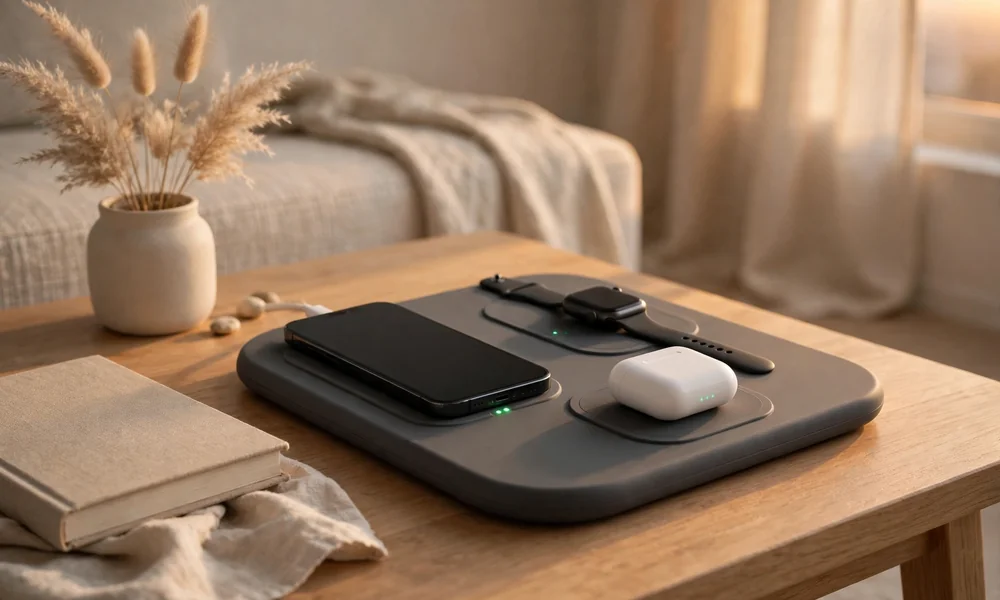
Pair a station with the best wireless earbuds of 2026 and you have a complete routine that needs only one plug, with every device ready each morning.
Best for Travel: A Foldable Pad
A foldable travel pad is the best wireless charger for trips, because it packs flat and weighs almost nothing. Many charge a phone on one side and earbuds or a watch on the other, covering a whole travel kit with one charger and one cable. Check that it works with the adapter you already carry and through your case, and test it at home first. The worst power banks for travel show what happens when portable power is chosen on price alone.
Best Budget: A Simple Pad
A budget wireless charger can be a good buy if you keep your expectations realistic. A simple 10-watt pad is perfectly good for overnight charging or a guest room, where speed does not matter. What you should not compromise on is safety: buy a charger with recognised safety certification, a proper warranty and a brand you can contact.
Single Pad vs Multi-Device Station
The choice between a single pad and a multi-device station comes down to how many devices you charge each night. If you only charge a phone, a single pad is cheaper, smaller and simpler. If you charge a phone, a watch and earbuds, the station wins easily: it costs less than three separate chargers and uses one plug instead of three.
Wireless Charging and Battery Health
Wireless charging is safe for modern phone batteries when it is done well, but heat is the enemy of battery health. A phone that gets hot every night will lose capacity faster than one that charges cool. Most phones and chargers manage heat actively, slowing down when the phone gets warm. Keep the charger out of direct sunlight, remove thick cases overnight, and try a different charger or adapter if your phone regularly feels hot.
Common Mistakes to Avoid
The most common wireless charging mistake is buying the wrong charger for your phone: one made for another brand may charge yours at half speed. The second mistake is using the wrong adapter, because a charger is only as fast as the adapter feeding it. The third is placing the charger somewhere awkward, such as a crowded desk where the phone gets knocked off, or a sunny windowsill where it overheats.

Your Buying Checklist
Use this checklist before you buy any wireless charger, and you will avoid the mistakes that turn a simple purchase into a daily annoyance.
- Confirm the charger supports your phone model at full speed, including Qi2 or MagSafe where it applies.
- Check whether a suitable adapter is included, and what wattage it needs if it is not.
- Test the charger with your everyday case on, not just with a bare phone.
- Choose a stand for a desk and a flat pad or station for a bedside table.
- Look for safety certification, a real warranty and a brand you can contact.
- Measure your space and check the cable length before you order.
Frequently Asked Questions
Are wireless chargers slower than cables?
Yes, wireless charging is usually slower than a good wired charger, but the gap has narrowed a lot. A 15-watt Qi2 charger is fast enough for overnight charging and daytime top-ups, and the convenience of setting your phone down matters more than the minutes a cable would save.
Can I use a wireless charger with a case on?
Most wireless chargers work through slim cases up to about three millimetres thick, and magnetic cases often work better, because the magnets improve alignment. Thick wallet cases, cases with metal plates and cases with pop sockets can block charging, so test your case first.
Does wireless charging damage the battery?
Wireless charging is safe for modern batteries when the charger manages heat well. Heat is the real risk, not wireless charging itself. Choose a charger that keeps your phone cool and avoid ones that leave it hot to the touch.
Do I need a special adapter for a wireless charger?
Often, yes. A 15-watt Qi2 charger usually needs a USB-C adapter rated at 20 watts or more, and a 3-in-1 station may need 30 watts or more. Using an old low-power adapter will slow the charger down.
Can one charger charge a phone, watch and earbuds?
Yes, a 3-in-1 station charges all three at once from a single plug. Check that the watch charger is fast enough and that the earbud spot fits your case, because those are where cheaper stations cut corners.
Is MagSafe the same as Qi2?
They are closely related but not identical. MagSafe is Apple’s magnetic system for iPhones, while Qi2 is the open standard that brings magnetic alignment to many brands. Most MagSafe chargers work with Qi2 phones, but always check the speed each combination delivers.
The Bottom Line
The best wireless chargers 2026 has to offer are the ones that fit your phone, your space and your routine. For most people, a single Qi2 pad or a magnetic charger is the right choice, while a 3-in-1 station is best if you charge a phone, watch and earbuds every night. Buy from a brand you trust, pair it with the right adapter, and place it where you naturally set your phone down.