The best travel adapters in 2026 are small devices that quietly decide whether your trip runs smoothly or falls apart at the worst possible moment. You land after a long flight, your phone is at four percent, and the socket looks nothing like the plugs back home. The right adapter turns that moment into a non-event.
Modern adapters have come a long way from the bulky sets of loose plug pieces that once rattled in suitcases. The strongest models now combine a universal plug system with fast USB-C charging, so one compact cube can power a laptop, a phone, and a pair of earbuds at the same time. Some also include safety shutters and surge protection for old or unpredictable hotel wiring.
This guide cuts through the crowded market to the adapters genuinely worth packing. We compared plug coverage, charging speed, build quality, and safety, then ranked the models that scored best. Whether you are planning a city break or a multi-country tour, you will find an adapter here that fits your trip.
Key takeaways
- The best travel adapters in 2026 combine universal plug coverage with at least one fast USB-C port, so one device charges everything you carry.
- Choose an adapter that covers every country on your itinerary, not just your first stop.
- Check the wattage before you pack a laptop: most compact adapters charge phones well but struggle with larger laptops.
- An adapter only changes the plug shape; it does not convert voltage, so dual-voltage devices are the safest travel companions.
- Buy from a reputable brand, and test your adapter at home before you travel.
Why the Right Travel Adapter Matters
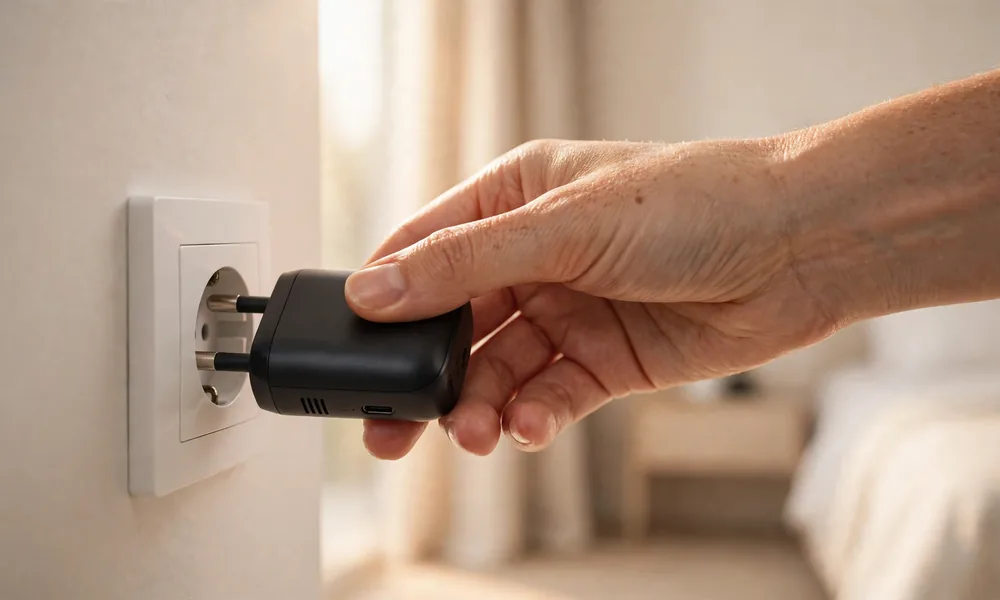
Plug shapes vary far more than most people expect. The flat two-pin plugs used in North America will not fit a British three-pin socket, and neither will fit the round two-pin sockets common across much of Europe. Add in the systems used in Australia, Japan, India, and parts of Africa and South America, and one trip can cross three or four plug standards.
The stakes are higher than a dead phone. A loose-fitting adapter can arc, overheat, or fall out of a worn socket, and a cheap unbranded adapter may lack the safety shutters and fuses that keep a faulty connection from damaging your devices. Travellers who rely on their phone for maps, boarding passes, and bookings have no backup when the battery runs out.
What Makes a Great Travel Adapter
Not every universal adapter is equally good. The best ones share qualities that separate them from the flimsy models sold at airport kiosks.
Plug Coverage That Actually Covers the World
A genuine universal adapter should handle the four main plug families: flat-pin Type A and B in North America and Japan, round-pin Type C and F across Europe, three-pin Type G in the United Kingdom and Ireland, and angled-pin Type I in Australia and New Zealand. The best models add the Type D and M plugs used in parts of India and southern Africa, and the Type L plug used in Italy. Check the supported types against every country on your itinerary, because an adapter that works in Paris but not in London is only half a solution.
Power Output and USB Ports
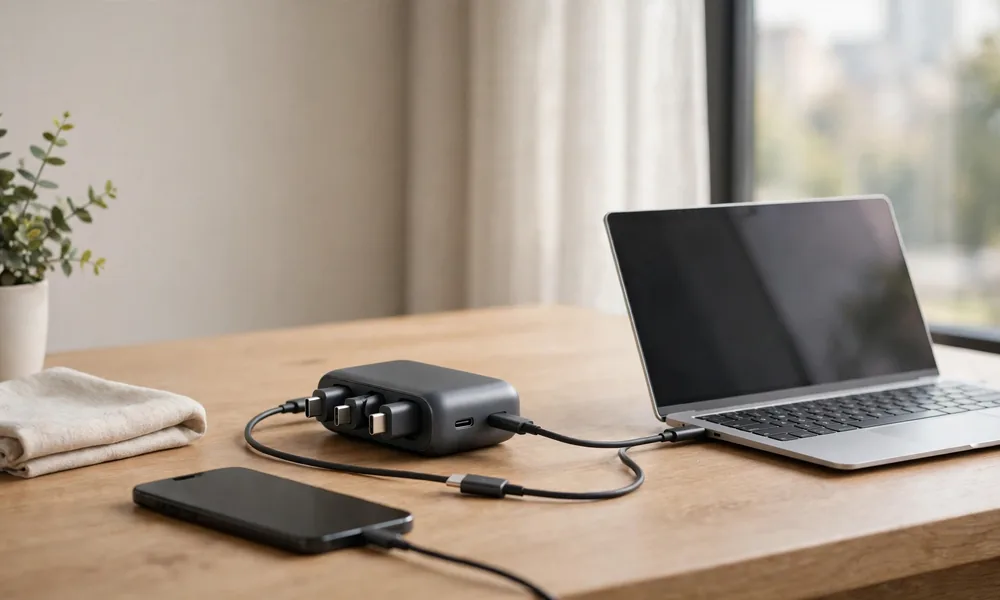
Charging speed is where the best travel adapters of 2026 pull ahead of older models. Look for at least one USB-C port with Power Delivery of 30 watts or more, which charges most phones quickly. A total output of 45 to 65 watts across two or three ports is the sweet spot, letting you charge a phone and a laptop at the same time. For a larger laptop, look for 65 watts or above, and a good portable charger for your devices is a useful backup for long days away from any socket.
Safety Features Worth Paying For
Safety is the feature you never notice until it matters. The best travel adapters include a built-in fuse or surge protection, safety shutters on the socket openings, and a solid locking mechanism that holds the selected plug firmly in place. A well-built adapter should feel firm and precise, with no wobble and no loose parts. If the plug pieces feel rattly or the adapter gets warm during a short test charge at home, do not trust it with your devices abroad.
The Best Travel Adapters of 2026
After comparing plug coverage, charging speed, safety, size, and build quality, five adapters stood out. The table compares them, and the notes explain who each suits best.
| Adapter | Plug types | USB ports | Max output | Weight |
|---|---|---|---|---|
| Universal Pro 65W | A, B, C, F, G, I, D, L | 2x USB-C, 1x USB-A | 65W | 168g |
| Compact Cube 45W | A, B, C, F, G, I | 1x USB-C, 2x USB-A | 45W | 132g |
| Mini Travel 30W | A, B, C, F, G, I | 1x USB-C, 1x USB-A | 30W | 98g |
| Dual Voltage 70W | A, B, C, F, G, I, M | 2x USB-C, 1x USB-A | 70W | 196g |
| Budget Universal 20W | A, B, C, F, G, I | 1x USB-C, 1x USB-A | 20W | 112g |
Best Overall: Universal Pro 65W
The Universal Pro 65W is the adapter to buy for one device that handles almost any trip. It covers eight plug types, delivers 65 watts through two USB-C ports and one USB-A port, and includes surge protection and a replaceable fuse. At 168 grams it is not the lightest model here, but it replaces a laptop charger as well as an adapter. The plug sliders lock firmly into place. For travellers crossing continents with a laptop, this is the clear first choice.
Best for Light Packing: Mini Travel 30W
The Mini Travel 30W weighs just 98 grams and is barely larger than a matchbox, which makes it the best pick for travellers who pack light and charge only a phone and earbuds. Its USB-C port delivers a full 30 watts, so a modern phone charges quickly, and the USB-A port handles a watch or earbud case. It covers the six most common plug types, enough for most trips across Europe, North America, and Asia. The trade-off is laptop charging: it will maintain a small laptop slowly, but it is not the right tool for a full-size machine.
Best Value: Compact Cube 45W
The Compact Cube 45W sits in the sweet spot between price and performance. Its 45-watt output charges a phone and a tablet at the same time, and its six plug types cover the destinations most people actually visit. Build quality is a clear step above the cheapest models, with firm sliders and a built-in fuse. It is the adapter we would recommend to most travellers who want a reliable all-rounder at a fair price.
How to Choose the Best Travel Adapter for Your Trip
The best adapter is not the same for every traveller. A business traveller with a laptop has different needs from a backpacker with a phone and a camera. Start with your itinerary and your devices.
Match the Adapter to Your Destinations
Write down every country you will visit and check the plug type for each one. The United Kingdom, Ireland, and several Gulf states use Type G. Most of continental Europe uses Type C and F. Australia and New Zealand use Type I, Japan uses Type A, and the United States and Canada use Types A and B. If your trip includes India, South Africa, or Italy, confirm coverage of Types D, M, or L, which many basic adapters skip. One adapter that covers every destination beats carrying extra plug pieces that can be lost.
Count Your Devices Before You Pack
List everything you will charge: phone, laptop, tablet, smartwatch, earbuds, and camera. Then count the ports you will need at once, and add up the wattage. A phone needs 20 to 30 watts for fast charging, a tablet around 30 watts, and a laptop 45 watts or more. If your total is above the adapter’s rating, charging will slow down for the hungriest device. Keeping your charging kit together in one organiser also helps, which is why one of the best travel backpacks for 2026 with a dedicated electronics pocket is worth considering too.
Common Travel Adapter Mistakes to Avoid
The most common mistake is assuming an adapter converts voltage. It does not. An adapter only changes the plug shape so it fits the socket. Most modern phones, laptops, and cameras are dual voltage and handle 100 to 240 volts, so they work worldwide with a simple adapter. But older hair dryers and some small appliances are single voltage, and plugging a 120-volt device into a 230-volt socket will damage it even through a perfect adapter. Check the label on every device, and leave single-voltage appliances at home.
Another frequent mistake is buying the cheapest adapter available and discovering its faults abroad. Loose plugs, flimsy sliders, and missing safety shutters are common in unbranded models. A related error is forgetting to test the adapter before departure: charge your phone through it at home for an hour, and replace it if anything feels loose or runs hot. Finally, do not pack your only adapter in checked luggage. Keep it in your carry-on so you can charge during layovers and still have it if a checked bag is delayed. Our guide to the worst power banks for travel shows how often low-quality charging gear causes problems on the road.

Travel Adapter Checklist
Run through this checklist the night before you travel.
- Confirm the plug types for every country on your itinerary, including layover stops.
- Check that every device you are packing is dual voltage, rated 100 to 240 volts.
- Count your devices and confirm the adapter has enough ports and wattage.
- Test the adapter at home by charging your phone through it for at least an hour.
- Pack the adapter and a spare USB-C cable in your carry-on, not in checked luggage.
- Note the nearest electronics shop to your hotel, just in case.
Frequently Asked Questions
Do I need a travel adapter for Europe?
Yes, if your plugs are from North America, the United Kingdom, or Australia, because continental Europe uses round-pin Type C and F sockets. Travellers from within Europe usually do not need one elsewhere in Europe, except for the United Kingdom and Ireland.
What is the difference between a travel adapter and a voltage converter?
An adapter only changes the plug shape so it fits a foreign socket. A converter changes the electrical voltage itself. Most modern electronics are dual voltage and need only an adapter, while single-voltage appliances need a converter.
Can one travel adapter charge a laptop and a phone at the same time?
Yes, if it has enough total wattage and enough ports. A model rated at 45 watts or above with two USB ports can charge a phone and a small laptop together, though a larger laptop may charge more slowly.
Are universal travel adapters safe?
A well-made adapter from a reputable brand is safe, especially with a built-in fuse, surge protection, and safety shutters. Cheap unbranded adapters are the ones to avoid, because they often skip these protections.
Can I use a travel adapter on a plane?
Most airlines allow travel adapters, and many long-haul aircraft have seat sockets. Check the socket type before you fly, and remember cabin power is often limited.
How many travel adapters should I pack?
One good universal adapter is enough for most trips. Pack a second one only for a partner or family, or to charge devices in two rooms at once.
The Bottom Line
The best travel adapters of 2026 prove that a small, well-chosen device can make a real difference. The Universal Pro 65W is the strongest all-rounder for laptop travellers, the Mini Travel 30W is best for light packers, and the Compact Cube 45W offers the best value for most people. Whichever you choose, match it to your destinations, check your wattage, test it at home, and pack it in your carry-on. Do that, and your devices will be ready every morning.