Wall art is the fastest way to change how a living room feels. A bare wall makes even a well-furnished room look unfinished, while the right piece pulls the sofa, the rug and the lighting together. The best wall art for living rooms in 2026 is not about chasing one trend. It is about choosing the right size, style and colours for the room you live in.
Shoppers today have more choice than ever. Oversized abstract canvases, framed photography, gallery walls and woven textiles all compete for the same stretch of wall above the sofa. A piece that looks stunning in a showroom can overwhelm a small room or disappear on a large wall. The difference between a living room that looks styled and one that looks cluttered comes down to a few simple decisions made before anything is hung.
This guide walks through those decisions in order: sizing, types, matching art to your style, and the mistakes that make good art look bad.
Key Takeaways
- Art above a sofa should span roughly two-thirds of the sofa’s width.
- Hang the centre of a piece at eye level, about 145 to 150 centimetres from the floor.
- Large single canvases suit modern rooms; gallery walls suit relaxed, eclectic spaces.
- Pick up one or two colours from your cushions, rug or curtains.
- Slim black, oak and brass frames work in most living rooms.
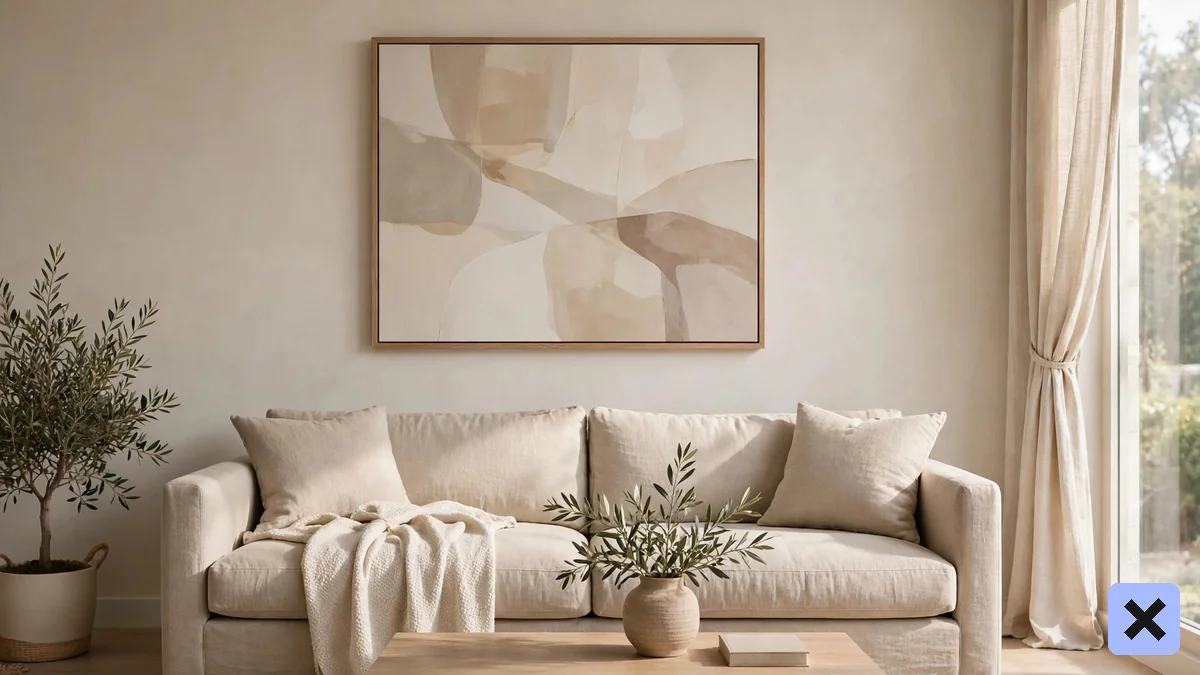
How to Choose the Right Size Wall Art for Your Living Room
Size is the first decision and the one people get wrong most often. A tiny framed print floating alone above a three-seater sofa looks lost, no matter how beautiful the image is, while art that is too large crowds the wall and makes the room feel smaller. Start by measuring the wall, not the art: the width of the sofa below it and the height from the top of that furniture to the ceiling. Good wall art fills the space without touching the edges.
The Two-Thirds Rule for Art Above a Sofa
The simplest sizing rule is the two-thirds rule. The art, or the group of pieces, should be about two-thirds as wide as the sofa beneath it. A sofa of 210 centimetres calls for art around 140 centimetres wide, while a two-seater of 160 centimetres needs art of roughly 105 centimetres.
The rule applies to groups too. For a gallery wall, measure the full width of the arrangement, including the gaps between frames. Leave 15 to 20 centimetres between the top of the sofa and the bottom of the art. Any higher and the art floats away from the furniture; any lower and it crowds the cushions.
The Best Types of Wall Art for Living Rooms in 2026
There is no single best type of wall art. The best choice depends on your room, your style and how much of a statement you want to make. The most popular options in 2026 feel warm, personal and lived with.
Large-Scale Abstract Canvas Art
Abstract canvas art remains the most popular choice for living rooms. A large abstract piece fills a wall in one move, needs no matching set, and works with almost any colour scheme. Soft abstracts in warm neutrals, muted greens and dusty blues are the strongest trend of 2026.
Look for canvases with visible brushwork and texture. Flat, glossy prints can look cheap at large sizes, while a canvas with depth in the paint feels like a real piece of art. A single large abstract above the sofa is the easiest way to finish a modern living room.
Gallery Walls
Gallery walls suit people who cannot choose just one piece. A well-planned gallery wall mixes framed prints, photographs and small paintings into an arrangement that feels collected over time. Lay the frames on the floor first, arrange them until the composition feels balanced, and photograph the layout before you pick up a hammer.
Keep the spacing consistent, usually 5 to 8 centimetres between frames, and anchor the arrangement with one larger piece. Limit yourself to two frame finishes at most, such as black and oak. Gallery walls work especially well on large walls.
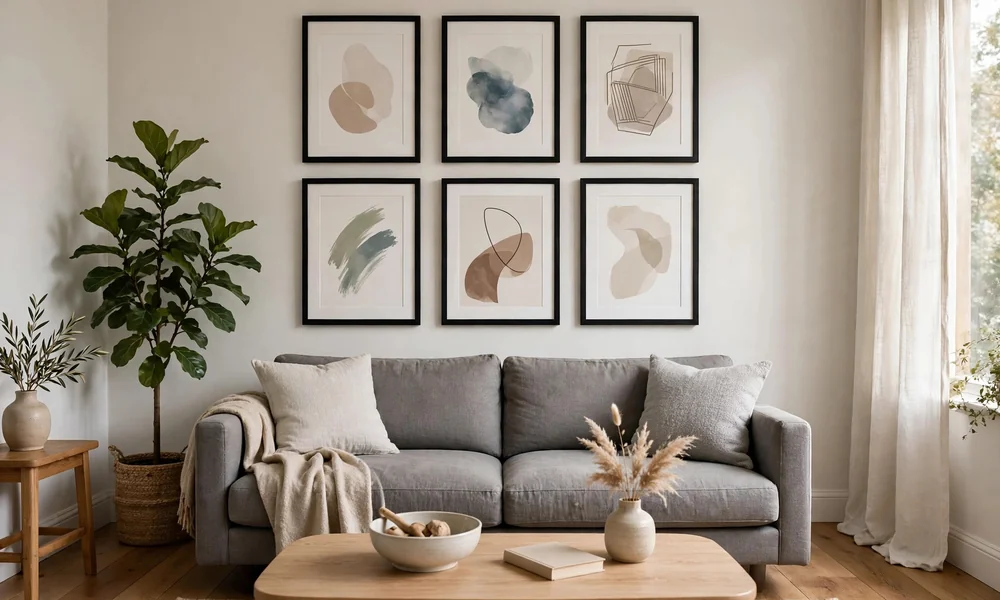
Framed Photography and Botanical Prints
Framed photography brings a personal note to a living room. Travel photographs and black-and-white landscapes work well when printed large and framed simply. Use a wide mount, the white border between the print and the frame, to make even a modest print feel gallery-worthy.
Botanical prints are the quiet success story of living room art. Leaf studies and soft landscape prints add colour without shouting, and they suit almost every style. They work best in sets of two or three, hung in a row above a sofa or a sideboard, with identical frames so the set reads as one piece.
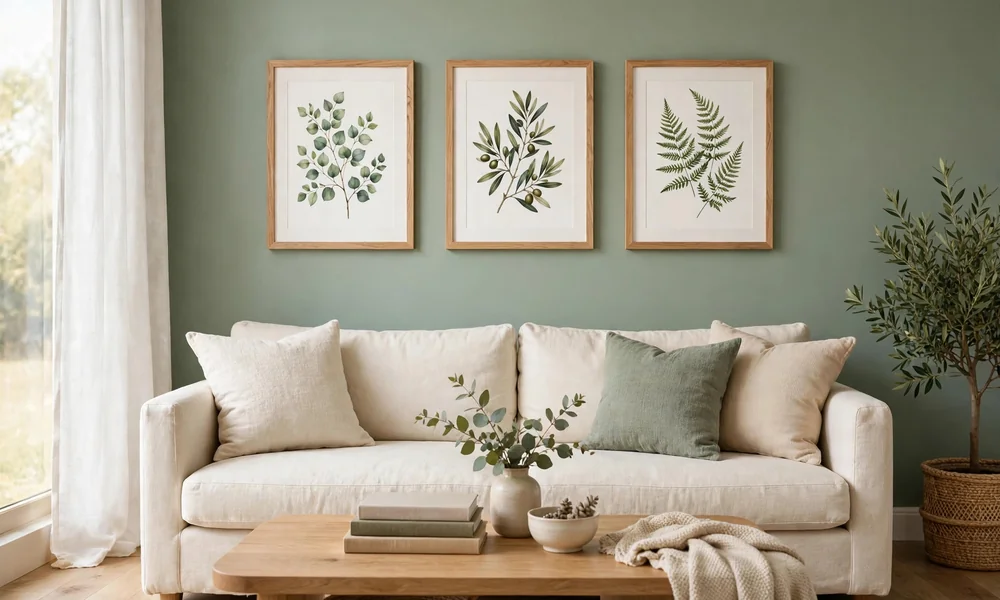
Wall Art Compared: Which Type Suits Your Living Room
| Type of Wall Art | Best For | Typical Price Range | Effort to Hang |
|---|---|---|---|
| Large abstract canvas | Modern rooms, above sofas | Moderate to high | Easy, one piece |
| Gallery wall | Eclectic rooms, large walls | Low to moderate | High, needs planning |
| Framed photography | Personal rooms, calm spaces | Low to moderate | Easy |
| Botanical prints | Scandinavian and traditional rooms | Low | Easy |
| Textured and mixed media | Minimalist rooms, statement walls | High | Moderate, often heavy |
Matching Wall Art to Your Living Room Style
Wall art should feel like it belongs in the room. The easiest way to achieve that is to match the art to the style you already have. A small contrast can make a room more interesting, but the art should share something with the room, whether that is colour, material or mood.
Modern and Minimalist Living Rooms
Modern rooms suit bold, simple art. One large abstract canvas, a single black-and-white photograph or a sculptural metal piece works better than a busy gallery wall. Keep the palette restrained, with one or two colours pulled from the room, and use slim black or white frames.
The cushions and throws around the art should stay simple so the art remains the focal point. If you are refreshing the seating area, our guide to the best throw pillows for couches explains how to choose cushions that support the art rather than competing with it.
Boho and Eclectic Living Rooms
Boho and eclectic rooms are where gallery walls and mixed media shine. Layered textures, woven hangings and vintage posters can all share a wall if they are tied together by a loose colour palette.
The trick is to keep one element consistent: the frame colour, the spacing or a repeated colour running through the pieces. Without that thread, an eclectic wall tips into clutter. A soft throw draped over the sofa arm helps tie the wall to the seating, and our guide to the best throw blankets for sofas shows how to pick colours that complement the art above them.
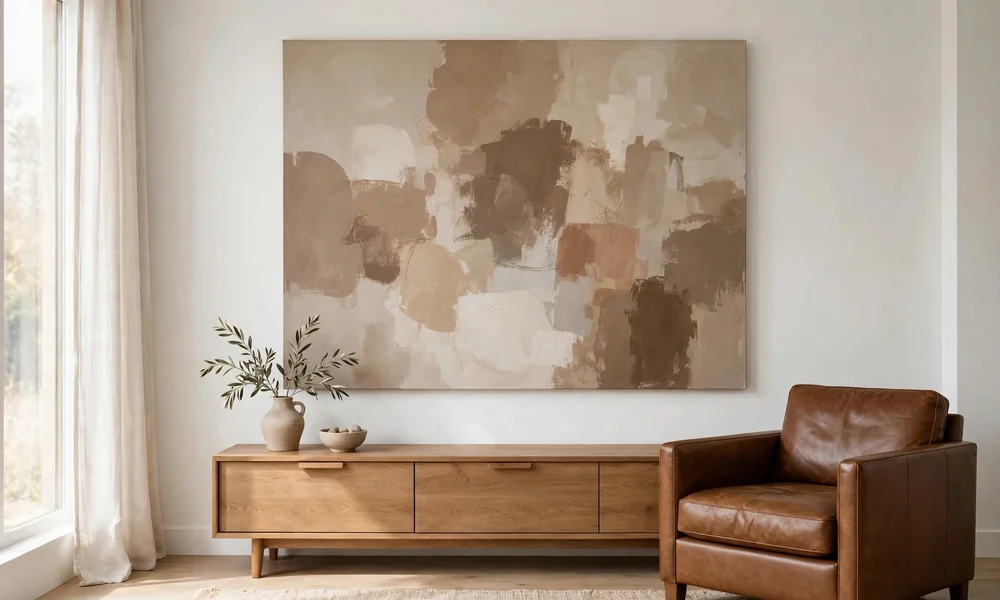
Colour, Frames and Placement
Choosing Colours That Work With Your Room
The safest approach is to pick up one or two colours already in the room. Look at your cushions, rug and curtains, and choose art that contains at least one of those colours. The art does not need to match exactly. A cushion in sage green works with art that has soft green tones.
If your room is mostly neutral, the art is your chance to add colour. A bold piece in terracotta, deep blue or mustard can lift a grey or beige room. If your room is already colourful, choose calmer art in muted tones so the wall does not fight with the furniture.
Frames That Flatter the Art
A good frame should disappear. It should protect the art, give it a clean edge and connect it to the room, without drawing attention to itself. Slim black frames suit almost every style. Oak frames warm up a room and suit botanical prints, while brass and gold frames suit traditional rooms.
Match the frame to the room, not just to the art. A black frame echoes dark furniture legs, while an oak frame echoes a wooden coffee table or floor. Avoid very thick frames for large modern canvases, which look best with a thin floating frame or no frame at all.
Hanging Height and Placement
Hang art at eye level. The centre of the piece should sit about 145 to 150 centimetres from the floor. In a living room, where people mostly sit, hanging slightly lower often feels better. The common mistake is hanging art too high, leaving a gap that disconnects the art from the furniture.
Above a sofa, leave 15 to 20 centimetres between the top of the sofa back and the bottom of the frame. Use proper picture hooks rated for the weight of the piece, and for anything heavy, fix into a wall stud or use a wall anchor. The floor beneath a feature wall gets noticed too. If your living room has wood floors, our guide to the best robot mops for hardwood floors can help you keep them looking their best.
Your Wall Art Checklist
- Measure the wall and the sofa, and choose art about two-thirds the width of the furniture below.
- Decide on one type of art that suits your room style.
- Pick colours from your cushions, rug or curtains.
- Choose slim frames in black, oak or brass.
- Hang with the centre at eye level and a 15 to 20 centimetre gap above the sofa.
- Step back and look at the whole wall before fixing anything.
Common Mistakes to Avoid
The most common mistake is buying art that is too small. A small print above a large sofa is the single biggest reason living room walls look unfinished. The second is hanging art too high, which disconnects it from the furniture below. The third is choosing art purely because it is trendy, without checking its colours against the room.
Hanging art in direct sunlight fades prints and canvases, so keep valuable pieces away from south-facing windows or use UV-protective glass. Mixing too many frame styles looks messy, so limit yourself to two finishes. A room feels more personal when the art is chosen piece by piece.
Frequently Asked Questions
What size wall art should I hang above my sofa?
Choose art about two-thirds as wide as your sofa. For a 210-centimetre three-seater, that means art of roughly 140 centimetres wide.
How high should I hang wall art in a living room?
Hang art so its centre sits about 145 to 150 centimetres from the floor, which is average eye level. Where people sit most of the time, hanging slightly lower often looks better.
What is the best wall art for a small living room?
One medium-to-large piece works better than many small ones, which can make the wall feel busy. A canvas of 90 by 120 centimetres or a compact gallery wall of three pieces are both good options.
Should wall art match my sofa and cushions?
Wall art should coordinate with your sofa and cushions, not match them exactly. Pick up one or two colours from your soft furnishings, and let the rest of the piece add contrast.
Is a gallery wall or one large piece better?
One large piece is better for modern rooms and for anyone who wants a quick, clean result. A gallery wall is better for eclectic rooms and large walls.
Can I hang wall art in a rented living room?
Yes, using removable adhesive hooks, picture hanging strips or leaning large pieces against the wall. Check your tenancy agreement first, since some landlords prefer no holes at all.
The Bottom Line
The best wall art for living rooms in 2026 is the piece that fits your wall, suits your style and shares a colour or two with the room around it. Measure first, choose a size about two-thirds the width of your sofa, and hang it at eye level. Get those basics right, and your living room will feel finished and welcoming.