The best travel backpacks for toddlers turn a long journey into something a small child can actually enjoy. Instead of carrying every toy, snack and spare outfit yourself, you hand your toddler a bag they can carry, open and love, and travel feels a little easier.
Choosing the right one matters. A bag that is too big slides off narrow shoulders and ends up in your hands, while a bag that is too small will not hold the things that keep a toddler happy. The best travel backpacks for toddlers sit between those two problems: roughly 5 to 10 litres, soft padded straps, a chest strap, and zips a two-year-old can manage.
This guide covers what makes a toddler travel backpack work, compares the main styles, and picks the best options for flights, road trips and family holidays in 2026. It also covers what to pack and a checklist for before you leave.
Key Takeaways
- Choose 5 to 10 litres for ages 2 to 4, keeping the loaded weight under 10 percent of body weight.
- Padded, adjustable shoulder straps and a chest strap matter more than extra pockets or clever features.
- Animal-shaped backpacks work well because toddlers want to carry a bag they love.
- Easy zips, a wide opening and side pockets make the bag usable without constant help.
- Let your toddler help pack the bag so they know what is inside and feel proud of carrying it.
What Makes a Great Toddler Travel Backpack
The Right Size and Weight
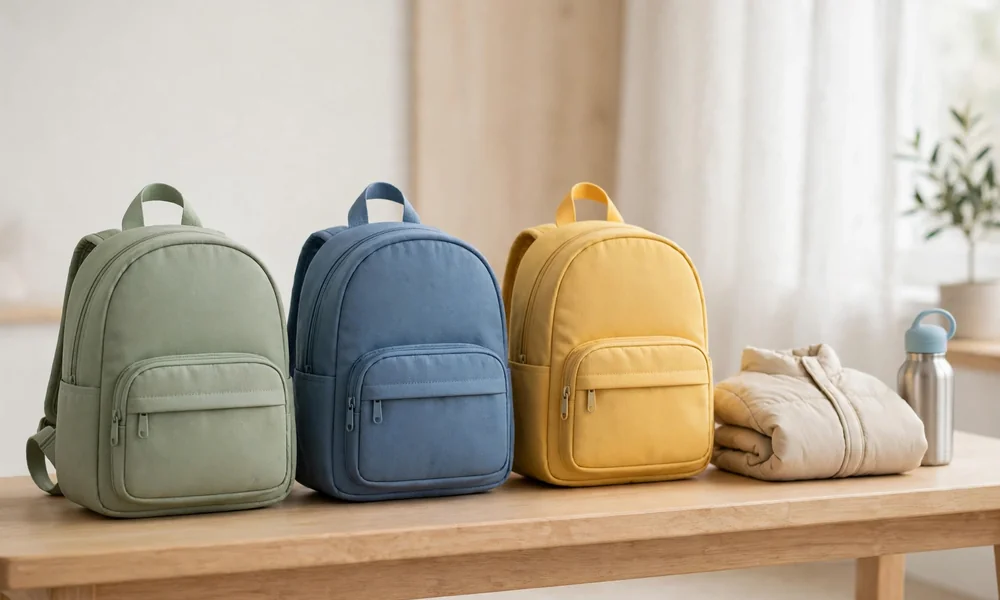
For most toddlers, a backpack between 25 and 33 centimetres tall works well, with a capacity of 5 to 10 litres. That holds a toy, snacks, a bottle, a change of clothes and a quiet toy. Anything larger hangs below the waist and bounces as they walk.
An empty toddler backpack should weigh 200 to 400 grams, and the loaded bag should stay under 10 percent of your child’s body weight. For a three-year-old weighing around 14 kilograms, that is about 1.4 kilograms at most. Pack heavy things in your own bag.
Straps That Actually Stay Put
Look for wide, padded, adjustable shoulder straps with adjusters that do not slip loose. Thin straps dig into small shoulders within minutes, and a bag that slides off one shoulder will be abandoned at the first opportunity. A chest strap is the most useful feature, holding the straps together so they cannot slide apart.
Easy-Open Pockets and Zips
A toddler who cannot open their own bag will ask you to open it every few minutes. Look for large, chunky zip pulls, zips that run smoothly without snagging, and a wide main opening so your child can see what is inside. One or two side pockets for a water bottle and a small front pocket for treasures are enough. Mesh side pockets stretch to fit different bottles.
The Best Travel Backpacks for Toddlers 2026
The styles below cover the main options for toddlers on the move. Each suits a different kind of trip, and all are light, easy to open and sized for ages roughly 2 to 4.
| Backpack style | Capacity | Weight | Best for |
|---|---|---|---|
| Animal-shaped mini backpack | 5 to 7 litres | 250 to 350 g | Flights and days out |
| Lightweight roll-top pack | 8 to 10 litres | 300 to 400 g | Longer trips and holidays |
| Harness backpack with rein | 5 to 6 litres | 300 to 400 g | Busy airports and cities |
| Small wheeled backpack | 10 to 12 litres | 700 to 900 g | Older toddlers who pull |
| Waterproof day pack | 7 to 9 litres | 350 to 450 g | Outdoor trips and rain |
Animal-Shaped Mini Backpack
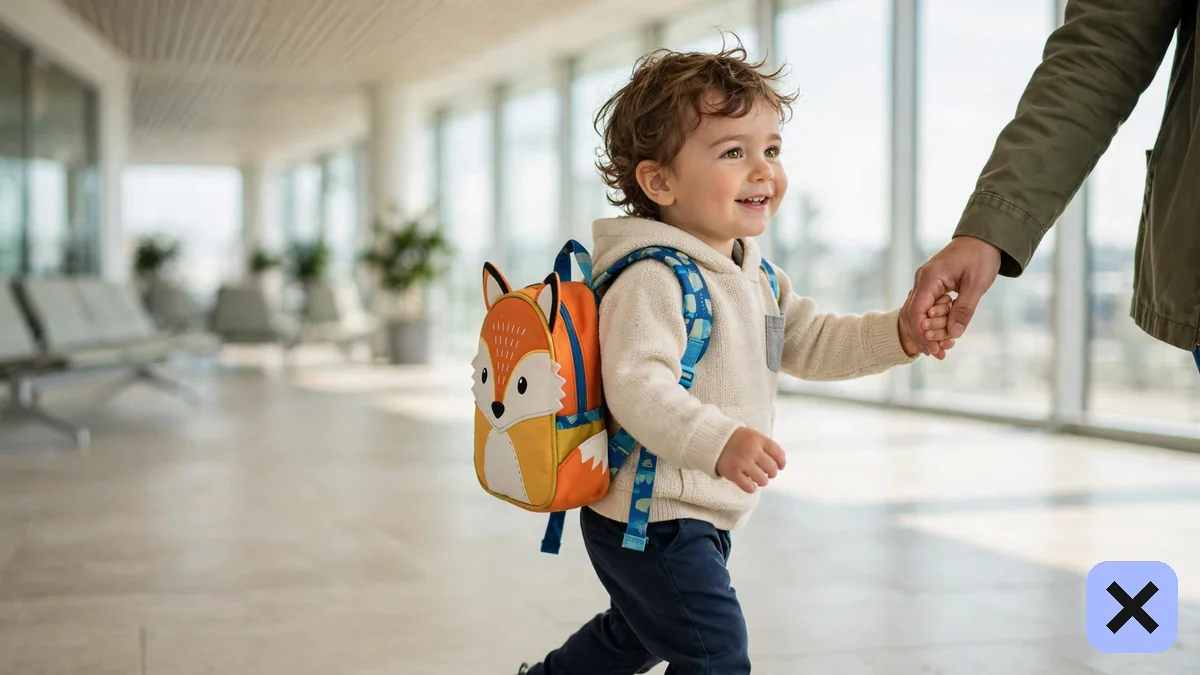
The animal-shaped mini backpack is the classic toddler travel bag and the best choice for most families. Shaped like a fox, bear, dinosaur or bunny, it is the bag toddlers ask for by name and refuse to take off. That enthusiasm matters, because a bag your child loves gets carried. Most hold 5 to 7 litres, with one main compartment and mesh side pockets. Choose wipe-clean fabric with features stitched on firmly.
Lightweight Roll-Top Pack
A roll-top pack closes by folding the top down and clipping it shut, keeping rain out and stopping things falling out when the bag tips over. It suits longer holidays because the capacity flexes for light days or extra kit. The trade-off is that it is slightly harder for a toddler to open alone, so it suits confident three and four-year-olds best. Practise opening it at home before the trip.
Harness Backpack With Rein
A harness backpack adds a detachable rein to a small, well-padded bag, and it is the safest-feeling option for very busy places. In busy places, the rein keeps a fast-moving toddler close. Choose one where the rein unclips cleanly and is short enough not to tangle. For older children who have outgrown toddler sizes, the best travel backpacks for older children offer larger capacities and sturdier frames.
Small Wheeled Backpack
A small wheeled backpack lets a toddler pull their own bag along like a tiny suitcase, which many children find hugely exciting. It works best for older toddlers on smooth floors, taking the weight off small shoulders. The downside is weight and bulk: even the smallest wheeled bags weigh 700 to 900 grams empty, and wheels make the bag awkward on stairs, escalators, rough pavements and sand.
Waterproof Day Pack
A waterproof day pack is the right pick for outdoor holidays, beach trips and anywhere the weather may turn. Made from coated fabric with covered zips, it keeps clothes and snacks dry in a shower and wipes clean after a muddy walk. Most hold 7 to 9 litres, with reflective details for low light. Check the bag is not stiff or noisy, and try the zips first.
How to Choose by Trip Type
The best backpack for a flight is not always the best for a road trip. Ask three questions: how far will your child walk, how much will they carry, and how often will they need to open the bag?
Flights and Airports
For flights, choose a small, soft bag that fits under the seat in front of you and opens easily on your lap. A 5 to 7 litre animal backpack is ideal and counts as a personal item on most airlines. Pack snacks and a small toy at the top the night before. A chest strap helps on long airport walks, and you should avoid wheeled bags on tight connections. For the rest of the family’s kit, travel packing cubes are a simple way to keep clothes and spares sorted inside a suitcase.
Road Trips and Car Journeys
On a road trip the backpack usually travels in the car rather than on your child’s back, so capacity matters more than weight. An 8 to 10 litre roll-top works well, holding more entertainment for a long drive. Keep the bag on the seat beside your child or in the footwell where they can reach it, rather than buried in the boot.
Days Out and Walking Holidays
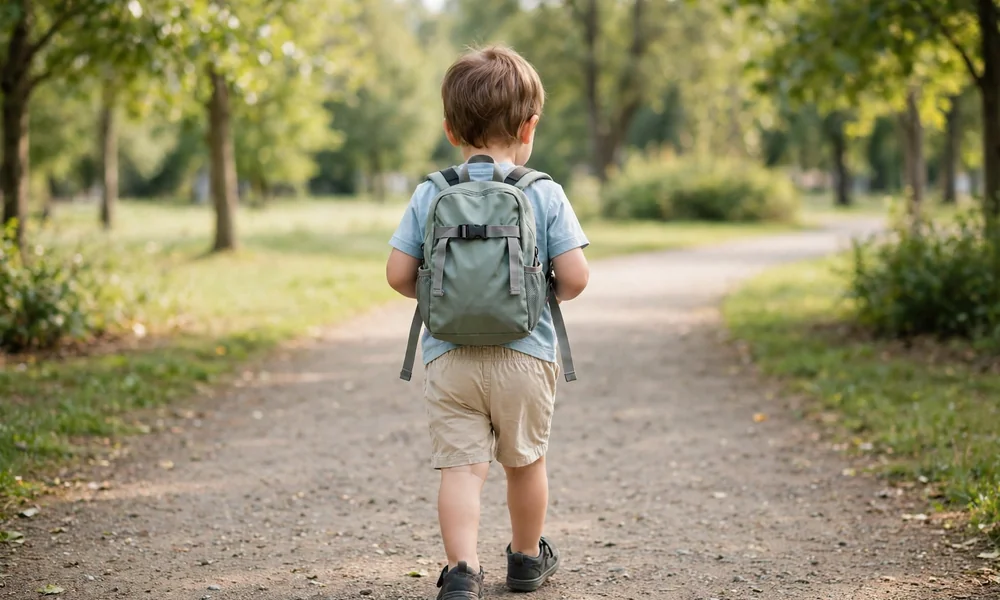
For days out, comfort is everything. Your child will wear the bag for hours, so padded straps, a chest strap and a light load matter more than extra space. A 5 to 8 litre bag with a bottle pocket on each side is a good balance. A water-resistant bag is sensible, and keep the heavy water bottle in your own bag.
What to Pack in a Toddler Travel Backpack
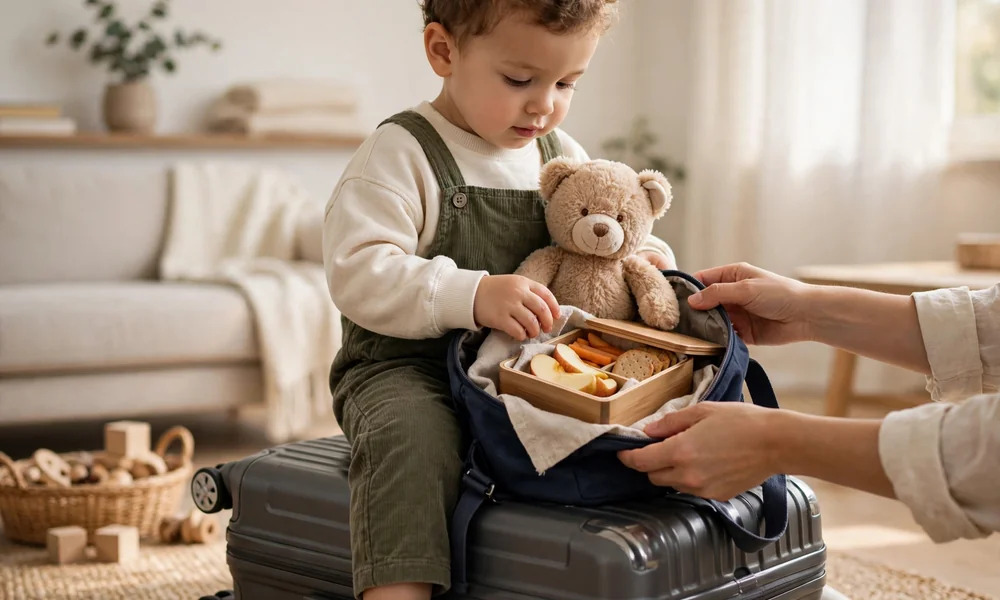
Start with comfort: a small soft toy or blanket your child already loves. Add a snack box with dry snacks such as crackers or dried fruit, and a spill-proof water bottle for the side pocket. Then add one quiet activity, such as a colouring book with a few crayons or a sticker book. Avoid small pieces, noisy toys and anything that needs batteries. Finish with spare underwear or a nappy, a spare top, wet wipes and a plastic bag for dirty items, spare clothes at the bottom and favourites at the top. travel pillows made for toddlers can help a small child rest comfortably in a car seat or on a plane.
Checklist: Before You Leave
- Adjust the straps so the bag sits between your child’s shoulders and waist.
- Weigh the packed bag and keep it under 10 percent of your child’s body weight.
- Let your toddler open and close every zip on their own before the trip.
- Pack a spare set of clothes, wipes and a plastic bag for dirty items at the bottom of the bag.
- Write your name and phone number on the bag’s name tag or luggage label.
- Do a practice walk with the loaded bag to check comfort and fit.
Common Mistakes to Avoid
The most common mistake is buying a backpack that is too big. Parents often buy a bag to grow into, but an oversized bag will spend the trip in your hands. Buy for the child you have now. The second mistake is overpacking: a heavy bag makes a toddler tired and unwilling to walk, so pack for the journey and keep extras in your own bag. The third is choosing style over comfort: stiff fabric, thin straps and fiddly zips feel awful on a small back, so check them first and let your child try the bag on.
Frequently Asked Questions
What size backpack is best for a 2-year-old?
A 2-year-old needs a small backpack of about 5 to 6 litres, roughly 25 to 28 centimetres tall. It should sit between the shoulders and the waist, with padded straps and a chest strap. Keep it very light, and let your child carry only soft, light things.
What size backpack is best for a 3 or 4-year-old?
Most 3 and 4-year-olds can manage 7 to 10 litres, roughly 28 to 33 centimetres tall. At this age a chest strap and adjustable straps matter most, because children grow quickly and the same bag needs to fit over a summer top and a winter coat.
How much should a toddler carry in a backpack?
A toddler should carry no more than 10 percent of their body weight, and less is better. For a child weighing 14 kilograms, that is about 1.4 kilograms at most, including the bag itself. Pack heavy items in your own bag.
Are wheeled backpacks good for toddlers?
Wheeled backpacks suit older toddlers, usually aged 3 and 4, on smooth surfaces such as airports and hotels, where pulling is easy and fun. They are less useful on stairs, rough paths or sand, and they are heavier than carried bags even when empty.
Should a toddler backpack have a chest strap?
Yes, a chest strap is one of the most useful features on a toddler backpack. It holds the shoulder straps together, stops them sliding off narrow shoulders and keeps the bag stable while your child walks or runs.
How do I clean a toddler travel backpack?
Most toddler backpacks can be wiped clean with a damp cloth and mild soap, which handles most spills and marks. For a deeper clean, check the care label: many fabric bags can be hand-washed in cool water and left to air dry, while bags with stiff animal shapes or glued features should be spot-cleaned only.
The Bottom Line
The best travel backpacks for toddlers are small, light, comfortable and fun enough that your child wants to carry them. Choose a bag of 5 to 10 litres with padded straps and a chest strap, pack it lightly, and let your toddler help choose and pack it. Get those basics right and the backpack becomes your child’s own little piece of the journey.