Finding the best travel backpacks for kids in 2026 is one of those small decisions that quietly shapes an entire family trip. A good pack turns a child from a passenger into a participant, carrying their own snacks and entertainment. The wrong pack slides off small shoulders and ends up swinging from your arm by the second hour.
The best travel backpacks for kids 2026 are built around one simple idea: a child’s body is not a smaller adult body. The best designs use shorter torso lengths, narrower shoulder straps, a proper chest strap and a weight that stays light even when the bag is full. They open wide enough for a child to pack alone, survive airport floors, and are fun enough that a child actually wants to wear one.
This guide compares the strongest options for every age and trip, judged on fit, comfort, durability and organisation.
Key takeaways
- Match the pack to your child’s torso length first; a bag that is too long will pull them backwards and hurt their shoulders.
- For most children, 10 to 18 litres is the sweet spot, with toddlers at the small end and older children at the large end.
- A chest strap matters more than any other single feature, because it stops the straps sliding off narrow shoulders.
- Look for a wide main opening, a water bottle pocket and at least one pocket a child can reach while wearing the bag.
- Let your child choose the colour or character; a pack they love is a pack they will actually carry.
What Makes a Great Kids Travel Backpack
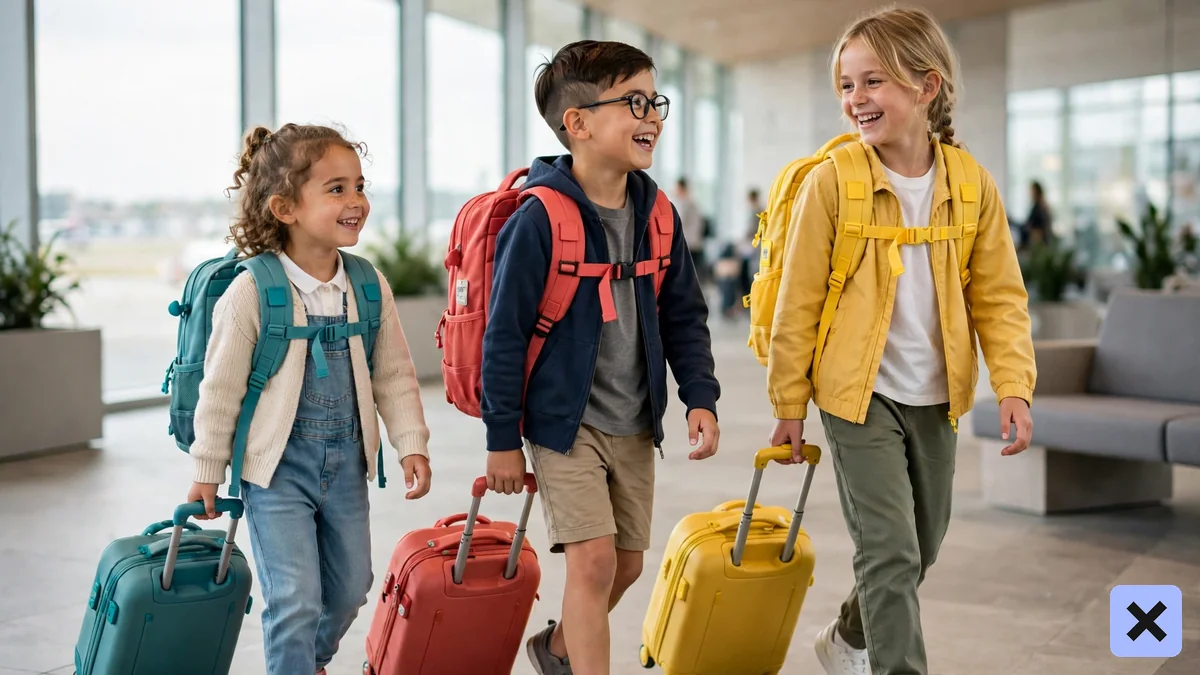
A great kids travel backpack starts with fit. Measure from the base of your child’s neck to the top of their hips, and compare that number with the pack’s stated torso range. A pack that ends below the waistband will bounce against the legs with every step, while one that rides too high will pull the shoulders back. Toddlers need only 5 to 8 litres, children aged four to seven are comfortable with 10 to 14 litres, and older children can handle 15 to 20 litres.
Comfort is mostly about the straps. Wide, padded shoulder straps spread the load, while a padded back panel stops books pressing into the spine. An adjustable chest strap keeps everything in place, and a waist belt is worth having on anything above 15 litres carried on a hike. The bag should be light when empty, because a heavy empty pack plus a child’s belongings quickly becomes too much for small shoulders.
Durability is where cheap packs fail. Look for strong zippers a child can open with one hand, reinforced stitching at the strap attachment points and water-resistant fabric that shrugs off rain and spilled juice. A pack that survives a school year of daily use will survive a holiday.
The Best Travel Backpacks for Kids 2026
The packs below cover the full range of ages, budgets and travel styles, each earning its place through fit, comfort and durability.
1. Osprey Jet 12: Best Overall
The Osprey Jet 12 is the benchmark that other kids travel packs are measured against. It holds around 12 litres in a compact frame that fits children from about five to ten, with a padded back panel, a proper chest strap and a rain cover tucked into its own pocket. The main compartment opens wide, and the straps are shaped for a child’s frame rather than shortened adult straps, so it works for flights, road trips and hikes alike.
2. Deuter Junior: Best for Hiking
The Deuter Junior is the pick for families who walk. It is a proper small hiking pack, with an adjustable back system that grows with the child, a comfortable hip belt that takes weight off the shoulders and a design that sits close to the body on uneven ground. A rain cover is included, and it holds a full day on the trail: a waterproof layer, lunch and a first aid kit.
3. JanSport SuperBreak: Best Budget Classic
The JanSport SuperBreak has been the default school and travel bag for decades, and it remains one of the best value picks for older children. It is a simple, tough one-compartment pack with a front pocket, padded straps and a huge choice of colours and patterns. It is light, durable and far cheaper than most specialist travel packs, ideal for children aged eight and up travelling light.
4. Pottery Barn Kids Mackenzie: Best for Younger Children
The Pottery Barn Kids Mackenzie is the pack for younger travellers who want a bag that feels like theirs. It comes in small and large sizes, with a padded back, an adjustable chest strap, a water bottle pocket and the option of adding a name, which is genuinely useful when several children are travelling together. The smaller size suits children from about three to six, while the large size carries children through primary school.
5. Skip Hop Zoo: Best for Toddlers and Preschoolers
The Skip Hop Zoo pack is the first travel backpack many children ever own, and it is designed with complete honesty about what a toddler can carry. At a small capacity with a friendly animal face, an insulated front pocket for snacks and a mesh bottle pocket, it holds exactly what a three-year-old needs and nothing they do not. It works as a personal item on a plane and a day bag for nursery trips, and the animal designs make it easy to spot.
6. Herschel Heritage Youth: Best for Style
The Herschel Heritage Youth brings the clean, simple styling of the adult Heritage line to a smaller frame. It has a padded tablet sleeve, a front storage pocket with a key clip and a shape that looks equally at home on a school run and in an airport. It suits children aged seven to twelve who want a bag that feels grown up, and the simple layout means a child can pack it quickly.
Best Travel Backpacks for Kids 2026: Comparison Table
| Backpack | Best For | Capacity | Key Feature |
|---|---|---|---|
| Osprey Jet 12 | Overall travel | 12 litres | Shaped straps and rain cover |
| Deuter Junior | Hiking and walking | 18 litres | Adjustable back and hip belt |
| JanSport SuperBreak | Budget and everyday use | 25 litres | Simple, tough and light |
| Pottery Barn Kids Mackenzie | Younger children | Small and large sizes | Name personalisation option |
| Skip Hop Zoo | Toddlers and preschoolers | Small capacity | Animal design and snack pocket |
| Herschel Heritage Youth | Style and older children | 16 litres | Padded tablet sleeve |
How to Choose the Right Size
Start with the torso measurement above, then think about the trip. A weekend away needs more space than a day at a theme park, but resist the urge to buy big and grow into it: an oversized pack is uncomfortable from the first day. A loaded pack should weigh no more than 10 to 15 percent of your child’s body weight.
Try the pack on with a realistic load before you travel. Put in the water bottle, the tablet, the snacks and the jumper, then tighten the chest strap and let your child walk around the house. If the straps slip or the bottom of the pack hits the backs of the legs, the fit is wrong. For a fuller sense of how pack sizes work across different kinds of trips, our guide to the best travel backpacks for day trips shows how capacity and comfort trade off when a bag has to last from morning to evening.

Packing a Kids Travel Backpack Like a Pro
Packing is a skill, and children learn it fast when the system is simple. Put heavy items closest to the back panel, where they keep the load stable. Keep snacks and the water bottle in the side pockets, where they can be reached without taking the bag off. Put the entertainment in the main compartment on top, so it is the first thing out.
Use small packing cubes or zip bags to separate clothes from toys, and let your child pack their own entertainment choices. A child who chose what goes in the bag is far more likely to look after it. For the journey itself, a comfortable travel pillow for kids makes the difference between a child who naps happily and one who wakes up grumpy at every bump in the road.

Built for the Plane, the Car and the Trail
Different trips ask different things of a pack. On a plane, it needs to fit under the seat as a personal item and keep entertainment within reach for hours. In a car, it becomes a mobile toy box that has to survive being dropped and sat on. On a trail, it needs to stay stable, keep water within reach and carry a waterproof layer.
The packs in this guide all handle more than one of those jobs, but it is worth matching the bag to the trip you take most. A hiking-focused pack with a hip belt is wasted on a child who mostly flies, while a lightweight school-style bag will struggle on a full day of walking. If your family takes short breaks often, our roundup of the best carry-on backpacks for weekend trips is a useful companion read.
Checklist: Before You Buy a Kids Travel Backpack
- Measure your child’s torso length and check it against the pack’s stated size range.
- Check that the shoulder straps are padded, adjustable and narrow enough for small shoulders.
- Make sure there is a chest strap, and that your child can fasten and unfasten it alone.
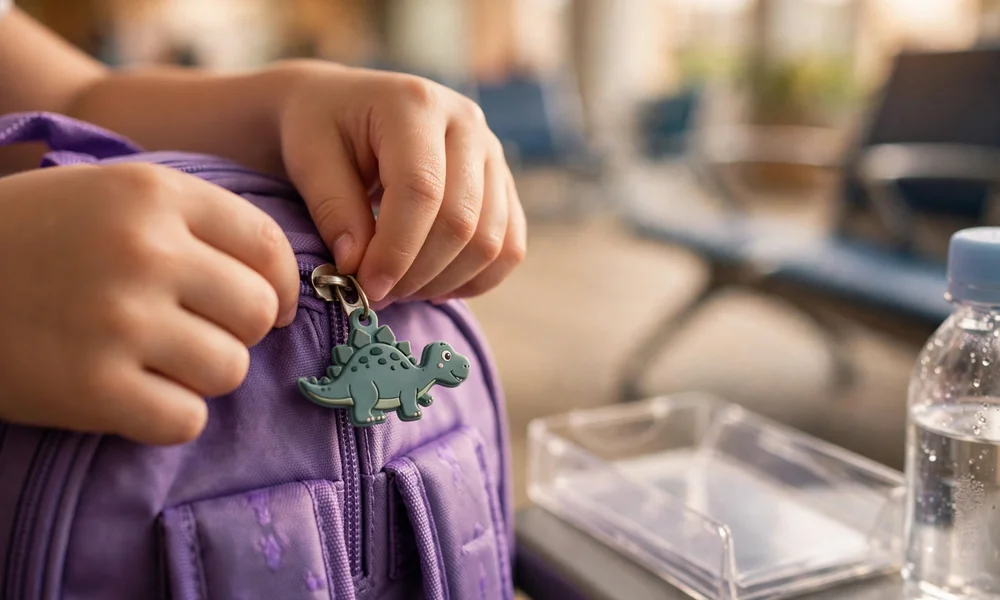
- Test the zippers: they should open smoothly with one hand and not snag on the fabric.
- Confirm there is a water bottle pocket and a pocket your child can reach while wearing the bag.
- Load the pack with a realistic weight and let your child walk, sit and climb stairs in it.
Frequently Asked Questions
What size backpack should a 5-year-old use for travel?
A 5-year-old is usually comfortable with 10 to 12 litres, enough for a water bottle, snacks, a small activity set and a change of clothes. Check torso length rather than the age label.
How heavy should a child’s travel backpack be?
A loaded pack should weigh no more than 10 to 15 percent of your child’s body weight, usually under 3 to 4 kilograms. Weigh the packed bag on a bathroom scale before you leave, and remove anything that is not needed.
Are wheeled backpacks better than regular backpacks for kids?
Wheeled packs are useful in airports, but they are heavier, harder to carry on stairs and useless on trails or beaches. A regular backpack is more versatile for most family trips.
What is the best age to start a child with their own travel backpack?
Most children are ready at around three years old, starting with a very small pack that holds just a toy and a snack. The habit builds quickly, and by five or six most children can manage a properly fitted pack for a full day out.
Should a kids travel backpack be waterproof?
Fully waterproof packs are rare and expensive, but water-resistant fabric plus a rain cover is a good combination. Look for a pack with a built-in rain cover, so a sudden shower does not soak everything inside.
Can a kids travel backpack be used as a school bag?
Yes, most of the packs in this guide work well as school bags, and using one bag for both purposes is good value. Just check that it fits your child’s folders and lunchbox.
The Bottom Line
The best travel backpacks for kids in 2026 are the ones that fit properly, feel light on small shoulders and make a child want to carry their own things. The Osprey Jet 12 is the strongest all-rounder, the Deuter Junior is the pick for walking holidays, and the Skip Hop Zoo is the perfect first pack for toddlers. Measure first, pack light, and let your child choose the colour.