The best hiking backpacks for women in 2026 are finally built for the people who carry them. For years, most packs were men’s designs shrunk down and recoloured, with straps that dug in and hip belts that sat in the wrong place. That has changed, and leading brands now design women’s packs from the ground up.
A good pack should feel like part of your body on the trail, not a burden strapped to it. The right one disappears on a long climb, keeps your water within reach, and still has room for layers, food, and a first aid kit. The wrong one will punish your shoulders by the second mile.
This guide compares the strongest women’s hiking backpacks of 2026 for day hikes, weekend trips, and multi-day treks, judged on fit, comfort, weight, durability, pockets, and value.
Key takeaways
- Women-specific packs use narrower straps, shorter torsos, and curved hip belts that sit on the hips.
- Match capacity to your trip: 20 to 30 litres for day hikes, 30 to 45 for weekends, 50 to 65 for multi-day treks.
- Fit matters more than brand: measure your torso and try the pack loaded before buying.
- A ventilated back panel and a well-shaped hip belt make the biggest difference to comfort on long days.
- Look for a rain cover, bottle pockets, and a hip belt pocket for snacks and a phone.

What Makes a Great Hiking Backpack for Women
A women’s hiking backpack is not simply a smaller men’s pack. Women typically have narrower shoulders, shorter torsos, and wider hips, and a pack that ignores those proportions will never sit comfortably. The best women’s packs reshape the harness so the load rests on the hips.
Shoulder straps are the first thing to check. On a women’s pack they sit closer together, curve to clear the chest, and use softer padding. The sternum strap should slide up and down.
Women-Specific Fit
The hip belt is where a women’s pack earns its keep. A curved, conical belt wraps the hips and transfers most of the load to your legs. The padding should hold its shape under weight yet stay comfortable for eight hours. Pockets on the belt keep a phone and a snack bar within reach.
Torso Length and Hip Belt Shape
To measure your torso, measure from the bony bump at the base of your neck to the top of your hip bones. Most women’s packs cover roughly 14 to 19 inches, in small, medium, and large sizes, and many offer an adjustable suspension. Too long, and the belt rides up onto your waist; too short, and it sits on your thighs.
The Best Hiking Backpacks for Women in 2026
The packs below cover every kind of trip, from a short morning loop to a week in the mountains. Each one is a women’s-specific design, not a unisex model in a different colour. To compare these with the wider field, see our roundup of the best hiking backpacks of 2026.
| Pack | Capacity | Weight | Best for |
|---|---|---|---|
| Osprey Tempest 30 | 30 litres | About 1.1 kg | Day hikes |
| Gregory Jade 38 | 38 litres | About 1.4 kg | Weekend trips |
| Osprey Aura AG 65 | 65 litres | About 2.1 kg | Multi-day treks |
| REI Co-op Flash 55 | 55 litres | About 1.3 kg | Ultralight trips |
| Deuter Futura 30 SL | 30 litres | About 1.5 kg | Value day hikes |
| Osprey Tempest 20 | 20 litres | About 0.9 kg | Short walks |
Best Overall Day Pack: Osprey Tempest 30
The Osprey Tempest 30 is the pack most women should start with. It holds two litres of water, a rain shell, lunch, a warm layer, and a first aid kit without feeling bulky. The AirScape back panel keeps air moving on warm climbs, and the hip belt pockets fit a phone. The harness uses narrow, contoured straps and a hip belt shaped to sit on the hips, with an adjustable torso. Compression straps keep the load stable, and the stretch front pocket swallows a wet jacket.
Best for Weekend Trips: Gregory Jade 38
The Gregory Jade 38 is the sweet spot for one or two nights out. At 38 litres it holds a tent share, a sleeping bag, a stove, and two days of food, yet it carries like a smaller pack thanks to a FreeFloat suspension that moves with your hips. The padded hip belt keeps the load stable on uneven ground. A large front pocket holds items you reach for often, the lid has a zipped pocket for valuables, and each side pocket fits a litre bottle. The rain cover is included.
Best for Multi-Day Treks: Osprey Aura AG 65
For trips of four days or more, the Osprey Aura AG 65 is the benchmark. Its Anti-Gravity suspension uses a suspended mesh back panel and hip belt that spread weight widely, so a heavy load feels lighter than the numbers suggest. The 65-litre capacity handles a full kit, and the fit adjusts across a wide torso range. The hip belt is one of the best available, with deep padding and a secure wrap, and the straps stay comfortable under a full load. Pockets sit everywhere they should: two on the hip belt, two on the lid, one on the front, and stretch pockets on the sides.
Best Ultralight: REI Co-op Flash 55
The REI Co-op Flash 55 proves a light pack can still carry well. At around 1.3 kilograms it is far lighter than most packs of its size, yet the women’s version keeps a proper hip belt, a supportive frame, and a ventilated back panel. It suits experienced hikers who have trimmed their kit and want to move fast. The trade-offs are a thinner fabric that needs more care around sharp rocks and a simpler pocket layout. The removable lid and roll-top make it flexible, and the price undercuts most specialist ultralight packs.
Best Value: Deuter Futura 30 SL
The Deuter Futura 30 SL is the best-value women’s day pack on this list. SL stands for Slim Line, Deuter’s women’s fit, with a shorter back length, narrower straps, and a conical hip belt. The Aircomfort mesh back panel holds the pack slightly away from your back, keeping you cooler on hot days. For the price, the features are generous: a rain cover, a zipped lid pocket, stretch side pockets, a hip belt pocket, and pole attachments.
Best Small Day Pack: Osprey Tempest 20
Not every hike needs 30 litres. The Osprey Tempest 20 is the pick for short walks and summer trails, where a light load is the whole point. It carries the same women’s-specific harness as its bigger sibling, with the same comfortable hip belt and ventilated back panel, in a package under a kilogram. The 20-litre capacity fits water, snacks, a light jacket, and the essentials, with a stretch front pocket for shed layers.
How to Choose the Right Size
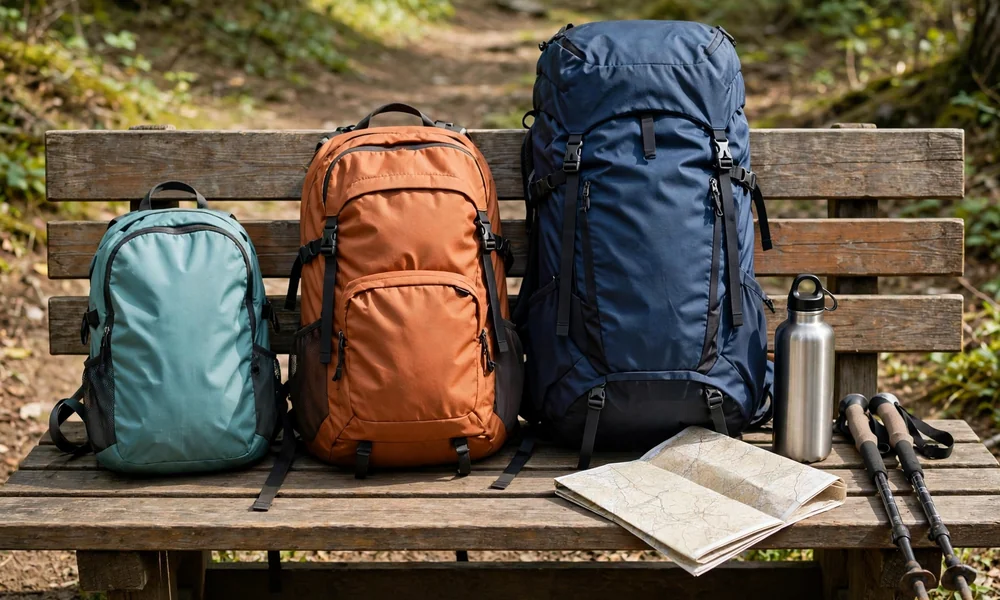
Capacity is the first decision, and it is easy to get wrong in both directions. Too small and you will strap things outside, which throws off the balance. Too big and you will carry dead weight. Lay out everything you plan to carry, then choose the smallest pack it fits into.
Match Capacity to Trip Length
For day hikes, 20 to 30 litres is right for most women, covering water, food, a rain shell, a warm layer, and a first aid kit. Lean towards 30 litres in cold weather or with camera gear. Overnight trips need 30 to 45 litres if your sleeping kit is compact, while multi-day trips usually need 50 to 65 litres. If you want one bag for hiking and travelling, our guide to travel backpacks made for women compares packs that work for airports as well as trails.
Get the Torso Fit Right
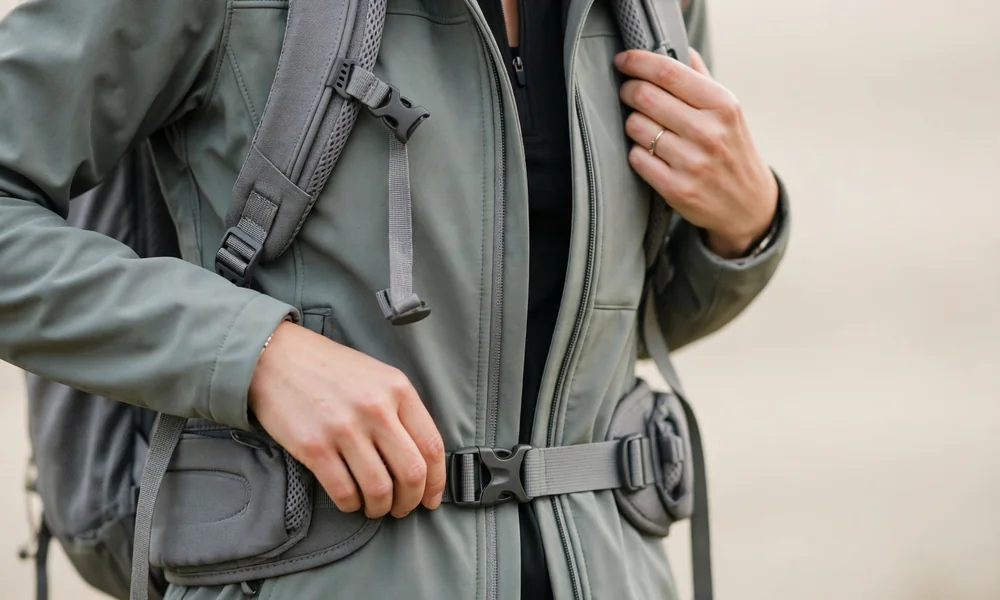
Once capacity is settled, fit is everything. Load the pack with about ten kilograms and walk around the shop for ten minutes, including stairs if you can. The hip belt should sit on the top of your hip bones, with 70 to 80 percent of the weight on your hips. Tighten in this order: hip belt, shoulder straps, load lifters, then sternum strap. A pack that feels right in this sequence will feel right on the mountain.
Packing and Organising Your Pack
How you pack matters almost as much as what you pack. Heavy items belong close to your back, between your shoulder blades and hips. Light, bulky items such as a sleeping bag go at the bottom. Water, snacks, sunscreen, and a rain shell belong in the pockets or at the top. Keep the same items in the same places, so you can find things in the dark without emptying the pack.
Weather Protection and Durability
Rain is the biggest threat to your kit, and a wet sleeping bag can end a trip. Most packs here include a rain cover, but if yours does not, buy one that fits, and pack critical items in dry bags. Water can still enter through the back panel, so a liner is cheap insurance. For more on staying dry, our guide to waterproof jackets for hiking covers the shells that pair best with these packs.
Checklist: Before You Buy
- Measure your torso length and check it against the pack’s size range.
- Try the pack loaded with weight and walk around for ten minutes.
- Check that the hip belt sits on your hips and carries most of the weight.
- Confirm the pack has a rain cover, water bottle pockets, and a hip belt pocket.
- Make sure the capacity fits your real kit, not just the label.
- Test the zips, buckles, and straps with the pack fully loaded.
Frequently Asked Questions
What size hiking backpack do women need for a day hike?
Most women need a 20 to 30 litre pack for a day hike, holding water, food, a rain shell, a warm layer, and a first aid kit. Choose 20 litres for short summer walks and 30 litres for camera gear or cold weather.
Are women’s hiking backpacks really different from men’s?
Yes. Women’s packs have narrower straps, shorter torsos, and curved hip belts shaped for wider hips.
How much should a women’s hiking backpack weigh?
A good day pack weighs 0.9 to 1.5 kilograms, while a multi-day pack weighs 1.3 to 2.3 kilograms. Lighter is not always better: a slightly heavier pack with a proper frame often feels lighter than a very light pack that carries poorly.
How do I measure my torso length for a backpack?
Measure from the bony bump at the base of your neck to the top of your hip bones. Most women’s packs fit torsos of 14 to 19 inches. If you fall between sizes, pick the closer size and fine-tune with the adjustable suspension.
Do I need a rain cover for my hiking backpack?
Yes. A rain cover is essential where rain is possible, and most good packs include one. Pack your sleeping bag and spare clothes in dry bags too, since water can enter through the back panel.
Can one backpack work for day hikes and multi-day trips?
A 38 to 45 litre pack can cover both if your overnight kit is compact; the Gregory Jade 38 is a good example. But for trips of four days or more, a dedicated 50 to 65 litre pack carries the load far more comfortably.
The Bottom Line
The best hiking backpack for women is the one that fits your body, suits your trips, and disappears on the trail. For most hikers, the Osprey Tempest 30 is the smartest day-pack choice, the Gregory Jade 38 covers weekends, and the Osprey Aura AG 65 is the pick for serious multi-day treks.