The best shower curtains for small apartments do far more than keep water off the floor. In a bathroom where every centimetre counts, the right curtain sets the tone for the whole room and can even make a cramped space feel larger.
Small apartment bathrooms come with particular problems. Standard curtains often hang too long, bunch up against the tub, or trap humidity in a room with little ventilation. Light colours, the right fabric, and a rod that fits the space can solve most of these problems at once.
This guide covers measuring your space, choosing a suitable material, picking a style that opens the room up, and keeping the curtain clean.
Key takeaways
- Measure your shower’s width and drop before buying, since apartment tubs and stalls vary more than most people expect.
- Light colours and clear panels make a small bathroom feel larger, while heavy dark fabrics tend to close it in.
- Fabric curtains look better and last longer; a separate liner handles the waterproofing.
- A curved rod adds elbow room inside the shower without taking up any extra floor space.
- Wash or wipe the curtain regularly, since mildew builds up fast in small, poorly ventilated bathrooms.
Why the Right Shower Curtain Matters in a Small Apartment
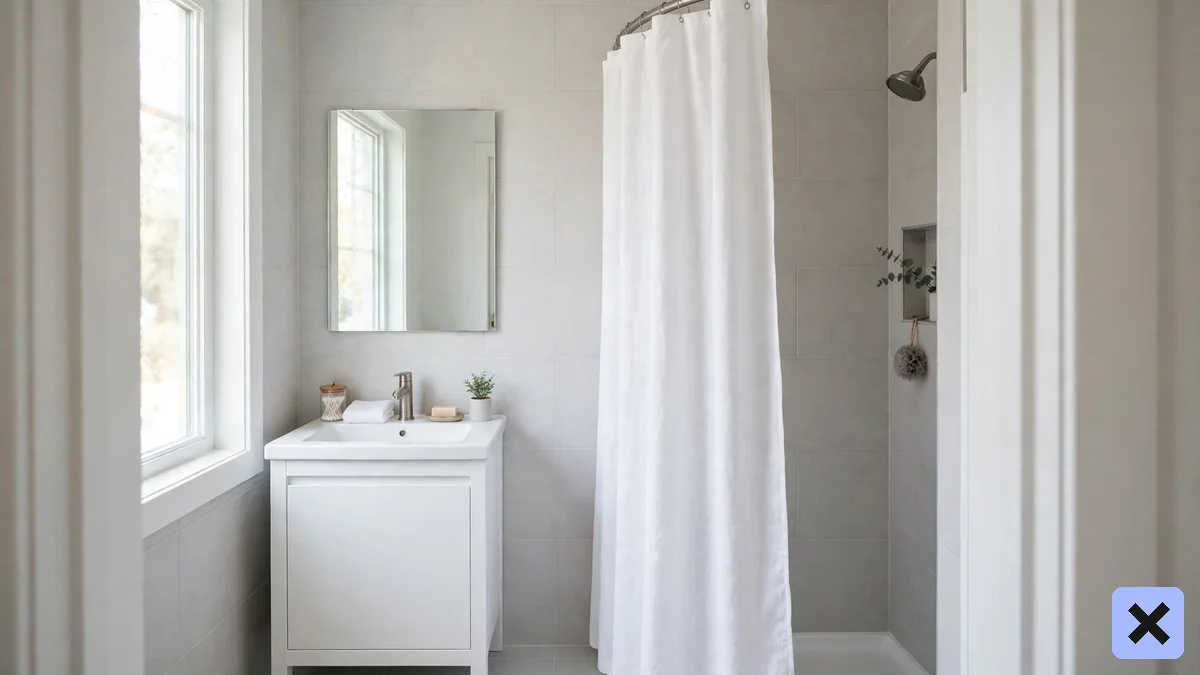
In a large bathroom, a shower curtain is a background detail. In a small apartment bathroom, it is often the largest surface in the room, sometimes covering a full wall, so its colour and pattern dominate what you see every morning.
Small bathrooms usually have weaker ventilation, so moisture lingers after every shower. A curtain that dries quickly and resists mildew protects the walls and grout, while one that stays damp becomes a source of smells and stains within weeks.
How to Measure Your Shower Space Before You Buy
Most people skip measuring and buy a standard 72 by 72 inch curtain, then wonder why it does not fit. Apartment bathrooms are rarely standard: older buildings often have narrower tubs, newer flats may have walk-in stalls, and some rentals have rods at unusual heights.
Measure the width first, from wall to wall at rod height. Then measure the drop, from the rod to the top of the tub or the floor of the stall. The curtain should end a few centimetres above the tub rim or floor, so water runs back into the shower.
Standard Tub Sizes in Apartments
Most apartment bathtubs are 60 to 66 inches long, which is why the familiar 72 inch wide curtain is so common. The extra width gives the fabric enough fullness to hang in soft folds rather than stretching flat, which looks better and keeps water inside the tub. If your tub is shorter, choose a shorter length so the hem does not sit in standing water.
Stall Showers and Odd Layouts
Stall showers are often narrower than tubs, sometimes as little as 32 inches wide, and a full-size curtain will swamp them. Look for narrow or stall-sized curtains. Corner showers need more thought: a straight rod leaves gaps, while a curved or L-shaped rod follows the shape of the base. If your bathroom has an unusual layout, a shower curtain made for a larger bathroom will not solve the problem, since the issue is shape rather than size.
The Best Shower Curtain Materials for Small Apartments
Material is the most important decision after size. It determines how the curtain looks, handles water, how often it needs cleaning, and how long it lasts. The main options are fabric, PEVA or vinyl, and fabric blends.
Fabric curtains are the best all-round option for most small apartments. They hang in soft, natural folds, come in the widest range of colours and patterns, and feel far more pleasant than plastic. Most are made from polyester, cotton, or a blend, and they need a separate waterproof liner, while PEVA and vinyl curtains are waterproof on their own.

Fabric Curtains: The Best Everyday Choice
A good polyester fabric curtain is the safest pick. Polyester dries faster than cotton, resists mildew better, and holds its shape after washing. Cotton feels softer, but it absorbs water and needs more careful drying. Most polyester curtains can go in the machine on a gentle cycle, then hang on the rod to dry.
PEVA and Vinyl: Simple and Waterproof
PEVA is the better of the two plastic options. It is free of the chlorine smell cheap vinyl can carry, it is softer and more flexible, and it is widely available in clear and frosted finishes. A clear PEVA curtain is the easiest way to make a tiny bathroom feel more open, because it removes the visual barrier between the shower and the rest of the room. Vinyl is the cheapest option and easy to wipe clean, but it can stiffen or yellow over time. Pairing your curtain with one of the best shower heads for small bathrooms also means less spray hitting the curtain, so it clings less and the floor stays drier.
Linen-Look Blends and Heavyweight Options
Linen-look polyester blends are the premium end of the fabric range, and they suit small apartments well. They have the relaxed look of real linen without the slow drying and high maintenance, though they cost more than plain polyester. Heavyweight curtains hang beautifully but crowd very small showers and take longer to dry.
Shower Curtain Materials Compared
The table below sums up the main options side by side.
| Material | Waterproof | Drying time | Best for | Drawbacks |
|---|---|---|---|---|
| Polyester fabric | Needs a liner | Fast | Everyday use, best looks | Requires a separate liner |
| Cotton fabric | Needs a liner | Slow | Soft feel, premium look | Absorbs water, mildew risk |
| PEVA | Yes | Very fast | Small dark bathrooms, rentals | Can cling, less attractive |
| Vinyl | Yes | Very fast | Budget and heavy use | Can smell, yellows over time |
| Linen-look blend | Needs a liner | Moderate | Style-led small bathrooms | Higher price, needs care |
Styles That Make a Small Bathroom Feel Bigger
Once the material is decided, style does the heavy lifting. In a small bathroom, the curtain is effectively a wall of fabric, so its colour and pattern set the mood of the room. The rule is simple: light and simple makes the room feel bigger, while dark and busy makes it feel smaller.
Light Colours and Bright Finishes
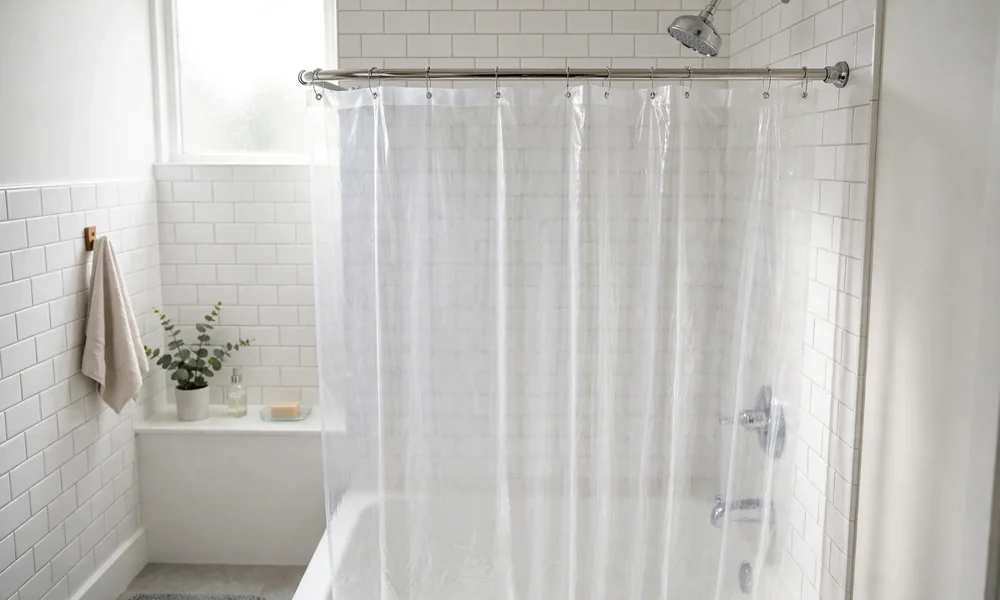
A pale curtain reflects light around the room, softening shadows and making the space feel airier. This matters most in bathrooms with small windows or no windows at all. A dark curtain absorbs light and makes the shower area feel like a separate, smaller box.
Clear and Frosted Panels
If your bathroom is genuinely tiny, a clear or frosted curtain is worth serious consideration. A clear curtain removes the visual wall entirely, so the shower and the rest of the room read as one space. Frosted panels offer a middle ground, letting light through while blurring shapes for privacy. Clear curtains show water spots more readily, so keep a squeegee in the shower.
Rods, Hooks, and Liners That Save Space
The curtain itself is only half the system. The rod, hooks, and liner determine how it hangs, how much room you have inside the shower, and how long the curtain lasts. A curved shower rod is the single best upgrade for a small shower: it bows outward a few inches, adding elbow room at shoulder height without using extra floor space.
Hooks and rings deserve more attention than they usually get. Smooth-gliding rings make the curtain easy to open and close with one hand, which matters when you step into a tight shower. Double hooks hold the curtain and liner separately, so you can pull the liner inside the tub while leaving the decorative curtain outside. A weighted PEVA liner hangs straight and dries quickly.
Curved Rods Versus Straight Rods
A straight rod is fine when the shower is generous, but in a small apartment the curved rod earns its place. The extra few inches at elbow height make the shower feel less cramped, and the curtain hangs further from your body, so it clings less. A curved rod needs a curtain wide enough to cover the longer arc. Tension rods are the renter-friendly option: look for a strong spring and rubber ends that grip without marking walls.
Care and Cleaning in a Small Bathroom
Small bathrooms are hard on shower curtains: limited ventilation means moisture lingers, warm air encourages mildew, and the curtain sits close to every surface that gets splashed. A simple routine, done little and often, keeps the curtain looking good and the bathroom smelling fresh. For fabric curtains, a machine wash every four to six weeks is usually enough: use a gentle cycle, add a cup of white vinegar to the rinse, then hang the curtain back on the rod to dry.
Preventing Mildew Before It Starts
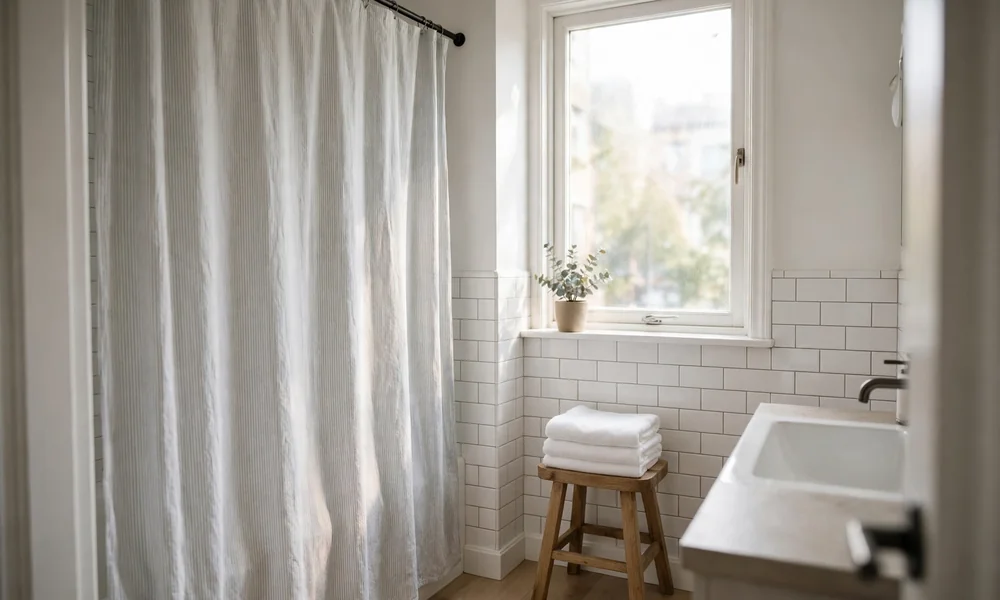
Prevention is easier than cleaning. Leave the curtain spread out after every shower, rather than bunched to one side, so the whole surface can dry. Run the extractor fan for twenty minutes after showering, or open the window a crack. Pairing your curtain with the best bath towels for small bathrooms also helps, since fast-drying towels add less moisture to the air than heavy ones that stay damp for hours.
Shower Curtain Checklist for Small Apartments
Use this checklist before you buy and when you hang the new curtain.
- Measure your shower’s width and drop, and write both numbers down before shopping.
- Choose a light colour or clear panel so the bathroom feels larger.
- Pick a fabric curtain with a liner for the best looks, or a clear PEVA curtain for maximum light.
- Check the curtain has a weighted hem or magnets so it hangs straight and does not cling.
- Consider a curved rod to add elbow room without using floor space.
- Plan a simple cleaning routine, and leave the curtain spread out to dry after showering.
Frequently Asked Questions
What size shower curtain do I need for a small apartment?
Most apartment tubs suit a standard 72 by 72 inch curtain, but measure first. Measure the width at rod height and the drop from the rod to the tub rim, then choose a curtain that covers the width and ends a few centimetres above the tub.
Are fabric or plastic shower curtains better for small bathrooms?
Fabric curtains look better and are easier to wash, making them the best choice for most small apartments when paired with a waterproof liner. Plastic curtains are simpler and cheaper, and clear PEVA is best for a very dark or very small bathroom.
How do I stop my shower curtain from blowing in and sticking to me?
Choose a curtain with a weighted hem or magnetic strips that hangs straight rather than billowing. A curved rod holds the curtain further from your body, and a heavier fabric curtain moves less than a thin plastic one.
How often should I wash a shower curtain in a small apartment?
Wash a fabric curtain every four to six weeks. Wipe a plastic curtain or liner weekly with a mild cleaner or vinegar solution, and replace the liner every six to twelve months.
Can a shower curtain really make a small bathroom look bigger?
Yes, and it is one of the cheapest ways to do it. A light-coloured or clear curtain reflects light and removes the visual barrier between the shower and the room. A dark or heavily patterned curtain does the opposite.
Do I need a liner with a fabric shower curtain?
Yes, in almost every case. A fabric curtain on its own will absorb water, stay damp, and develop mildew quickly. A waterproof liner keeps water in the shower and the fabric curtain dry, and it is cheap to replace.
The Bottom Line
The best shower curtains for small apartments fit properly, dry quickly, and keep the room bright. Measure before you buy, choose a light colour or clear panel, pair fabric with a liner, and consider a curved rod for extra elbow room.