A kids bookshelf should be the sturdiest piece of furniture in a child’s room, because it is the one a child climbs on. A good bookshelf holds books at a height a small child can reach, stays firmly against the wall, and survives being pulled, pushed, and used as a ladder. A bad one leans, sheds its shelves, and cannot survive one climbing toddler, which is the child it was built for. The worst kids bookshelves of 2026 look sweet in the photograph, and that is where their virtues end: they are too tall, too shallow, and too flimsy for a room where small children play. A parent deserves a shelf that stays upright, not one that has to be watched.

What Makes a Kids Bookshelf Bad
A kids bookshelf has one job above all others: it must hold books safely at a height a child can reach, without tipping over. A good shelf is low and wide, with a broad base, a back panel that keeps it square, and a fixing that holds it firmly to the wall. A bad shelf is tall and narrow, with a base barely wider than the shelf itself, so it tips the moment a child pulls on it. The worst shelves have no wall fixing at all, or a fixing so flimsy it pulls out of the plaster at the first tug. A bookshelf that can fall on a child is not furniture, it is a hazard, and no amount of charm makes up for that.
The second problem is the shelves themselves. A good shelf holds books upright without them flopping over, with enough depth that a book does not fall off the front and enough height between shelves for the books it has to hold. A bad shelf is too shallow, so books stick out and slide off, or too tall between shelves, so small books fall over and large books do not fit. The worst shelves are held up by tiny plastic pegs that snap under the weight of a few books, so a shelf collapses without warning and dumps its contents on the floor. A shelf that cannot hold books is not a bookshelf, whatever the label says.
The Main Types of Kids Bookshelf, and Where They Go Wrong
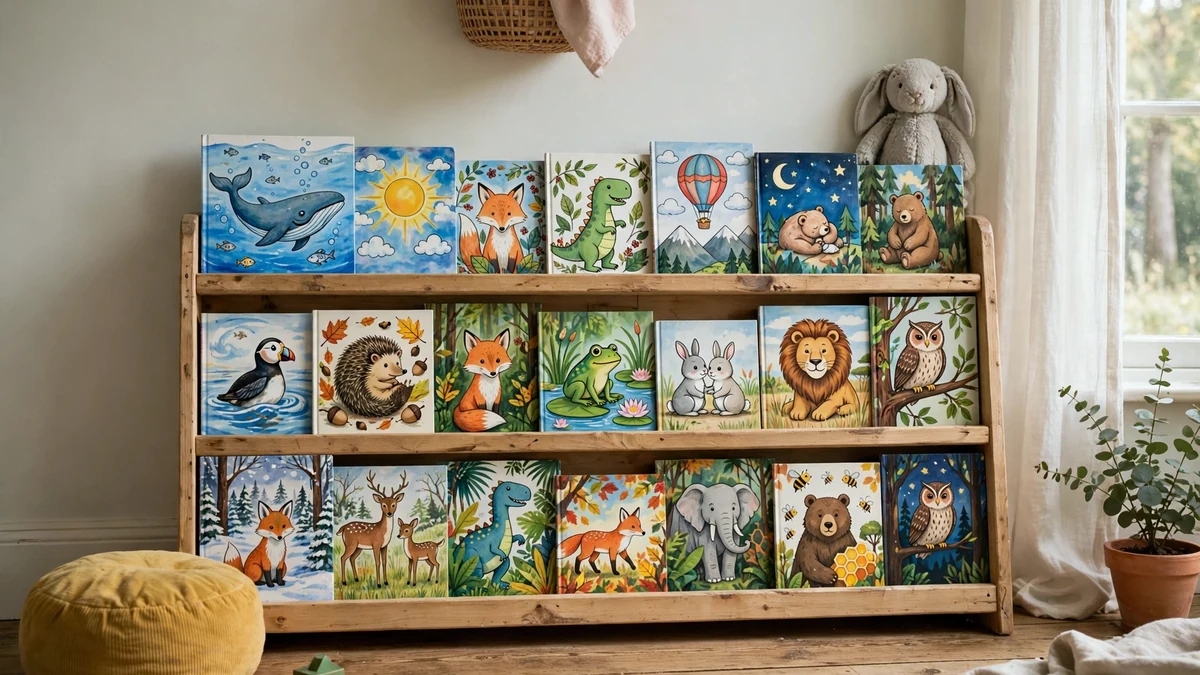
Low forward-facing bookshelves are the best design for young children, because the books face outwards and a child can see the covers. A good one is low enough for a toddler to reach the top shelf, sturdy enough to lean on, and deep enough that the books stay put. A bad one is too tall for the child it is sold for, so the top shelf is out of reach and the books up there are never read. The worst forward-facing shelves have shallow pockets that hold only a few thin books, so the rest pile up beside the shelf and the shelf becomes a decoration rather than storage.
Tall traditional bookshelves suit older children, and they fail in more serious ways. A good tall shelf is fixed to the wall, has a wide base, and shelves that are properly supported. A bad one is tall, narrow, and free-standing, with no wall fixing and a base that is too small for its height. The worst tall shelves are made of thin chipboard that sags under the weight of books, so the shelves bow in the middle and the books slide towards the centre. Some tall shelves have a back panel made of thin cardboard that does nothing to keep the shelf square, so the whole thing twists and leans. A tall shelf that is not fixed to the wall should not be in a child’s room at all. For more on the furniture that goes with it, our guide to the best bookshelves of 2026 covers the full-size shelves these designs are copied from.

The Shelf That Tips: Worst for Safety
Tipping is the worst failure a kids bookshelf can have, because it happens suddenly and it can seriously hurt a child. A good shelf is fixed to the wall with a proper bracket, has a wide base, and is low enough that a child cannot pull it over. A bad shelf is tall, narrow, and unsecured, so a child who climbs it pulls the whole thing down on top of themselves. Children climb bookshelves: they climb to reach a book, they climb because the shelf is there, and they climb when nobody is watching. A shelf that cannot survive being climbed has no place in a child’s room.
The test is simple and worth doing the moment the shelf is assembled. Fix it to the wall first, then pull firmly on the top edge from the front. A good shelf barely moves. A bad shelf pulls away from the wall, or the fixing pulls out of the plaster, which means the fixing was wrong for the wall. Then check the base: a shelf that rocks on a flat floor is a shelf that is out of square, and a shelf that is out of square will lean further over time. If the shelf tips, leans, or pulls away from the wall, it is not safe, whatever the instructions claim. A bookshelf in a child’s room must be fixed to the wall, full stop, and a shelf that cannot be fixed properly should not be bought.
Shelves That Sag and Pegs That Snap
A sagging shelf is the worst kind for the books, because the damage is gradual and easy to miss until it fails. A good shelf stays flat for years, so books stand upright and stay where they are put. A bad shelf is made of thin chipboard that bows in the middle under the weight of a few books, so the books slide towards the centre and fall over. The worst shelves are supported by tiny plastic pegs that snap under load, so a shelf collapses without warning and dumps a row of heavy books on the floor. A shelf that cannot hold books is not a bookshelf, and a peg that snaps is a peg that was never strong enough.
The spacing matters as much as the strength. A shelf with too much space between levels wastes room and lets small books fall over, while a shelf with too little space will not fit the picture books that are the biggest books a young child owns. The best kids shelves have adjustable heights, so the spacing can change as the books change, and the worst have fixed shelves at the wrong heights for every book a child owns. Check the pegs before you buy: metal pegs in metal holes hold, and plastic pegs in chipboard do not. If the shelf sags when it is loaded with books in the shop, it will sag worse at home, and the books will end up on the floor. The best test is to load the shelf in the shop with the heaviest books you can find and leave it for a minute. If the shelf bows, or the pegs creak, or the whole unit sways, it is telling you what it will do at home with a full load of picture books. A shelf that holds its shape under load in the shop will hold it at home, and a shelf that sags under a few books will only get worse.

Depth, Finish, and the Climbing Problem
A kids bookshelf has to be deep enough for the books it holds and safe enough for the child who climbs it, and the bad ones get both wrong. A good shelf is deep enough that a book sits fully on it without sticking out, and shallow enough that a small child can reach the back. A bad shelf is so shallow that books stick out and fall off, or so deep that small books vanish at the back where a child cannot see them. The worst shelves are deep enough to climb into, which is an invitation a child will accept, and shallow enough that the books fall off at the slightest touch.
The finish matters too, because a child touches every part of a bookshelf. A good finish is smooth, wipe-clean, and free of sharp edges, so a child can run a hand along it safely. A bad finish is rough chipboard with a printed surface that peels off in strips, leaving sharp edges and a surface that cannot be cleaned. The worst shelves have corners that are sharp enough to bruise a shin and edges that give splinters. Run a hand along every edge before you buy, and if anything feels sharp or rough, put the shelf back. A bookshelf in a child’s room should be as safe to touch as the toys in it, and a shelf that gives splinters is not safe for anyone.
How to Spot a Bad One Before You Buy
Start with the wall fixing: a shelf that comes with no fixing, or a fixing that is a thin strap and a single screw, is a shelf that was not designed for a child’s room. Then check the base: put the shelf on a flat floor and push it gently from side to side. If it rocks, it is out of square. Load the shelves with books in the shop and look for sagging in the middle. Check the pegs: metal pegs hold, plastic pegs snap. Measure the shelf against the books it has to hold, and make sure a child can reach the top shelf without climbing.
Fix the shelf to the wall the day it is assembled, and check the fixing every few months, because a fixing that loosens is a shelf that will tip. For the rest of the child’s room, our guide to the best kids art tables of 2026 covers the table the books are read at, and our guide to the best toddler beds of 2026 covers the bed the stories are read in. The verdict is simple: buy the shelf that is low, wide, fixed to the wall, and strong enough to hold its books, and walk past the one that only looks sweet in the photograph.
The Verdict
The worst kids bookshelves of 2026 are the ones that tip when a child climbs, sag under the weight of a few books, and shed shelves on small plastic pegs. The best are the ones you stop noticing, because they are low and wide, fixed firmly to the wall, and hold every book within a child’s reach. Test the fix, load the shelves, and check the edges before you buy, and fix every shelf to the wall the day it is assembled. A shelf that is still square, still fixed, and still holding its books after a year of climbing toddlers is a shelf that was built properly. A good bookshelf is used every day, and the difference between a good one and a bad one is the difference between a child who reads happily and a shelf that falls on them.