A toddler bed is the first real bed your child will call their own, and it is also one of the most practical purchases in the nursery. It sits low to the floor, it has rails that stop a sleepy roll turning into a fall, and it gives a two-year-old the freedom to climb in and out without help. The best toddler beds of 2026 do all of that without fuss: solid wood, a snug mattress, smooth edges, and a frame that stays steady when a small person bounces on it at seven in the morning. This guide looks at the beds that earn their place in a small bedroom, the ones that last, and the mistakes that turn a simple purchase into a nightly problem.
Key Takeaways
The best toddler bed is low, sturdy, and fitted with a proper safety rail on each side. A standard toddler mattress, around 70 by 140 centimetres, should fit with no gap wider than two fingers at any side. Solid wood beats hollow plastic and thin metal for stability and for surviving years of daily use. A simple frame in a neutral finish lasts longer than a themed bed, and it moves easily from a toddler room to a guest room later. Keep the sleep space bare at first: a fitted sheet and a light blanket are enough, with no pillows, loose bedding, or large soft toys in the bed.
What Makes a Toddler Bed Safe
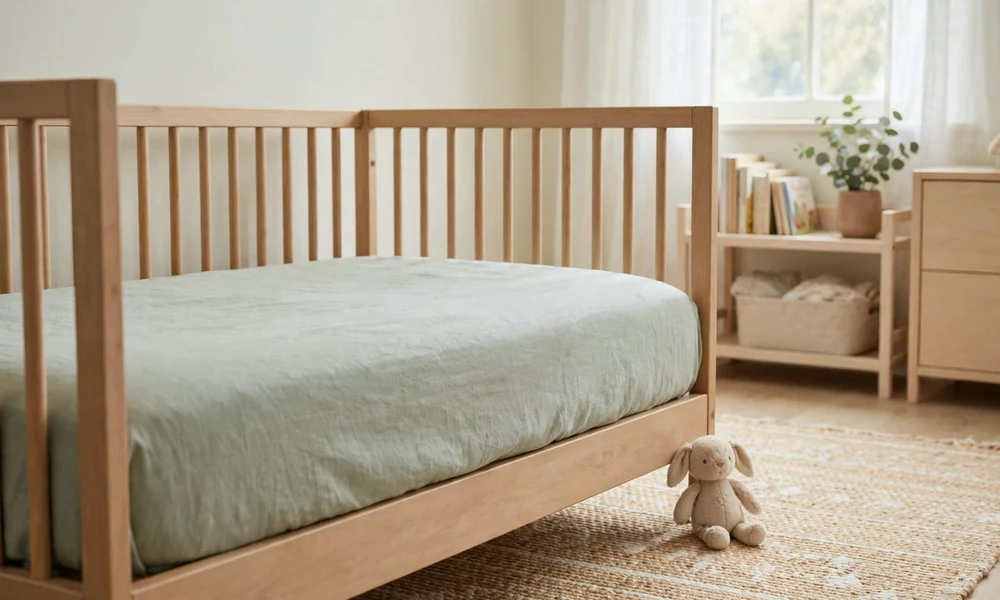
Safety comes before style with a toddler bed, every time. The frame should be solid wood or sturdy metal, with tight joints and hardware that stays put. Shake the bed in the shop or when you assemble it at home: if it rocks or creaks, it is not good enough. The top of the mattress should sit no more than about 25 centimetres above the floor, so a fall, if it happens, is a short one onto a rug. Rails should run along most of each long side, with a gap at one end where your child climbs in, and no opening wide enough for a head or a limb to pass through and get stuck.
The Best Overall: A Low Wooden Bed With Rails
The best toddler bed of 2026 is a low wooden bed with full-length safety rails, in a plain, pale finish that suits any nursery. It takes a standard toddler mattress, it sits close to the floor, and it has a low opening at one side so your child can climb in alone. The wood is solid rather than veneered chipboard, the joints are bolted rather than glued, and the whole frame weighs enough that it does not slide across the floor when a toddler pushes against it. It is not the cheapest bed on the shelf, and it is not the prettiest, but it is the one that still looks and feels solid after two years of daily use.

The Floor Bed: Freedom Without a Fall
A floor bed, sometimes called a house bed or a Montessori bed, is simply a mattress on a very low frame, often with a low rail or a house-shaped frame around it. Its great advantage is obvious: there is almost no height to fall from, so a child who rolls out of bed lands on a rug and can climb straight back in. For confident climbers and for children who wake in the night and want to reach a book or a toy, that freedom can make bedtime calmer rather than harder. The room needs to be safe as a whole, though, because a child who can leave the bed can also reach the rest of the room.
The Convertible Crib: One Purchase, Two Beds
If you are still choosing a crib, a convertible model deserves a serious look, because it turns into a toddler bed when your child is ready. One side comes off, a low safety rail goes on, and the bed your baby slept in becomes the bed your toddler sleeps in, with the same mattress size and the same familiar smell and feel. That familiarity matters more than most parents expect: a child who moves into a bed they already know often settles faster than a child faced with a brand-new piece of furniture in a new room. You can read more about the crib side of this choice in our guide to the best cribs of 2026, which covers the convertible models worth buying.
Metal Frames and Themed Beds: Fun With Limits
Metal toddler beds are lighter and often cheaper than wooden ones, and they can be a sensible choice for a spare room or a grandparent’s house. The best ones have a powder-coated finish, rounded joints, and a frame that does not flex when you press down on a corner. The worst ones are thin tubes that wobble, squeak, and feel cold to the touch in winter. If you choose metal, test it the same way you would test wood: shake it, sit on it, and check that every bolt is tight and flush. A good metal bed is perfectly safe; a cheap one is a false economy that you will replace within a year.
Mattresses and Bedding: Firm, Flat, and Snug
The mattress matters as much as the frame, and the rule is simple: firm, flat, and snug. A toddler mattress should be firm enough that it does not dip when your child lies on it, flat across its whole surface, and snug in the frame with no gap wider than two fingers at any side. Most toddler beds take a mattress around 70 by 140 centimetres, but always measure your frame before ordering, because a mattress that is even a few centimetres short leaves a gap a small arm can slip into. A waterproof cover under the fitted sheet protects the mattress from the accidents that are a normal part of this age, and it makes night-time changes far quicker.
Size, Room, and Storage
Measure the room before you buy the bed, not after. A toddler bed is smaller than a single bed, but it still needs space around it for a child to climb in, for you to sit beside it at story time, and for a rug to soften the floor where a child steps down in the morning. Leave at least 60 centimetres clear on the open side, and keep the bed away from windows, radiators, and blind cords. A bed pushed against a wall on one side needs only one rail, which saves money and floor space, but check that the wall side has no gap the mattress can slip away from.
Storage is the quiet problem in a toddler bedroom, and the bed can help solve it. Some toddler beds have drawers underneath, which are ideal for spare sheets, pyjamas, and the small pile of books that migrates to the bedside each night. Others leave the space open, which is better for air flow and for a child who likes to hide toys underneath. Either way, keep the top of the bed clear: a bed that doubles as a shelf for toys and laundry is a bed that never feels restful. The wider nursery picture, including storage and lighting, is covered in our guide to the best nursery essentials of 2026, which is worth reading before you buy anything else for the room.
When to Move, and How to Make It Stick
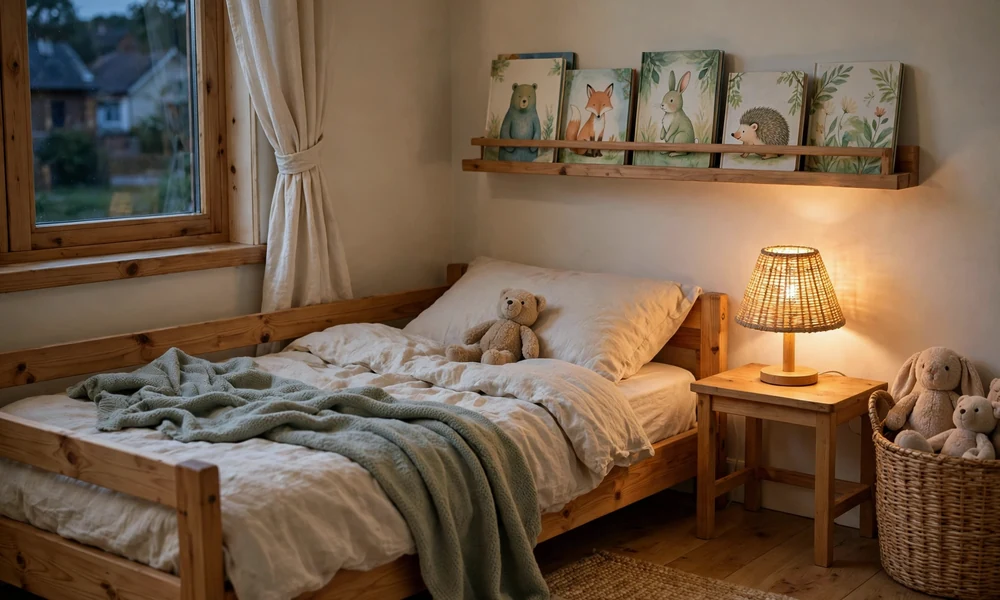
Make the move feel like a promotion, not a punishment. Let your child choose the bedding, put a familiar blanket and a small soft toy in the new bed, and keep the bedtime routine exactly the same for the first few weeks. A bedtime story in the new bed, a night light that stays on, and a calm, consistent response to night-time visits will do more than any gadget. A soft glow helps here: our guide to the best night lights of 2026 covers the dim, warm lights that let a child see the room without waking fully. Expect a few unsettled nights, celebrate the mornings your child stays in bed until you come, and remember that most children settle within a fortnight.
What to Avoid
Avoid beds that are too high, too soft, or too clever for their own good. A bed with a high frame and a thin rail looks like a toddler bed but behaves like a small adult bed, and a mattress that sinks in the middle will leave a child aching by morning. Avoid second-hand beds unless you can check them properly: confirm the model, check for recalls, measure the slat spacing, and make sure every bolt and rail is present and original. A missing rail or a replaced bolt is not a small problem, and a hand-me-down with loose joints is not worth the saving, however charming it looks.
Frequently Asked Questions
What age is a toddler bed for? Most children use a toddler bed from around eighteen months to about four or five years old, depending on their size. The move is usually prompted by climbing out of the crib or by reaching about 90 centimetres tall, rather than by age alone, and a child who is happy in the crib can stay there a little longer.
What size mattress does a toddler bed take? Most take a mattress around 70 by 140 centimetres, which is the standard toddler size, but frames vary, so measure yours before ordering. The mattress should fit with no gap wider than two fingers at any side, and it should be firm and flat rather than soft and deep.
Does my toddler need a pillow? Not at first. A small, flat pillow can be introduced once your child is over two and shows interest, but many toddlers sleep happily without one for another year. When you do add a pillow, choose a thin, washable one rather than a full-size adult pillow.
Are safety rails necessary? Yes, for most toddlers, especially in the first year after the move from a crib. Rails stop a rolling sleeper from falling out of bed, and they give a child a clear sense of where the bed ends. They can come off later, once your child is used to the bed and stays put through the night.
Can a toddler bed be used as a daybed later? Many can, and this is one of the best reasons to buy a solid wooden frame. Remove one rail, add a few cushions along the back, and the bed becomes a small sofa for a playroom or a spare bed for a young guest, which extends its life well beyond the toddler years.
The best toddler bed is not the most expensive one, and it is not the one with the brightest theme or the cleverest shape. It is the low, solid, well-railed bed that your child climbs into happily, sleeps in safely, and wakes from without a fall. Buy that bed, fit it with a firm mattress and a fresh sheet, keep the room calm and the routine steady, and bedtime becomes what it should be: a quiet end to the day, in a bed that belongs entirely to your child.