Heart rate monitors are the one training tool that tells you the truth about your effort. Your legs can lie to you and a tough session can feel easy on a good day — but your heart rate shows exactly how hard you are working, second by second. The best heart rate monitors in 2026 measure that number accurately enough to train by, whether you are chasing a faster 10K or simply making sure your easy days stay easy. A good monitor disappears on your body, connects to everything you own, and still shows the same number an hour into a sweaty session.
A heart rate monitor is not a fitness tracker and not a smartwatch, though it works happily alongside both. A tracker or watch measures heart rate as one feature among many, using a light on your wrist; a dedicated monitor measures it as its only job, usually from your chest or upper arm. Our guide to fitness trackers covers wrist bands and rings that track heart rate around the clock, and our guide to smartwatches covers watches that do calls, apps and payments as well as health.
Key Takeaways
- Chest straps are still the most accurate heart rate monitors you can buy, and the standard every wrist device is judged against.
- Optical armbands are close behind on accuracy and far more comfortable, making them the best choice for most people.
- Check connectivity before you buy: a monitor needs Bluetooth, ANT+ or both to talk to your watch, bike computer and apps.
- Train by heart-rate zones, not by a single number: most of your training should sit in zones two and three.
- A monitor is only useful if you wear it every session, so comfort and a battery that lasts weeks matter more than extra features.
What a Heart Rate Monitor Actually Measures
A heart rate monitor counts your heartbeats and reports the number in beats per minute. Your resting heart rate, measured first thing in the morning, is one of the simplest fitness numbers you can follow: as fitness improves it drifts down, and a sudden rise often means illness, stress or overtraining is coming.
Accuracy is the whole point of a dedicated monitor. Wrist sensors work by shining light into your skin and watching the blood flow, which works well when you are still and poorly when you are moving hard or gripping handlebars. Chest straps measure the heart’s electrical signal directly, which is why they stay accurate during intervals and sprints. Optical armbands sit between the two: the same light technology, but on the upper arm, where there is less movement and better blood flow.
The practical difference shows up in the numbers you train by. A wrist sensor that reads ten beats too low during intervals will tell you to push harder than your plan calls for; a chest strap that reads true lets you hold a zone for an hour. If you follow a structured plan with target zones, accuracy is the feature that decides everything else.
The Monitor Types Worth Knowing
Chest Strap Monitors
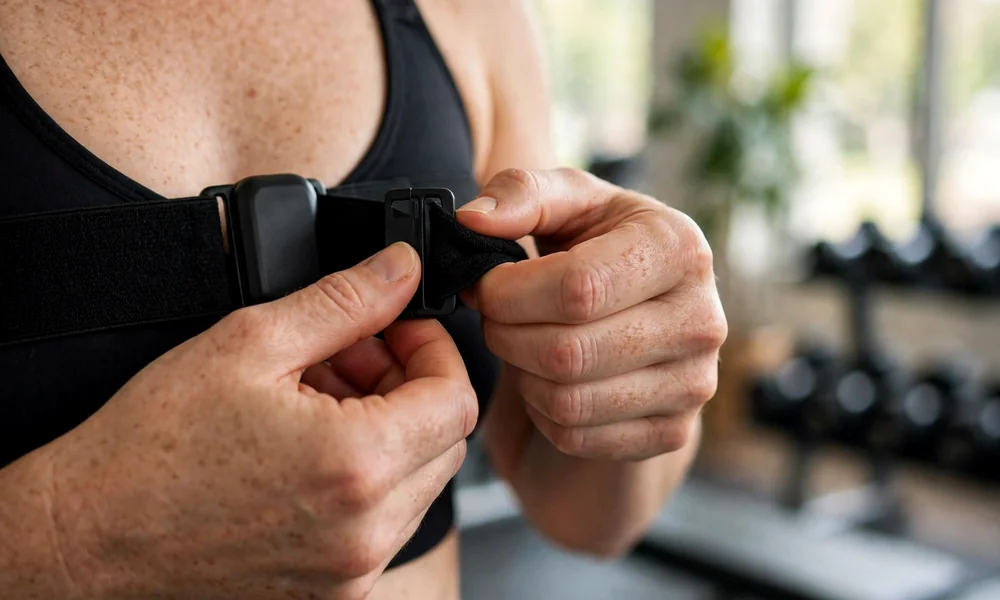
Chest straps are the accuracy standard. A soft fabric strap wraps around your chest with a small sensor pod that reads the heart’s electrical signal, which is why they stay accurate during intervals and sprints. Modern straps are far more comfortable than the stiff plastic bands of a decade ago, and most now last for months on a single coin battery. The trade-offs are real: the strap needs moisture to make contact, so you wet the electrodes before you start.
Optical Armband Monitors
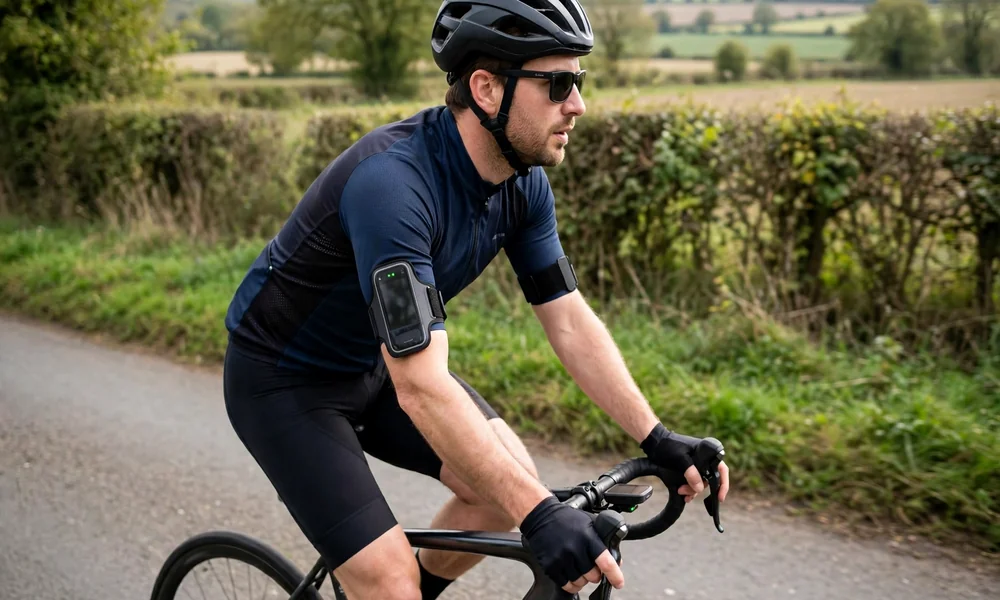
Optical armbands are the comfort pick. A small pod on a stretchy band sits on your forearm or upper arm, shining light into the skin to read your pulse, with no chest strap and no wet electrodes. They are close to chest-strap accuracy during steady exercise, and most people find them far easier to wear for hours. They struggle more during short, sharp intervals, when the light sensor loses the pulse for a few seconds.
ECG and Medical-Grade Monitors
A few monitors record a full ECG trace rather than just a heart rate number, and some carry medical clearances for detecting irregular rhythms. These are genuinely useful for people with a known heart condition, and overkill for everyone else. If your reason for buying a monitor is a health concern rather than a training goal, talk to your doctor about which device they want to see data from.
Chest Strap vs Armband vs Watch
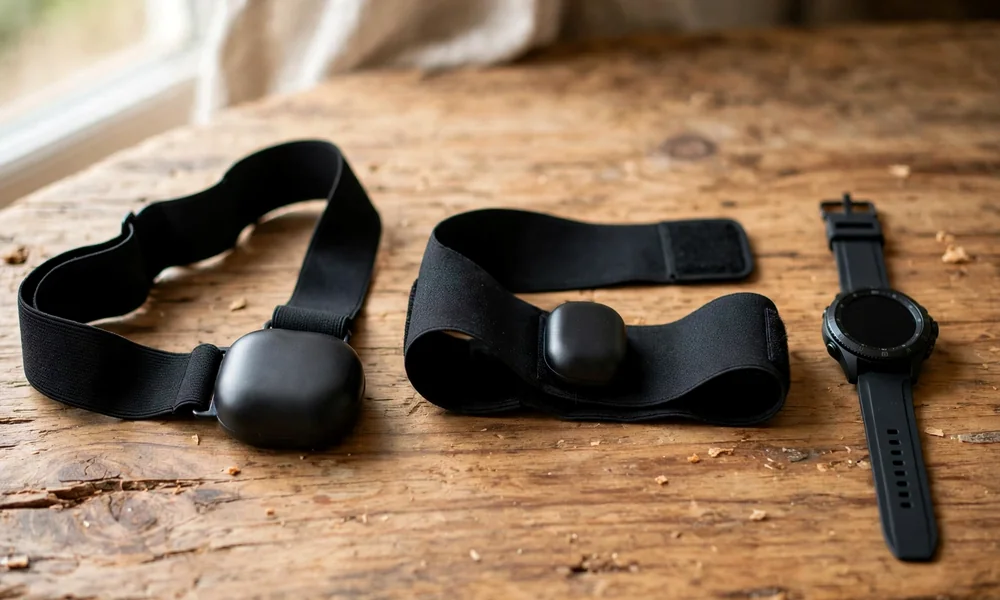
The choice between a chest strap, an armband and a watch sensor is really a choice between accuracy, comfort and convenience. A chest strap wins on accuracy in every condition, an armband wins on comfort for most people, and a watch wins on convenience because it is already on your wrist. The honest answer for most buyers is an armband: accurate enough for structured training and comfortable enough to wear every session.
| Type | Accuracy | Comfort | Best for | Watch out for |
|---|---|---|---|---|
| Chest strap | Best, clinical-grade signal | Good once broken in | Intervals, racing, structured plans | Needs wet electrodes, can chafe |
| Optical armband | Very good, near strap | Excellent | Most runners and cyclists | Lags on sharp intervals |
| Wrist sensor | Good at rest, weaker in motion | Excellent | All-day tracking, easy days | Reads low during hard efforts |
| ECG monitor | Best, plus rhythm trace | Good | Heart health monitoring | Costly, overkill for training |
Connectivity: Bluetooth, ANT+ and Your Apps
Connectivity decides whether your monitor is useful or frustrating. Bluetooth connects to one device at a time — your phone or your watch — and is the standard for apps. ANT+ connects to many devices at once, so a bike computer, a watch and a gym treadmill can all read the same strap simultaneously, which is why cyclists and triathletes insist on it. The best monitors broadcast both at the same time.
Before you buy, check what your watch and apps accept. Most modern watches take both Bluetooth and ANT+, but some budget watches take Bluetooth only, and some gym equipment takes ANT+ only. If your monitor and your watch cannot talk to each other, you will be reading numbers off your phone mid-workout. Our guide to workout apps covers the apps that turn heart rate data into training plans, and every one of them needs a monitor that connects cleanly.
Training by Heart-Rate Zones
Heart-rate zones turn a single number into a training plan. Zone one is a gentle warm-up, zone two is the easy endurance pace where most of your training should live, zone three is a steady tempo, zone four is threshold work, and zone five is all-out effort. The commonest mistake in endurance training is spending too much time in zone three — too hard to build base fitness, too easy to build speed.
To find your zones you need your maximum heart rate, and the honest way to find it is a hard field test, not the 220-minus-age formula, which can be twenty beats wrong. A simple version: after a good warm-up, run hard up a hill for three minutes, recover for two, and repeat — the highest number you see is close to your maximum. Set your zones from that number, then trust the monitor over your feelings for the first month.
The Best Heart Rate Monitors of 2026
We judged every monitor on accuracy against a reference chest strap, comfort over long sessions, connectivity, battery life and value. The five picks below cover every sport and every budget.
Best Overall: Garmin HRM-Pro Plus. The benchmark chest strap: accurate in every condition, dual Bluetooth and ANT+ broadcast, running dynamics for Garmin watches, and a coin battery that lasts a year.
Best Armband: Polar Verity Sense. The best optical armband we tested: near chest-strap accuracy during steady exercise, superb comfort, internal memory for swimming, and dual Bluetooth and ANT+ broadcast.
Best Budget: Coospo H9Z. The strongest budget strap we found: genuine ECG-based chest measurement, dual Bluetooth and ANT+, and a price well below the big brands. The strap is less refined, but the number on your watch is just as accurate.
Best for Swimming: Polar H10. The H10’s internal memory records your heart rate in the pool, where Bluetooth cannot reach through water, and syncs it to your watch afterwards. It is also one of the most accurate straps on dry land.
Best for Everyday Use: Wahoo TICKR Fit. A comfortable armband with a simple one-button design, dual broadcast, and a rechargeable battery. The pick for gym-goers and casual runners who want a monitor they can put on in seconds.
Care, Batteries and Lifespan
Chest straps need a little care to stay accurate. Rinse the strap in clean water after every session, and wash it properly with mild soap once a week — dried sweat corrodes the electrodes and is the commonest cause of a strap that reads erratically. Unclip the sensor pod after each session, because a pod left clipped to a damp strap drains its battery.
Armbands are simpler: wipe the optical sensor clean after each session and charge weekly. Expect a good monitor to last three to five years. Replace a chest strap when the fabric loses its stretch or the electrodes stop reading cleanly, and replace an armband when the band no longer holds the sensor flat against your skin.
Heart Rate Monitor Buying Checklist
- Choose a chest strap for maximum accuracy, an armband for comfort, and a watch sensor only for all-day tracking.
- Check connectivity: dual Bluetooth and ANT+ covers watch, bike computer and gym kit at once.
- Try the fit before you commit: a strap should sit snug below your chest muscles, an armband flat on your upper arm.
- Check battery type and life: coin batteries last months, rechargeables last weeks, and both should outlast your longest session.
- Make sure your watch and apps accept the monitor’s signal before you buy, not after.
- Buy the monitor you will wear every session — accuracy you leave in a drawer is worth nothing.
Frequently Asked Questions
Are chest strap heart rate monitors more accurate than watches?
Yes. A chest strap reads the heart’s electrical signal directly, while a watch shines light into your wrist and infers the rate from blood flow. The gap is small at rest and grows during hard exercise.
Do I need a heart rate monitor if I have a smartwatch?
It depends on how you train. For all-day tracking and easy runs, a watch is enough. For structured training with target zones or racing, a chest strap or armband gives you numbers you can trust.
Can I wear a heart rate monitor swimming?
Yes, but only some models. Bluetooth does not travel through water, so a swimming monitor needs internal memory to record your heart rate and sync it afterwards. Check for a 5 ATM water rating and a memory mode before buying for the pool.
Why does my heart rate monitor spike or drop suddenly?
Sudden spikes usually mean the sensor lost contact: a dry chest strap, a loose armband, or static from a synthetic shirt. Wet the electrodes, tighten the band, and check the sensor is flat against your skin.
What heart rate should I train at?
Most of your training should sit in zone two, roughly 60 to 70 percent of your maximum heart rate, where you can still hold a conversation.
How long do heart rate monitor batteries last?
Coin-battery chest straps last six to twelve months of regular use. Rechargeable straps and armbands last twenty to thirty hours per charge.
The Bottom Line
The best heart rate monitors are the ones that give you a number you can trust and that you will actually wear: a chest strap for maximum accuracy, an armband for comfort, and dual Bluetooth and ANT+ so the number reaches every device you own. Set your zones properly, and let the number keep your easy days easy and your hard days hard.