Worst Rackets to Look the Other Way: The Worst Sports Rackets of 2026
The worst sports rackets of 2026 look fine on the shop wall and feel fine in a couple of practice swings, then fail exactly when a rally matters: the strings go dead, the frame twists in the hand, or the throat cracks on a cold morning and the game ends before it starts. A bad racket also teaches a player to swing around the ball instead of through it, a habit that takes a season to unlearn. This guide ranks the worst types of sports racket in 2026 by the damage they do to a player, across tennis, badminton and squash.
Key takeaways
- The worst sports rackets are types, not brands: the same seven failures turn up on racks in every sport and at every price.
- Dead strings are a dead racket. Once the string bed loses tension, the sweet spot shrinks and good shots drop into the net.
- Weight and balance matter more than the price tag. A racket that is too heavy or too head-heavy makes the arm late, and a late arm misses easy balls.
- A cracked frame is a safety problem, not just a performance problem. A throat that splits can send a shaft flying across the court.
- Check the strings, the frame and the grip before you pay, and walk away from any racket that fails even one of those three checks.
How the worst sports rackets were ranked
Every type below was scored on five measures. Playability comes first: does the ball or shuttle come off the strings with control, or does a well-timed swing die in the net or fly long? Durability is second, judged on whether the racket survives a season or warps, cracks or loses its strings within weeks. Feel is third, covering vibration and whether the racket stings the arm on every mishit. Balance is fourth, because a racket that is too heavy at the head will wreck timing faster than any other fault. Value is fifth: does the price match what you get, or are you paying real money for a toy?
Two notes before the list. First, no single racket is named as the worst, because the same bad patterns appear under many labels. Second, a racket is not a bat: our guide to the worst sports bats of 2026 covers dented barrels and cracked handles, while the ball itself is another problem, as our guide to the worst sports balls of 2026 shows.

Comparison table: the worst sports rackets of 2026
| Rank | Racket type | Main fault | Who it hurts most |
|---|---|---|---|
| 1 | The dead-string racket | Strings with no tension left | Players who hit through the ball |
| 2 | The warped frame | Head bent out of shape | Everyone who trusts the strings |
| 3 | The cracked-throat racket | Throat splits under load | Hard hitters and their partners |
| 4 | The sledgehammer | Far too heavy at the head | Young players and late swingers |
| 5 | The slippery-grip racket | Grip that twists when hands sweat | Summer players and long rallies |
| 6 | The bare frame | Sold with no strings at all | Beginners who expect to play |
| 7 | The toy-shop frame | Not a real racket at all | Children learning the game |
The worst sports rackets of 2026
1. The dead-string racket: the worst racket of all
The dead-string racket is the worst sports racket you will ever pick up, and it is not close. The strings are the whole point of a racket: they catch the ball and throw it back with pace and direction, and a dead string bed cannot do any of that. A fresh bed feels crisp, with a sweet spot the size of your palm. A dead one feels soft and dull, like hitting with a mattress, and the sweet spot shrinks to a coin-sized patch. Press your thumb into the bed before you buy: fresh strings push back firmly, dead ones sink and stay sunk.
2. The warped frame: bent before you even play
The warped frame looks straight until you hold it up against something that is, and then the truth shows. The head is no longer a clean oval: one side sits higher than the other, and the strings pull tighter on one side because the frame has moved. Heat usually starts it, a car boot in summer or a radiator in winter, or a hard knock against a post. Once a frame has warped, it will not straighten, and every string job after it pulls unevenly and makes the bend worse. Sight down the shaft and lay the frame flat: a frame that rocks on a table has already failed.

3. The cracked-throat racket: fast until it fails
The cracked-throat racket is the most dangerous racket on this list, because it hides its failure until the worst possible moment. The throat is the narrow bridge where the head meets the shaft, and it takes the full force of every hit. A hairline crack there is easy to miss: it hides under the paint, and the racket still plays well enough that nobody looks twice. Then one hard shot and the throat gives way: the head snaps off, the shaft kicks back, and pieces can fly across the court. Tap the throat with a knuckle: a sound frame knocks clean, a cracked one thuds dull, and a cracked throat belongs in the bin.
4. The sledgehammer: far too heavy at the head
The sledgehammer is the racket that promises power and delivers exhaustion. It is heavy at the head, long in the shaft, or simply too heavy overall, and it feels impressive for the first five minutes. Then the rally goes long, the arm goes heavy, and the timing falls apart. The head arrives late on every swing, the wrist drops, and good shots start sailing long or dying in the net. Hold the racket out straight for thirty seconds and swing it ten times: if the arm tires, it is too heavy for you.
5. The slippery-grip racket: the frame that twists away
The slippery-grip racket fails at the one place where the player actually touches it. The grip is worn smooth, or it was cheap and shiny from the start, and the moment the hands sweat, the handle starts to turn. A quarter-turn is enough to ruin a shot: the face opens, the ball flies wide, and the player tightens their hold to compensate. A fresh overgrip costs very little and takes a minute to fit, which makes the failure worse. Twist the handle against your palm before you buy: a good grip bites, a bad one slides.
6. The bare frame: sold with no strings at all
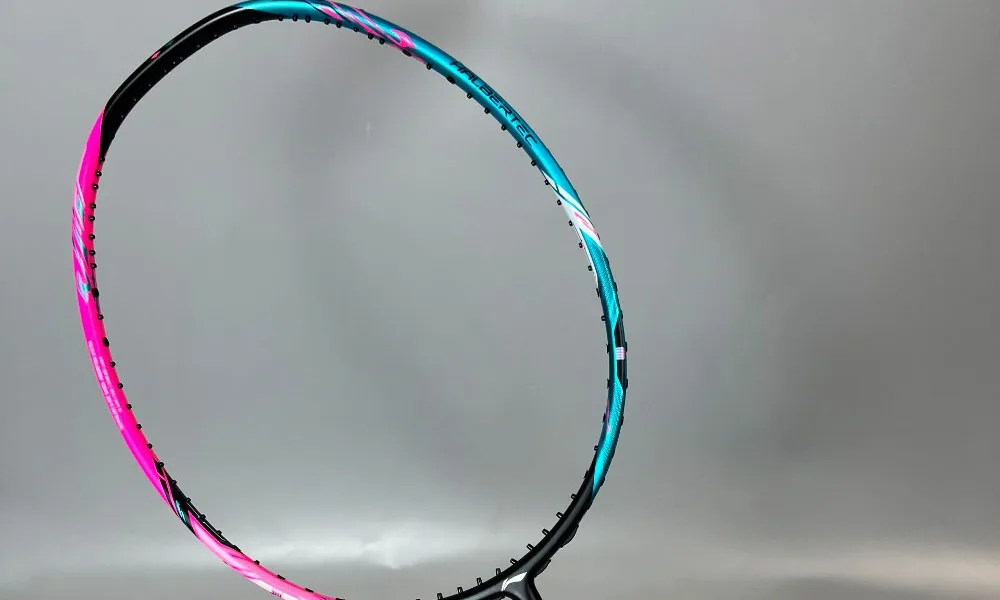
The bare frame is the racket that is not ready to play, and the shop does not always say so. It hangs on the rack looking complete, with a smart paint job and a proper grip, and only when you look closely do you see that there is nothing inside the head: no strings, no string bed, just an empty frame. Some are sold this way honestly, as frames for players who want their own stringer. Many are sold this way quietly, to buyers who assume a racket comes ready to play, and the surprise comes at the till. A bare frame is a bad buy for anyone without a stringer and a budget for the job: look through the head and add the stringing cost to the price.
7. The toy-shop frame: not a real racket at all
The toy-shop frame is the racket that was never meant to be played with, and it shows the moment a real ball meets it. It is too light, too short, or made of thin plastic that flexes like a ruler, and its strings are often a single moulded sheet rather than real strings at all. A child can wave it at a foam ball, but the first real rally ends the pretence: the frame bends and the ball goes nowhere. A proper junior racket costs more, but it has real strings, a real grip and a real weight: press the bed, and if it stays dented, it is a toy.
What to avoid when buying a sports racket
The most common racket regret is not a bad racket but a wrong match: a heavy frame bought for a child, a dead string bed bought because the paint was pretty, or a bare frame bought by someone who has never met a stringer. Avoid the trap by checking three things before you pay: the strings, the frame and the grip, in that order. Press the string bed, sight down the frame for warps and cracks, and twist the grip against your palm. The same checks work across racket sports too, and our guide to the worst sports nets of 2026 makes the same point about checking the equipment first.
Checklist: buying a sports racket
- Press the string bed hard with your thumb: fresh strings push back firmly, dead strings sink and stay sunk.
- Sight down the shaft to the head and lay the frame flat: walk away from any warp, wobble or flat spot.
- Run a fingernail around the throat and shaft, and listen for a dull thud that means a hidden crack.
- Hold the racket out straight for thirty seconds and swing it ten times: if the arm tires, it is too heavy for you.
- Twist the grip against your palm: a good grip bites, a shiny glazed grip slides and needs replacing.
- Look through the head before you pay: a frame with no strings is a project, so add the stringing cost to the price.
Frequently asked questions
How do I know if my racket strings are dead?
Press your thumb hard into the middle of the string bed. Fresh strings push back firmly and spring back at once, while dead strings sink and stay sunk. Frayed fibres and notches where the strings cross are signs the strings are finished.
Can a warped racket frame be fixed?
No, not in any way that lasts. Once a frame has bent, every string job pulls unevenly and makes the bend worse, and the shots will never go where you aim them. A warped frame belongs in the bin, however new it looks, because the bend is permanent.
Is a heavy racket better for power?
Only if you can still swing it cleanly in the last game. A heavy head feels powerful for five minutes, then the arm tires, the timing falls apart and the shots sail long or die in the net.
Should I buy a racket without strings?
Only if you already have a stringer and a budget for the string job. A bare frame plus stringing often costs more than a ready-strung racket of the same quality, with a worse result. If you want to play the day you buy it, buy a racket that is strung and ready.
What grip size should I choose?
Hold the racket in a normal playing grip: there should be a finger-width of space between your fingertips and the palm. Too small and the racket twists in the hand, too big and the wrist locks up. When in doubt, go smaller and add an overgrip.
Are cheap rackets always bad?
No, a cheap racket with fresh strings, a straight frame and a decent grip can play perfectly well. Price is the least reliable guide: check the strings, the frame and the grip first, and judge the racket on those three things, not on the tag.
Bottom line
The worst sports rackets of 2026 fail at the basics: strings with no life, frames that have warped or cracked, grips that slide, and frames sold as toys or sold empty. Check the strings, the frame and the grip before you pay, buy the weight you can still swing when tired, and the racket will help your game instead of getting in its way.