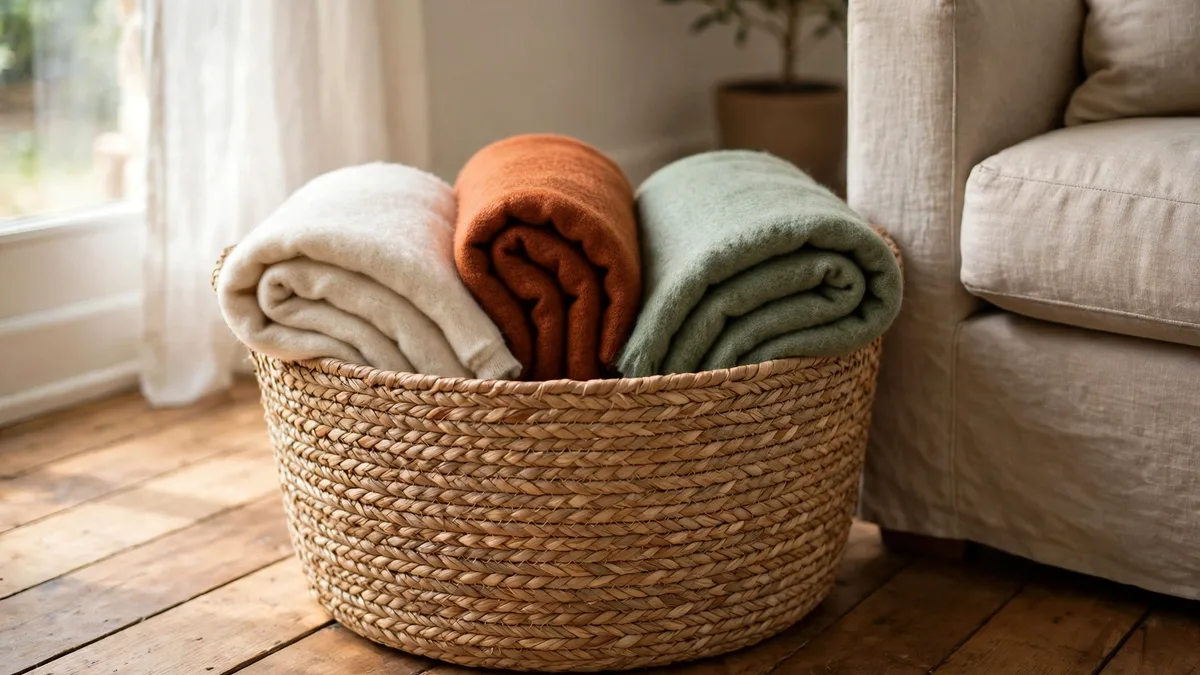
An afghan is the only blanket in the house that usually comes with a story. It was crocheted or knitted by hand, square by square or row by row, often as a gift, and it carries the hours someone spent making it. That is what makes buying one different from buying any other throw. You are choosing stitchwork you can see, yarn you can feel, and a piece that should last long enough to hand on. This guide explains what makes a good afghan, which types suit which rooms, and how to tell a well-made one from a pretty one that will fall apart.
Key Takeaways
- An afghan is a handmade crocheted or knitted throw: tight, even stitches last for years, loose ones snag and stretch.
- Granny squares suit colourful living rooms, ripples suit calm bedrooms, chunky knits suit cold evenings.
- Wool is warmest and longest lasting, cotton is coolest and easiest to wash, acrylic is the practical budget choice.
- Buy the size for the person: about 130 by 180 centimetres covers one adult fully.
- A handmade afghan needs gentle care: cool wash, dry flat, never hang it wet.

What an Afghan Actually Is
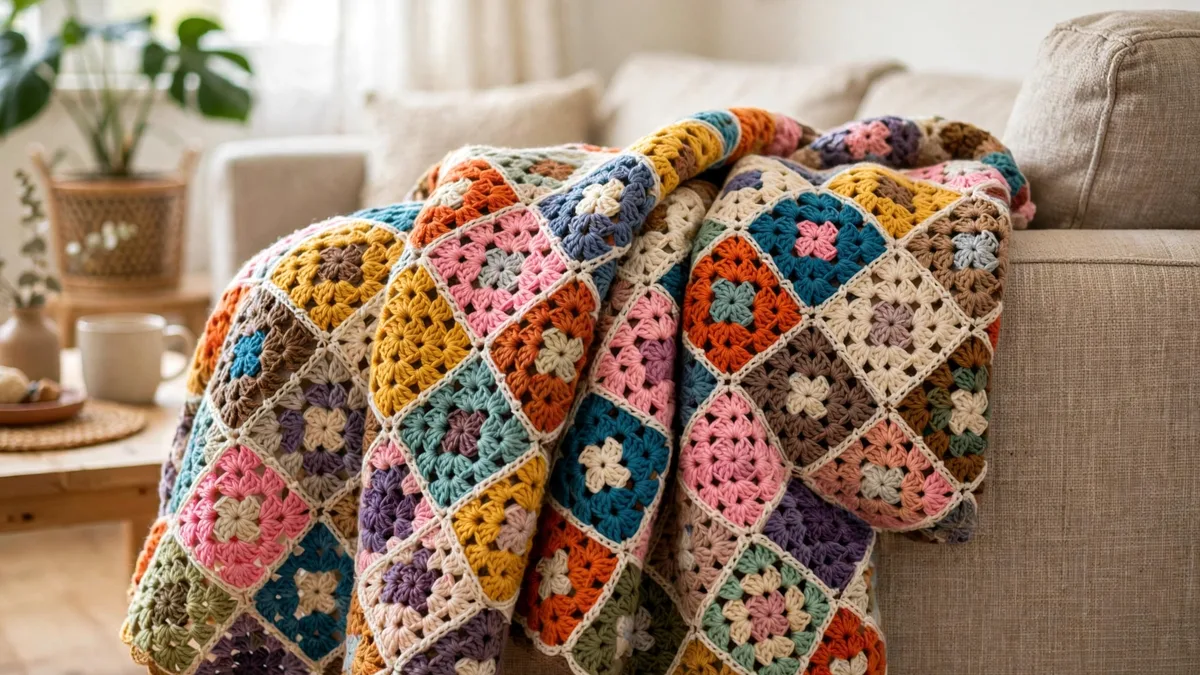
An afghan is a throw blanket made by crochet or knitting, usually in pieces joined together. The classic is the granny square: small crocheted squares in different colours, joined into a blanket that looks handmade from across the room, because it is. Other afghans are worked in long rows, in ripple or chevron stripes, in shell stitches that fan out like scales, or in a single solid colour with a textured stitch. Knitted afghans use needles, and chunky knits use very thick yarn for a heavy, deeply textured blanket.
Shops now sell machine-made blankets labelled as afghans. A machine-made throw with a crochet-look pattern is not an afghan in the sense this guide means. A handmade afghan has slight variations between squares, visible joins, and a drape that comes from real stitches rather than a printed pattern. That handmade character is the point, and it is why afghans are so often gifts: a blanket that took weeks to make says something a shop-bought throw cannot.
Afghans are not bed blankets. They are too small for a double bed and too decorative to hide under a duvet. Their home is the sofa, the armchair, and the foot of a single bed. A good afghan lives folded over an armrest, ready to pull across your lap.
The Main Types of Afghan Compared
Every afghan is a variation on a few stitch families, and the stitch decides warmth, drape and wear. A well-chosen stitch suits its room; a wrong one fights it.
| Type | Best for | Warmth | Watch out for | Price in 2026 |
|---|---|---|---|---|
| Granny square | Colourful rooms | Medium | Openwork lets draughts in | Mid-high |
| Ripple stripe | Calm bedrooms | Medium-high | Stripes must line up | Mid |
| Shell stitch | Nurseries | Medium | Scalloped edge snags | Mid |
| Chunky knit | Cold nights | Highest | Heavy, sheds, hard to wash | Mid-high |
| Solid colour | Minimal rooms | Medium | Shows stains, pills | Low-mid |
Granny Squares, Ripples and Shells: Choosing a Stitch
The granny square is the most famous afghan stitch, and the easiest to judge. Each square is crocheted from the centre out, usually in three or four colours, then joined to its neighbours. A good granny-square afghan has squares of the same size, joins that lie flat, and colours that repeat in a pattern rather than scattering at random. Hold it up to the light: the openwork is part of the design, but the squares should feel firm, not floppy. Granny squares suit living rooms, and they make the best gifts.
Ripple afghans are worked in long wavy rows, usually in stripes that rise and fall across the blanket. They drape better than granny squares, because there are no joins to stiffen the fabric, and they suit bedrooms, where a calm striped band across the foot of the bed looks deliberate. The test is the stripe: colours should change cleanly at the same point in every row, and the wave should be even. A ripple that wanders was made in a hurry.
Shell stitch afghans fan out in overlapping scallops, soft to the touch and pretty to look at. They suit nurseries and gentle gifts. The weakness is snagging: the raised shells catch on rings, zips and rough wood, so a shell afghan belongs on a bed or a chair. Chunky knits are the opposite: thick, heavy, deeply textured, made for cold evenings in a reading chair. They are the warmest afghans you can buy, and the hardest to wash, so keep one for the chair rather than the sofa the dog sleeps on.
Yarn: Wool, Cotton or Acrylic?
Yarn decides warmth, weight, care and lifespan, and it matters more than the stitch. Wool is the warmest and the longest lasting. A wool afghan traps air, breathes when you get warm, and can last for decades if washed gently. Our guide to the best wool blankets of 2026 covers the fibre in depth, and the same rules apply here: merino is softest, lambswool is best value, and blends trade some warmth for easier washing. The catch is care. Wool needs a cool wool wash or a hand wash, dried flat, and it will felt if it meets hot water and agitation together.
Cotton is the coolest yarn and the easiest to live with. A cotton afghan suits warm rooms and year-round use, washes in the machine without fuss, and feels smooth against bare skin. It is less warm than wool and heavier when wet, so it suits a sofa throw better than a bed layer. Acrylic is the budget workhorse: soft, light, machine washable, and available in every colour. It pills faster than natural fibres and holds static, but for an everyday afghan washed weekly, acrylic is the sensible buy. Check the label, since a yarn that is only 20 percent wool will not behave like wool.

Afghans vs Throw Blankets: What Is the Difference?
Every afghan is a throw blanket, but not every throw blanket is an afghan, and the difference is how it was made. A throw blanket is defined by size and use: a small blanket for one person, for the sofa or the foot of the bed. An afghan is defined by making: crocheted or knitted by hand, in stitches you can see and count. A machine-made fleece throw is a throw blanket. A granny-square blanket is an afghan. Our guide to the best throw blankets of 2026 covers the wider category room by room, from wool to fleece to acrylic, and it is the right starting point if you have not decided what kind of throw you want.
The practical differences follow from the making. An afghan drapes differently: crochet and knit have a give woven fabric does not, so an afghan settles around shoulders and laps instead of sliding off. It also wears differently. A woven throw pills across its surface; an afghan snags at a stitch, and a snagged stitch can be repaired with a hook in minutes, while a pilled throw can only be shaved. And it ages differently. A good wool afghan softens with use, while a cheap fleece throw goes flat within a season. That is why afghans are handed on and throws are replaced.
There is one honest trade-off. A handmade afghan costs more than a machine-made throw of the same size, because someone spent hours making it, and it needs gentler care. For a house with small children and a dog, a machine-washable fleece blanket is the practical buy. If you want a blanket with a story, for a quiet chair and a cold evening, an afghan is worth the difference.
Sizing: Measure the Person, Not the Room
Size is where most afghan purchases go wrong, because buyers measure the sofa instead of the person. An afghan should cover one adult from shoulders to feet, about 130 by 180 centimetres for most people. A smaller afghan of about 100 by 130 centimetres works as a lap blanket, and a larger one of about 150 by 200 centimetres covers two people sharing a sofa. For a single bed, 130 by 180 centimetres folds neatly across the foot.
Check the size before you buy, because handmade afghans vary more than machine-made throws. Count the squares across and down a granny-square afghan, and multiply by the size of one square, to check the maker’s claimed size. For a ripple afghan, measure the finished width, since the wave makes the edge hard to judge by eye. Crochet stretches: an afghan that fits today will grow a little with use, especially in cotton, so buy snug if you are between sizes.
How to Tell a Well-Made Afghan from a Pretty One
Start with the stitches. They should be even, tight enough that you cannot see through the solid parts, and consistent from edge to edge. Run your hand across the blanket: it should feel springy, not floppy, and the joins should lie flat. Turn it over. The back should look nearly as neat as the front, with ends woven in. Loose ends are the first sign of a rushed job, and the first thing to unravel in the wash.
Check the edges. A good afghan has a border, usually one or two rounds of a plain stitch, that frames the blanket and stops the edge stitches from stretching. A blanket with no border will curl within weeks. Smell it, too: wool should smell faintly of lanolin, not chemicals, and a musty smell means it was stored damp. Finally, ask how it was made. A seller who can name the yarn, the stitch and the time it took is selling a handmade piece.

Buying Checklist
- Choose the stitch for the room: granny squares for colour, ripples for calm, chunky knits for cold nights.
- Check the stitches are even and tight, the joins lie flat, the ends are woven in.
- Pick the yarn for the care you will give it: wool for warmth, cotton for easy washing, acrylic for budgets.
- Measure the person, not the sofa: 130 by 180 centimetres covers one adult.
- Make sure it has a border, or the edges will curl within weeks.
- Ask how it was made before you pay for handmade.
Frequently Asked Questions
What is the difference between an afghan and a blanket?
An afghan is a handmade crocheted or knitted throw; a blanket is the wider category, including machine-made, woven and fleece blankets.
Are afghans warm?
Yes, when stitch and yarn suit the cold. Chunky knits and dense wool afghans are very warm. Openwork granny squares are lighter and suit cool evenings, because the gaps let draughts through.
Can I wash an afghan in the washing machine?
It depends on the yarn. Acrylic and cotton afghans usually machine wash on a cool, gentle cycle. Wool afghans need a wool wash or a hand wash in cool water, and all afghans should be dried flat.
How long does it take to crochet an afghan?
A granny-square afghan takes most makers several weeks of evening work, and a large ripple afghan can take a month or more. That time is why handmade afghans cost more.
What size afghan should I buy?
About 130 by 180 centimetres covers one adult from shoulders to feet. A lap blanket is about 100 by 130 centimetres, and two sharing need about 150 by 200 centimetres.
Do afghans make good gifts?
They are among the best handmade gifts, because the time in them is visible. Choose colours that suit the recipient’s room, and include care instructions.
The Bottom Line
Buy the stitch for the room, the yarn for the care you will give it, and the size for the person who will use it. Check the stitches are even, the joins lie flat, and the blanket has a border. A good afghan costs more than a machine-made throw and needs gentler care, but it softens with use and repairs with a hook.