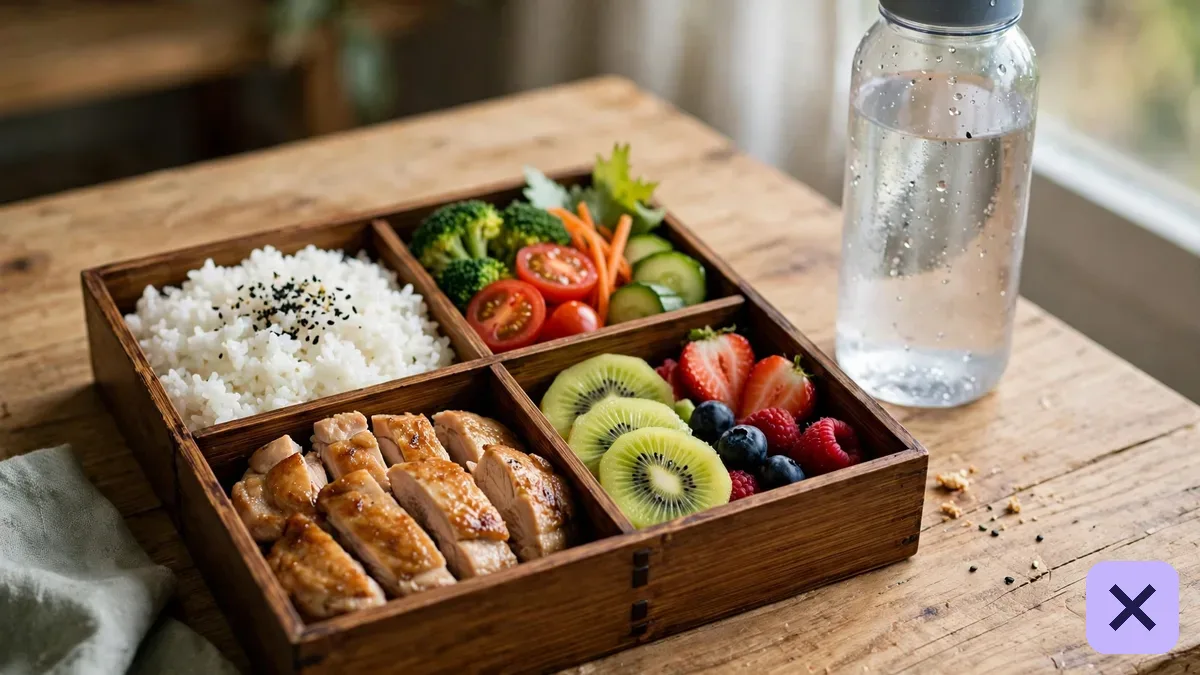
Open a packed lunch at noon and the difference between a bento box and a plain plastic container is obvious before you take a bite. In the bento box, the rice is separate from the salad, the dressing is still in its own corner, and nothing has leaked into anything else. In the plastic container, the whole meal has slid into one corner, the sauce has soaked through the bread, and the lid smells faintly of last week’s curry. Bento boxes beat plastic containers for packed lunches in 2026 because they are built around how a real lunch works: several foods, kept apart, sealed properly, and still appetising hours after they were packed.
This guide explains why bento boxes win for packed lunches, how they compare with plastic containers on leaks, freshness, cleaning and cost, and how to choose one that fits your bag, your food and your routine. Whether you pack lunch for work, school or the gym, the right box makes the difference between a meal you look forward to and a meal you throw half of away.
Key takeaways
- Compartments keep foods separate, so salads stay crisp and sauces stay where they belong.
- A bento box seals each section, while a single plastic tub lets everything mix and leak.
- Stainless steel and glass bento boxes do not stain or hold smells the way plastic does.
- Bento boxes encourage better portions, with a main, a side and a snack in one box.
- A good bento box costs more upfront but lasts years, while cheap plastic tubs warp and crack.
What makes a bento box different
A bento box is not just a lunch box with dividers. It is a system: a shallow box with fixed or removable compartments, a lid that seals each section separately, and a size designed around a complete meal rather than a single dish. The idea comes from Japan, where a packed lunch has always been a small, balanced meal rather than a sandwich in a bag. That thinking is what makes it work so well for modern packed lunches too, because most of us no longer pack a single sandwich. We pack a grain, a protein, vegetables and a snack, and we want each of them to arrive in good condition.
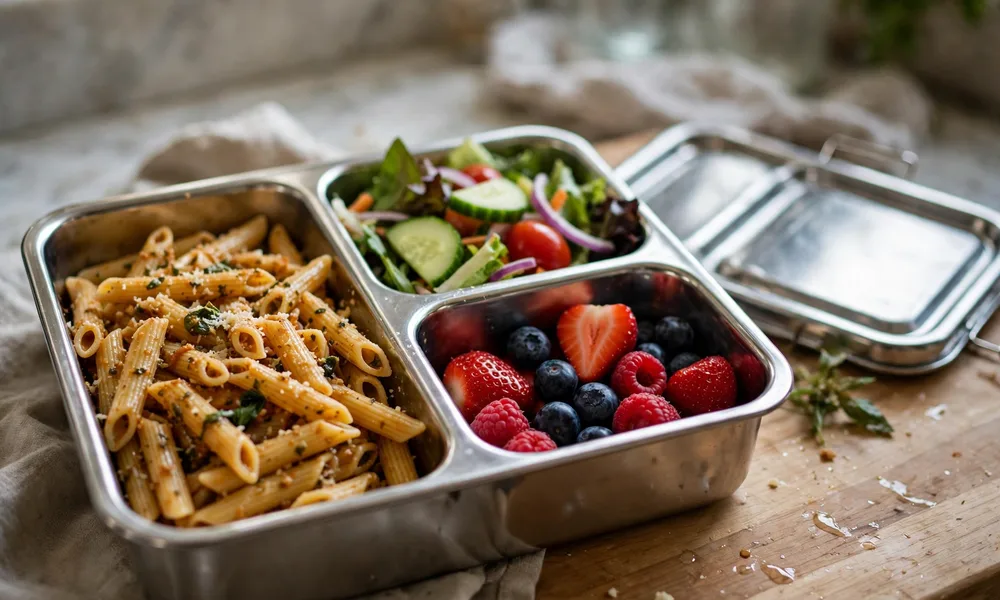
A plain plastic container is built for one thing: holding food in a single space. That is fine for soup or leftovers, but it is a poor design for a mixed lunch. Dressing runs into the salad, hot food steams the cold food, and everything ends up tasting the same by noon. A bento box solves this by giving each food its own space, with dividers that stop wet food touching dry food and a lid that presses down on each compartment. The result is a lunch that looks and tastes like the meal you packed, not like something that survived a journey.
Bento boxes versus plastic containers
The fairest way to judge the two is head to head, on the things that matter at noon on a working day. A plastic tub wins on price and weight, and it is hard to beat for carrying soup. On almost everything else, the bento box comes out ahead, and the gap is widest on the things that ruin a lunch: leaks, smells and soggy food.
| What matters | Bento box | Plastic container |
|---|---|---|
| Keeping foods separate | Compartments keep every food apart | Everything mixes in one space |
| Leaks | Sealed sections and locking lids | Lids flex and leak sauces |
| Stains and smells | Steel and glass stay clean | Plastic stains and holds odours |
| Portions | Built-in sections guide a balanced meal | No portion control at all |
| Durability | Lasts for years | Warps, cracks and clouds |
| Price | Costs more upfront | Cheap to buy, often replaced |
Leaks, stains and smells: where plastic loses
The most common packed-lunch disaster is a leak, and plastic containers cause most of them. A thin plastic lid flexes when the box is squeezed in a bag, the seal breaks, and dressing or curry escapes onto your laptop, your book or your gym clothes. A good bento box uses a different design: a silicone gasket in the lid, locking clips on two or four sides, and compartments that are sealed individually, so even if one section is wet, the rest stays dry. Test any box before you trust it: fill it with water, close it, and turn it upside down over the sink.
Stains and smells are the slower problem. Plastic absorbs turmeric, tomato sauce and garlic, and after a few months a clear tub turns orange and smells of old food no matter how well you wash it. Stainless steel and glass do not absorb anything, so a steel bento box still looks and smells new after a year of daily use. That matters more than it sounds, because a box that smells stale makes even fresh food unappealing. If you pack food with strong flavours, steel or glass is the only material that stays neutral.
Portions that make lunch better
A bento box quietly improves what you eat, because its compartments set the portions for you. The large section holds the main dish, a medium section holds vegetables or salad, and a small section holds fruit or a snack. That shape nudges you towards a balanced meal without any counting or measuring, and it stops the common packed-lunch problem of packing far too much of one thing and nothing else. It also makes packing faster: you fill each section and you are done, instead of hunting for the right combination of tubs and bags.
For most adults, a box of about 900 millilitres to 1.2 litres holds a proper main meal. Children need less, usually 600 to 800 millilitres, and a box that is too big for a child is as bad as one that is too small, because food slides around in the empty space. If you pack for a long day, look for a bento box with a second tier or a separate snack box that stacks on top. Our round-up of the best lunch boxes of 2026 covers sizes and styles in more detail.
Materials: steel, wood, glass or plastic
Bento boxes come in four main materials, and each suits a different routine. Stainless steel is the toughest and the most practical for daily use: it does not stain, it does not hold smells, it survives drops, and it lasts for years. It cannot go in the microwave, so if you reheat lunch at work, steel is the wrong choice unless you tip the food onto a plate. Glass is the best for reheating and for seeing what is inside, but it is heavy and it can break, so it suits an office desk better than a school bag or a building site.
Wooden bento boxes, usually cedar or bamboo, look beautiful and keep rice at a good texture, but they need hand washing and occasional oiling, and they are not leak-proof enough for saucy food. Plastic bento boxes are the lightest and the cheapest, and the best ones use thick, BPA-free plastic with proper seals, but they still stain over time and they are the least durable. For most people, stainless steel is the best all-round choice, with glass as the second box for office days when reheating matters. If you also freeze meals ahead, see our guide to the best meal prep containers, which covers what survives the freezer best.
What to look for when you buy one
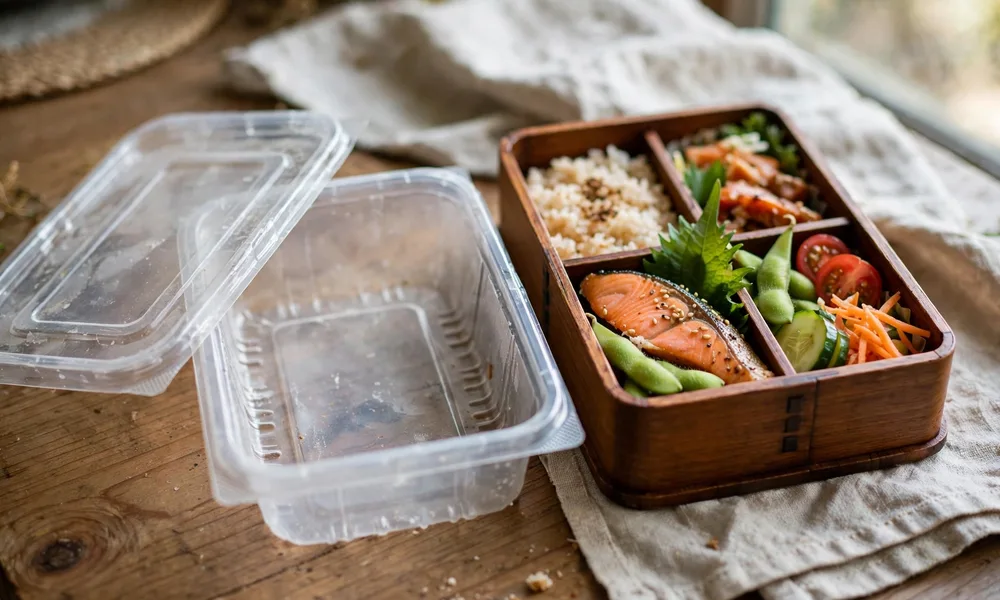
Start with the seal, because it decides whether the box is trustworthy. Look for a silicone gasket that sits snugly in the lid all the way around, without twisting or lifting out, and locking clips that press the lid down evenly. Four clips give the most even pressure, while two are quicker to open; avoid lids that simply rest on top, because they will not hold soup, curry, yoghurt or dressing. Then check the dividers: removable dividers are more flexible than fixed ones, because you can change the layout for different meals.
Packing a bento lunch that still tastes good at noon
A good box helps, but packing well matters too. Pack hot food and cold food with a divider between them, and let hot food cool for a few minutes before you close the lid, or steam will condense and make everything soggy. Put wet foods such as dressing, yoghurt and cut fruit in the smallest compartments or in a leak-proof pot, and keep dry foods such as crackers and bread in a section of their own. Fill each compartment fairly full, because food that rattles around in empty space gets battered on the journey.
Choosing your bento box: a quick checklist
- Pick a size of 900 ml to 1.2 litres for an adult main meal.
- Check the seal: a silicone gasket plus locking clips, tested upside down with water.
- Choose stainless steel for durability, glass if you reheat at work.
- Make sure the dividers suit your food: removable is more flexible than fixed.
- Confirm it fits your bag and your dishwasher before you buy.
- Look for a small leak-proof pot for dressing and a lid that doubles as a plate.

Frequently asked questions
Are bento boxes better than plastic containers?
For packed lunches, yes. Compartments keep foods separate, sealed sections stop leaks, and steel or glass does not stain or hold smells the way plastic does. Plastic tubs are cheaper and lighter, and better for soup, but for a mixed lunch the bento box wins on freshness, taste and durability.
What size bento box do I need?
Most adults need 900 millilitres to 1.2 litres for a main meal, plus a small snack section. Children usually need 600 to 800 millilitres. Measure against the bag you carry: a box that does not fit your bag will not get used, however good it is.
Can you put a bento box in the microwave?
Glass and some plastic bento boxes can go in the microwave, but stainless steel and wooden boxes cannot. If you reheat lunch at work, choose glass, or tip the food from a steel box onto a plate. Always remove the lid before microwaving, whatever the material.
Do bento boxes leak?
A good one does not. Look for a silicone gasket in the lid and locking clips on the sides, and test it with water before you trust it with sauce. Cheap boxes with lids that simply rest on top will leak, so the seal is the first thing to check when you buy.
How do I clean a bento box?
Most steel and plastic bento boxes go in the dishwasher, which is the easiest option for daily use. Wooden boxes need hand washing and drying straight away. For smells, a paste of baking soda and water left for an hour before washing works well, and steel boxes rarely need it at all.
Are bento boxes good for kids?
Yes, they are ideal for children. The compartments make lunch look fun, the portions suit smaller appetites, and the sealed sections stop food mixing in a school bag. Choose a lightweight plastic or steel box with an easy-open lid a child can manage alone, and keep the size to 600 to 800 millilitres.
The bottom line
Bento boxes beat plastic containers for packed lunches because they are designed around a real meal: separate compartments keep food fresh and apart, proper seals stop leaks, and steel and glass do not stain or smell. A plastic tub is cheaper and lighter, but it mixes your food, leaks your sauce and looks tired within months. Buy a steel or glass bento box of the right size, test the seal, and pack it the night before. For days out, a picnic basket is the better carry, but for the daily packed lunch, the bento box still tastes good at noon.