Candle Wicks That Burn Clean and Even in 2026
A candle wick is the smallest part of a candle and the part that decides whether it burns clean and even or tunnels, smokes, and soots the jar. Candle wicks draw melted wax up to the flame, control how hot it burns, and set the size of the melt pool that releases the scent. This guide explains the materials, the sizing, and the small habits that keep a flame steady.
Most people never think about wicks until something goes wrong: the flame flickers, the jar turns black, or the wax tunnels down the middle. Every one of those problems is a wick problem, and nearly every one has a fix that costs pennies. The wax is the fuel, the fragrance is the scent, and the wick is the engine. Our guide to the best candles of 2026 covers the finished candle; this guide looks only at the engine.
Key Takeaways
- Cotton wicks are the best all-round choice for most jar candles: steady and suited to soy, beeswax, and paraffin alike.
- Match the wick to the container diameter, not the height: too small tunnels, too large smokes.
- Trim the wick to about 5 millimetres before every burn to stop mushrooming, smoking, and oversized flames.
- Wooden wicks suit wide, shallow containers and give a soft crackle, but need a longer first burn.
- Prime a new wick in melted wax, and keep it centred so the flame never leans on the glass.
What a Candle Wick Actually Does
A wick works by capillary action, the same force that pulls water up a paper towel. The flame melts a small pool of wax, the wick draws that liquid wax upward, and the wax vapour burns in the flame.
Because the wick controls the flame, it controls everything else. A wick that is too thin cannot pull enough wax to the flame, so the melt pool never reaches the edges and the candle tunnels down the middle, wasting half the wax. A wick that is too thick pulls up too much wax, the flame grows tall, the wick mushrooms into a black carbon ball, and soot collects on the glass. The right wick makes a melt pool that reaches the edges within about an hour and leaves the glass nearly clean. It also decides how much scent you get: fragrance is released from the warm melt pool, not the flame.
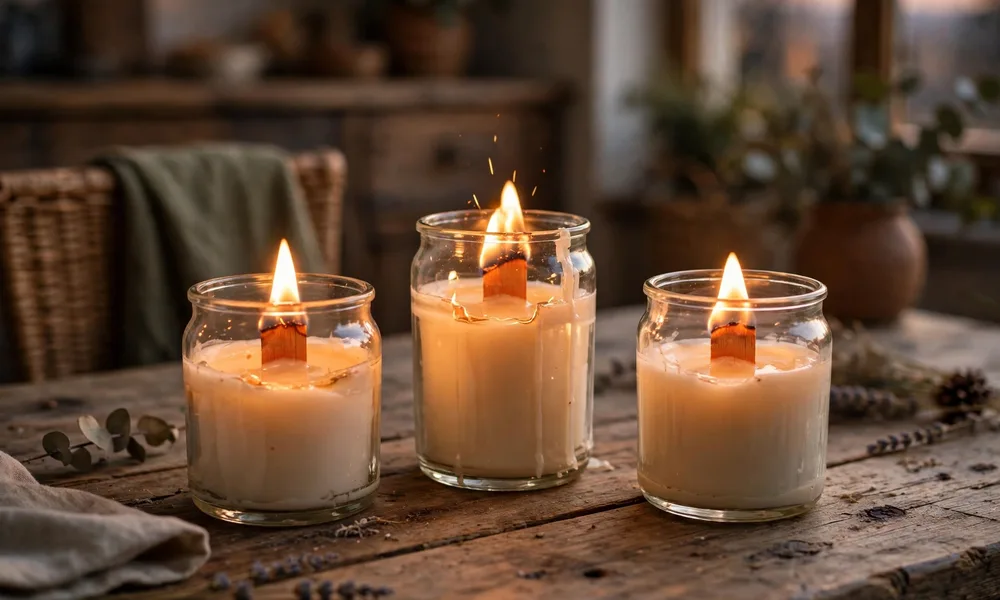
The Main Candle Wick Types Compared
Only a handful of wick materials are worth buying in 2026. The table compares them at a glance.
| Wick type | Best for | Flame | Watch out for |
|---|---|---|---|
| Cotton, braided | Jar and container candles | Steady, even | Needs trimming every burn |
| Cotton, cored | Pillars and wide candles | Strong, upright | Can smoke if oversized |
| Wooden | Wide, shallow containers | Wide, crackling | Needs a long first burn |
| Hemp | Beeswax candles | Warm, steady | Size carefully |
| Paper-core cotton | Tea lights, small candles | Small, neat | Not for large jars |
Cotton Wicks: The Best All-Rounder
Braided cotton is the default wick for a reason. Cotton fibres are absorbent, so they pull wax up efficiently, and a braided wick curls gently toward the edge of the flame as it burns, letting the tip burn away cleanly instead of building up carbon. That self-trimming curl keeps a good cotton wick from mushrooming. Cotton wicks come pre-tabbed with a small metal base for container candles, or on a spool for makers who cut their own, and they suit soy, beeswax, coconut, and paraffin wax. Cored cotton wicks have a stiff centre that keeps the wick upright in a tall pillar or wide candle, and they suit pillars and jars wider than about 9 centimetres.
Wooden Wicks: Crackle and a Wide Flame
A wooden wick is a thin strip of wood, usually cherry or basswood. It burns with a broad, flat flame and a soft crackling sound, and because the flame is wide it makes a wide melt pool, suiting wide, shallow containers better than tall narrow ones. The trade-off is that it needs more heat to get going: the first burn should last until the melt pool reaches the edges, often two hours or more. Trim it by snapping off the charred top before each burn.
Hemp and Paper-Core Wicks
Hemp wicks suit beeswax candles and fully natural candles, but they are less standardised than cotton, so sizing takes more testing. Paper-core cotton wicks are neat and upright, ideal for tea lights and votives, but they burn faster than plain cotton and are not right for a large jar.

How to Size a Wick to Your Candle
Sizing is the most important decision in wick buying, and it is simpler than it looks: match the wick to the diameter of the container. For a jar about 6 centimetres across, a small cotton wick is usually right; for 7 to 8 centimetres, step up one size; for 9 to 10 centimetres, a large cotton wick or a pair of smaller wicks works well. For anything wider than 10 centimetres, two or three wicks spaced evenly are better than one oversized wick, which would burn too hot in the middle.
Wax type changes the answer a little. Soy wax melts easily and needs a slightly smaller wick than paraffin, while beeswax melts hotter and usually needs a wick one size larger. A heavily fragranced candle also needs a bigger wick. The honest way to size a wick is to burn-test it: light the candle, wait an hour, and look at the melt pool. If the pool reaches the edges and the flame is a calm teardrop, the size is right. If the pool stops short, go up a size; if the flame dances or smokes, go down.
When buying a finished candle, use sizing as a check. The wick should look proportionate to the jar, roughly centred, and straight. A wick that looks lost in a wide jar will tunnel; a wick that looks thick and heavy in a small jar will smoke.
Priming, Centring, and the First Burn
A new wick burns best if it is primed first: dip it in melted wax and let it cool so the fibres are coated before the first lighting. A primed wick lights quickly and stands upright. Most pre-tabbed wicks are already primed, but a spool wick you cut yourself usually is not, so dip the cut end in melted wax and let it set before you pour.
Centring matters just as much. A wick that leans to one side makes a melt pool that reaches one edge while the other side stays solid, and a flame that leans on the glass can crack it. Hold the wick upright in the centre with a wick holder or chopsticks until the wax has set.
The first burn sets the pattern for the whole candle. Burn until the melt pool reaches the edges, about one hour for every 2.5 centimetres of diameter. This first full melt pool stops tunnelling later. Blow the candle out after ten minutes and you have taught it to tunnel. Candle-making kits usually include wicks matched to their jars, a good way to see correct sizing before you buy wicks on your own.
Trimming: The Habit That Fixes Most Problems
If one habit separates people whose candles burn cleanly from people whose candles smoke, it is trimming. Before every burn, trim the wick to about 5 millimetres. A long wick makes a tall flame, and a tall flame makes soot and mushrooming. A trimmed wick makes a small, steady flame that burns the wax cleanly.
Use a wick trimmer if you have one: the angled blades reach into the jar and catch the trimmed piece. Scissors work too, but fish any cut piece out of the wax before lighting. For wooden wicks, snap off the charred top once cool.
Troubleshooting: Mushrooming, Soot, Tunnelling, and Drowning
Soot on the glass usually means the wick is too long or too large, or the candle is burning in a draught. Trim the wick and move the candle away from windows and vents. If soot keeps coming back, the wick is oversized for the jar.
Tunnelling means the melt pool never reached the edges, almost always a wick that is too small or a first burn that was too short. Rescue it by wrapping foil around the top of the jar, leaving a hole for the flame, and burning for an hour. A drowning wick, bending over and going out in its own melt pool, is usually too short or the pool too deep: pour off a little wax, cool, and trim to 5 millimetres. Never burn a candle for more than four hours at a stretch, and keep it out of draughts, which cause flickering and smoking.

Wicks for Makers Versus Wicks for Candle Owners
If you make candles, buy wicks in more than one size and test them. A sample pack of three or four cotton wick sizes costs little and saves wasted wax. Buy pre-tabbed wicks for jars and spool wick for pillars, and write down the winning size for each jar.
If you only buy finished candles, your wick job is simpler: trim before every burn, burn long enough for a full melt pool, and keep the candle out of draughts. When a candle misbehaves, check the wick first: the fix is usually a trim or a foil rescue. Wax melts offer the same scent with no flame at all, as our guide to the best wax melts of 2026 explains.
Your Candle Wick Checklist
- Match the wick to the container diameter and burn-test one size up and down.
- Prime a new wick in melted wax.
- Centre the wick while the wax sets, so the flame never leans on the glass.
- Burn until the melt pool reaches the edges on the first burn.
- Trim the wick to 5 millimetres before every burn.
- Keep the candle out of draughts and never burn it for more than four hours at a stretch.
Frequently Asked Questions
What is the best wick for a soy jar candle?
Braided cotton. Soy melts easily, so a medium cotton wick usually gives a full melt pool within an hour. Size it to the jar diameter and go one size up if the pool stops short.
How often should I trim a candle wick?
Before every burn, once the candle is cool. A wick grows longer and collects carbon each time it burns, so trim to about 5 millimetres to prevent most smoking and sooting.
Why does my candle wick keep mushrooming?
The wick is too long, too large, or the wax heavily fragranced, so the tip does not burn away cleanly. Blow the candle out, cool, trim, and relight. If it mushrooms again at once, you need a smaller wick.
Are wooden wicks better than cotton wicks?
Neither is better in general. Wooden wicks give a wide flame and soft crackle, suiting wide, shallow containers. Cotton wicks give a steadier flame and suit most jars and pillars. Choose for the shape of your container.
Can I replace the wick in a shop-bought candle?
Yes. Melt the remaining wax out in a warm water bath, set a new pre-tabbed wick in the centre, pour the wax back in, and let it set. It is fiddly, so do it only for a candle you love.
Why does my candle tunnel down the middle?
The melt pool never reached the edges, usually because the wick is too small or the first burn was too short. Rescue it with foil around the jar top and a one-hour burn, and next time burn until the pool reaches the edges.
The Bottom Line
The best candle wicks of 2026 are the ones matched to your jar, your wax, and the way you burn. Start with braided cotton, try a wooden wick for wide, shallow containers, trim to 5 millimetres before every burn, and give the first burn time to melt the wax to the edges.