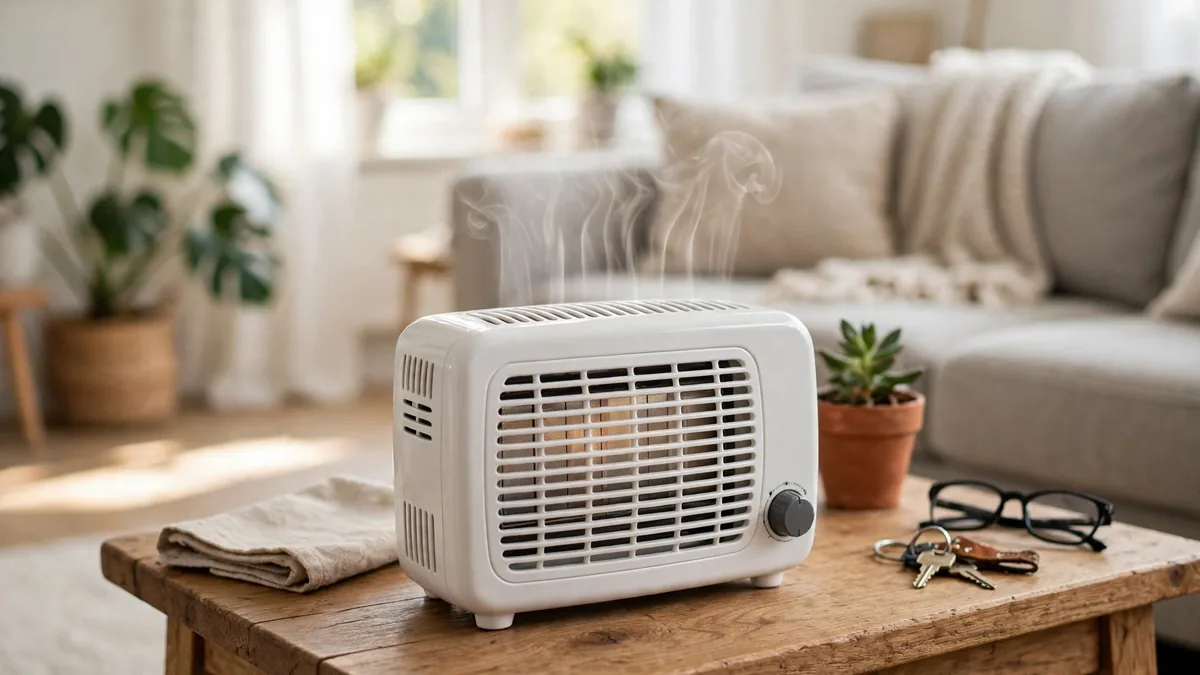
Ceramic heaters are the sprinters of the heating world. Switch one on in a cold room and you can feel warm air within a minute or two, which is why they have become the default choice for bedrooms, home offices and small living rooms in 2026. A ceramic heater works by passing air over a ceramic heating element, usually a set of plates or a honeycomb block coated in ceramic, and a fan then blows that warmed air out into the room. The ceramic heats fast and cools fast, so the heater responds quickly.
That speed is the whole point of a ceramic heater, and it shapes everything else about how you should choose and use one. Ceramic heaters are compact, light and cheap to buy, they suit rooms that need warming quickly, and most of them come with the safety features that matter, like tip-over protection and overheat shut-off. They are not silent, and the warmth fades quickly when the fan stops. This guide explains how ceramic heaters work, what they cost to run, how to pick a quiet and safe one, and where they beat every other type of heater.
Key Takeaways
- Ceramic heaters warm a room in minutes, because a fan blows air across a fast-heating ceramic element.
- They are best for small to medium rooms, desks and bedrooms, not for large open-plan spaces.
- A 1,500-watt ceramic heater costs the same per hour as any other 1,500-watt electric heater.
- Fan noise varies hugely between models, so check the decibel rating if you want one for a bedroom or office.
- Look for tip-over protection, overheat shut-off, a thermostat and a timer before you buy.
How a Ceramic Heater Works
Inside every ceramic heater sits the part that gives the technology its name: a ceramic heating element. In most models this is a set of aluminium plates coated with a ceramic material, or a honeycomb-shaped ceramic block. When electricity flows through the element it heats up in seconds, and the ceramic spreads that heat evenly across its surface . A small fan then pushes room air across the hot ceramic and out through the grille, carrying the warmth into the room.
Many modern ceramic heaters use a self-regulating element known as a PTC, which stands for positive temperature coefficient. Its resistance rises as it gets hotter, so it draws less power near its target temperature. That makes it harder for the heater to overheat, and it is one reason ceramic heaters have a good safety record compared with older wire-element fan heaters, whose elements could glow red hot.
Because the element heats and cools quickly, a ceramic heater responds well to its thermostat. When the room reaches the set temperature, the heater can throttle back or switch off, and when the room cools a degree or two, it is back up to full warmth within seconds. That responsiveness is useful in a room that is only used for part of the day, like a home office, because you can heat it on demand rather than keeping it warm all day.
Why Ceramic Heaters Warm a Room So Fast
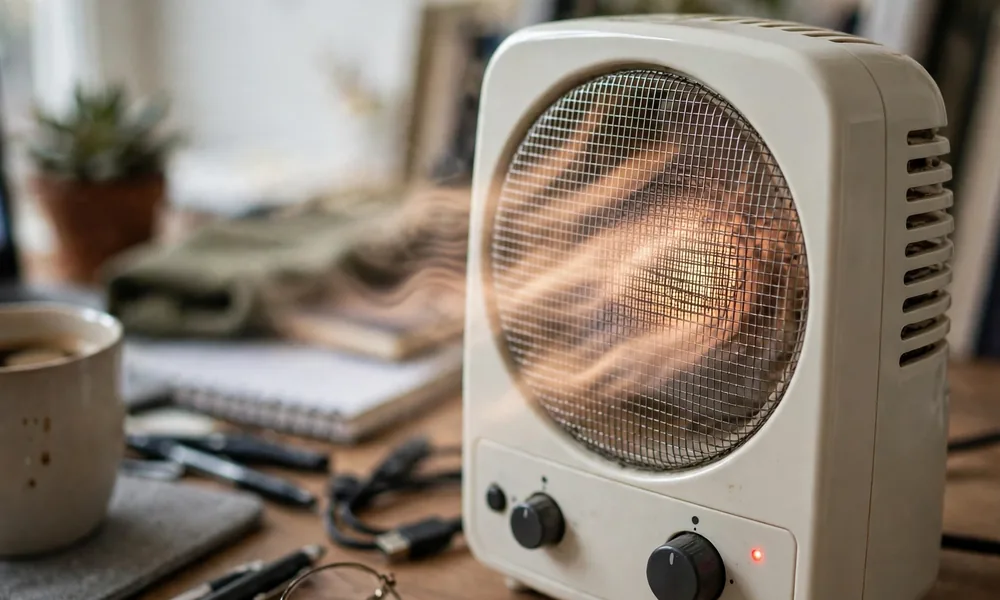
Speed is a ceramic heater’s main selling point, and it comes from the combination of a fast-heating element and a fan that moves the warm air where it is needed. A fan heater does not wait for heat to drift across the room by convection: it pushes it. Sit a ceramic heater on a desk or a bedside table and the warm air reaches you almost immediately, . A 1,500-watt model can take the chill off a bedroom in five to ten minutes.
The fan also helps the heat spread more evenly than a still heater would. Many ceramic heaters oscillate, turning slowly from side to side to sweep warm air across the room instead of blasting one spot. Tower models do this particularly well, and they suit a living room where people sit in different places. A small cube-shaped ceramic heater, by contrast, is a personal heater: it warms the person sitting in front of it beautifully, but it will struggle to heat a whole room evenly on its own.
Ceramic Heaters Compared With Other Room Heaters
The right heater depends on the job, and ceramic heaters win some jobs and lose others. The table below sets out the practical differences, and for the wider picture our round-up of the best heaters for every room, patio and budget covers every heater family in one place. If you work at a desk all day, our guide to the best desk heaters is worth a look before you buy.
| Heater type | Warm-up speed | Noise | Best for | Weakness |
|---|---|---|---|---|
| Ceramic fan heater | Fast, a few minutes | Fan hum | Quick warmth, small rooms | Heat fades when it stops |
| Oil-filled radiator | Slow, 20 to 40 minutes | Silent | Long evenings, bedrooms | Heavy, slow to start |
| Infrared panel | Fast on people | Silent | Draughty rooms, spot heat | Does not warm the air |
| Micathermic panel | Moderate | Silent | Slim spaces, steady heat | Surface gets very hot |
| Convector heater | Moderate | Silent | Even air warmth | Can feel drying |
What Ceramic Heaters Cost to Run
There is a stubborn myth that some heater types are cheaper to run than others, so let us deal with it plainly. All electric heaters turn almost all the electricity they use into heat, which means a 1,500-watt ceramic heater costs exactly the same per hour as a 1,500-watt oil heater or a 1,500-watt convector. The technology changes how the heat is delivered, not how much it costs to make.
To work out the cost, multiply the wattage by the hours of use and by your electricity price. A 1,500-watt ceramic heater running for two hours uses three kilowatt-hours, which at around 25 pence per kilowatt-hour costs about 75 pence. Most models have a 750-watt low setting: use it once the room is warm. A thermostat and a timer help even more, because they stop the heater running when nobody needs it.

Choosing a Ceramic Heater: Size, Noise and Controls
Size is the first decision, and the rule of thumb is about 100 watts per square metre of room. A small bedroom or home office of ten square metres needs around 1,000 watts, a living room of fifteen square metres needs around 1,500 watts, and anything bigger than that is really two heaters’ work, or a different type of heater altogether. Too small runs flat out and never warms the room; too big cycles and overshoots.
Noise is the second decision, and it is the one buyers most often regret getting wrong. Fan noise varies enormously between models: a well-designed ceramic tower on its low setting can be barely audible at around 35 decibels, while a cheap cube heater on full power can be as loud as 55 decibels, which is enough to intrude on a phone call or a light sleeper. For a bedroom or office, prefer a quiet low setting and a sleep mode.
Safety: What to Check Before You Buy
Ceramic heaters are generally safe, but they move hot air with a fan, so placement and habits matter. Always plug the heater directly into a wall socket, never into an extension lead or a power strip. Keep at least a metre of clear space in front of the grille, and never drape clothes, towels or blankets over the heater, because the fan can pull fabric onto the hot element.
Check that the model you buy has tip-over protection, which cuts the power if the heater is knocked over, and overheat shut-off, which switches it off if the airflow is blocked or the element gets too hot. These are standard on reputable models and their absence is a reason to walk away. Keep it on a flat surface, away from curtains and bedding. The grille itself can get hot, so keep it out of reach of small children and pets.
Dust is the quiet enemy of a ceramic heater. Because the fan draws room air through the element, dust builds up on the grille and the element over time, and a dusty heater smells when it runs and works less efficiently. Vacuum the grille gently every few weeks during winter, and wipe the casing with a dry cloth. Never use the heater in a bathroom or any damp room unless it is specifically rated for that use, because water and mains electricity do not mix.
Where Ceramic Heaters Work Best, and Where They Do Not
Ceramic heaters shine in small to medium rooms that need warming quickly. A bedroom on a frosty morning, a home office that is cold at nine and empty by six, a living room that needs a boost before the central heating catches up, or a desk where one person sits still for hours are all natural fits. They are easy to carry between rooms and tuck away in summer.
If you are still weighing the options, our guide to the space heaters that warm a room fast and safely compares every type side by side.

Checklist: Before You Buy a Ceramic Heater
- Measure the room and match the wattage to it, allowing about 100 watts per square metre.
- Check the noise rating if the heater is for a bedroom, a nursery or a home office.
- Confirm tip-over protection, overheat shut-off, a thermostat and a timer are all built in.
- Decide between a compact cube for personal warmth and a tower with oscillation for a whole room.
- Plan to plug it directly into a wall socket, with a metre of clear space in front of the grille.
- Budget for cleaning: vacuum the grille every few weeks so dust never builds up on the element.
Frequently Asked Questions
Are ceramic heaters safe to leave on overnight?
Yes, if the model has tip-over protection, overheat shut-off and a thermostat, and it is placed with clear space around it and plugged directly into a wall socket. Many people run one on a low setting with a timer.
Do ceramic heaters use a lot of electricity?
They use the same electricity as any other electric heater of the same wattage, because all electric heaters turn nearly all their power into heat. A 1,500-watt model costs about the same per hour as a 1,500-watt oil heater. The saving is running it only when needed.
Why does my ceramic heater smell when I first switch it on?
A slight smell in the first few uses is usually dust burning off the element, and it should fade quickly. If it persists, switch off, cool, and vacuum the grille. A persistent burning smell means the heater may be faulty and should not be used.
Can a ceramic heater heat a large living room?
Not on its own. Ceramic heaters suit rooms up to about fifteen square metres. In a larger open-plan room, the warm air spreads too thinly, and you would be better off with two heaters, an oil-filled radiator.
Are ceramic heaters noisy?
It depends on the model. Good ceramic towers on a low setting are barely audible, while cheap cube heaters on full power can be intrusive. If noise matters to you, check the decibel rating, look for a sleep or quiet mode.
How long do ceramic heaters last?
A well-made ceramic heater should last five years or more with regular cleaning. The fan is usually the first part to wear out, so keep the grille free of dust and avoid running the heater on full power all day.
The Bottom Line
A ceramic heater is the right choice when you want warmth quickly, in a small room, for a few hours at a time. It is light, cheap, fast and easy to move. Size it right, check the noise, plug it into the wall, and keep it clean. Do that, and the smallest heater in the shop will be the one you reach for most often all winter.