
Chemex Coffee in 2026: The Glass Brewer Behind the Cleanest Cup
Chemex coffee is the cleanest cup most home brewers will ever make, and the brewer behind it is one of the simplest objects in coffee: a single piece of hourglass-shaped glass with a wooden collar and a paper filter. Hot water poured slowly over ground coffee drips through a thick filter into the carafe below, catching the fine sediment and most of the oils, leaving a cup that is clear and bright.
The Chemex has been in production since 1941, designed by chemist Peter Schlumbohm, and it has barely changed since. It sits in the permanent collection of the Museum of Modern Art, but its reputation rests on what it brews. This guide covers the sizes worth buying, the filters that make the difference, the grind and pour that produce a clean cup, and the care that keeps it brewing well.
Key Takeaways
- The Chemex is a single-piece glass pour-over brewer and carafe in one, and its thick bonded paper filters make the cup so clean.
- Buy the 6-cup Classic: it brews one to six cups and every recipe is written for it.
- Use a medium-coarse grind, like coarse sea salt, and about 30 grams of coffee to 500 grams of water.
- Rinse the filter, bloom the grounds for 45 seconds, then pour in slow circles for about four minutes.
- The glass is fragile and the brewer is slow, so it suits unhurried mornings and shared pots.
Chemex Coffee 2026 at a Glance
| Pick | Size | Best for | Standout strength |
|---|---|---|---|
| Best overall | 6-cup Classic | Most homes | The standard size: every recipe fits |
| Best for one or two | 3-cup Classic | Small households | Less coffee wasted |
| Best for sharing | 8-cup Classic | Families and guests | Brews up to eight cups |
| Best for travel | Funnex or 3-cup | Small spaces | Compact and easy to pack |
| Best for bright beans | 6-cup, bonded filter | Light roasts | Highlights acidity and origin |
| Best for dark roasts | 6-cup, bonded filter | Chocolatey beans | Clean cup, no bitterness |
What a Chemex Actually Is
A Chemex is a pour-over brewer made from a single piece of borosilicate glass, shaped like an hourglass: a wide cone on top where the filter and grounds sit, a narrow neck in the middle, and a bulbous carafe below where the brewed coffee collects. A wooden collar wrapped around the neck with a leather tie gives you a handle, because the glass gets hot. There are no valves, no electronics, no moving parts.
The filter is the whole secret. Chemex filters are bonded paper, about 20 to 30 percent thicker than ordinary pour-over filters, and they trap the fine coffee particles and most of the coffee oils that other methods let through. The result is a cup with almost no sediment, in which the bean’s acidity and sweetness show through clearly. The trade-off is speed: the thick filter drains slowly, so a Chemex brew takes about four minutes, twice a standard pour-over cone.
The Chemex is a pour-over brewer, but it is not a general pour-over guide. Our comparison of pour-over vs French press coffee covers the two classic hand-brewing methods head to head, including the V60 and the Kalita Wave. The Chemex deserves its own guide because the thick filter, the carafe design and the slow drawdown change the grind, the ratio and the pour.
Sizes and Filters: What to Buy
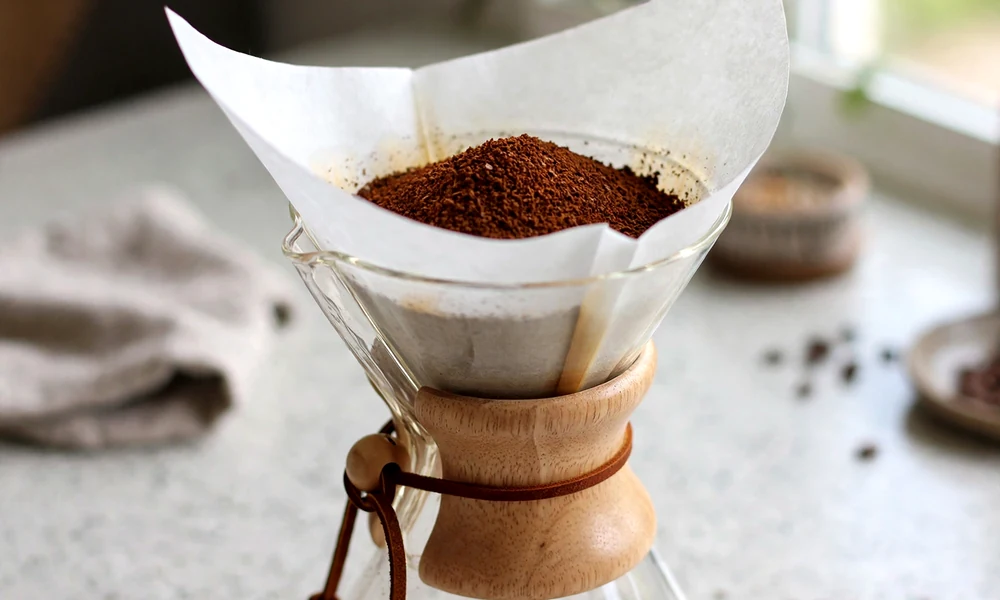
The 6-cup Classic is the size to buy first. It brews between one and six small cups, about 750 millilitres at full capacity, and every Chemex recipe online is written for it. The 3-cup suits one or two people, while the 8-cup and 10-cup sizes suit households that brew for a crowd. The glass is the same thickness in every size, so the choice is purely about how much coffee you make.
Filters come in two forms: pre-folded squares and unfolded circles. The squares are easier, dropping straight into the cone with the thick triple-folded side against the spout. The circles are cheaper and need folding. Both are the same bonded paper, and both need rinsing with hot water before brewing: the rinse washes away any papery taste, warms the glass, and makes the wet filter cling to the cone.
Our guide to coffee filters covers paper, metal and cloth filters across all brewers, and it explains why the Chemex filter is the thickest paper filter you can buy. That thickness is a feature, not a flaw: it is what keeps the sediment out. Buy genuine bonded filters rather than thin generic squares, because a thin filter drains too fast and lets fines through.
Grind, Ratio and Water Temperature
Grind size for a Chemex is medium-coarse, like coarse sea salt: coarser than a V60, finer than a French press. Too fine and the thick filter chokes, the drawdown stretches past five minutes and the cup turns bitter. Too coarse and the water rushes through in under three minutes, leaving a thin, sour cup.
The classic ratio is 30 grams of coffee to 500 grams of water, about one gram of coffee for every 16 to 17 grams of water, which makes two generous mugs. For a stronger cup, use 35 grams to the same 500 grams of water; for a lighter cup, use 28 grams. A kitchen scale is the single most useful accessory, because the ratio matters more than the brewer.
Water temperature should be around 93 to 96 degrees, just off the boil. Boiling water straight onto light-roast beans scorches the delicate flavours, while water below 90 degrees under-extracts and leaves the cup sour and flat. If you have no thermometer, boil the kettle and wait about 45 seconds. The beans matter as much as the water: light and medium roasts show their origin character best in a Chemex, while very dark roasts can taste thin, because the filter strips out the oils that give them their body. Choosing good coffee beans matters here more than with any other brewer, because the Chemex hides nothing.
The Pour: Bloom, Circles and Patience
Start by rinsing the filter with hot water and tipping the rinse water away. Add the ground coffee, shake the brewer gently to level the bed, and make a small well in the centre. Pour about 60 grams of water in slow circles, just enough to wet all the grounds, and wait 45 seconds. This is the bloom: the coffee releases trapped gas and the grounds are ready to brew evenly.
After the bloom, pour in slow, steady circles from the centre outward, keeping the water level about halfway up the cone. Pour in two or three stages, letting the water drain partway between each, and finish pouring by about two and a half minutes, for a total drawdown of around four minutes. The stream should be thin and controlled, which is why a gooseneck kettle is worth owning: a regular kettle pours too fast, disturbs the bed and muddies the cup.
The last thing to watch is the spout. The filter’s thick side must sit against the pouring spout, with the little groove left open, or the carafe seals and the brew stalls. If the drawdown stops dead with water still in the cone, lift the filter slightly and re-seat it with the spout clear. It is the most common beginner mistake.

How It Compares With Other Brewers
Against a French press, the Chemex wins on clarity and loses on body. A French press steeps the grounds and lets the oils through a metal mesh, so the cup is heavy, rich and full of sediment. A Chemex filters all of that out, so the cup is clean and bright but lighter in the mouth. If you like a heavy, syrupy coffee, use a French press; to taste the difference between two origins, use a Chemex.
Against a V60, the Chemex wins on forgiveness and loses on speed. The V60’s thin filter and ridged cone drain fast, so it rewards a precise pour and punishes a sloppy one. The Chemex’s thick filter slows everything down, so small mistakes matter less. The V60 makes a single cup faster; the Chemex makes a better pot for two or more.
Cleaning and Care
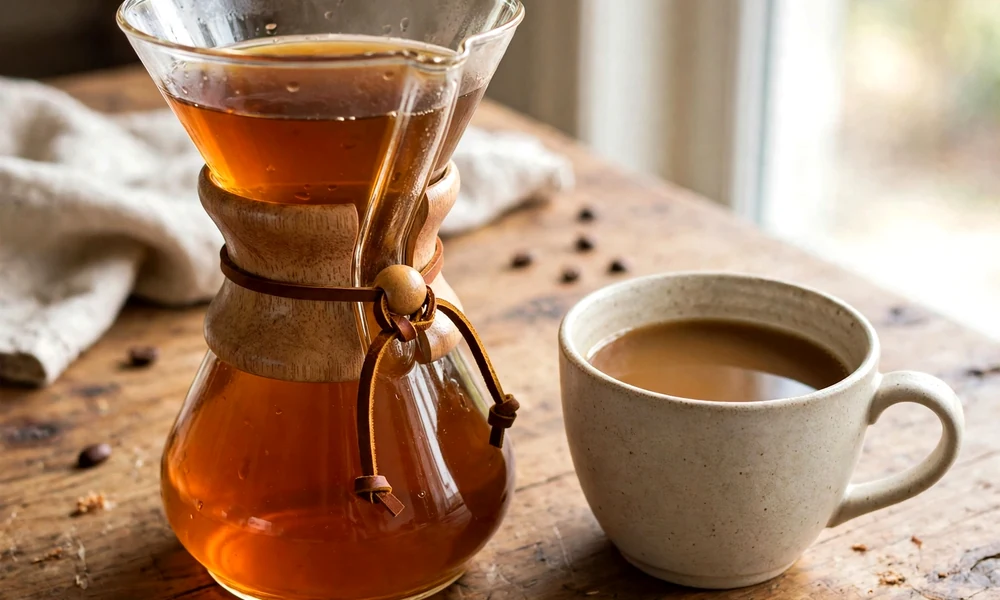
Cleaning a Chemex is simple but needs care, because the glass is the weak point. Rinse it with hot water straight after brewing, lift out the filter and grounds in one piece, and wash the glass with warm soapy water. Never use a scouring pad, which scratches the glass. The wooden collar comes off by untying the leather cord, so you can wash it separately and let it dry fully before retying it. Stains build up over time: a spoonful of baking soda and warm water, swirled around the carafe and left for ten minutes, removes brown staining without scrubbing.
Never put a Chemex in the dishwasher: the heat and rattling chip the rim, and a chipped rim is the beginning of a crack. The glass is borosilicate, which handles heat well, but it is still glass, and the narrow neck is the most fragile part. Keep it away from the edge of the counter, never put it directly on a hot hob, and never pour boiling water into a cold Chemex: warm it with a rinse first. Treated gently, a Chemex lasts for decades; the only part you ever replace is the filter.
Before You Buy: A Short Checklist
- Choose the 6-cup Classic first; the 3-cup wastes less coffee for one person.
- Buy genuine bonded Chemex filters, and rinse each one with hot water.
- Pair the brewer with a burr grinder and a kitchen scale: grind and dose decide the cup.
- Get a gooseneck kettle if you do not own one: a thin, controlled pour makes the Chemex work.
- Check the wooden collar is tight and the leather tie intact, and keep the spout side of the filter open.
- Plan for four unhurried minutes per brew, and a gentle hand wash afterwards.
Frequently Asked Questions
Is Chemex coffee stronger than French press coffee?
No, it is usually lighter. The thick filter removes oils and fine particles, so the cup tastes cleaner and brighter but has less body. Strength is set by the ratio: use more coffee per gram of water for a stronger cup.
Can I use regular pour-over filters in a Chemex?
You can, but the cup changes. Thin filters drain faster and let more sediment and oil through, so the coffee tastes more like a V60. The bonded filter is what makes the brewer distinctive.
Why is my Chemex coffee sour?
Usually under-extraction: the grind is too coarse, the water is too cool, or the brew finished too fast. Grind finer and use hotter water.
How long does a Chemex brew take?
About four minutes from first pour to last drip, plus a minute to rinse the filter and weigh the coffee. It is slower than a V60 and much slower than a drip machine.
Is the Chemex fragile?
Yes: a single piece of glass with a narrow neck, it will break if dropped on a hard floor. Keep it away from counter edges, warm it before brewing, and never put it in the dishwasher.
Can I make iced coffee in a Chemex?
Yes, and it is one of the best uses for it. Brew a stronger ratio, about 35 grams of coffee to 300 grams of water, directly onto 200 grams of ice in the carafe. Flash-chilled coffee keeps more aroma.
The Bottom Line
Verdict: the Chemex is the best pour-over brewer for anyone who values a clean, bright cup and brews for two or more people, because its thick bonded filters strip out sediment and oils that no other paper filter catches. Buy the 6-cup Classic with genuine filters, grind medium-coarse, use 30 grams of coffee to 500 grams of water at 93 to 96 degrees, and pour slowly. Buy it for light roasts and unhurried mornings; skip it if you need a fast single cup.


