Chili crisp is the condiment that changed the way a lot of people eat in 2026: a jar of hot oil crowded with crunchy bits of chilli, garlic, and onion, spooned over noodles, eggs, rice, and almost anything else that needs waking up. It is not a sauce in the usual sense, because it does not pour. It is a topping, a texture, and a flavour all at once, and a single spoonful can turn a plain bowl of food into something worth sitting down for.
This guide explains what chili crisp actually is, how it differs from chilli oil and hot sauce, what makes one jar better than another, and how to use it without drowning the food it is meant to lift. It stays with chili crisp itself: the crunch, the oil, the heat, and the many small ways a jar earns its place in the cupboard.
Key Takeaways
- Chili crisp is a crunchy condiment of fried chilli, garlic, and onion in flavoured oil, not a smooth sauce.
- The crunch matters as much as the heat: a good jar is full of crisp bits, not mostly oil.
- Always stir the jar before serving, because the best bits sink to the bottom.
- It suits noodles, eggs, rice, dumplings, and roasted vegetables, added at the table as a topping.
- Use a clean, dry spoon, keep the bits covered in oil, and finish an open jar within a few months.
What Chili Crisp Actually Is
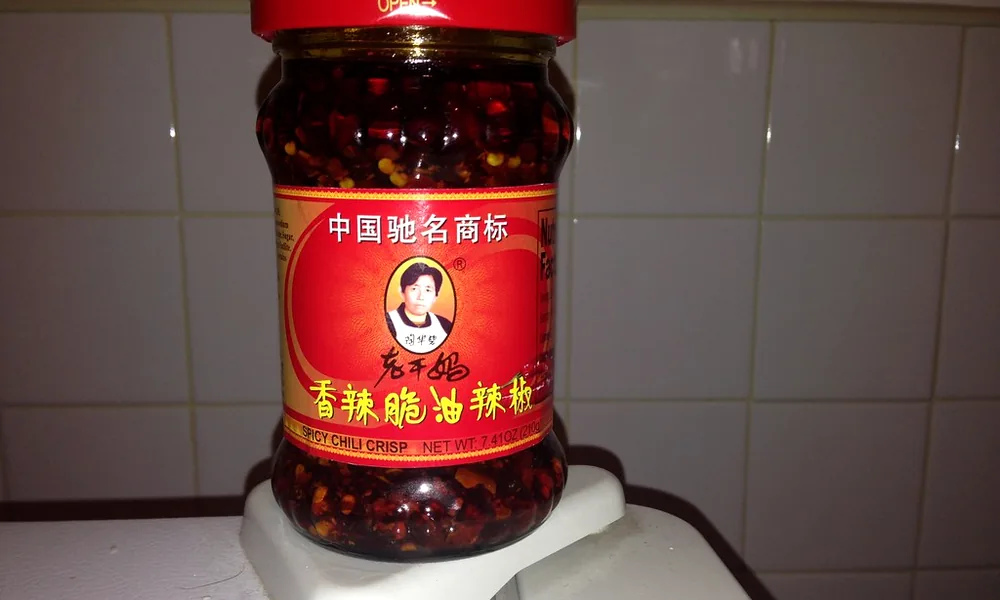
Chili crisp is made by frying dried chillies, garlic, shallots or onion, and sometimes peanuts or fermented beans in oil until everything turns crisp, then bottling the whole mixture, solids and oil together, in the jar. The oil takes on the flavour of everything fried in it, and the solids stay crunchy in it, so each spoonful gives you heat, savouriness, and texture at the same time.
The name tells you the two things that matter. Chilli gives the heat and the colour, and crisp gives the texture: the fried bits should shatter gently between your teeth, not bend or feel soggy. A jar that has gone soft has lost its point, however good the oil tastes, and a jar that is all oil with a few sad flakes at the bottom is not chili crisp at all.
Crunch, Oil, and Heat: The Three Parts
The crunch comes from the fried solids, and it is the first thing to judge. Good chili crisp has a generous amount of crisp chilli flakes, fried garlic, and fried onion or shallot, and the pieces are distinct rather than ground to dust.
The oil is the second part, and it carries the flavour. It should taste of the chillies and garlic fried in it, with a gentle warmth rather than a raw, harsh burn, and it should look clear and red-gold rather than dark and murky.
The heat is the third part, and it is usually medium: warm and slow-building rather than sharp and sudden. Some jars add Sichuan peppercorn, which brings a tingling, numbing note alongside the heat, and some stay simple with chilli alone.
Chili Crisp Compared: What Makes One Jar Better Than Another
| What to check | A good jar | A poor jar |
|---|---|---|
| Solids to oil | Jar crowded with crisp bits | Mostly oil, few flakes at the bottom |
| Crunch | Bits shatter gently, stay crisp | Soft, soggy, or ground to dust |
| Garlic and onion | Clear, savoury, fried not burnt | Barely there, or bitter and burnt |
| Oil | Clear, red-gold, tastes of chilli | Dark, murky, tastes of old oil |
| Heat | Warm, slow-building, fades cleanly | Harsh and sudden, or barely any heat |
| Sweetness and salt | Balanced, savoury first | Noticeably sweet, or very salty |
Chili Crisp, Chilli Oil, and Hot Sauce: The Differences
Chilli oil and chili crisp are often confused, and the difference is what is left in the jar. Chilli oil is oil infused with chilli and then strained, so it is smooth and pourable, with heat and flavour but no texture.
Hot sauce is different again. It is a smooth, vinegar-based liquid, poured or squeezed from a bottle, and its job is to add heat and brightness to a finished dish. Chili crisp is spooned, not poured, and it adds texture as well as heat. The guide to hot sauces that bring the heat covers the smooth sauces, and chili crisp sits alongside them as the crunchy option for people who want something to bite into.
Reading the Jar Before You Buy It
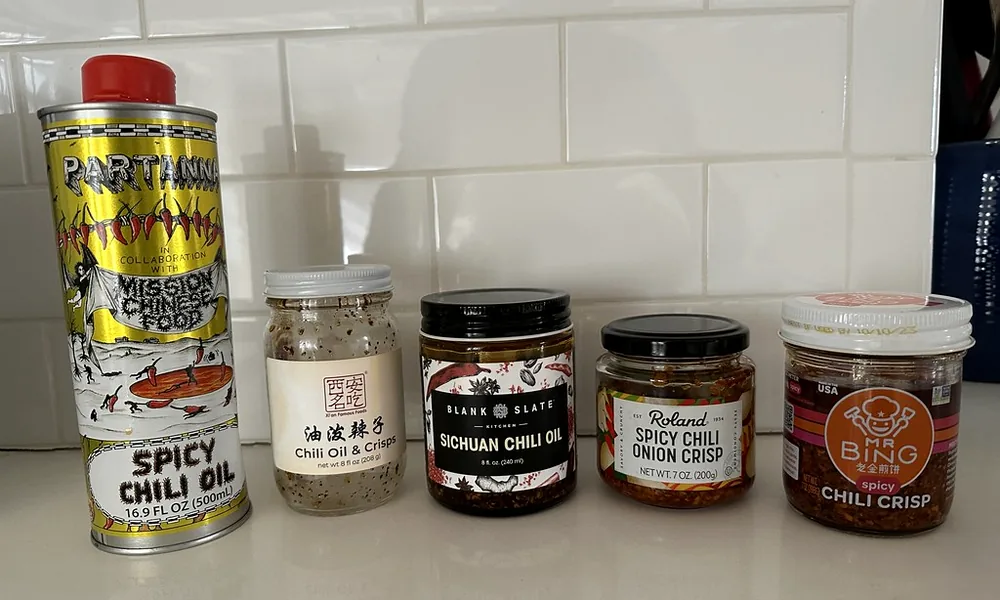
Hold the jar up to the light before you buy it. A good jar looks crowded: chilli flakes, garlic, and onion visible all the way through the oil, not settled in a thin layer at the bottom. The oil should be clear enough to see through, with a red-gold colour, and the solids should look crisp and distinct rather than dark and mushy.
Read the ingredient list. Chilli, oil, garlic, and onion or shallot should lead it, with salt and perhaps peanuts, fermented beans, or Sichuan peppercorn further down. A short list is a good sign. When sugar sits near the top, or when the list is long with flavourings and preservatives, the jar is compensating for poor ingredients, and the crunch will usually disappoint too.
How to Use Chili Crisp
Stir the jar first, every time. The crisp bits sink to the bottom as the jar sits, and the oil rises to the top, so an unstirred spoonful is mostly oil and a stirred one is the real thing.
Start with a teaspoon on a finished dish. Chili crisp is a topping, added at the table or at the very end of cooking, and a little goes a long way.
Noodles are the classic match. A spoonful over a bowl of udon, ramen, or instant noodles seasons the whole bowl, and the crunch gives plain noodles a texture they do not have on their own. The udon noodles that taste like the restaurant in a bowl become a proper meal with chili crisp, a soft egg, and some spring onions, and the hoisin sauce in the cupboard can join it when a little sweetness is wanted too.
Chili Crisp on Eggs, Rice, and Dumplings
Eggs are chili crisp’s second great match. A fried egg with a spoonful of chili crisp needs nothing else: the yolk softens the heat, the crunch gives the egg a texture it does not have on its own, and the garlic lifts the whole plate.
Rice bowls and plain rice take chili crisp just as well. A spoonful over steamed rice with a little soy sauce turns a side dish into a snack, and it works on grain bowls, roasted vegetables, and grilled chicken too.
Where Chili Crisp Does Not Work So Well
Chili crisp is a topping, and cooking with it needs care. The fried bits burn easily in a very hot pan, and the crunch is lost the moment the solids are simmered in liquid, so it should not be cooked into a stew or a sauce. Add it at the end, off the heat, and it keeps its texture and its flavour.
It is also the wrong choice for delicate food that it would overwhelm. A light fish dish, a fresh salad, or a soup built around a single clear flavour will lose its character under a spoonful of chili crisp, because the garlic, chilli, and oil are assertive. In those cases a lighter seasoning, or nothing at all, is the better call.
Finally, chili crisp is not a substitute for a smooth sauce when a dish needs one. It will not coat food evenly, glaze a roast, or mix into a dressing, because the solids get in the way. Use it where crunch is welcome, and reach for a smooth sauce where a coating is needed instead.
Storing Chili Crisp So It Stays Crisp
An unopened jar keeps for months in a cool, dark cupboard. Once opened, it should stay in the cupboard too, away from heat and sunlight, and it is at its best in the first few months. The fridge is not needed, and cold oil thickens and makes the jar harder to stir, though it will not harm the contents.
Two habits keep a jar crisp. First, always use a clean, dry spoon: water in the jar is what softens the bits and shortens the life of the oil.
Chili Crisp Beyond the Obvious
Once the noodle and egg uses are familiar, chili crisp rewards experiment. A spoonful over roasted vegetables gives them a savoury crunch that plain seasoning cannot. Stirred through a simple pasta with garlic and olive oil, it makes a quick, punchy dinner. On pizza, it does the job of chilli flakes with more flavour and more texture. On avocado toast, it turns a plain breakfast into something with bite.
It also works in places people do not expect. A little chili crisp on vanilla ice cream sounds wrong until you try it: the cold, the sweet, and the warm crunch play against each other, and the result is genuinely good. Folded into mayonnaise, it makes a sandwich spread with crunch built in.
Checklist: Before You Buy Chili Crisp
- Hold the jar to the light: it should look crowded with crisp bits, not mostly oil.
- Check the ingredient list: chilli, oil, garlic, and onion first, with a short list after them.
- Look for clear, red-gold oil, not dark or murky oil.
- Choose a jar with a tight-fitting lid and a good seal.
- Buy from a shop with good turnover and keep the jar away from sunny shelves.
- Use a clean, dry spoon, stir before serving, and keep the bits covered in oil.
Frequently Asked Questions
Is chili crisp very hot?
It is usually medium heat: warm and slow-building rather than sharp. Some jars add Sichuan peppercorn, which brings a tingling note as well. Start with a teaspoon and add more if you want it.
What is the difference between chili crisp and chilli oil?
Chilli oil is strained oil with no solids, smooth and pourable. Chili crisp keeps the fried chilli, garlic, and onion in the oil, so you eat the crunchy bits as well as the oil.
Is chili crisp the same as hot sauce?
No. Hot sauce is a smooth, pourable liquid, usually vinegar-based. Chili crisp is a spoonable topping of crisp solids in oil, and it adds texture as well as heat.
Do I need to refrigerate chili crisp?
No. Keep an open jar in a cool, dark cupboard, away from heat and sunlight. The fridge thickens the oil and makes stirring harder, though it will not harm the jar.
How do I keep chili crisp crunchy?
Always use a clean, dry spoon, stir before serving, and keep the solids covered in oil. Water and air are what soften the bits, so keep the lid tight and the jar out of the sun.
What food goes best with chili crisp?
Noodles, eggs, rice bowls, dumplings, roasted vegetables, and grilled chicken. It suits plain or rich food best, where its crunch, garlic, and heat can lift the whole plate.
The Bottom Line
Chili crisp is taking over in 2026 because it does something no smooth sauce can: it adds crunch, heat, and savouriness in a single spoonful. Buy a jar that looks crowded with crisp bits, stir it before every serving, and add it at the table to the foods it suits best. The jar will empty itself.