
Chili Oil That Lifts Noodles, Eggs and Dumplings in 2026
Chili oil is the bottle that turns a plain bowl of noodles into something worth sitting down for. The best chili oil is a smooth, red-gold infused oil: warm rather than punishing, fragrant with chili and garlic, and thin enough to drizzle in a fine stream over finished food. A poor bottle is murky, bitter, or so hot that it covers every other flavour on the plate. This guide explains what chili oil actually is, how it differs from the crunchy and saucy neighbours on the same shelf, how to judge a bottle, and how to use it well once it is open.
Key Takeaways
- Chili oil is oil infused with chili and then strained: smooth, pourable, and made for drizzling, with heat and flavour but no texture of its own.
- It is not chili crisp and not hot sauce: crisp is spooned for crunch, hot sauce is vinegar-based, and chili oil is a finishing oil.
- Judge a bottle by colour and clarity: clear red-gold oil that smells of chili and garlic beats dark, murky oil every time.
- Use it at the table, not in the pan: a teaspoon over noodles, eggs, or dumplings does more than a tablespoon cooked into them.
- Store it cool and dark, keep the cap clean, and use an open bottle within a few months.
What Chili Oil Actually Is
Chili oil is made by heating oil and pouring it over dried chilies, sometimes with garlic, Sichuan peppercorn, or star anise, then letting the oil take on their flavour and colour before the solids are strained out. What is left is a smooth, clear, red-gold oil that carries the heat and fragrance of the chilies without any bits in it. It pours in a thin stream from the bottle, which is exactly how it is meant to be used: drizzled over a finished dish, a little at a time.
The straining is the whole point, and it is what makes chili oil different from its closest neighbour. Chili crisp keeps the fried chili, garlic, and onion in the jar, so every spoonful brings crunch as well as heat. Chili oil leaves those solids behind, so every drop brings flavour and warmth and nothing to chew. Our guide to chili crisp in 2026 covers the crunchy side of the shelf: crisp is spooned on as a topping, oil is drizzled on as a finish.
Hot sauce is different again. It is a smooth, vinegar-based liquid, and its job is to add heat and brightness to a finished dish. Chili oil has no vinegar in it, so it adds warmth and richness instead of sharpness, and it behaves like an oil rather than a sauce: it coats food and carries flavour across the plate. Our guide to hot sauces that bring the heat in 2026 covers the vinegar-based bottles — hot sauce wakes food up with acid, chili oil warms it up with fat.
How to Judge a Bottle Before You Buy It
Hold the bottle up to the light before you buy it. Good chili oil is clear enough to see through, with a red-gold colour that glows rather than glowers. Dark, murky, or brownish oil has usually been overheated or left too long, and it will taste bitter and stale.
Smell matters as much as colour. Open the bottle and the first thing you should notice is warm chili, followed by garlic and a gentle toasted note. A good bottle smells inviting; a poor one smells harsh, smoky in the wrong way, or of old frying oil. Read the ingredient list too: chili, oil, and perhaps garlic, Sichuan peppercorn, or salt should lead it, and a short list is a good sign.
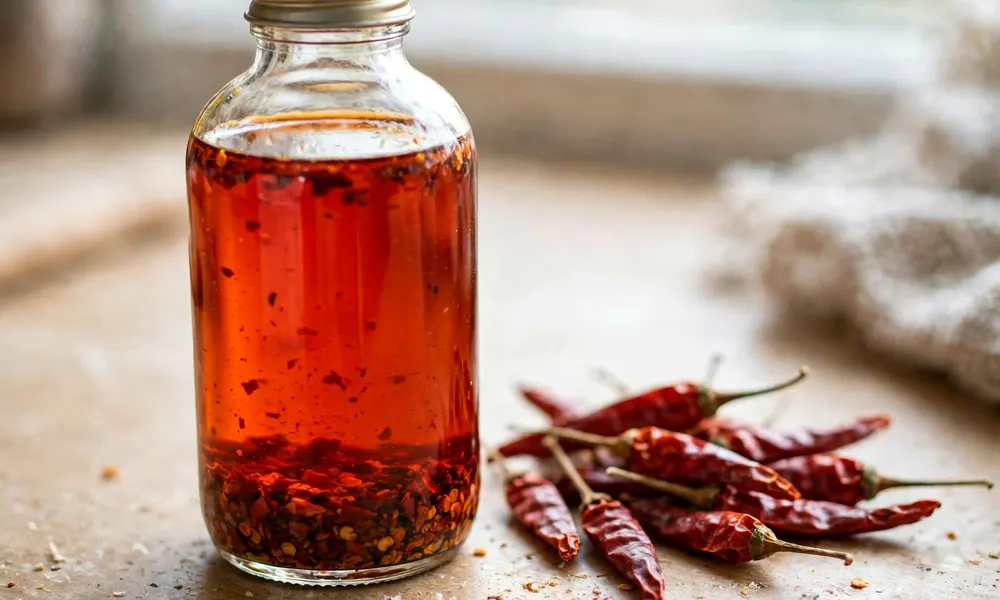
Heat is the hardest thing to judge from the shelf, because the numbers on the label describe the chili, not the finished oil. The safest guide is colour and smell: a bright, fragrant bottle is usually warm rather than punishing, while a dark, acrid one is usually harsh. Start with half a teaspoon on real food and build up from there.
Chili Oil Compared: What Makes One Bottle Better Than Another
| What to check | A good bottle | A poor bottle |
|---|---|---|
| Colour | Clear red-gold, glows in the light | Dark, murky, or brownish |
| Texture | Smooth, pours in a thin stream | Thick with bits, or gritty |
| Aroma | Warm chili, garlic, toasted oil | Harsh, smoky, or stale |
| Heat | Warm, slow-building, fades cleanly | Harsh and sudden, or barely any |
| Ingredient list | Short, chili early | Long, flavourings and colourings |
| Flavour | Chili first, then savoury depth | Only heat, or only oil |
Chili Oil, Chili Crisp, Sriracha and Hot Sauce: The Differences
The four bottles on the chili shelf look alike from a distance, but they do four different jobs. Chili oil is the smooth infused oil: strained, pourable, and used as a finishing drizzle. Chili crisp is the crunchy topping: fried chili, garlic, and onion left in the jar, spooned over food for texture as well as heat. Hot sauce is the vinegar-based liquid: sharp, thin, and made for splashing. Sriracha is the thick, garlicky sauce: sweet, smooth, and squeezed from a bottle as a table sauce.
Sriracha deserves its own note, because it is the bottle most people reach for first. It is thicker than a vinegar hot sauce and smoother than a chunky salsa, so it sits where you put it instead of running off the food, and its garlic and sugar give it a warmth that suits almost anything. Our guide to sriracha in 2026 covers it in full. The difference from chili oil is the base: sriracha is built on chili, garlic, vinegar, and sugar, while chili oil is built on oil alone, so it adds richness where sriracha adds brightness.
The practical rule is simple. If you want crunch, reach for chili crisp. If you want sharp heat, reach for hot sauce. If you want garlicky sweetness, reach for sriracha. If you want warm, fragrant heat that coats the food, reach for chili oil.
The Best Ways to Use Chili Oil
Noodles are the home of chili oil, and the method matters. Cook the noodles, dress them, and drizzle the oil over the finished bowl at the table, half a teaspoon at a time, tossing as you go. The oil coats the strands, the heat spreads evenly, and the fragrance rises with the steam. Added too early, in the cooking water or a hot pan, the oil loses its aroma and the chili can turn bitter.
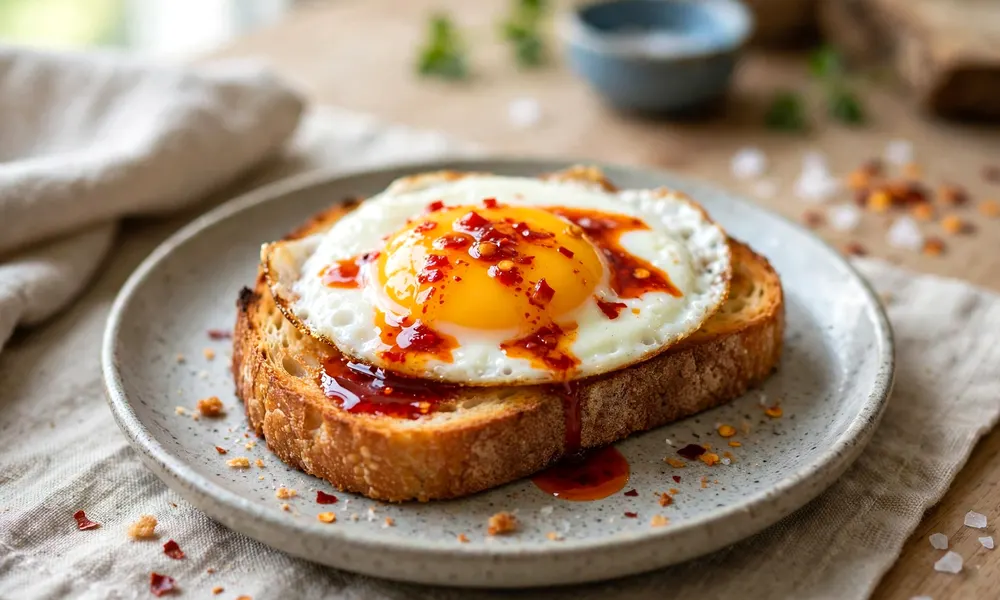
Eggs are the second home. A fried egg on toast with a drizzle of chili oil over the yolk is one of the best quick breakfasts there is. The same drizzle works on scrambled eggs and omelettes. Keep the amount small — a teaspoon is plenty for two eggs — and add it after cooking, so the oil stays fragrant.
Dumplings, rice, and roasted vegetables all take chili oil well. For dumplings, put a small dish of chili oil beside the soy dipping sauce; for rice, a teaspoon stirred through a hot bowl with spring onion and sesame is enough; for roasted vegetables, drizzle the oil over the finished tray rather than before roasting.
Heat, Chili Types and the Sichuan Question
Not all chili oils are hot in the same way, because the chili behind them decides the character of the heat. Oils made with mild red chilies are warm and round, building slowly and fading cleanly, and they suit everyday cooking. Oils made with hotter chilies hit faster and sharper, and they suit people who want the heat to announce itself.
Some bottles add Sichuan peppercorn, which brings a tingling, numbing note alongside the heat. The tingle is the point of the Sichuan style: it lets you taste more heat without more burn. Garlic is the other common addition, giving the oil a savoury depth that plain chili oil lacks.
The base oil matters too. Most chili oils use a neutral oil that lets the chili lead, and that is the right choice. What matters is freshness: oil goes stale with heat, light, and time, and a chili oil made with old oil will taste flat no matter how good the chilies were.
Storage, Shelf Life and the Mistakes to Avoid
An unopened bottle keeps for months in a cool, dark cupboard. Once opened, it is best within a few months, though it will usually last longer if kept properly. Keep the cap tight, and never leave it open beside the cooker. Heat and light are the enemies: a bottle left on a sunny windowsill will lose its fragrance in weeks.
The most common mistake is cooking with chili oil at high heat. It is a finishing oil, not a frying oil, and a screaming-hot pan will burn the chili solids left in it and turn the flavour bitter. The second mistake is using too much: a tablespoon where a teaspoon would do drowns the dish. The third is treating it like chili crisp — spooning it on for crunch that is not there. Use it for what it is, a smooth warm drizzle, and it will rarely disappoint.

Checklist: Buying and Using Chili Oil Well
- Hold the bottle to the light: clear red-gold oil beats dark, murky oil every time.
- Smell it before you commit: warm chili and garlic, never harsh, smoky, or stale.
- Read the label: a short list with chili early, and no flavourings or colourings.
- Start with half a teaspoon on real food and build up; the label cannot tell you how hot it will feel.
- Use it at the table as a finishing drizzle, never as a high-heat frying oil.
- Store it cool and dark with the cap tight, and use an open bottle within a few months.
Frequently Asked Questions
Is chili oil the same as chili crisp?
No. Chili oil is oil infused with chili and then strained, so it is smooth and pourable. Chili crisp keeps the fried chili, garlic, and onion in the jar, so it is spooned on for crunch as well as heat.
Is chili oil the same as hot sauce?
No. Hot sauce is a vinegar-based liquid that adds heat and sharpness, while chili oil is an oil that adds warmth and richness.
How hot is chili oil?
It varies by the chili used, from gently warm to properly fierce. Start with half a teaspoon on real food and build up.
Can I cook with chili oil?
Use it as a finishing oil, not a frying oil. High heat burns the chili and turns the flavour bitter. Drizzle it over finished food at the table instead.
How long does an open bottle last?
An open bottle is best within a few months, kept cool and dark with the cap tight. Discard it if the oil smells stale or rancid, or if the colour has turned dark and muddy.
What does Sichuan peppercorn do in chili oil?
It adds a tingling, numbing note alongside the heat, which lets you taste more warmth without more burn. Start with a small amount if you have never tried it.
The Bottom Line
The best chili oil is a smooth, clear, red-gold bottle that smells of warm chili and garlic, pours in a thin stream, and warms food without covering it. Buy it by colour and smell rather than by the label, use half a teaspoon at the table, and keep it cool and dark. The BestXWorst verdict: a good bottle earns its place beside the salt and the soy sauce, and a drizzle over noodles or eggs is still the best use of it.


