
There is a particular kind of quiet in the first hour at camp, when the tent is still damp with dew and the forest has not quite woken up. The best coffee makers for camping in 2026 are built for exactly that moment, turning a handful of grounds and hot water into a proper cup without electricity, fuss, or much extra weight. Whether you are car camping with the family or hiking into the backcountry, the right brewer makes mornings feel like a small ritual worth looking forward to.
Camping coffee has come a long way from the dented tin pot and the bitter cup it used to produce. Today’s camp coffee makers are light, tough, and capable of cafe-quality results. Pour-over drippers collapse flat, French presses are made from unbreakable steel, and moka pots turn a camp stove into a tiny espresso bar. The trick is matching the brewer to the way you actually camp.
This guide compares the best coffee makers for camping in 2026 across the styles that matter most: pour-over, French press, moka pot, cold brew, and percolator. Every pick was chosen for weight, packability, durability, ease of cleaning, and, above all, taste. By the end, you will know exactly which brewer belongs in your kit.
Key takeaways
- Pour-over drippers are the lightest option and make the cleanest cup, but they need paper filters.
- French presses brew rich coffee for groups with no filters, but they are heavier and harder to clean.
- Moka pots deliver strong, espresso-like coffee on any camp stove and pack down well for car campers.
- Cold brew makers are ideal for hot-weather trips, producing smooth, low-acid coffee you can make the night before.
- The best camp coffee maker depends on your group size, stove, and how much weight you will carry.
The Best Coffee Makers for Camping 2026 at a Glance
| Coffee Maker | Best For | Weight | Capacity | Filters Needed |
|---|---|---|---|---|
| Collapsible Pour-Over Dripper | Ultralight backpacking | Under 100 g | 1–2 cups | Yes, paper |
| Steel French Press | Groups and car camping | 450–700 g | 4–8 cups | No |
| Moka Pot | Strong, espresso-like coffee | 300–500 g | 3–6 cups | No |
| Immersion Cold Brew Maker | Hot-weather trips | 350–600 g | 4–6 cups | No |
| Percolator | Large groups, campfire brewing | 500–900 g | 8–12 cups | No |
Pour-Over Drippers: The Ultralight Favourite
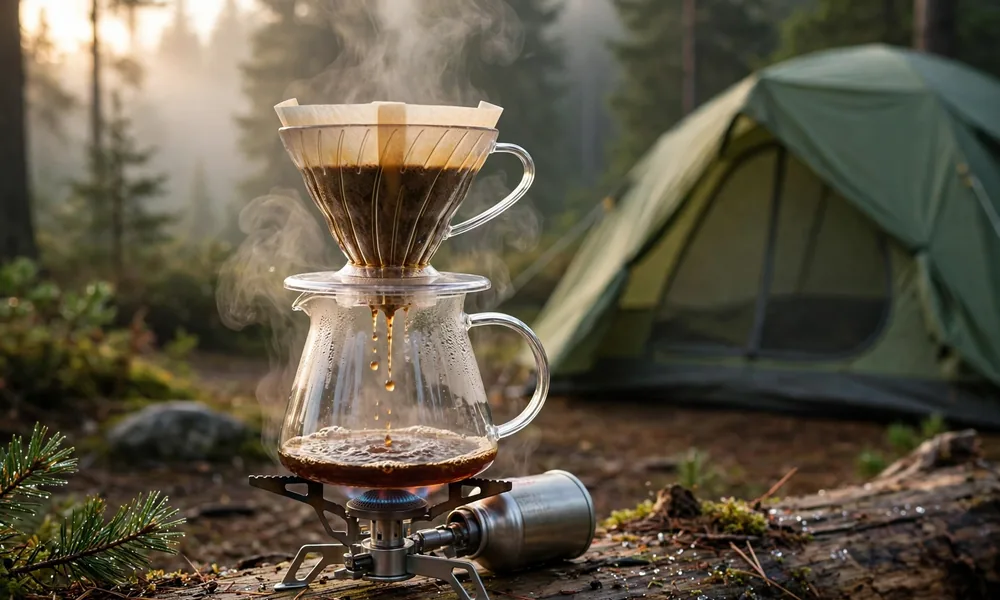
If every gram matters, nothing beats a pour-over dripper. A silicone collapsible dripper weighs less than a packet of sugar, flattens to the thickness of a coaster, and makes a bright, clean cup that lets good beans shine. Set it over your mug, add a filter and grounds, and pour hot water in slow circles. Three minutes later, the result tastes far better than instant coffee or a rough campfire brew.
The trade-off is that pour-over demands a little technique: a steady hand, hot water, and paper filters kept dry in a zip bag. Wind can cool the water fast, so brew behind a windbreak or in the tent vestibule. For solo backpackers who travel light, it is hard to beat, and it costs less than a bag of decent beans.
French Press: Rich Coffee for the Whole Camp
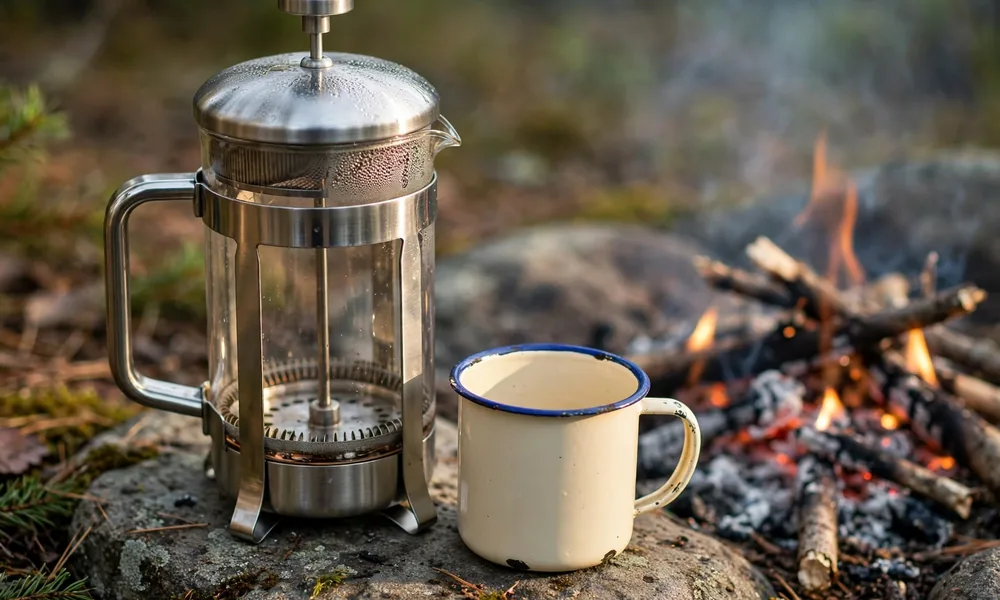
The French press is the workhorse of camp coffee. It brews a rich, full-bodied cup with almost no technique: add coarse grounds, pour in hot water, wait four minutes, and press. There are no paper filters to carry and no delicate parts to break, and modern steel versions are effectively indestructible. A one-litre press makes enough coffee for four people in one batch, which is why it is the default choice for family camping trips.
Cleaning is the French press’s only real weakness at camp, since spent grounds must be scraped out and the mesh rinsed, so bring a small spatula and a cloth. Use a coarse grind, or you will get sludge in the cup. With fresh beans, a steel French press makes camp coffee that rivals what you drink at home, and our guide to the best French press coffee makers for camping compares the sizes and materials worth your money.
Moka Pots: Espresso-Style Coffee on a Camp Stove
A moka pot is the closest thing to an espresso machine that works on a camp stove. Water in the base chamber boils, pressure pushes it up through the grounds, and strong, dark coffee collects in the top. The result is intense and syrupy, perfect for mornings when you want a short, punchy cup rather than a big mug.
Moka pots are compact, have no glass and no filters, and are made from aluminium or stainless steel that shrugs off camp life. Choose stainless steel if you cook over an open fire, since aluminium can warp with uneven heat. The main skill is heat control: too hot and the coffee turns bitter, too cool and it barely brews. A low, steady flame, and removing the pot the moment it starts to gurgle, gives a superb cup every time.
Cold Brew Makers: Smooth Coffee for Hot Days
On a summer trip, hot coffee is not always what you want at midday, and that is where cold brew earns its place. Cold brew is made by steeping coarse grounds in cold water for twelve to twenty-four hours, producing a smooth, naturally sweet coffee with far less acidity than hot-brewed coffee. Make a batch in the evening, let it steep overnight in the cooler, and you wake up to ready-to-drink coffee that needs no stove or fuel.
Immersion cold brew makers are usually a sturdy jar or bottle with a built-in mesh filter: add grounds and water, wait, and pour. They suit car camping and basecamps rather than long hikes, because of the water they hold. The payoff is a concentrate that keeps for days in a cooler, and our roundup of the best cold brew coffee makers for camping compares the best jars and bottles for the trail.
Percolators: The Classic Campfire Brewer
The percolator is the old-school camp coffee maker, and it is still the best choice when you need to serve a crowd. It sits directly over a campfire or on a stove, cycling boiling water through the grounds until the coffee is strong enough. A large enamel or steel percolator can make ten or twelve cups at once, making it the natural pick for group trips and big family weekends.
Percolators have a reputation for bitter coffee, earned when they are left boiling too long. The fix is simple: take the pot off the heat once the coffee reaches the strength you like, usually after seven to ten minutes of gentle perking. Used with care, a percolator makes a satisfying, old-fashioned cup, and it is one of the few brewers that works happily directly over open flames.
How to Choose a Coffee Maker for Camping
Choosing between these brewers comes down to four questions: how many people are drinking, how much weight can you carry, what heat source do you have, and how much cleanup will you accept. A solo backpacker needs a dripper, a family of five needs a French press or a percolator, and a car camper with a good stove can choose on taste alone.
Weight and Packability
Backpackers should aim for a brewer under 150 grams, which points straight to a collapsible pour-over dripper. Car campers can ignore weight and choose on capacity and taste. Whatever you pick, make sure it packs flat or nests inside your cook pot, because a brewer that rattles around loose in your pack will not survive many trips.
Group Size and Heat Source
One or two people can be served by almost any brewer, but groups of four or more need capacity. A one-litre French press or a six-cup moka pot handles four drinkers, while larger groups should look at a percolator or brew two rounds. Your stove matters too: a gooseneck kettle gives the control pour-over deserves, while a simple billy can does the job for a French press. A good kettle is half the brewing setup, which is why pairing your brewer with one of the best tea kettles for camping makes the whole morning routine faster and more reliable.
Cleanup and Durability
At camp, cleanup is part of the decision. Pour-over is the easiest, since you just toss the filter and grounds, while a French press needs scraping and rinsing. Whatever you choose, it should be made from steel, silicone, or thick enamel rather than glass or thin plastic, because camp gear gets dropped and packed tightly. A brewer that survives the trip is worth more than one that makes a marginally better cup.
Brewing Great Coffee at Camp
Good beans matter more at camp than at home, because you cannot hide stale coffee behind a fancy machine. Buy whole beans and grind them just before your trip, or grind a day’s worth each morning with a small hand grinder. Store grounds in an airtight container, and use roughly 60 grams of coffee per litre of water as a starting point.
Water quality is the other half of the equation. If the campsite water tastes of minerals or chlorine, your coffee will too, so a simple filter or a bottle of drinking water is worth the weight. Let boiling water cool for about thirty seconds before pouring, since water straight off a rolling boil scorches the grounds and adds bitterness.

Camping Coffee Checklist
- Choose your brewer by group size and weight, and test it at home before the trip.
- Pack whole beans or fresh grounds in an airtight container, with enough for one extra morning.
- Bring a reliable way to heat water, plus a lighter or matches and spare stove fuel.
- Carry paper filters in a dry zip bag if your brewer needs them.
- Pack a small spatula and cloth for cleaning, and a bag for carrying out used grounds.
- Store your brewer where it cannot be crushed, ideally nested inside your cook pot.
Frequently Asked Questions
What is the best coffee maker for camping overall?
For most campers, a stainless steel French press is the best all-round choice: it brews for a group, needs no filters, and is nearly indestructible. Solo backpackers will do better with a collapsible pour-over dripper, which weighs almost nothing and makes an excellent cup.
Can I use a regular French press while camping?
You can, but a glass French press is a poor choice outdoors because it breaks easily and loses heat quickly. A double-walled stainless steel press is safer, keeps coffee hot longer, and survives being packed and dropped.
Do I need paper filters for camping coffee?
Only if you choose a pour-over dripper that uses them. French presses, moka pots, percolators, and cold brew makers all use built-in metal filters, so you can leave paper behind. If you do need them, pack them in a sealed bag to keep them dry.
How much coffee should I bring camping?
Plan on about 60 grams of coffee per litre of water, or roughly 15 to 20 grams per mug. For a weekend trip for two people, a 250-gram bag is usually enough, with a little spare for an extra morning.
Can I make coffee over a campfire?
Yes, and percolators and steel moka pots are the best brewers for it, since they can sit directly over flames. Keep the heat moderate, use a grate or tripod to control the distance from the fire, and never put a plastic-handled brewer into the flames.
Is cold brew practical for camping?
Cold brew is very practical for car camping and basecamps, where you can steep a batch overnight and keep it in a cooler. It is less suited to backpacking because of the weight of the water, but the smooth, low-acid coffee is worth it on hot-weather trips.
The Bottom Line
The best coffee makers for camping in 2026 prove that a great cup needs no kitchen, plug, or complicated machine. A steel French press covers most campers, a pour-over dripper wins for ultralight trips, a moka pot satisfies anyone who likes their coffee strong, and cold brew is the smart choice for hot days. Pick the brewer that fits your group, stove, and pack, pack fresh beans, and your mornings at camp will be the best part of the trip.


