Choosing the best compact SUVs for families in 2026 means balancing three things that rarely come together in one vehicle: enough room for children, car seats and the weekly shop, safety technology that genuinely protects the people inside, and running costs that do not quietly drain the household budget. The compact SUV has become the default family car for good reason, offering the high driving position and flexible cargo space of a larger SUV without the bulk, the fuel bills or the parking headaches.
Families shopping in 2026 have more choice than ever, and that is both the good news and the problem. Almost every mainstream manufacturer now offers a well-equipped compact SUV, and the differences between the best and the rest hide in details like rear legroom, the shape of the cargo floor, or how easily a child seat clicks into place. A model that looks spacious on paper can feel cramped once two child seats are fitted.
This guide cuts through that confusion, comparing the strongest family-focused compact SUVs on sale in 2026 on real-world space, safety, comfort, fuel economy and everyday practicality, so you can shortlist with confidence and spend your test drives on the models that truly deserve your attention.
Key takeaways
- Rear legroom and door opening width matter more than headline boot figures when fitting child seats.
- The safest family SUVs in 2026 come with automatic emergency braking, blind-spot monitoring and rear cross-traffic alert as standard.
- Hybrid versions typically save a busy family hundreds a year in fuel without any loss of space.
- A flat cargo floor and a low loading lip make daily life far easier than a few extra litres on paper.
- Always test-fit your own child seats and stroller before signing anything.
What Makes a Compact SUV Great for Families
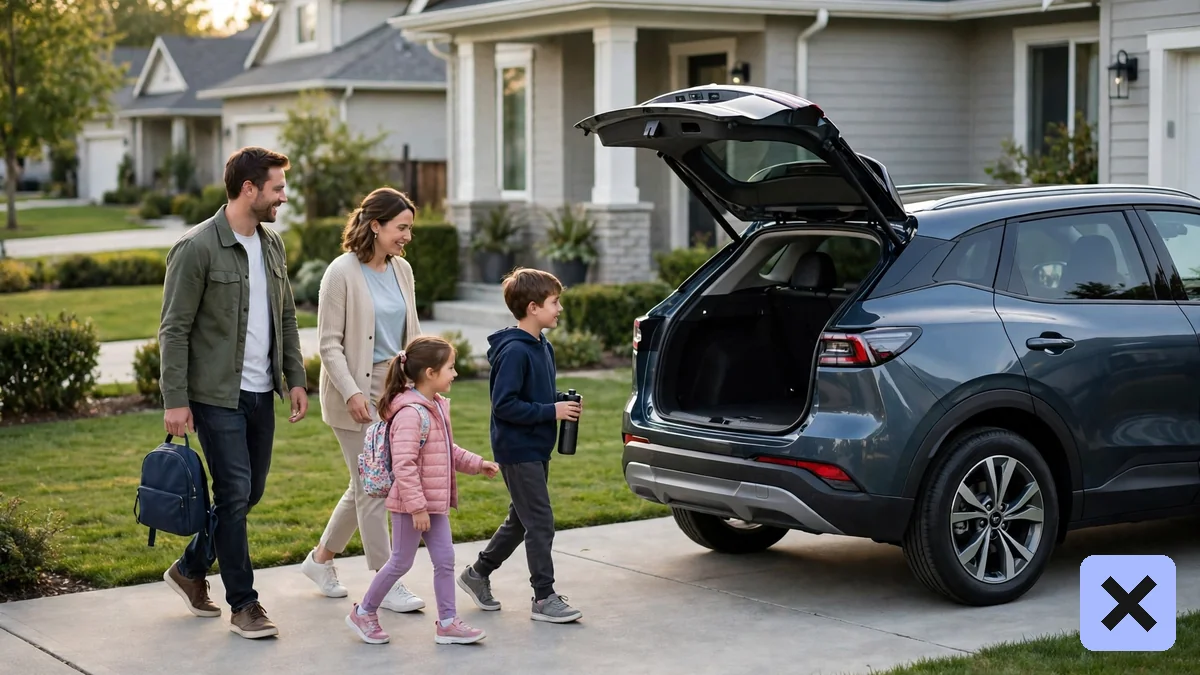
A great family compact SUV is not simply a smaller version of a big SUV. The best models are designed around the daily routines of parents: the school run, the weekly shop, weekend trips and the occasional long holiday drive. That means wide rear doors, a flat floor and plenty of storage.
Space is the first test, and it is worth measuring with your own family in mind rather than trusting brochure figures. Bring your tallest child seat and your folded stroller and see how they fit. A boot that looks generous can be ruined by a high loading lip, while a cleverly shaped load area with a flat floor and underfloor storage can hold far more in practice.
Comfort matters just as much. Rear passengers need enough knee room to sit without their feet wedged against the front seats, and rear air vents keep children comfortable on warm days. A smooth ride matters on potholed streets.
If most of your driving happens in town, compare the best compact SUVs for city driving as well, since the models that shine in urban traffic are not always the ones that excel on long family journeys.
Space That Actually Works
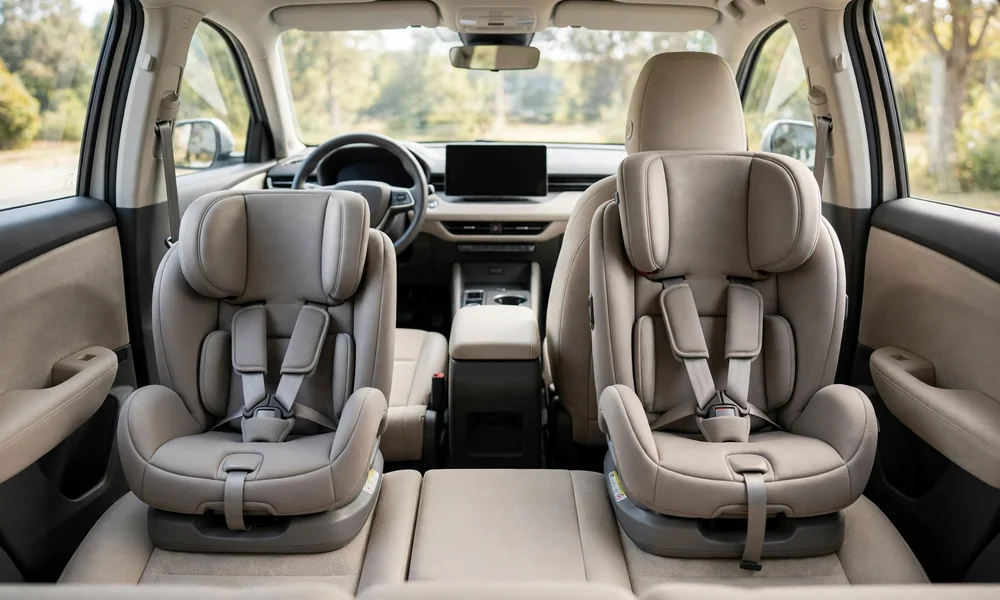
Check rear legroom, rear headroom and the width of the rear bench. Three children across the back is possible in the roomiest compact SUVs, but it depends on the width of your child seats as much as the car. Slim-profile seats and a flat rear floor help enormously.
Safety First, Always
Safety is non-negotiable in a family car, and the standard is very high in 2026. Every model in this guide has a strong crash-test record and a comprehensive suite of driver assistance systems, including automatic emergency braking, lane-keeping assistance, blind-spot monitoring and rear cross-traffic alert.
Child seat installation deserves a close look on your test drive. ISOFIX anchor points should be easy to reach, the rear doors should open wide enough to lift a seat in without twisting, and the rear headrests should adjust easily so they do not push a child seat forward.
The Best Compact SUVs for Families in 2026
The models below are the strongest all-round family choices in the compact SUV class for 2026.
Toyota RAV4
The Toyota RAV4 remains the benchmark family compact SUV, and the hybrid version is the one to choose. It returns excellent real-world fuel economy, offers generous rear legroom and a large, square boot, and strong resale values keep long-term costs down.
Honda CR-V
The Honda CR-V is the roomiest choice here, with rear legroom that rivals some larger SUVs and a boot that swallows a folded stroller with ease. The hybrid powertrain is smooth and quiet and the ride is composed over rough roads.
Mazda CX-5
The Mazda CX-5 trades a little outright space for the most premium-feeling cabin in the class and the most engaging drive. Interior materials feel a step above its rivals, the steering is precise, and the ride balances comfort and control well.
Hyundai Tucson
The Hyundai Tucson offers bold design, the longest warranty of any model here, a well-equipped cabin and a strong hybrid option. Rear space is generous and the infotainment is intuitive.
Kia Sportage
The Kia Sportage shares its engineering with the Tucson but brings distinctive styling and a slightly more driver-focused feel. It offers the same long warranty, a roomy rear cabin and a wide range of powertrains including an efficient hybrid.
Subaru Forester
The Subaru Forester is the quiet achiever of this group, with standard all-wheel drive, superb visibility from its large windows, and a rugged cabin that shrugs off muddy boots and wet dogs. Its sure-footed traction and excellent safety record suit bad weather and rough roads.
Compact SUV Comparison at a Glance
Figures below are approximate manufacturer claims for hybrid versions where available.
| Model | Boot Space (approx.) | Fuel Economy (approx.) | Key Family Strength |
|---|---|---|---|
| Toyota RAV4 | 580 litres | 48 mpg | Efficiency and resale value |
| Honda CR-V | 600 litres | 45 mpg | Best rear legroom |
| Mazda CX-5 | 505 litres | 40 mpg | Premium cabin and handling |
| Hyundai Tucson | 575 litres | 47 mpg | Equipment and warranty |
| Kia Sportage | 570 litres | 46 mpg | Value and practicality |
| Subaru Forester | 520 litres | 38 mpg | All-wheel drive and visibility |
Cargo Space and Everyday Practicality
Boot space is the figure families quote most, but it is also the most misleading. Manufacturers measure volume differently, and a tall, narrow boot can score well on paper while struggling with a wide stroller. What matters is the shape: a flat floor, a wide opening, a low lip and minimal intrusion from the wheel arches.
The best test is the stroller test. Bring your folded stroller to the dealership and see whether it lies flat with room left for shopping bags. A powered tailgate is a genuine help when your hands are full, and a hands-free sensor that opens the boot with a foot wave is even better.
Flexibility seals the deal. A 60/40 split rear bench is standard across the class, but the best models add a sliding rear seat and a flat load floor when the seats fold down. Underfloor storage hides valuables and keeps the boot tidy.

Running Costs: What Families Actually Pay
The purchase price is only the beginning. Fuel, insurance, servicing and depreciation together decide what a family SUV really costs over three to five years, and the differences between models can run into thousands. Hybrid versions cost more up front but usually repay the premium through lower fuel bills, especially for families doing the school run and short urban trips where the electric motor does much of the work.
Insurance groups vary more than many buyers expect, so get a quote before you fall in love with a particular model. Strong safety equipment often means lower insurance groups. Depreciation is the largest hidden cost of all, and models with strong reliability reputations hold their value far better when trade-in time comes.
Families weighing petrol against hybrid power should also look at the best hybrid cars for families, which compares hybrid running costs in more detail and explains where the savings are biggest.
Driving in the Real World
Family driving is mostly mundane: school runs, supermarket trips, commuting in traffic and the occasional long motorway journey. The best family compact SUVs make all of that effortless. A high driving position gives a clear view over traffic, light steering and a tight turning circle make parking simple, and a smooth automatic gearbox removes the chore of constant gear changes in stop-start traffic.
On the motorway, the priorities shift to refinement and stability. The best models cruise quietly at speed, and driver assistance systems reduce fatigue on long drives: adaptive cruise control that follows the car ahead and lane-centring assistance are genuinely useful on long family trips.
Do not overlook ride comfort on the roads you actually use. Take your test drive over familiar streets rather than the dealer’s preferred smooth loop, and bring the whole family if you can: their verdict on rear comfort matters as much as yours on the driving position. Urban manoeuvrability is a separate skill from motorway refinement, and the best hybrid SUVs for city driving shows which compact SUVs are easiest to live with in tight streets and crowded car parks.
Family SUV Buying Checklist
Use this checklist on every test drive to compare models fairly and avoid an expensive mistake.
- Fit your own child seats and check the ISOFIX anchors are easy to reach.
- Load your folded stroller and weekly shopping into the boot.
- Sit in the rear seats yourself with the front seats set for the driver.
- Check rear air vents, charging ports and door bin size.
- Drive over speed bumps and rough roads, not just smooth streets.
- Confirm the safety equipment list and insurance group before negotiating.
Frequently Asked Questions
What is the best compact SUV for a family of four?
The Honda CR-V and Toyota RAV4 are the strongest all-round choices for a family of four, thanks to generous space and efficient hybrid powertrains. The CR-V wins on outright space, while the RAV4 edges ahead on fuel economy and resale value.
Are compact SUVs big enough for two child seats?
Yes, every model in this guide fits two child seats comfortably, and the roomiest ones can fit three across the rear bench with slim-profile seats. Always test-fit your own seats, since seat widths vary.
Is a hybrid compact SUV worth it for families?
For most families, yes. Hybrids save the most fuel on short urban trips and school runs, where the electric motor does much of the work, and usually repay the higher price within a few years.
How much boot space does a family really need?
Around 500 litres is the practical minimum for a family with one young child, covering a folded stroller and weekly shopping. Families with two children or regular holiday trips should aim for 550 litres or more.
Do compact SUVs cost more to insure than hatchbacks?
Usually a little more, because they are larger and more expensive to repair, but the difference is often smaller than expected. Strong safety equipment and good crash-test results keep many compact SUVs in moderate insurance groups.
Should I buy new or nearly new?
A nearly new compact SUV, around one to two years old, often offers the best value, with the steepest depreciation already absorbed and most of the warranty remaining. Buying new suits those wanting the latest safety technology.
The Bottom Line
The best compact SUVs for families in 2026 combine genuine space, strong safety and sensible running costs in a package that is easy to live with every day. The Honda CR-V is our top pick for maximum family room, the Toyota RAV4 is the smartest buy for low running costs and strong resale value, and the Hyundai Tucson offers the best equipment and warranty for the money. Before you decide, test-fit your child seats, load your stroller and drive it on your own roads.