Why Coping Saws Still Beat Power Tools for Fine Curves in 2026
Coping saws are the small frame saw with the thin blade, and they still do one job better than any power tool: tight curves and the coped joints where skirting boards meet in a corner. A coping saw turns round a bend a panel saw cannot follow.
This guide explains what a coping saw is, how its blades work, when to reach for it instead of a jigsaw, and how to cut a clean coped joint.
Key Takeaways
- A coping saw is a thin-blade frame saw for curves and coping joints, not a general saw: it cuts slowly and steers round tight bends.
- Teeth per inch decides the finish: 15 TPI is the all-round pick, 20 TPI or finer leaves the cleanest edge in hardwood and thin ply.
- Blade tension is everything: a slack blade wanders and snaps, a taut blade tracks the line.
- A jigsaw is the powered equivalent for bigger curved work, and a scroll saw is the powered bench equivalent: the coping saw wins on small, delicate work.
- Coped joints beat mitred joints on inside corners, because a coped profile still fits when the wall is not square.
Coping Saws Compared
| Type | Best for | Throat depth | Blade | Watch out for |
|---|---|---|---|---|
| Standard coping saw | Skirting, trim, curves | 120–150 mm | 15 TPI pinned | Cheap frames flex |
| Deep-throat coping saw | Wide boards, deep curves | 200 mm or more | 15–18 TPI pinned | Hard to keep square |
| Mini coping saw | Modelling, jewellery, fine fretwork | 80–100 mm | 20–24 TPI | Too small for skirting |
| Fret saw | Very fine piercing, veneer, marquetry | 300 mm or more | Pinless, very fine | Blades snap easily |
| Rotating-blade coping saw | Curves in awkward spots | 120–150 mm | 15 TPI pinned | Blade can drift |
What a Coping Saw Actually Is
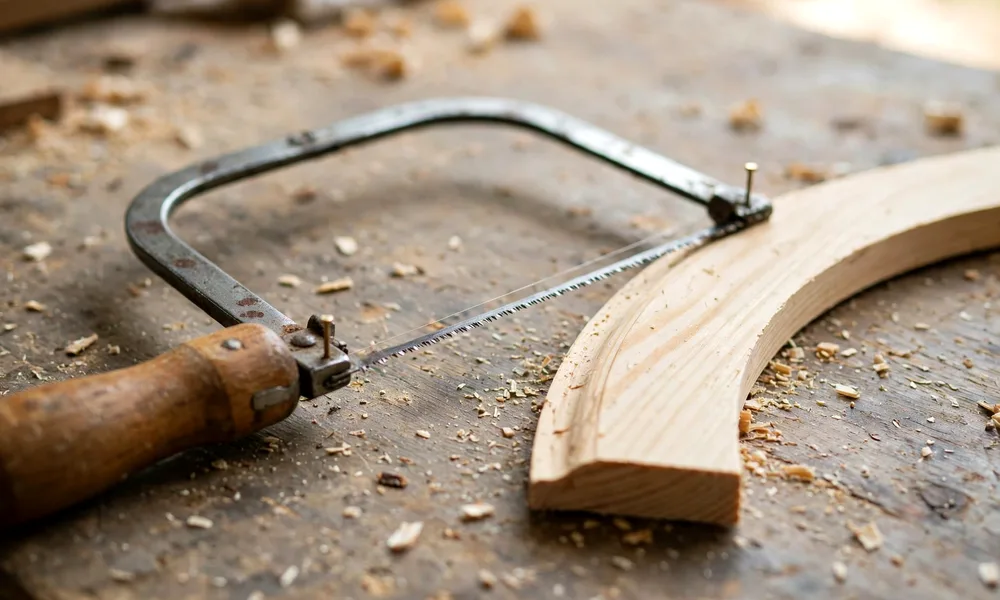
A coping saw is a hand saw built around a thin, narrow blade held under tension in a deep metal frame, with a handle at one end. The blade is only a few millimetres wide, so it can turn round tight curves, and the deep frame clears the work as you cut. It is a special-purpose saw. Our guide to the best hand saws of 2026 covers the general panel saw for straight cuts.
The powered equivalents set the boundary. A jigsaw is the powered saw for curves and cut-outs: it cuts faster, handles thicker boards, and suits big curved work. Our comparison of the best and worst jigsaws of 2026 judges it on its own terms. A scroll saw is the powered bench saw for the same fine work, but it needs a bench, power and space. The coping saw wins where the work is small, delicate or quiet.
Two near-relatives cause the most confusion. A fret saw is the finer cousin: a deeper frame and a thinner pinless blade, made for piercing and marquetry. A hacksaw looks almost identical, but it is a metal-cutting tool for steel and pipe. A bow saw is the big frame saw for logs and branches outdoors. Our comparison of the best and worst saws of 2026 puts all of these in their place, and the coping saw’s place is the fine curve.
The frame decides whether a coping saw is any good. A stiff steel frame holds the blade taut, and a taut blade tracks the line; a frame that flexes lets the blade wander, bind and snap. Look for a frame that feels rigid when you squeeze it, pins that hold the blade firmly, and a handle that sits comfortably. A tensioner that works with a lever or a screw is worth having: blades need changing often.
The Main Types of Coping Saw
The standard coping saw is where most people should start. Its throat is usually 120 to 150 mm, which clears a skirting board and most trim. It takes standard pinned blades, cheap and sold everywhere, and it handles the two jobs that define the tool: coped joints and tight curves. If you buy one, spend a little more on a rigid frame.
A deep-throat coping saw has a throat of 200 mm or more, which lets you cut curves further from the edge of a wide board. It suits larger fretwork, but the longer frame is harder to keep square. It is a second saw, not a first.
A mini coping saw is the small one, with a throat of 80 to 100 mm and very fine blades. It suits modelling, jewellery work and delicate fretwork in thin ply and veneer. It is too small for skirting boards. Modellers who cut small curves all day will reach for it constantly; everyone else can skip it.

Blades: Teeth, Pins and Tension
Coping saw blades are sold by teeth per inch. A 15 TPI blade is the all-round pick: fast enough for pine skirting, fine enough for hardwood. A 20 TPI blade leaves the cleanest edge in hardwood, thin ply and veneer, but cuts more slowly. Most people need 15 TPI and a packet of 20 TPI.
Most coping saw blades are pinned: a small pin at each end hooks onto the frame, which makes changing a blade quick and tool-free. Pinless blades, used in fret saws, clamp into the frame instead. For a coping saw, pinned blades are the right choice: cheap, sold everywhere, and you will change them often.
Tension separates a good cut from a broken blade. Fit the blade with the teeth pointing away from the handle, then tension it until it pings when you pluck it, like a low guitar string. Too slack and the blade wanders and snaps; too tight and it snaps at the pins.
Blades are cheap, so do not nurse a dull one. A dull blade needs hard pushing, wanders off the line, and tears the edge. Change the blade when the cut feels slow or the edge looks ragged. A fresh blade costs pennies and saves a spoiled board.
How to Cut a Coped Joint
The coped joint is the reason most people buy a coping saw. On an inside corner, two skirting boards meet at 90 degrees, but walls are rarely square, so a mitred joint often leaves a gap. A coped joint solves it: one board runs straight into the corner, and the second is cut to the profile of the first.
Cut the second board square, then cut a 45-degree mitre on its end. The mitre is only a guide: it exposes the profile of the moulding as a line on the end of the board. Then take the coping saw and cut along that profile, back-cutting slightly, so the edge is a fraction undercut. The undercut is the secret: it lets the profile sit tight even if the wall is not square.
Hold the board firmly, clamped or in a vice, with the profile facing you, and cut slowly. Turn the saw, not the board, and keep the blade upright: a blade that leans leaves a bevelled edge that shows a gap. Test the fit often, and trim until the profile sits flush. A good coped joint needs no filler.
Cope the second board before you fix the first one in place, and always cope the board that runs into the corner. On a long run of skirting, cope every inside corner and mitre only the outside ones. Practise on offcuts before you cut the board that matters.
Cutting Curves Without Breaking Blades
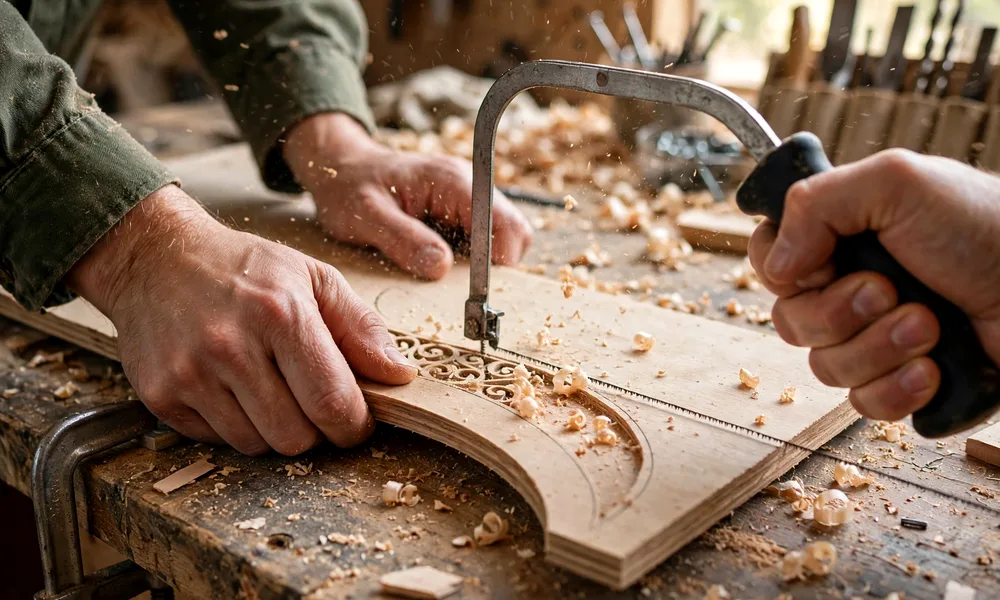
Curves are the coping saw’s other home, and the technique is the same whether the curve is a fretwork scroll or a rounded shelf corner. Mark the line clearly, drill a starter hole if the curve is enclosed, and feed the blade through it. Cut slowly, with short, even strokes, and turn the saw gently as the line bends.
Let the frame clear the work. The deep frame lets the blade reach the line without hitting the board, but on a tight inside curve it can still catch. When it does, stop, back the blade out, and approach the curve from the other end. A blade that binds is telling you to slow down, not to push harder.
Thin ply and veneer need the most care, because they split easily along the grain. Cut with the good face up, support the board close to the line, and use a fine blade. Masking tape along the cut line helps, and a slow first stroke scores the surface so the blade does not tear it.
Keep your free hand well away from the blade, and never put your fingers in the path of the cut. The blade is thin and sharp, and it cuts skin as easily as pine. Wear eye protection, and work in good light.
Looking After a Coping Saw
A coping saw needs little care. Keep the frame clean and dry, wipe the blade after use, and store the saw where nothing can bend the frame or knock the blade. Spare blades live in their packet or a small tube, not loose in a drawer. A bent frame will never hold tension properly again, so hang the saw on a peg or keep it in a dry toolbox.
Change blades often. A coping saw blade is a consumable, and a fresh blade is the cheapest way to a clean cut. When a blade snaps, check the frame and the pins before you fit the next one. If the frame is bent, replace the saw; a good coping saw costs little.
Before You Buy Checklist
- Match the saw to the job: standard for skirting and trim, deep-throat for wide boards, mini for modelling.
- Check the frame: it should feel rigid when you squeeze it, with pins that hold the blade firmly.
- Check the tensioner: a lever or screw that works smoothly, and a blade that pings when plucked.
- Buy the right blades: 15 TPI for general work, 20 TPI or finer for hardwood and thin ply.
- Check the handle: it should fill your hand and sit comfortably.
- Buy spare blades: they are cheap, they snap, and a fresh blade is the cheapest way to a clean cut.
Frequently Asked Questions
What is a coping saw used for?
Two jobs above all: cutting coped joints in skirting boards and trim, and cutting tight curves and fretwork in thin wood. It is a special-purpose saw for fine curves.
What is the difference between a coping saw and a jigsaw?
A coping saw is a hand frame saw with a thin blade, made for small, delicate, quiet work. A jigsaw is the powered equivalent: faster, better on thick boards, but noisier and harder to steer on very tight bends.
What is the difference between a coping saw and a fret saw?
A fret saw is the finer cousin: a deeper frame and a thinner pinless blade, made for piercing and marquetry. A coping saw uses pinned blades and suits skirting, trim and general curves. The coping saw is the sturdier, more general tool.
Which way do the teeth point on a coping saw?
Teeth point away from the handle, so the blade cuts on the push stroke. If it feels as if it is scraping, it is fitted backwards.
Why does my coping saw blade keep breaking?
Usually one of three things: the blade is too slack, you are forcing it round a bend too fast, or the frame is bent. Tension the blade until it pings, and slow down on tight curves.
Can a coping saw cut metal or plastic?
It can cut thin plastic and soft metal with a fine blade, but it is not the right tool: a hacksaw cuts metal far better.
The Bottom Line
Buy a standard coping saw with a rigid frame, a smooth tensioner and a packet of 15 TPI pinned blades, and learn to tension the blade until it pings. Cut slowly, turn the saw rather than the board, and practise on offcuts first.