How to Choose Hand Saws That Cut Straight and Stay Sharp in 2026
Hand saws are the quietest, simplest cutting tool in the workshop, and a good one still does work no power tool can match. A sharp hand saw cuts a straight line through a pine board in seconds, with no battery, no dust cloud and no noise.
This guide sorts the main kinds, explains teeth per inch and handle fit, and helps you pick the right saw for your wood.
Key Takeaways
- A hand saw is the general panel saw for straight cuts: crosscut saws cut across the grain, rip saws cut along it, and a good general-purpose saw handles both jobs for most home work.
- Teeth per inch decides the finish: coarse teeth around 7 TPI cut fast in softwood, fine teeth around 11 TPI leave a cleaner edge in hardwood and plywood.
- A stiff, straight blade matters more than a famous brand: a blade that flexes will wander off the line whatever the price.
- Coping saws and bow saws are special-purpose frame saws: the coping saw cuts tight curves and coping joints, the bow saw cuts logs and branches.
- Keep the blade clean, dry and lightly oiled and a good hand saw cuts straight for decades; a rusty, dull saw binds, tears and tires your arm.
Hand Saws Compared
| Type | Best for | Teeth per inch | Blade length | Watch out for |
|---|---|---|---|---|
| General-purpose panel saw | Straight cuts in boards and sheet timber | 7–9 | 20–22 inches | Cheap thin blades that flex |
| Crosscut saw | Cutting across the grain, clean edges | 8–11 | 20–26 inches | Slow if used along the grain |
| Rip saw | Cutting along the grain, long boards | 5–7 | 24–28 inches | Rough edge across the grain |
| Backsaw | Precise joints, tenons, mitres | 11–14 | 10–14 inches | Too short for big boards |
| Japanese pull saw | Fine, splinter-free cuts in hardwood | 14–17 | 9–12 inches | Thin blade, needs a light touch |
What Counts as a Hand Saw
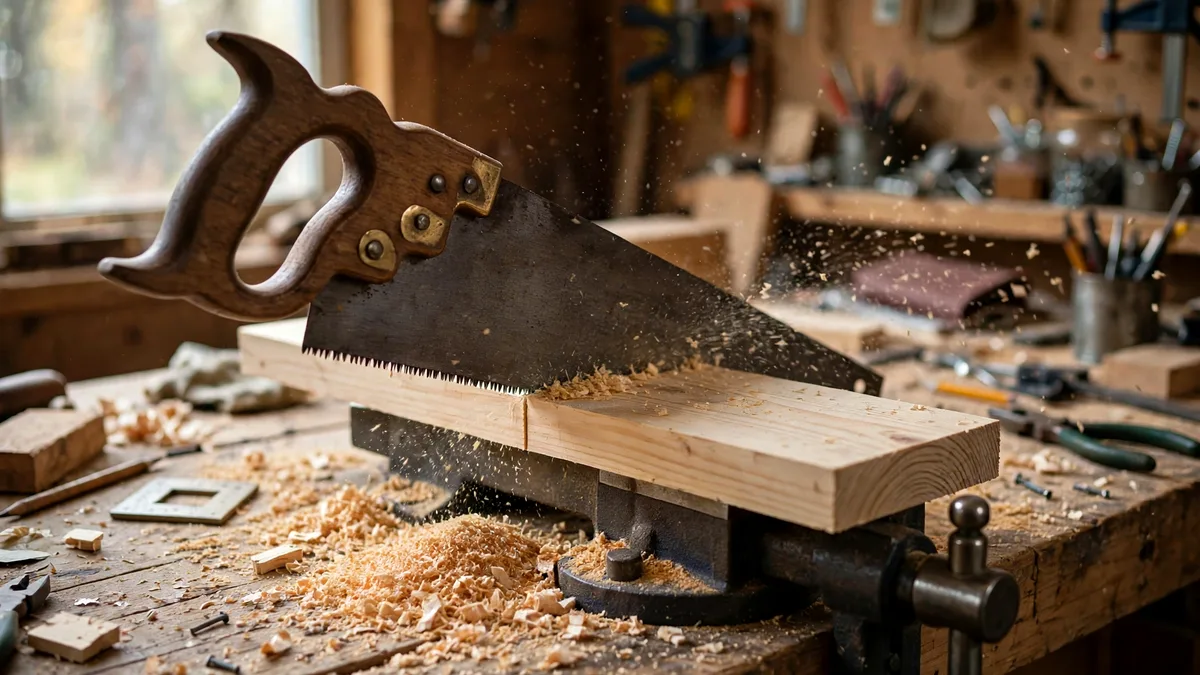
A hand saw, in the sense this guide uses it, is the ordinary panel saw: a broad steel blade with a handle at one end, pushed and pulled by hand through wood. It is the general saw for straight cuts, the one most homes need first. Our comparison of the best and worst saws of 2026 makes the same point: sharp teeth and a stiff blade matter far more than price.
Two close relatives are not general hand saws. A coping saw is a thin-blade frame saw built for tight curves and the coping joints where skirting boards meet in a corner. A bow saw is the big frame saw with a tubular steel frame and a coarse blade, built for cutting logs and branches outdoors. Neither replaces a panel saw for straight cuts in boards.
The powered saws are a different family. A circular saw cuts long straight lines fast, and a jigsaw is the powered tool for curves and cut-outs. A hand saw is the quiet choice for one or two careful cuts, for work with no power nearby, and for cuts where dust and noise matter. A hacksaw looks similar, but it is a metal-cutting tool for steel, copper and plastic pipe. Our guide to the best hacksaws of 2026 covers it on its own terms.
The Japanese pull saw confuses more buyers than any other hand saw. It cuts on the pull stroke, its blade is far thinner than a Western panel saw, and it leaves a fine finish in hardwood. It asks for light pressure, long easy strokes and no forcing. Practise on a spare board before you use one on a visible joint.
The Main Types of Hand Saw
The general-purpose panel saw is where most people should start. It is usually 20 to 22 inches long, with 7 to 9 teeth per inch, and it does both jobs reasonably well. If you buy one hand saw, buy this one. Look for a stiff blade, a handle that fills your hand, and teeth that look even and sharp.
A dedicated crosscut saw has teeth shaped like tiny knives, filed at an angle so each tooth slices across the wood fibres. It leaves the cleanest edge across the grain, which is what you want on visible cuts in skirting and shelving. It is slow along the grain, so it is the wrong pick for ripping long boards to width.
A rip saw is the opposite: its teeth are filed straight across, like little chisels, so each tooth scoops a chip out along the grain. It rips a long board quickly, but across the grain it tears and leaves a rough edge. Most home workshops manage with a general-purpose saw instead.
A backsaw is the small, stiff saw for precise work. A steel spine along the top edge keeps the thin blade dead straight, and the fine teeth leave a clean edge in joints, tenons and mitres. Dovetail and tenon saws are backsaws made for the joints themselves.
Length matters more than beginners expect. A longer blade takes longer strokes, and longer strokes cut faster with less effort. A 22-inch panel saw suits most adults; a shorter 20-inch saw suits smaller hands and tighter spaces.

Teeth per Inch: Picking the Right TPI
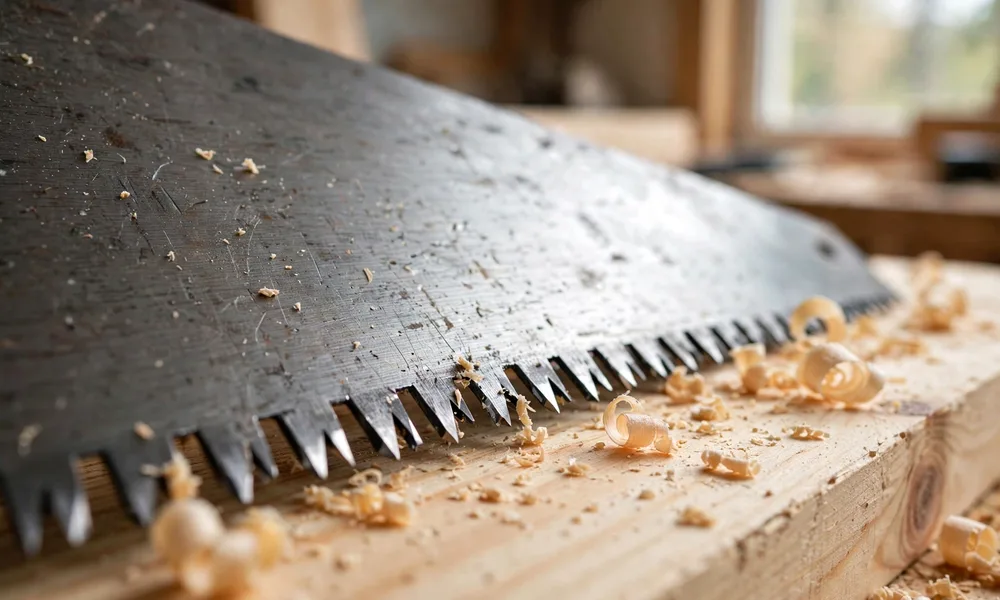
Teeth per inch, usually written TPI, is the single most useful number on a hand saw. Coarse teeth, around 5 to 7 TPI, take big bites and clear waste fast, which suits softwood and ripping along the grain. Fine teeth, around 11 to 14 TPI, take small bites and leave a smoother edge, which suits hardwood, plywood and veneered board. A general-purpose saw at 7 to 9 TPI sits in the middle.
Let the wood steer the choice. Softwood forgives a coarse blade: pine and spruce cut easily. Hardwood punishes one: oak, ash and beech need a finer tooth or the edge will tear. Plywood and veneered board are trickiest, because the thin face veneer chips easily; a fine-tooth saw, masking tape along the cut line, and a slow first stroke will save a spoiled panel.
Tooth shape matters too. Crosscut teeth are filed with a fleam angle, so they slice; rip teeth are filed square, so they chisel. If the teeth look identical and evenly spaced, the saw was made properly; if they look uneven or missing in patches, put it back.
Set is the slight sideways bend of alternate teeth, and it keeps the blade from binding: each tooth leans a fraction to one side, so the cut is slightly wider than the blade. Too little set and the saw binds; too much and the edge comes out rough.
How to Cut Straight With a Hand Saw
Good technique matters as much as good hardware, and most crooked cuts come from rushing the start. Mark the line with a pencil and a square, and support the board on both sides so it cannot pinch the blade as it closes. Clamp the work firmly: a board that moves will wander off the line no matter how good the saw is.
Start the cut with the saw at a low angle, using the teeth near the handle, and draw the blade backwards a few times to open a shallow groove that guides the rest of the cut. Then lengthen the strokes, keep the blade at about 45 degrees, and let the weight of the saw do the work. Pressure is the enemy of a clean cut: pushing hard bends the blade and leaves a ragged edge.
Stand so your shoulder, arm and saw are in one line with the cut, and watch the blade, not your hand. If the saw drifts, stop and ease it back. Let the teeth cut on the push stroke, and ease off on the return. Keep the offcut supported so it does not snap off and tear the last fibres.
Safety is simple but not optional. Wear eye protection, keep your free hand well away from the cutting line, and never hold the board with your hand in the path of the blade.

Sharpening and Looking After a Hand Saw
A hand saw stays good only if you look after it. Clean the blade after use, wipe it dry, and store it where nothing can knock the teeth. A thin wipe of oil keeps rust off, and a saw hung on a peg or kept in a dry box keeps its edge far longer than one rattling around loose in a damp shed. Our guide to the best hand planes of 2026 makes the same point about storing sharp hand tools dry and protected.
Sharpening is a skill worth learning if you own a good saw. It takes a triangular file, something to hold the blade still, and patience: each tooth is filed in turn, at the same angle, with the same number of strokes. If the teeth are impulse-hardened, they cannot be filed: they stay sharp for a long time and then the blade is replaced.
Know when a saw is finished. If the blade is kinked, teeth are missing in a run, or the handle is cracked and loose, it is not worth saving unless it is a quality blade. A bent blade will never cut straight again. Spend a little more on the replacement: a good hand saw costs far less than a power saw and lasts a lifetime if kept sharp and dry.
Before You Buy Checklist
- Match the saw to the job: panel saw for boards, backsaw for joints, Japanese pull saw for fine hardwood work.
- Check the TPI: 7 to 9 for softwood, 11 or finer for hardwood, plywood and veneered board.
- Flex the blade gently: it should spring back straight, not stay bent.
- Hold the handle: it should fill your hand and not twist your wrist.
- Look along the teeth: even spacing, no missing teeth, no broken tips.
- Check the length: 20 to 22 inches for most board work, shorter for tight spaces.
Frequently Asked Questions
What is the best hand saw for a beginner?
A 20 to 22 inch general-purpose panel saw with 7 to 9 teeth per inch. It crosscuts and rips well enough for most home jobs, and it costs far less than a power saw. Add a backsaw later for joints.
What is the difference between a crosscut saw and a rip saw?
Crosscut teeth are filed at an angle so they slice across the fibres. Rip teeth are filed square so they chisel along the grain. A general-purpose saw splits the difference and does both jobs well enough for most people.
Can a hand saw cut plywood without splintering?
Yes, with a fine-tooth blade of 11 TPI or more, masking tape along the cut line, and a slow first stroke to score the face veneer. Support the sheet on both sides so it does not flex, and cut with the good face up.
How do I know when my hand saw is blunt?
It skips instead of biting at the start of the cut, it needs hard pushing to move, and the edge it leaves looks torn rather than sliced. A sharp saw starts without skipping and follows the line with light pressure.
Is a Japanese pull saw better than a Western hand saw?
It is better for fine, splinter-free cuts in hardwood, because its thin blade cuts on the pull stroke. It is not better for rough board work, where a Western panel saw is faster and more forgiving.
How should I store a hand saw?
Hung on a peg or in a dry toolbox, blade lightly oiled, teeth protected from knocks. Never leave it loose in a damp shed, where rust and chipped teeth will ruin it.
The Bottom Line
Buy a 20 to 22 inch general-purpose panel saw with 7 to 9 teeth per inch, a stiff straight blade and a handle that fits your hand, and learn to start the cut slowly and let the teeth do the work. Keep it clean, dry and oiled, and it will cut straight for decades.