What Is a Hacksaw — and Which Blade Cuts Metal Cleanest in 2026
A hacksaw is the hand tool you reach for when metal needs cutting and nothing else in the workshop will do it neatly. It is a frame saw built for metal: a slim, fine-toothed blade held under tension in a metal frame, pushed and pulled across steel, copper, brass, aluminium and plastic until the teeth have eaten a clean slot through the work. It cuts conduit, threaded rod, bolts, brackets and pipe with a control no power tool matches at this size.
Key Takeaways
- A hacksaw is a metal-cutting frame saw, not a wood saw: its fine teeth suit steel, copper and aluminium, and it cuts wood badly.
- Match teeth per inch to the metal: 18 TPI for thick stock, 24 TPI for general work, 32 TPI for thin sheet and tube.
- Bi-metal blades are worth the extra cost: a flexible back with a hard edge bends instead of snapping and stays sharp longer.
- Tension is everything: a loose or backwards blade wanders and breaks, while a tensioned blade cuts straight with light pressure.
- Let the teeth do the work: long, steady strokes with almost no downward pressure cut faster than short, forced strokes.
What a Hacksaw Actually Is
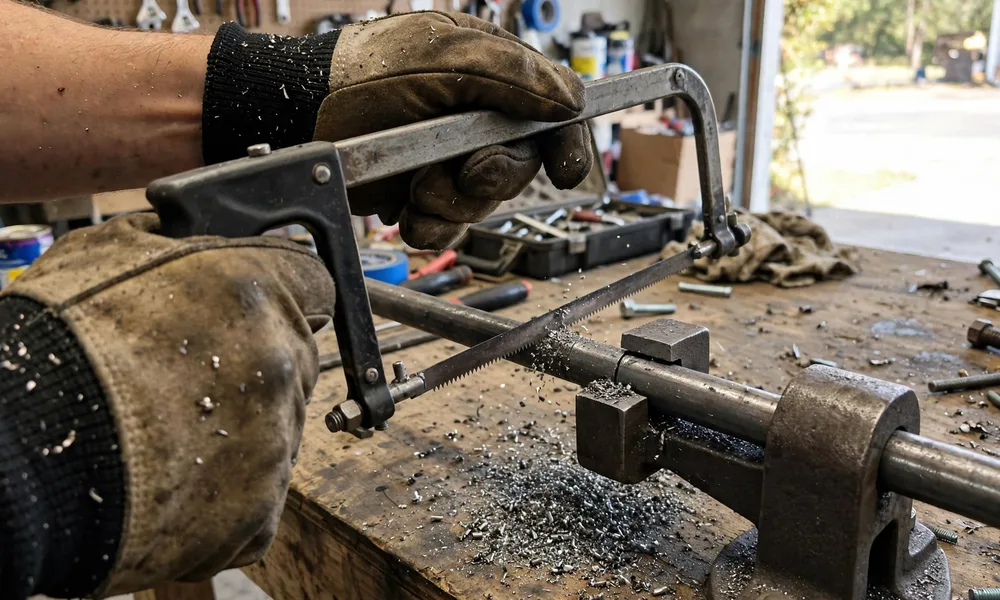
A hacksaw is a deceptively simple tool. A steel or tubular metal frame holds a narrow blade, about 300 millimetres long, between two pins. A wing nut or lever pulls the blade tight, and a pistol-grip handle gives your hand something to push against. The blade is the whole point: a thin strip of steel with tiny teeth along one edge, far finer than any wood-saw teeth, made to shave metal away slowly.
The cut happens on the push stroke. The teeth face away from the handle, so they bite as you push forward and slide back harmlessly on the return. Press lightly forward, ease back, and repeat. Forcing the blade down only bends it, heats it and snaps teeth off.
The most common mistake is treating a hacksaw as a general-purpose saw. It is not. Our guide to the best and worst saws of 2026 covers the wood-cutting family in full — circular saws, jigsaws, hand saws, Japanese pull saws, reciprocating saws and mitre saws — and a hacksaw appears there only in passing, because it belongs to a different job. Wood saws have big teeth that clear soft fibres fast; a hacksaw has small teeth that shave hard metal slowly. Each tool has its material, and the hacksaw’s material is metal.
The frame is what makes the tool usable. A hacksaw blade is far too thin to cut straight on its own, so the frame holds it under tension, like a bowstring, keeping it rigid through the cut. Cheap frames flex, letting the blade wander and snap. Good frames are rigid, hold tension, and let you change blades without a fight. Most take a standard 300-millimetre blade, and many let you mount it at ninety degrees for flush cuts against a wall.
The Main Types of Hacksaw
High-Tension Tubular Frames
The high-tension tubular frame is the best all-round hacksaw for most home workshops. Its steel-tube frame pulls the blade up to very high tension with a lever or large wing nut. A blade pulled tight stays straight, tracks a line accurately and resists the wobble that snaps blades. They usually take both 300-millimetre and 250-millimetre blades. They cost more than the cheapest frames, but the difference in feel is immediate. If you buy one hacksaw, buy this type.
Flat Steel Frames
The flat steel frame is the classic budget hacksaw: a strip of flat steel bent into a D-shape, with a wooden or plastic handle and a wing nut for tension. It works, and it has cut metal in workshops for a century, but it cannot pull a blade as tight as a tubular frame, and the frame itself flexes under hard use. That flex shows up as wandering cuts and more broken blades, especially in thick steel. A flat frame suits the occasional cut — trimming a bolt, cutting copper pipe — but for regular work, the tubular frame earns its price within a week.
Mini Hacksaws
A mini hacksaw is a short handle that grips one end of a standard blade, with no frame at all. It is made for tight spaces: inside a wall cavity, under a sink, between joists, anywhere a full frame cannot fit. The blade is unsupported, so it flexes and cuts less straight, but it reaches places nothing else can. Many plumbers and electricians carry one alongside the full-size saw, and for a bolt flush in a cramped corner it is the only tool that works.
Choosing the Right Blade: TPI Explained
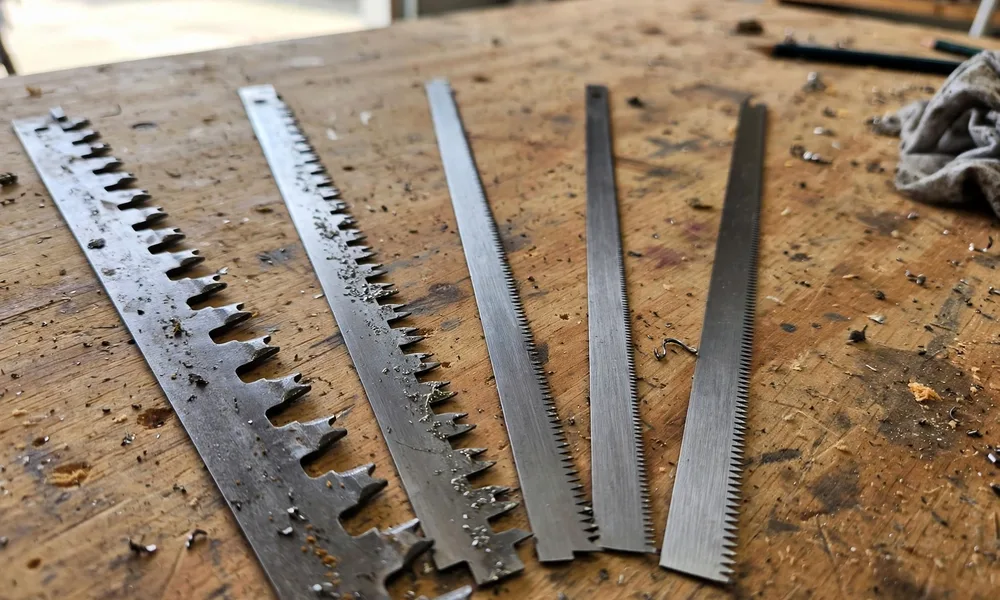
TPI means teeth per inch, and it is the single most important number on a hacksaw blade. The rule is simple: at least three teeth should be in contact with the metal at all times. If fewer touch the work, the teeth straddle the edge, catch, and snap off.
For thick metal — a steel bar, a heavy bracket, thick-walled pipe — use an 18 TPI blade, coarse enough to clear the swarf without clogging. For general work in metal around 3 to 6 millimetres thick, a 24 TPI blade is the everyday choice: it copes with conduit, threaded rod, angle iron and most bolts. For thin material — sheet metal, thin-walled tube, a bolt under 6 millimetres — step up to 32 TPI, so the fine teeth stay in contact with thin edges.
Blade material matters almost as much as TPI. A bi-metal blade has a flexible spring-steel back welded to a hard high-speed-steel edge. The hard edge stays sharp far longer than plain steel, and the flexible back bends instead of shattering. A plain high-carbon-steel blade is cheaper and cuts well when new, but it dulls faster and snaps rather than bends. Keep a small stock of blades: a dull blade skates, heats the work and tempts you to push harder, which is when blades snap.
How to Choose a Hacksaw
Start with the frame. Hold it in your hand and squeeze the grip: it should feel solid, with no flex in the tube and no rattle in the joints. Work the tensioning lever or wing nut — it should pull the blade tight with a firm twist and hold that tension without creeping loose. A frame that cannot hold tension is a bad frame at any price, because a slack blade causes most wandering cuts and broken blades.
Check the handle and the blade change. A pistol grip with a rubberised coating is the most comfortable for sustained cutting. Pins should be easy to reach, the blade should drop on without a fight, and the tensioner should be operable with one hand. Finally, buy blades with the saw: a ten-pack of bi-metal blades in 18, 24 and 32 TPI covers nearly every home-workshop job.
Hacksaws at a Glance
| Type | Best For | Tension | Price |
|---|---|---|---|
| High-tension tubular | Everyday metal cutting | Very high | Mid-range |
| Flat steel frame | Occasional light cuts | Moderate | Budget |
| Mini hacksaw | Tight spaces, flush cuts | Low (no frame) | Budget |
| Bi-metal blade (24 TPI) | General conduit, rod, bolts | — | Low |
| Bi-metal blade (32 TPI) | Thin sheet and tube | — | Low |
Cutting Technique: Conduit, Rod and Bolts
Good technique starts before the first stroke. Clamp the work firmly in a bench vice — our guide to sawhorses covers steady supports for long lengths. A workpiece that moves even slightly will grab the blade, snap teeth and leave a ragged cut. For round stock, clamp close to the cut line so the free end cannot vibrate, and mark the cut with a pencil or a light file score, which gives the teeth a groove to start in.
Start the cut gently. Place the blade on the mark and draw the saw back a few times with almost no pressure to open a shallow groove. Then settle into long, steady strokes that use nearly the full length of the blade. Let the weight of the saw and a light forward push do the work; your job is guidance, not force. Keep the blade square to the work, and if the cut wanders, ease off and let the blade find the groove again — never steer it back by twisting, because twisting snaps blades. A drop of cutting oil on steel cools the teeth and extends blade life noticeably.
For bolts, cut close to the nut or the surface, and finish slowly: as the blade breaks through the last millimetre, ease the pressure right off, or the blade will lurch forward and score the surface beyond. A few strokes of a file afterwards removes the burr. For threaded rod, run a nut onto the rod before cutting and wind it off afterwards — it cleans the thread as it travels. For copper pipe, a 32 TPI blade and cutting oil keep the cut smooth; for plastic pipe, keep the strokes steady so the blade does not heat up and melt it.

Care, Blade Changing and Storage
Changing a blade is simple once you know the order. Release the tensioner fully, lift the old blade off the pins, and drop the new blade on with the teeth facing away from the handle. Then pull the tensioner tight until the blade pings when plucked. A blade fitted backwards cuts on the pull stroke and dulls fast, so check the tooth direction every time. Wear gloves when handling blades — our guide to work gloves covers close-fitting pairs that protect hands without costing grip.
Store the saw with the blade tension released: leaving a blade under tension stretches it and weakens the frame. Hang the saw on a pegboard, keep spare blades in their paper sleeves, and keep blades dry — a damp garage rusts carbon-steel blades quickly.
Hacksaw Checklist
- Frame rigid, with a tensioner that holds tight without creeping loose.
- Blades in 18, 24 and 32 TPI, bi-metal, kept sharp and dry in their sleeves.
- Teeth facing away from the handle, blade tensioned until it pings.
- Work clamped firmly, close to the cut line, before the first stroke.
- Long steady strokes, light pressure, blade kept square to the work.
- Cutting oil on steel, burr filed off, tension released for storage.
Frequently Asked Questions
Can a hacksaw cut wood?
It can, slowly and badly. The fine teeth are made for metal and clog in wood. A hand saw or jigsaw is the right tool for wood.
What TPI should I use for steel conduit?
Use a 24 TPI bi-metal blade for most steel conduit. It keeps at least three teeth in contact with the thin wall. Step up to 32 TPI for very thin-walled tube.
Why does my hacksaw blade keep breaking?
Almost always too little tension, too much pressure, or twisting mid-cut. Tension the blade until it pings and never twist to steer a wandering cut.
How do I cut a bolt flush against a surface?
Mount the blade at ninety degrees to the frame if it allows it, or use a mini hacksaw. Cut slowly, protect the surface with a thin card, and file the stub smooth afterwards.
Are bi-metal blades worth the extra cost?
Yes. They stay sharp far longer than plain carbon-steel blades, bend instead of snapping, and the price difference is small.
How long does a hacksaw blade last?
It depends on the metal and the technique. A bi-metal blade cutting copper and aluminium can last months of occasional use, while the same blade cutting hard steel daily may last a few weeks.
Bottom Line
A hacksaw is a small, cheap tool that solves a large number of metal-cutting problems. Buy a rigid high-tension tubular frame, keep bi-metal blades in 18, 24 and 32 TPI, tension the blade until it pings, clamp the work firmly, and let long, light strokes do the cutting. Do that, and it will cut conduit, rod, bolts and pipe cleanly for years.