
Best Work Gloves 2026
A good pair of work gloves is the difference between a job finished well and a week of sore, blistered hands. The wrong gloves slip on a hammer handle, tear on the first sharp edge, or leave your fingers too numb to feel a screw. The right pair disappears on your hands: you forget you are wearing them until you take them off and find your skin intact.
These are the best work gloves of 2026, chosen for protection, grip, dexterity, and durability across the jobs people actually do with their hands, from building and bricklaying to yard work, warehouse shifts, and weekend repairs.
Key Takeaways
- Match the glove to the hazard first, because cut resistance, abrasion resistance, and grip matter far more than brand or colour.
- Leather wins for heavy, rough work, while thin synthetic gloves win when you need to feel small parts and fasteners.
- A glove that fits properly protects better than a tougher glove that does not, since loose fingertips snag and bunching palms blister.
- Check the cuff and the palm before you buy, because a short cuff lets dust and splinters in and a smooth palm drops tools.
- Keep two pairs on hand if you work across different jobs, since one pair cannot be both a heavy leather glove and a dexterous fitting glove.
Work Gloves 2026 at a Glance
| Best for | Glove type | Material | Standout strength |
|---|---|---|---|
| Best overall | Leather driver glove | Goatskin leather | Tough, flexible, and comfortable all day |
| Best for heavy labour | Heavy-duty rigger glove | Cowhide leather | Thick palms that survive rough handling |
| Best for dexterity | Coated knit glove | Nitrile on nylon | Thin enough to pick up screws |
| Best for cutting work | Cut-resistant glove | HPPE with steel fibre | High cut rating without bulk |
| Best for cold weather | Insulated work glove | Leather with fleece lining | Warm hands that can still grip |
| Best for wet work | Fully coated glove | Latex or nitrile coating | Waterproof grip in mud and rain |
What Work Gloves Are Really For
Work gloves do four jobs at once. First, they protect your skin from cuts, scrapes, splinters, and blisters. Second, they improve your grip on tools, timber, and materials, especially when your hands are sweaty or the work is dusty. Third, they cushion your palms against vibration and repeated pressure. Fourth, they keep dirt, chemicals, and cold away from your skin.
Most people buy work gloves the wrong way round. They grab the cheapest pair on the shelf, then discover the gloves tear on the first day, or they buy heavy leather gloves for a job that needs fingertip feel and spend the day pulling them off. Start with the job, not the glove.
It helps to know where work gloves sit among their close cousins. General-purpose gloves are made for warmth and light everyday use, and our guide to gloves that keep your hands warm without losing your grip in 2026 covers that gentler world in detail. Work gloves are different: they are personal protective equipment, built to a standard, with cut levels, abrasion ratings, and reinforced palms that a warm winter glove simply does not have.
Leather Work Gloves: The Classic Choice
Leather is still the default material for serious work gloves, and it earns that place. A good leather glove moulds to your hand over a few days, grips timber and metal even when dusty, and takes punishment that would shred a fabric glove in an afternoon. Goatskin is the best all-rounder: it is thinner and more flexible than cowhide, so it suits long days of handling tools, timber, and fencing. Cowhide is thicker and stiffer, which makes it the better choice for heavy labour such as moving bricks, handling rough stone, or dragging cable.

Coated and Knit Gloves: Dexterity for Fiddly Jobs
Not every job needs leather. When the work involves small parts, wiring, or fasteners, a thin coated knit glove is the better tool. These gloves are a stretchy knitted shell, usually nylon or a nylon and elastane blend, with the palm and fingers dipped in nitrile, latex, or polyurethane. The coating gives grip, the knit gives feel, and the whole glove is thin enough to pick up a screw from a bench.
Cut-Resistant Gloves: When the Blade Is the Risk
Some jobs carry a real risk of a serious cut: handling sheet metal, glass, sharp-edged steel, or a blade that slips. For those jobs, ordinary gloves are not enough, and a cut-resistant glove is essential. These gloves use fibres such as high-performance polyethylene, often blended with steel or glass fibre, woven into the shell to resist a blade sliding across the palm or fingers.
Fit: The Detail That Decides Everything
Fit is the single most important factor in a work glove, and it is the one people check least. A glove that is too big bunches at the palm, and that bunching causes blisters within an hour. Fingertips that extend past your own fingers catch on everything and make fine work impossible. A glove that is too small restricts blood flow, tires your hands, and splits at the seams.
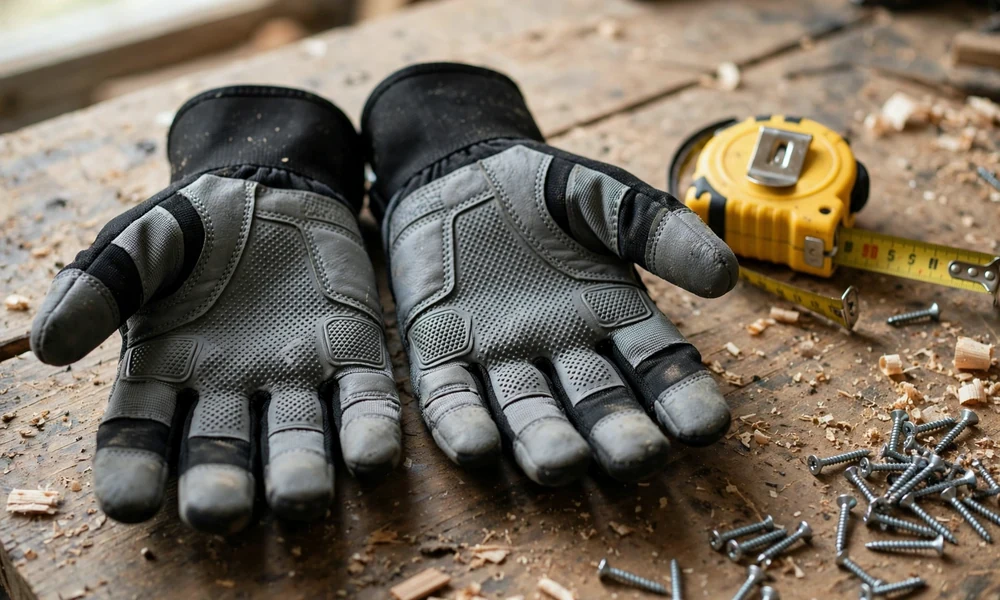
Measure your dominant hand around the knuckles, excluding the thumb, and check the maker’s size chart rather than guessing. Sizes vary between makers more than most people expect, so a large from one brand can be a medium from another. When you try a pair on, make a fist, spread your fingers, and pick up something small. The glove should move with your hand, not against it, and the fingertips should reach the end of your fingers without pressing on them.
Cold, Wet, and Dirty Conditions
Wet work calls for a fully coated glove, where the coating covers the whole glove rather than just the palm. These gloves keep water and mud out and grip well when everything is slippery, which makes them the right choice for drainage work, concreting, and rainy-day building. The trade-off is sweat: a fully coated glove does not breathe, so your hands will be damp from the inside within an hour. Change into a dry pair at lunch if you can, and dry gloves overnight rather than wearing the same wet pair two days running.
Dirty work is where cheap gloves earn their keep. Handling soil, compost, or demolition rubble ruins gloves quickly, so keep a pair of inexpensive coated gloves for the dirtiest jobs and save your good leather pair for the work that needs it. Garden gloves are a case in point: they are built for soil, thorns, and wet earth, and our guide to the best garden gloves of 2026 covers the lighter, soil-proof designs that suit planting and pruning better than a heavy rigger glove ever could.
Work Gloves as Safety Gear
Eye protection belongs with gloves on most building and workshop jobs, and it is worth choosing it with the same care. Our guide to the best safety glasses of 2026 covers glasses that stay clear, fit under a hard hat, and survive a dusty site. A pair of safety glasses and a pair of work gloves together cost less than a single trip to have a splinter or a speck of grit removed from an eye.
How Long Should Work Gloves Last?
How long a pair lasts depends on the job, not the calendar. A leather rigger glove used for bricklaying might last a month of daily use, while the same glove used for occasional weekend repairs could last a year. A coated knit glove used for warehouse picking might last a week, while a pair used for light assembly could last a month.

The signs that a glove is finished are easy to spot. The palm has worn thin enough to see light through it, the fingertips have holes, the stitching has split, or the coating has peeled away in patches. When any of those appear, replace the pair. Keeping a spare pair in the van or the toolbox means you never have to choose between working bare-handed and working in a failed glove.
Before You Buy: A Short Checklist
- Name the main hazard first: cuts, abrasion, grip, cold, or wet, and buy for that hazard.
- Choose the material for the job: leather for heavy and rough work, coated knit for dexterity, cut-resistant fibre for blades.
- Measure your hand around the knuckles and check the maker’s size chart instead of guessing.
- Try the glove on: make a fist, spread your fingers, and pick up something small.
- Check the palm for reinforcement and the seams for double stitching.
- Check the cuff: long enough to protect the wrist, snug enough to keep dust out.
- Buy a spare pair for dirty work, and replace any glove with a worn palm or a split seam.
Frequently Asked Questions
What are the best work gloves for general use? A goatskin leather driver glove is the best all-rounder for most people, because it balances toughness, flexibility, and comfort. Add a pair of thin nitrile-coated knit gloves for fiddly jobs, and you are covered for most work.
Are leather work gloves better than synthetic ones? Leather wins for heavy, rough, and abrasive work, and it lasts longer. Synthetic coated gloves win for dexterity, wet work, and jobs that need fingertip feel. Neither is better in general; the job decides.
How do I know my work glove size? Measure around your dominant hand at the knuckles, excluding the thumb, and match the measurement to the maker’s size chart. If you are between sizes, try both: a glove that is slightly snug is usually better than one that is slightly loose.
Can I wear work gloves near power tools? Wear them for handling materials, but take them off near rotating machinery such as a drill press, a lathe, or a circular saw. A loose glove caught by a spinning part pulls your hand in, so gloves off is the safe rule there.
How do I clean leather work gloves? Brush off dried mud, wipe them with a damp cloth, and let them dry naturally away from direct heat. Rub in a little leather conditioner once they are dry to keep the leather supple and stop it cracking.
The Bottom Line
The best work gloves of 2026 are the ones that fit your hands, suit your job, and survive the work you actually do. A goatskin leather glove for general building and repairs, a thin coated glove for fiddly work, and a cut-resistant pair for blades will cover almost every job a home or a site can throw at you.
Start with the hazard, not the price tag. Measure your hand, check the palm and the seams, and choose the cuff for the conditions. Then buy a spare pair, because the day your gloves fail is never the day you planned to replace them, and working bare-handed is the one shortcut that always costs more than it saves.


