A saw is only as good as the blade fitted to it. The top saw blades of 2026 cut straight, clean lines through timber, sheet goods, metal and masonry, while a dull or wrongly chosen blade burns the wood, chips the edges or binds halfway through the cut. Most bad cuts are not the saw’s fault: they are the blade’s.
This guide explains the blade types worth owning, how tooth count and kerf decide the quality of a cut, and how to match a blade to the material. There is no single best saw blade for everything, because ripping a board and cutting across it ask opposite things of a blade, but a small, well-chosen set covers almost every job a home workshop will ask for.
Key Takeaways
- Match the blade to the cut: rip blades cut along the grain, crosscut blades cut across it, and combination blades do a fair job of both.
- Fewer teeth cut faster and rougher; more teeth cut slower and cleaner — 24 teeth for framing, 40 for general work, 60 to 80 for fine finish cuts.
- Carbide-tipped blades stay sharp far longer than plain steel blades and are worth the extra cost for any circular saw.
- Thin-kerf blades cut with less effort and waste less wood, but they need a steady hand and a saw with a riving knife.
- Clean blades cut better: resin and pitch build-up makes a sharp blade behave like a blunt one.

Saw Blade Types Worth Owning
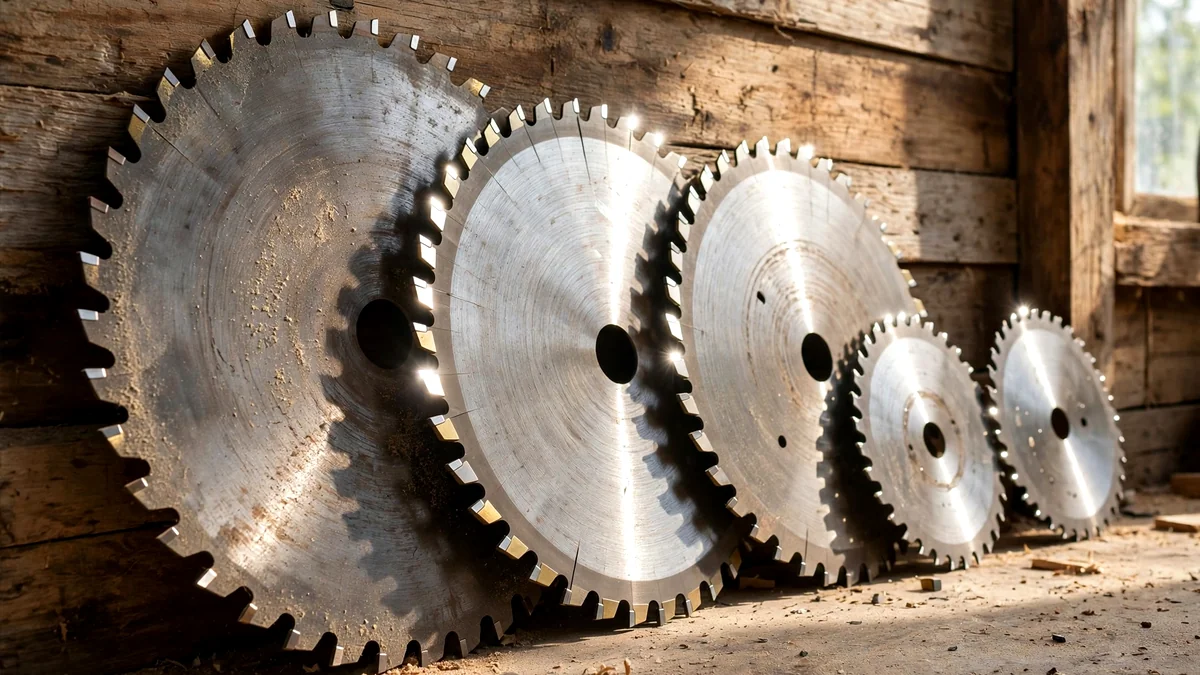
A circular saw blade is the workhorse of the home workshop. It is a steel disc with teeth around its edge, fitting circular saws, table saws and mitre saws in sizes from 165mm to 305mm. The blade type is decided by its teeth: rip blades have few, large teeth with a flat top that chisel wood away along the grain; crosscut blades have many smaller teeth that slice fibres cleanly across the grain; combination blades split the difference and handle both cuts well enough for most home work.
A jigsaw blade is a thin, narrow strip of steel that cuts curves and cut-outs no circular blade can manage. Jigsaw blades are cheap and easy to swap, and they come in wood, metal and laminate versions. Teeth per inch decide the finish: coarse blades cut fast and rough, fine blades cut slowly and cleanly. A jigsaw blade is a consumable, but it is the only blade that turns a corner mid-cut.
A reciprocating saw blade is a long, straight blade that cuts by moving back and forth, and it is the demolition blade: it cuts through timber, nails, pipe and plaster in one pass. Reciprocating blades are made to be abused — they flex, they bend, they hit nails — and they come in wood, metal and demolition versions. They are not finish blades: the cut is fast and rough.
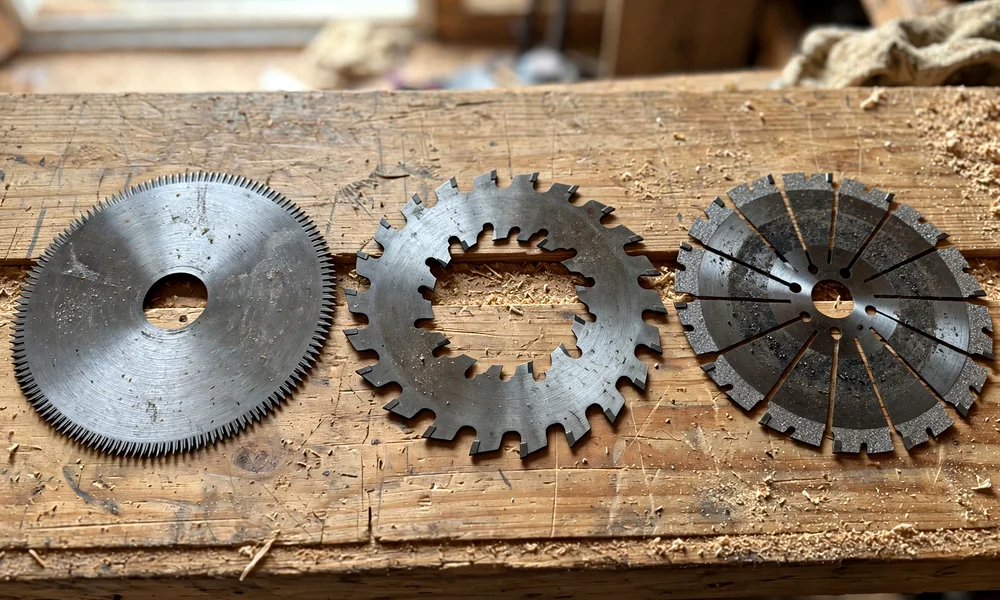
A diamond blade has no teeth at all. Its edge is coated with industrial diamond grit, and it grinds through tile, stone, brick and concrete where a toothed blade would be destroyed in seconds. Diamond blades come in continuous-rim versions for clean tile cuts and segmented versions for fast masonry cutting. They are the only blade that belongs anywhere near a patio slab.
Best Saw Blades by Material
Wood, metal and masonry ask different things of a blade, and the right choice starts with the material rather than the saw.
Best Saw Blades for Wood
For wood, a 40-tooth combination blade is the best single blade to own: it rips acceptably, crosscuts cleanly and handles sheet goods without tearing the face. Add a 24-tooth rip blade for long cuts along the grain in thick timber, and a 60-tooth or 80-tooth crosscut blade for visible cuts in hardwood and veneered board, where tear-out shows. Carbide-tipped teeth are worth the extra cost: they stay sharp through far more cuts than plain steel.
Best Saw Blades for Metal
Metal needs a fine-tooth blade with hardened teeth, and it needs low speed. A bi-metal blade — high-speed steel teeth welded to a flexible steel body — cuts mild steel, aluminium, copper pipe and threaded rod cleanly, and it bends rather than snapping when it binds. Use cutting oil on steel and keep the speed low: forcing a metal blade overheats the teeth and strips them in seconds. Our guide to the best hacksaws of 2026 covers the tooth counts that suit thin tube and thick bar.
Best Saw Blades for Masonry and Tile
Masonry and tile need a diamond blade, full stop. A segmented diamond blade cuts brick, block and concrete fast, while a continuous-rim diamond blade gives the clean, chip-free edge that tile and stone need. Never fit a wood blade to a masonry cut: the teeth will be gone before the cut is halfway through. Never use a diamond blade dry on a long cut without breaks — the segments overheat and the blade wears out in minutes instead of months.
Tooth Count, Kerf and Arbor Explained
Tooth count is the single most important number on a saw blade. Fewer teeth mean bigger gullets, so each tooth takes a bigger bite and clears waste fast — that is why a 24-tooth blade rips quickly but leaves a rough edge. More teeth mean smaller bites and a smoother finish, which is why an 80-tooth blade leaves a polished edge on hardwood but cuts slowly and can burn the wood if you push it too fast. For most home work, 40 teeth is the sweet spot.
Kerf is the width of the cut, decided by the thickness of the blade and the set of the teeth. A full-kerf blade is about 3.2mm thick and cuts a wide, stable slot; a thin-kerf blade is about 2.2mm thick, needs less power, wastes less wood and is easier on smaller saws. Thin-kerf blades can flex on long rip cuts, so they need a riving knife to stop the cut closing on the blade and kicking back.
The arbor is the hole in the middle of the blade, and it must match the saw: most home circular saws take a 20mm or 30mm bore, and many blades come with a reducer ring for the smaller size. Check the bore before you buy, because a blade that does not fit the arbor does not fit at all. Our comparison of the best vs worst saws of 2026 covers the saws these blades fit.
How to Get a Clean Cut
A clean cut starts with the right blade and a marked line. Mark the cut with a pencil and a straightedge, then score the line lightly with a knife on veneered board or laminate: the score stops the surface fibres tearing as the blade exits. On a circular saw, cut with the good face down; on a table saw, cut with the good face up.
Feed rate matters more than force. Push the saw steadily and let the teeth cut at their own pace. Pushing too fast overloads the motor and burns the wood; pushing too slowly lets the blade rub, which also burns the wood. Listen to the saw: a steady hum means the feed is right.
Support the workpiece properly. A board that sags as you cut will pinch the blade. Support both sides of the cut, clamp a straightedge as a guide for long cuts, and never let the offcut fall and tear the last fibres. When the cut is done, let the blade stop spinning before you lift the saw.
Top Saw Blades of 2026 at a Glance
| Blade Type | Best For | Teeth | Watch Out For |
|---|---|---|---|
| Rip blade | Cutting along the grain | 24 | Rough edge on crosscuts |
| Crosscut blade | Cutting across the grain | 60–80 | Slow, can burn if pushed |
| Combination blade | General workshop work | 40 | Neither fastest nor finest |
| Jigsaw blade | Curves and cut-outs | 6–12 TPI | Wears out fast, replace often |
| Bi-metal blade | Steel, aluminium, pipe | 14–24 TPI | Teeth strip if forced |
| Diamond blade | Tile, stone, masonry | No teeth | Overheats on long dry cuts |

Cleaning, Storage and Safety
A dirty blade cuts like a blunt one. Resin and pitch from pine and MDF build up on the teeth and the blade body, adding friction and heat until the blade burns the wood it used to cut cleanly. Clean blades regularly with a pitch remover or warm soapy water, dry them thoroughly, and the blade will cut like new. A blade that still cuts badly after cleaning is blunt, and it is time to replace it.
Store blades flat or hung, never loose in a drawer where the teeth knock against other tools. A blade guard or a simple cardboard sleeve protects the teeth and your hands. Keep blades dry: a damp garage rusts plain steel blades in a season. Carbide-tipped blades last far longer, but the teeth chip if the blade is dropped on concrete.
Safety is straightforward but not optional. Wear eye and ear protection: sawing throws chips and dust at speed and is loud enough to damage hearing over time. Never reach across a spinning blade, never remove the guard, and always unplug the saw or remove the battery before changing a blade. A sharp blade is safer than a blunt one, because it cuts with light pressure and does not bind — and a binding blade is the one that kicks back. Our guide to the best hand saws of 2026 covers the grip and stance that keep a hand saw cutting straight.
Saw Blade Checklist
- Match the blade to the cut: rip along the grain, crosscut across it, combination for general work.
- Pick the tooth count for the finish you need: fewer teeth for speed, more teeth for a clean edge.
- Check the arbor size before you buy — a blade that does not fit the saw is useless.
- Support both sides of the cut so the board cannot pinch the blade and kick back.
- Clean resin and pitch off the blade regularly; a clean blade cuts like a sharp one.
- Store blades flat or hung, dry and protected, and replace them when cleaning no longer helps.
Frequently Asked Questions
What is the best saw blade for general use?
A 40-tooth carbide-tipped combination blade. It rips acceptably, crosscuts cleanly and handles sheet goods without tearing the face.
How many teeth do I need on a circular saw blade?
It depends on the cut. Use 24 teeth for fast ripping, 40 teeth for general work, and 60 to 80 teeth for fine finish cuts in hardwood or veneered board where tear-out shows.
Why is my saw blade burning the wood?
Usually the blade is blunt, dirty or the wrong tooth count for the cut. Clean the blade first — resin build-up is the most common cause — then check the feed rate.
Can I use a wood blade to cut metal?
No. A wood blade’s teeth will be destroyed by metal in seconds, and the cut will bind and kick back. Use a bi-metal blade with fine teeth, at low speed, with cutting oil on steel.
How long does a circular saw blade last?
A carbide-tipped blade used on the right material and kept clean lasts years of home use. Plain steel blades dull far faster.
What is the difference between a rip blade and a crosscut blade?
A rip blade has few large flat-topped teeth that chisel wood away along the grain, fast and rough. A crosscut blade has many smaller bevelled teeth that slice fibres cleanly across the grain, slow and smooth.
The Bottom Line
The top saw blades of 2026 are not the most expensive ones: they are the right ones for the cut in front of you. A 40-tooth combination blade for general work, a 24-tooth rip blade for long cuts, a 60-tooth crosscut blade for visible edges and a diamond blade for tile and masonry cover every job a home workshop will ask for. Buy carbide-tipped, keep them clean, and the saw you already own will cut like a better tool.