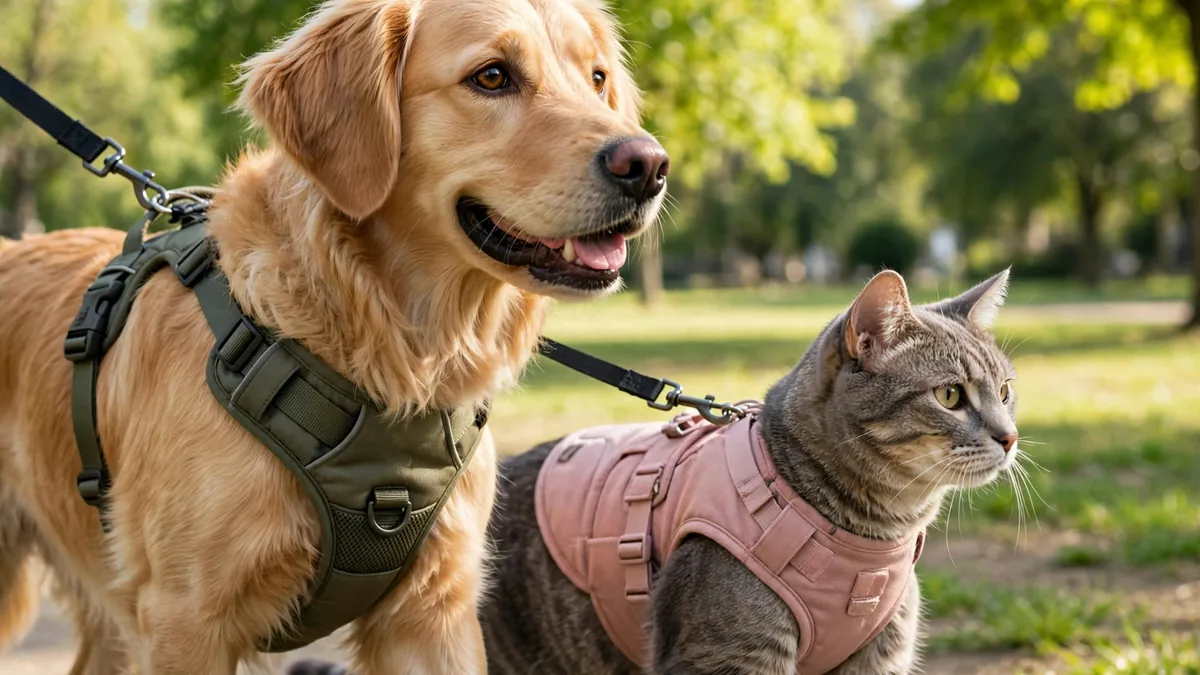
The best pet harnesses of 2026 are the ones that fit the animal wearing them, not the ones that look best on the shelf. A harness has to spread pressure across the chest and shoulders, stay put without rubbing, and let the animal move naturally. Get those three things right and walks become calmer and safer for both of you.
Pet harnesses are not just a dog product any more. Cats now go out on leads and small dogs that once wore only collars now walk in vests. Each animal has a different body shape and a different escape trick, so this guide compares the main types across species and shows how to choose one your pet will actually accept wearing.
Key Takeaways
- Measure the chest behind the front legs and the neck at the base, then buy from the size chart, never from the breed label.
- Choose a vest harness for cats and small pets, a step-in harness for nervous animals, and a front-clip harness for dogs that pull.
- Look for wide, padded straps with soft edges, because thin unpadded straps rub raw spots under the legs.
- Check the fit with the two-finger test under every strap, and re-check it after a week, because new webbing stretches.
- Introduce the harness indoors first, with treats and short sessions, before you ever clip on a lead outside.
Why a Harness Beats a Collar for Most Pets
A collar concentrates every tug on one narrow band around the neck. For a dog that pulls, that means pressure on the windpipe and coughing. For a cat, a collar is worse than useless as a walking tool: most cats can slip one in seconds. A harness moves the attachment point to the chest and ribcage, where the body is strongest, so pressure spreads over a wide area and the airway stays clear.
That does not mean collars have no place. A collar still carries the identity tag, and many dogs wear one all day at home. The two work as a pair: collar for identity, harness for walking. Our guide to the best dog collars for comfort and control explains how to pick one that sits comfortably alongside a harness, and our guide to the best dog leashes that will not fray covers the lead.
Harnesses also give you steering. A front-clip harness turns a lunging dog back toward you instead of letting it drag you forward. A vest harness gives you a secure grip on a cat that panics at a sudden noise, so you can lift it calmly instead of watching it bolt.
The Main Types of Pet Harness
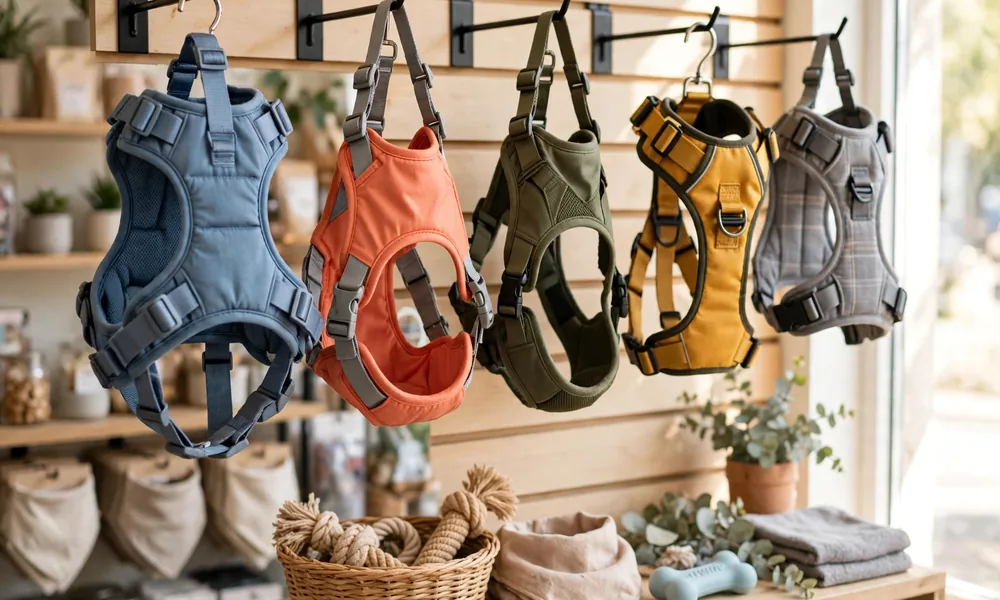
Every harness is a compromise between control, comfort, and ease of fitting. The table below compares the main styles side by side.
| Harness type | Best for | Control | Comfort | Ease of fitting |
|---|---|---|---|---|
| Vest harness | Cats and small pets | Good | Excellent | Easy |
| Step-in harness | Nervous dogs and cats | Moderate | Very good | Easy |
| Front-clip harness | Dogs that pull | Excellent | Good | Moderate |
| Dual-clip harness | Dogs in training | Very good | Very good | Moderate |
| Escape-proof harness | Slender cats and escape artists | Good | Good | Tricky |
| Car and travel harness | Road trips and vet visits | Good | Good | Moderate |
Vest Harnesses
A vest harness wraps the chest in a broad panel of mesh or padded fabric, with straps that fasten at the back. It is the best choice for cats and small pets because it spreads pressure over the largest area and has no narrow straps to dig in. Look for a vest with a secure Velcro and clip double fastening, since a single Velcro strip can pop open when a cat twists.
Step-In Harnesses
A step-in harness is the kindest option for an animal that hates things going over its head. The pet steps its front paws into two loops, you pull the harness up and clip it on the back, and nothing passes over the ears. The trade-off is control: most step-in designs are back-clip only, so they offer little help with a dog that pulls hard.
Front-Clip and Dual-Clip Harnesses
Front-clip harnesses are a dog product first and foremost. The lead attaches to a ring on the chest, so a forward surge rotates the dog sideways instead of driving it straight ahead. They are the most effective tool for a genuine puller, and the best versions have a Y-shaped front that leaves the shoulders free. Dual-clip harnesses add a second ring on the back, so you can start on the front ring while training and move to the back ring once the dog walks politely. If your dog is the pulling type, our guide to the best dog harnesses that stop pulling without choking covers the no-pull designs in full.
Escape-Proof Harnesses
Some animals back out of a standard harness in seconds. Slender cats, greyhounds, whippets, and nervous rescues with a narrow waist and a wide chest are the usual escape artists. A three-strap escape-proof harness adds a second belly strap behind the ribcage, so there is no gap to wriggle through. These harnesses are slightly heavier and take longer to fit, and you must measure the waist as well as the chest.
Car and Travel Harnesses
A travel harness keeps a pet restrained in a moving car: a wide chest panel, a strong back attachment, and a short tether that clips to the seat belt. Never clip a car tether to a collar, and never use a walking harness with a long lead in a car, because a sudden stop can throw the animal forward.
How to Measure and Fit a Harness
Fitting is where most harness purchases go wrong. Owners buy by breed label, and breed labels are guesses: a medium in one brand can be a large in another. Measure before you order, and measure twice.
Use a soft tape measure on the chest at its widest point, just behind the front legs, then the neck at the base and the waist for escape-proof designs. Compare all three numbers with the size chart for the exact harness you are buying. Between sizes, size up for a vest and down for a strap harness.
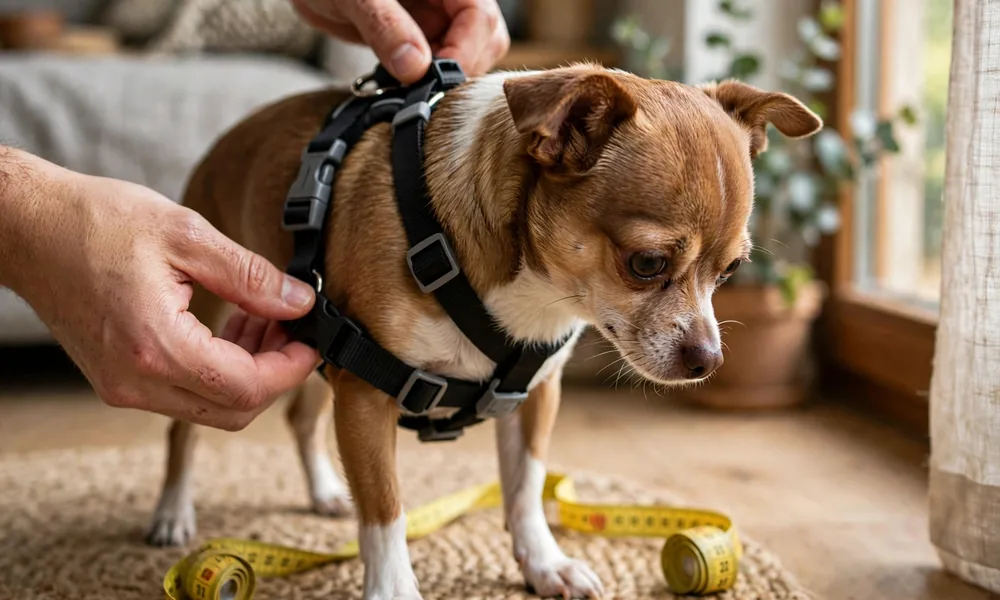
Once the harness is on, run the two-finger test under every strap: two fingers should slide snugly between strap and body, no more and no less. The chest strap should sit on the breastbone, not on the soft throat, and the girth strap a couple of finger-widths behind the front legs. Watch the animal move: the front legs should swing freely and the harness should not slide to one side.
Re-check the fit after a week, because new webbing stretches and growing puppies and kittens outgrow a harness fast. Check it monthly, and retire any harness whose webbing has frayed or whose buckle no longer clicks firmly.
Harnesses for Cats: A Different Game
Walking a cat is not like walking a dog, and the harness has to match the difference. Cats are not trained to heel; they explore, stop, crouch, and change direction without warning. A cat harness needs to be secure enough to survive a sudden bolt and light enough that the cat forgets it is wearing it.
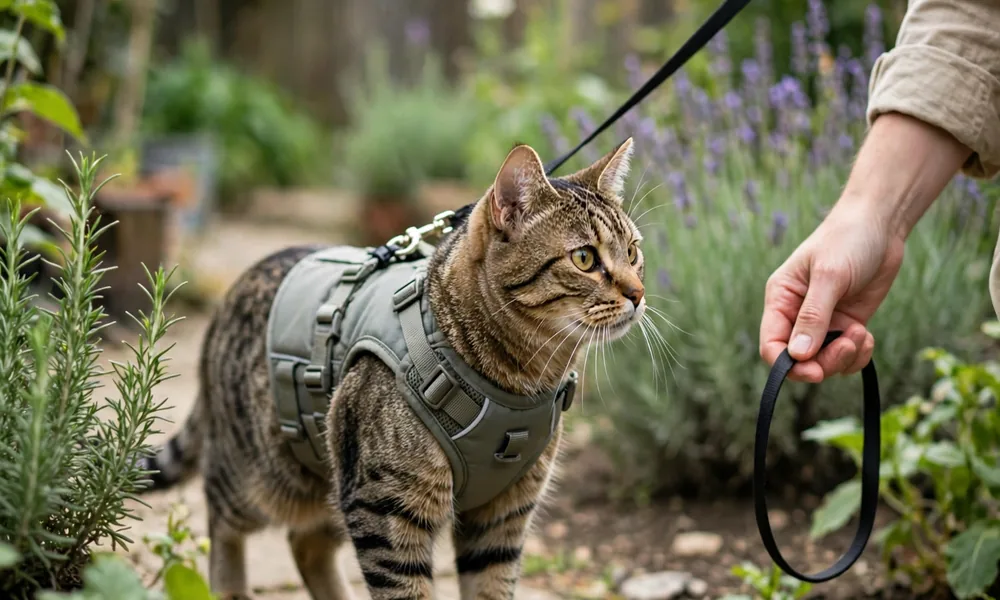
Start indoors. Let the cat wear the vest around the house for a few minutes at a time, with treats and play, before you ever attach a lead. Most cats flop over the first time they wear a harness, which is normal and passes within a few sessions. When you do go outside, choose a quiet garden first, keep the lead loose, and follow the cat rather than leading it.
For cats, a vest or escape-proof harness is almost always the right call. A strap harness leaves gaps a flexible cat can exploit, and a front-clip design is pointless when the animal weighs four kilograms and has no interest in pulling you anywhere. Reflective trim is worth having for evening garden time.
Materials That Last
Nylon webbing is the default for strap harnesses: strong for its weight, easy to wash, and available in every width and colour. Good nylon feels dense and slightly stiff when new, then softens without losing strength. Cheap nylon frays at the edges, so look for sealed or heat-finished edges and bar-tack stitching at every stress point.
Mesh is the best material for vests and step-in harnesses. It breathes, dries quickly, and spreads pressure over a wide area. Padded neoprene linings add comfort for strong pullers, but they hold water after rain and take longer to dry. For most owners, a well-made nylon or mesh harness with metal hardware is the sweet spot: light, washable, and strong enough to trust.
Hardware matters as much as fabric. Plastic buckles are fine for cats and small dogs, but a strong dog needs metal D-rings and sturdy clasps that click firmly and show no wobble.
Common Mistakes That Undo a Good Harness
The most common mistake is buying by looks and never measuring. A harness that is too loose slides sideways and rubs the same spot raw, while one that is too tight restricts the shoulders. The second mistake is leaving the same harness on all day: even a well-fitted harness can cause matting and sore spots if it never comes off.
The third mistake is expecting the harness to do the training. A front-clip harness reduces the reward for pulling, but the dog still needs to learn that a loose lead earns forward motion. And the fourth mistake is buying one harness for two very different animals: a dog harness and a cat harness are different products, even when they look alike on the shelf.
Checklist: Before You Buy
- Measure the chest, the neck, and the waist for escape-proof designs, then buy from the size chart.
- Choose a vest for cats and small pets, a step-in for nervous animals, and a front clip for dogs that pull.
- Look for wide padding under the chest and behind the legs, with soft edges.
- Check the front shape: a Y-shaped front frees the shoulders.
- Make sure all adjustment points are easy to reach.
- Plan the first fitting at home and check the skin under every strap for redness before the return window closes.
Frequently Asked Questions
Can a cat wear a dog harness?
Usually not well. Dog harnesses are cut for a deeper chest and a different shoulder shape, and most leave gaps a cat can slip through. Buy a harness made for cats, preferably a vest style, and size it from your cat’s own measurements.
Will a harness stop my dog pulling completely?
No. A front-clip harness makes pulling less rewarding and gives you steering control, but the dog still needs to learn that a loose lead means forward motion.
How tight should a pet harness be?
Snug enough not to slide sideways, loose enough that two fingers fit under every strap. Check the fit monthly, as pets gain and lose weight and webbing stretches.
Can puppies and kittens wear a harness?
Yes, from their first walks. A lightweight vest or dual-clip design adapts as the young animal grows, so measure every few weeks.
Is a harness better than a collar for a cat?
For walking, yes. A collar concentrates pressure on a cat’s delicate neck and most cats can slip one, while a harness spreads pressure across the chest. Keep the collar for the identity tag.
How do I wash a pet harness?
Hand-wash most fabric harnesses in warm water with mild soap, rinse well, and air-dry away from direct heat. Replace it if the webbing frays or a buckle no longer clicks firmly.
The Bottom Line
The best pet harnesses of 2026 are the ones that fit the individual animal: a vest for cats and small pets, a step-in for nervous animals, a front-clip or dual-clip design for a dog that pulls, and an escape-proof three-strap harness for the slender escape artist. Measure the chest and neck, buy from the size chart, check the fit with the two-finger test, and introduce the harness indoors before the first real walk.