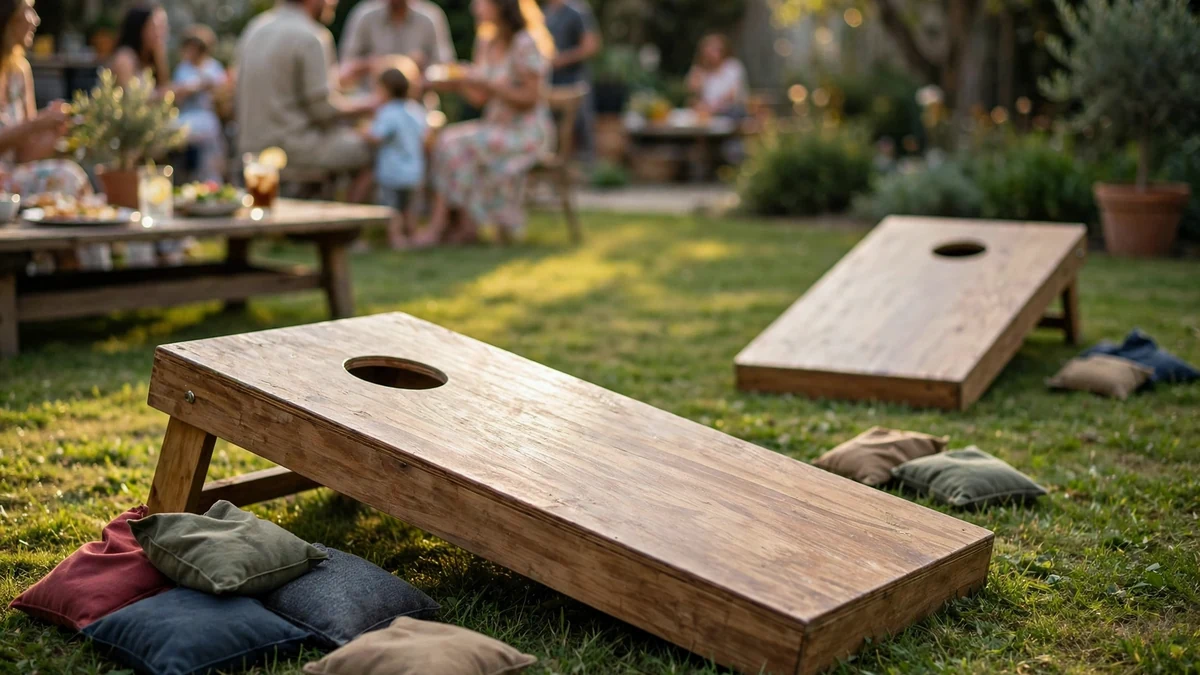
Cornhole looks simple. Two boards, eight bags, one hole. Yet anyone who has played on a cheap board knows the difference immediately: bags that bounce off a warped surface, a board that slides across the grass, legs that wobble, and a finish that chips after one summer. A good cornhole board sits flat, plays true, and survives years of backyard games, tailgates, and family tournaments without falling apart. The best cornhole boards of 2026 are the ones that make every throw feel fair, whether you are playing for fun or keeping score.

What Makes a Cornhole Board Good
The first thing to judge is the playing surface. A cornhole board is only useful if bags slide predictably across it, and the best boards have a smooth, sealed top that lets a bag glide, stop, or drop into the hole exactly as thrown. A rough or sticky surface grabs bags and kills the game, while a surface that is too slick sends every bag sliding off the back. The finish should feel like glass under your hand, not like sandpaper, and it should stay that way after a season in the sun and the rain.
The second thing is the build. A cornhole board takes a beating: bags thud onto it all afternoon, it gets carried, stacked, and left outside, and a board made from thin wood or flimsy framing will warp, crack, or bounce. The best boards use a solid plywood or hardwood top, a sturdy frame underneath, and legs that fold out and lock firmly in place. A board that stays flat and steady is a board that earns trust, and a board that bounces is a board that ruins the game.
The Main Types of Cornhole Board
Regulation cornhole boards are the tournament standard. They measure 24 by 48 inches, with a 6-inch hole centred 9 inches from the top edge, and the top of the board sits 12 inches off the ground at the back. They are the best choice for serious players, because they play exactly like the boards used in organised games, and practising on anything else builds the wrong habits. The trade-off is the size and the weight: a regulation board is big and heavy, and it needs a proper space to play in. For anyone who plays competitively, a regulation board is the one to buy.
Solid pine backyard boards are the classic choice. They have a warm wooden look, they are lighter than hardwood tournament boards, and they are the best choice for most families, because they look great on a lawn and play well enough for a casual game. They suit a backyard, a garden party, or a holiday rental, and they are the easiest boards to love. The downside is the durability: pine dents and scratches more easily than birch or hardwood, so the finish matters more. For most people, a solid pine board is the one to buy.
Folding cornhole boards are the portable option. They fold in half for carrying and storage, they fit in a car boot, and they are the best choice for players who take the game to the park, the beach, or a friend’s house. They suit a player who travels, and they are the easiest boards to store in a small home. The trade-off is the seam: a folding board has a join across the middle, and a cheap one will have a ridge or a bounce at the fold. For a travelling player, a well-made folding board is the one that works.
Weatherproof cornhole boards are the outdoor option. They are built from treated wood, aluminium, or high-density plastic, they shrug off rain and damp, and they are the best choice for anyone who leaves boards outside all summer. They suit a garden, a poolside, or a campsite, and they are the boards that survive the weather that ruins a wooden set. The downside is the feel: a plastic board never plays quite like wood, and the slide can be faster or slower than expected. For an outdoor setup, a weatherproof board is the one to buy.
Customisable cornhole boards are the personal option. They come with a plain surface ready for paint, vinyl, or a printed design, they let a family, a team, or a business put its own mark on the game, and they are the best choice for a gift or a special occasion. They suit a wedding, a birthday, or a company event, and they are the boards people remember. The trade-off is the price and the wait: a custom board costs more and takes longer to arrive, and a printed surface needs the same smooth finish as any other board. For a board with a story, a customisable board is the one that matters.

How to Choose the Right Cornhole Board
Start with how you play, not with the prettiest board. A serious player needs a regulation board with a slick, consistent surface, while a family playing in the garden needs a sturdy pine board that looks good and survives being knocked about, and a player who travels needs a folding board that packs away neatly. A board that does not match how you play will sit in the garage, however good it is. Match the board to the game, and the board will be used every weekend. Buying the cheapest board available and hoping it plays well is the fastest way to end up with a board that ruins the game.
Then check the practical details. Measure the space before buying, because a regulation board needs a proper throwing distance, while a smaller board suits a small garden. Check the weight: a heavy board stays put in the wind but is hard to carry, while a light board is easy to move but can slide. Check the legs: they should fold out firmly, lock in place, and hold the board steady on uneven grass. And check the surface: run a hand across it, and if it feels rough or sticky, walk away. A board that fails any of these tests will be a daily disappointment.
The Best Cornhole Boards of 2026
The best regulation cornhole board for most players this year is a tournament-standard board with a slick Baltic birch top, a solid frame, and legs that lock firmly in place. It plays exactly like the boards used in organised games, it is built to survive years of hard throws, and it is the board for anyone who takes the game seriously. It is heavy, and it costs more than a casual board, but the consistency is worth it. For a serious player, this is the board to buy.
The best solid pine backyard board of 2026 is a board with a warm wooden finish, a smooth sealed surface, and a frame that stays flat season after season. It looks great on a lawn, it plays well for a casual game, and it is the board for family tournaments and garden parties. It will dent if it is dropped, but with a little care it will last for years. For most families, this is the board that works.
The best folding cornhole board is a board that folds in half, packs into its own carry bag, and plays flat when it is opened out. It costs a little more than a fixed board, but the portability is worth it. It is the board for the park, the beach, and a friend’s garden, it is the one that fits in a car boot, and it is the one that gets played most often simply because it is easy to take anywhere. For a travelling player, this is the board to buy.
The best budget cornhole board of 2026 is a simple pine board, at a price that is less than a night out. It is flat, it is steady, and it is genuinely fun to play on. It will not have a tournament finish or a custom design, and it will not fold away, but for a first board, or for a family that plays a few times a summer, it is all that is needed. Cheap does not have to mean useless, and this board proves it.
What Else You Need
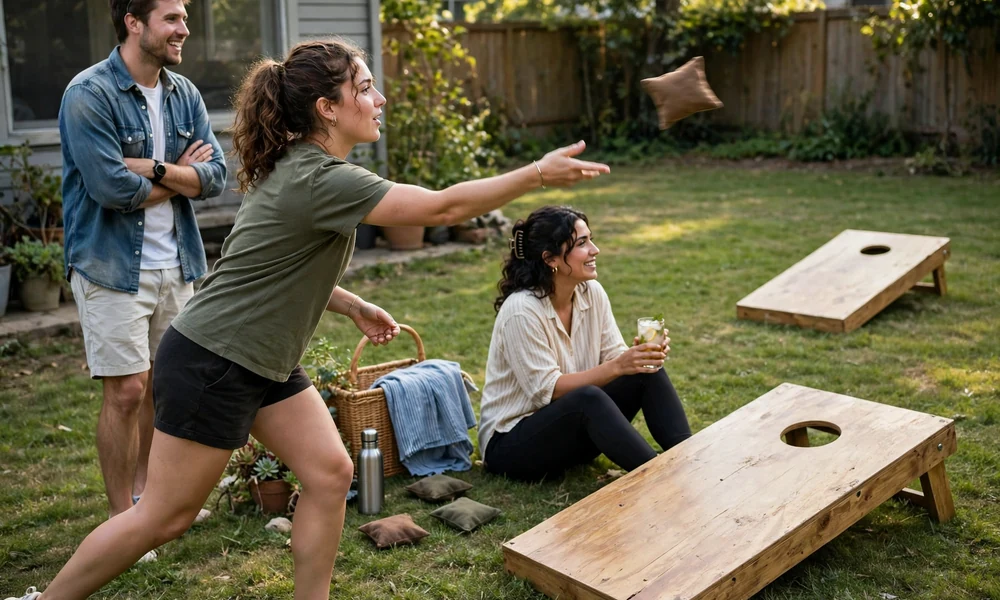
A cornhole board works best with a little help. A full cornhole set adds the eight bags and a carry bag, so you can start playing the moment the box opens, and a bocce ball set gives the garden a second classic game for when the cornhole tournament ends. And a board game or two for the evening will keep the fun going once the sun goes down. The board is the heart of the game; the bags, the second game, and the indoor option are what make a garden party last all day.
Common Mistakes to Avoid
The biggest mistake is buying a board that is too small or too flimsy. A board that is not regulation size will teach the wrong distances, and a board that bounces will make every throw a lottery. Check the dimensions and the build quality before buying, and buy a board that plays true. The second mistake is leaving a wooden board outside in the rain: a board that is never covered will warp, and a warped board is a board that should not be used. Store the board dry, and it will last for years.
Another common mistake is choosing a board for its looks rather than its surface. A pretty board with a rough or sticky finish is a frustrating board, however nice it looks. Choose the board for its slide first, and let the looks follow. And do not forget the space: a board that does not fit the garden will not be used, so measure the throwing distance before buying, and buy a board that fits it with room to spare.
How Cornhole Boards Fit a Better Backyard
A cornhole board is the simplest way to make a backyard more fun. It gives everyone a game to play, it brings people together without anyone thinking about it, and it does it without a screen in sight. A garden with a good cornhole board is a garden where people stay outside longer, and a garden where people stay outside longer is a garden that gets used. The board is not exciting on its own, but it is the thing that turns a barbecue into a tournament.
The habit also pairs naturally with a little routine. A quick wipe of the surface after each game, a check of the legs before the season starts, and a coat of sealant once a year will keep the board playing true and looking good.
The Verdict
The best cornhole board of 2026 is the one that matches how you play. For most players that means a solid pine backyard board with a smooth sealed surface and a sturdy frame. For someone who plays competitively, a regulation board is the better choice. For someone who travels, a folding board is the one that matters. Whatever the choice, measure the space first, check the surface, and test the stability before the board is used. A board chosen this way will not just sit in the garage; it will make the garden more fun, the games fairer, and the summer better. And that is worth more than any board on a lawn.


