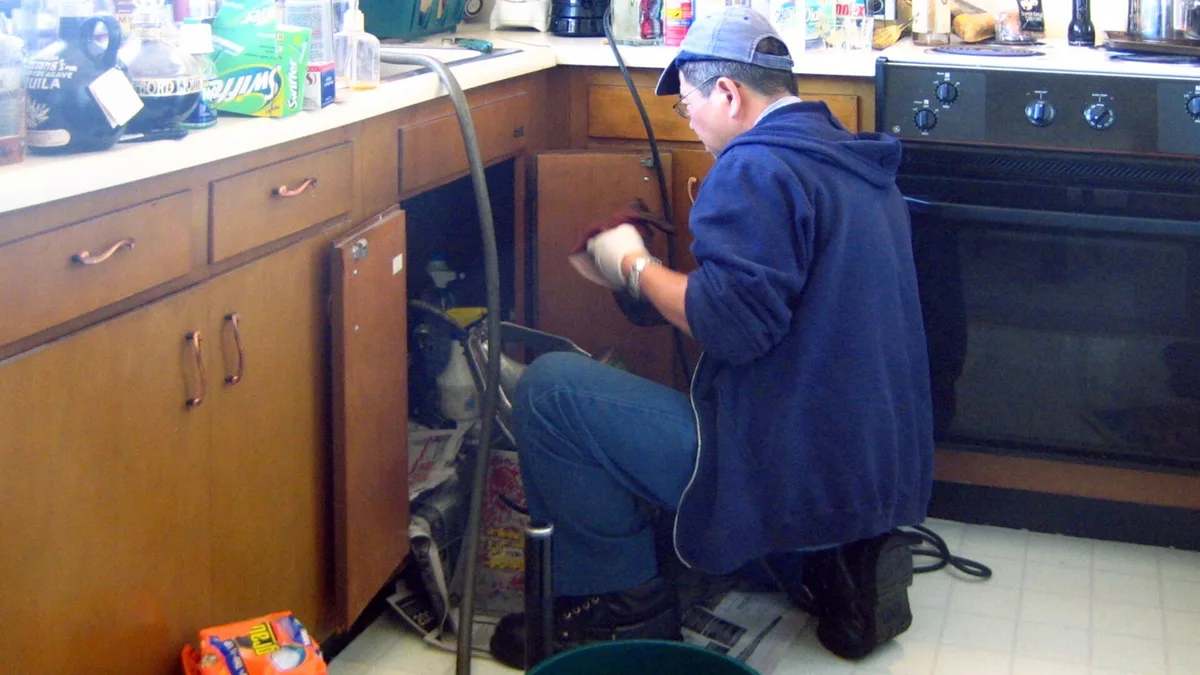
The best drain snakes of 2026 clear the blockages that a plunger cannot move and a bottle of cleaner cannot dissolve. A drain snake is a long, flexible steel cable with a cutting or corkscrew head that you feed down the drain and turn, so it breaks up hair, soap scum, grease and food where they actually sit in the pipe. When the water in the sink starts rising instead of falling, the blockage is usually only a metre or two down, and a drain snake reaches it in minutes. The wrong snake kinks on the first bend and comes back clean while the water still sits.
This guide explains how to choose a drain snake: the main types, the cable length and thickness for each drain, the auger heads for hair and grease, and how to use one without damaging pipes. A plunger clears blockages with air pressure, and our guide to the best plungers of 2026 covers that option, while a drain cleaner dissolves a clog with chemicals, and our guide to the best drain cleaners of 2026 covers that approach. A drain snake sits between the two: it reaches further than a plunger and works on blockages chemicals cannot dissolve.
Key Takeaways
- Match the cable to the drain: a thin 6-millimetre cable suits sinks and baths, while a thicker 8-millimetre cable suits toilets and main drains.
- Length matters more than power: a 7-metre cable reaches most household blockages, and a cable that is too short is useless no matter how well it is made.
- A corkscrew head grabs hair, a bulb head pushes through grease, and a blade head cuts through roots and heavy scale.
- A drum keeps the cable tidy and feeds it smoothly, while a hand-crank snake gives you more feel for the head inside the pipe.
- Never force a snake that stops dead: pull back, turn slowly, and try again, because forcing it is how cables kink and pipes get scratched.
What a Drain Snake Actually Is
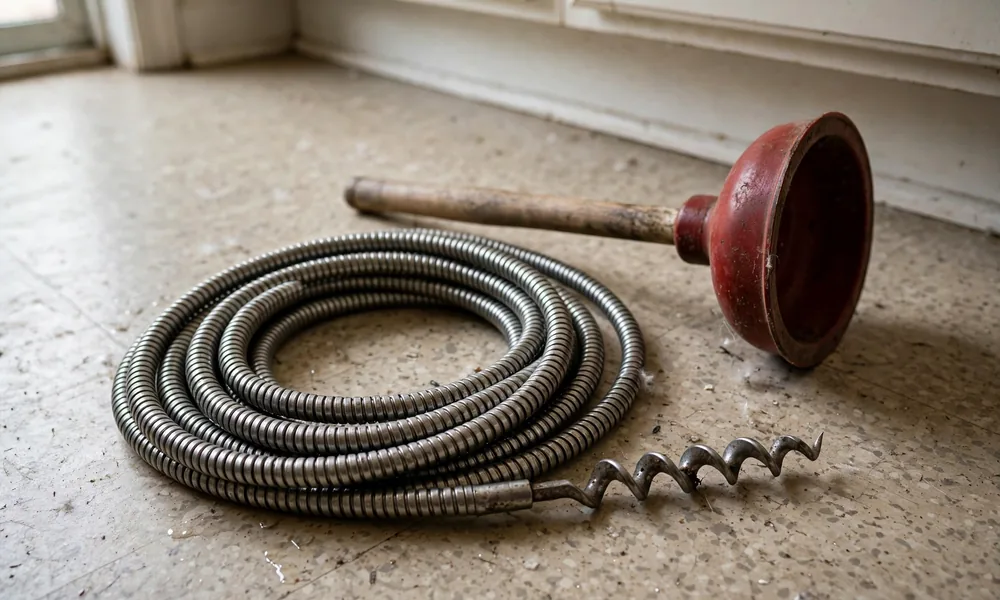
A drain snake, also called a drain auger or a plumbing snake, is a coiled steel cable wound so tightly that it bends around the curves of a pipe without folding flat. At one end is the working head, a corkscrew, bulb, blade or hook that does the clearing. At the other end is a handle or a crank that lets you turn the cable while you push it forward. The turning is the whole point: a straight wire just pokes at a blockage, while a turning cable screws into it, winds hair around the head, and scrapes grease off the pipe wall.
The cable decides whether the tool works. A good cable is spring steel, flexible enough to follow a trap and a bend, but stiff enough to push through a clog instead of folding back on itself. A cheap cable is often thin mild steel that kinks the first time it meets resistance, and once a cable kinks it never runs straight again. Sinks, basins and baths have narrow pipes and tight traps, so a 6-millimetre cable is right, while toilets and floor drains have wider pipes, so an 8-millimetre cable suits them better.
The Main Types of Drain Snakes Compared
Every drain snake is a variation on four basic designs, each suiting a different kind of blockage.
| Type | Best for | Cable | Typical price |
|---|---|---|---|
| Hand-crank snake | Sinks and baths, occasional use | 5 to 7 metres, 6 mm | $10 to $25 |
| Drum auger | Most homes, regular use | 7 to 8 metres, 6 to 8 mm | $20 to $45 |
| Toilet auger | Toilet bowls only | 1 metre, short rigid shaft | $15 to $35 |
| Drill-powered snake | Deep or stubborn blockages | 8 to 15 metres, 8 mm | $30 to $70 |
Drum Augers
A drum auger is the best all-round drain snake for most homes. The cable lives inside a round drum, and a crank on the side feeds it out and winds it back in. The drum keeps the cable tidy, keeps your hands off the dirty length, and stops the cable whipping around the bathroom as you turn it. Most drum augers hold 7 to 8 metres of cable, which reaches the blockages in sinks, baths, showers and kitchen sinks. When you buy one, check that the drum locks, so the cable does not feed too fast and kink, and that the crank turns smoothly under load.

Toilet Augers
A toilet auger, sometimes called a closet auger, is a short, specialised snake made only for toilet bowls. It has a rigid curved shaft about a metre long, with a cable inside and a crank at the top, and the curve is shaped to follow the toilet trap without scratching the porcelain. Do not use a standard drain snake in a toilet: a long flexible cable coils up inside the wide trap and scratches the glaze. Keep the toilet auger in the bathroom, not the garage, because a blocked toilet never waits for a convenient moment. For the rest of the bathroom, a different tool does the scrubbing, and our guide to the best toilet brushes of 2026 covers the brush that keeps the bowl clean between blockages.
Choosing the Right Auger Head
The head is the part that actually clears the blockage, and the right head depends on what is blocking the drain. A corkscrew head is the best choice for hair, the most common bathroom blockage: the spiral winds hair around itself as it turns, and you pull the tangled mass out when you wind the cable back. A bulb head is a smooth rounded tip that pushes through soft blockages such as soap scum and grease, opening a channel for the water to flow again.
A blade head, sometimes called a cutter, scrapes grease and scale off the inside of the pipe and cuts through tougher material such as roots in an outside drain. It is the most aggressive head, so save it for blockages that a corkscrew or bulb head has already failed on.
How to Use a Drain Snake Without Damaging Your Pipes
Using a drain snake well is a slow job, and the most common mistake is rushing it. Start by removing the drain cover or the plug, and put a bucket and old towels around the drain, because the cable will come back dirty. Feed the cable in slowly by hand until you feel resistance, usually the trap, a U-shaped bend just below the drain, which needs a gentle push and a slow turn to get around. When the cable stops moving forward, you have reached the blockage. Turn the crank slowly and push gently: forcing it only kinks the cable or scratches the pipe.
When the cable starts moving forward again, the head has broken through. Wind it back slowly, turning as you go, and the head will bring the clog with it or break it into pieces small enough to wash away. Run the tap for a minute: if the water drains freely, the job is done, and if it still drains slowly, feed the snake in again and repeat the pass. Two slow passes clear more blockages than one forceful one. After use, rinse the cable and dry it before you put it away, because a wet cable left in a drum rusts and stiffens. Never use a drain snake on a drain that has just had chemical cleaner poured into it.

The Best Drain Snakes of 2026 at a Glance
Use these picks to narrow your choice, then check the table above to compare them side by side.
Best Overall: A 7-Metre Drum Auger with a Corkscrew Head
For most homes, the best drain snake is a drum auger with 7 metres of 6-millimetre cable and a corkscrew head. It reaches the blockages in sinks, baths and showers, and the corkscrew head grabs the hair that causes most bathroom blockages.
Best for Toilets: A Toilet Auger with a Curved Shaft
If the toilet is the drain that blocks most often, buy a toilet auger first. The curved shaft follows the trap without scratching the porcelain, and the short cable is easy to control. It pays for itself the first time it clears a blocked bowl.
Best Budget: A 5-Metre Hand-Crank Snake
The cheapest good drain snake is a 5-metre hand-crank model. It costs little, it fits in a drawer, and it clears the shallow blockages in sinks and baths that sit just past the trap.
What to Avoid
A cable that is too thin for the drain is the worst buy of all, whatever the price. A 4-millimetre cable in a toilet or a main drain just coils up and never reaches the blockage with any force, and it kinks the first time it meets resistance. A cable that is too short is the second trap: a 3-metre snake cannot reach a blockage 5 metres down the pipe. Measure the distance from the drain to the main stack before you buy, and add a metre for the bends. A snake with a fixed head is the third trap, because blockages differ, and a tool with only a corkscrew head cannot push through grease.
Buying Checklist
- Match the cable thickness to the drain: 6 millimetres for sinks and baths, 8 millimetres for toilets and main drains.
- Buy enough length: 7 metres covers most household blockages, and longer is better for a deep main drain.
- Choose the head for the clog: corkscrew for hair, bulb for grease, blade for roots and heavy scale.
- Check the drum locks and the crank turns smoothly under load before you buy.
- Make sure the cable is spring steel, not thin mild steel that kinks on the first bend.
- Keep gloves, a bucket and old towels with the snake, so the job is ready when the drain blocks.
Frequently Asked Questions
How far down the drain is the blockage usually?
Most household blockages sit between 1 and 3 metres down the pipe, just past the trap or at the first bend. A 7-metre cable reaches them comfortably.
Can a drain snake damage my pipes?
Yes, if it is forced. A cable pushed hard around a bend can scratch plastic pipes, and a fast-spinning snake can kink and gouge a joint. Feed the cable slowly, turn it gently, and stop the moment it stops dead.
Should I try a plunger or a drain snake first?
Try the plunger first for a toilet or a drain that is completely blocked, because pressure often clears a soft blockage in seconds. Use the drain snake when the plunger fails, or when the drain is slow rather than fully blocked.
Can I use a drain snake on a toilet?
Only a toilet auger, which is made for the job. A standard drain snake coils up inside the wide toilet trap and scratches the porcelain. Buy the short curved toilet auger for toilets.
How do I clean a drain snake after use?
Rinse the cable under a tap, wipe it down, and dry it before storage. A wet cable left in a drum rusts and stiffens, and a rusted cable kinks more easily. A light spray of oil before you put it away keeps it smooth for the next use.
When should I call a plumber instead?
Call a plumber if the snake meets a hard stop that will not move, if several drains block at the same time, or if water comes up in a different drain when you run the tap. Those signs point to a blockage in the main drain or a broken pipe.
The Bottom Line
The best drain snake is the one that matches your drains: a 7-metre drum auger with a corkscrew head for most homes, and a toilet auger for the bowl. Buy the right cable thickness and length, choose the head for the clog you have, and use it slowly. The drain will run free again, and the plumber stays a phone call you did not need to make.