
Best Toilet Brushes for a Cleaner Bowl in 2026
A toilet brush is the least glamorous cleaning tool in the house, and also one of the few that has to work properly every single time. The best toilet brushes of 2026 scrub the bowl clean without scratching the porcelain, reach under the rim where stains start, and rinse clean afterwards instead of holding on to everything they just removed. A bad one splashes, sheds bristles, bends at the neck, and leaves the ring exactly where it was.
This guide explains what actually decides whether a toilet brush cleans well: the bristle material, the shape of the head, the length and stiffness of the handle, and how the brush is stored between uses.
Key takeaways
- Silicone heads rinse cleaner and dry faster than nylon bristles, but stiff nylon still scrubs dried-on stains better.
- The head shape matters more than the brand: a curved or angled head is the only way to reach properly under the rim.
- A handle of at least 35 centimetres keeps your hands clear of the water, and a solid handle that does not flex is worth paying for.
- How the brush dries decides how long it stays hygienic, so a vented holder or a wall mount beats a sealed cup every time.
- Replace a nylon brush every three to six months, and sooner if the bristles splay, bend, or start to smell after rinsing.
What makes a toilet brush actually clean
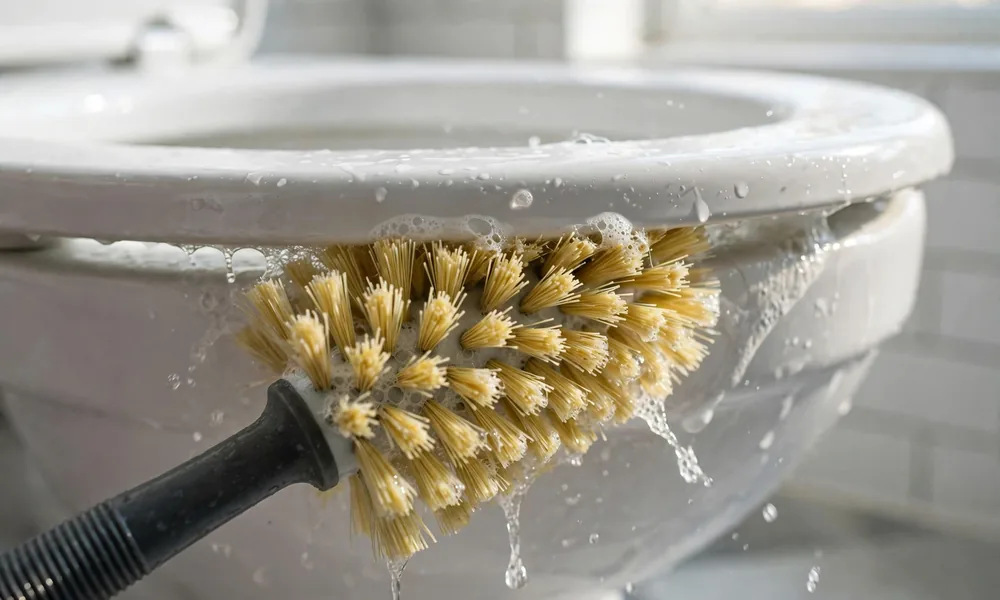
A toilet brush has three jobs: loosen the dirt, reach every part of the bowl, and then rinse clean itself. Most brushes fail on the second or third. The bowl is not a smooth cylinder. It has a rim with a hidden channel underneath, a waterline where limescale and stains collect, a curved throat at the back, and a drain hole at the bottom. A brush that only scrubs the visible part of the bowl leaves the dirtiest parts untouched, and the stains come back within days. A good head is dense enough to hold its shape under pressure, but flexible enough to follow the curve of the bowl, with bristles of different lengths: longer ones at the edges for the rim, shorter ones in the middle for the bowl wall.
The second thing is the handle. A short handle puts your hand close to the water, which is unpleasant and unhygienic. A handle of 35 to 45 centimetres lets you scrub the whole bowl while keeping your hand above the rim. It should be rigid: a hollow plastic handle that flexes when you press down makes scrubbing tiring and imprecise, and it usually snaps at the neck after a few months. Stainless steel, solid resin, and thick hardwood handles last far longer.
Nylon bristles: the classic scrubber
Nylon is still the most common bristle material, and for good reason. Stiff nylon bristles scrub dried-on limescale and staining better than anything else, and a well-made nylon head keeps its shape for months. The drawback is hygiene. Nylon absorbs a little water, traps dirt in the centre of the head, and dries slowly, so the brush can start to smell if it is stored wet in a closed holder. Nylon brushes are also the ones that shed: a cheap head loses bristles into the bowl, and splayed bristles stop cleaning long before the handle wears out.
Silicone heads: the easy-rinse option
Silicone toilet brushes use flexible fins or nubs instead of bristles. They do not absorb water, so they rinse clean under the tap in seconds, dry fast, and do not hold odours. They are also gentler on porcelain, which suits newer toilets with delicate glazes. The trade-off is scrubbing power. Silicone fins glide over hard limescale rather than scraping it off, so a silicone brush works best in soft-water homes and for regular light cleaning. In a hard-water home with heavy staining, it will struggle where nylon succeeds.
Disposable heads: the no-storage answer
Disposable toilet brush systems use a handle with a clip-on pad that is thrown away after use, usually with cleaning solution already in the pad. There is nothing to store wet and nothing to smell, a real advantage in a small bathroom. The cost adds up, though, and the pads are thinner than a bristle head, so they are less effective on heavy staining and cannot reach as far under the rim.
The main types, compared
Choosing between the types is mostly a question of your water and your cleaning habits. A household that cleans the toilet twice a week with a descaler will be happy with almost any decent brush. A household that cleans once a fortnight, in a hard-water area, needs the strongest scrubber it can get.
| Type | Best for | Scrubbing power | Drying and hygiene | Watch out for |
|---|---|---|---|---|
| Stiff nylon bristles | Hard water, heavy staining | Strongest | Slow to dry, can smell | Splaying and shedding bristles |
| Soft nylon bristles | Everyday cleaning, older porcelain | Moderate | Slow to dry | Too soft for limescale |
| Silicone fins | Regular light cleans, soft water | Gentle | Dries fast, rinses clean | Slides over hard stains |
| Disposable pads | Quick cleans, hygiene first | Light | Nothing stored wet | Running cost, weak on stains |
| Under-rim angled head | Rim stains, older toilets | Strong at the rim | Depends on bristle type | Awkward on the bowl floor |
How to use a toilet brush properly
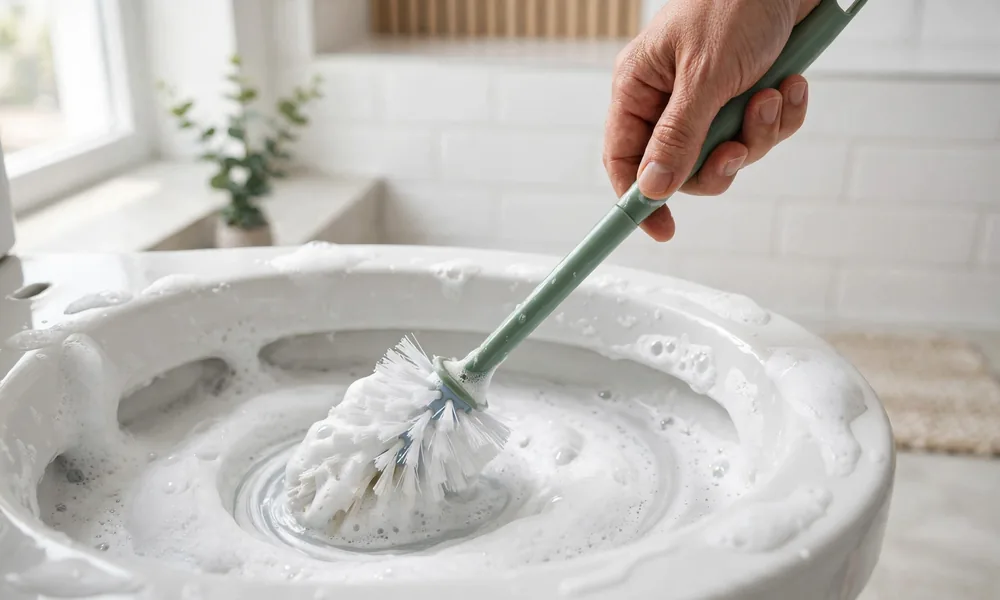
Technique matters as much as the brush. Start by flushing once so the bowl is wet, then apply cleaner around the bowl and under the rim and leave it for five to ten minutes. A cleaner that has had time to work does half the scrubbing for you, and it means less pressure on the brush, which makes the bristles last longer.
Scrub under the rim first, working the head around the whole channel. Then scrub the waterline in a slow circle, where limescale collects, and the throat at the back of the bowl, pushing the head down and twisting it into the curve. Finish by flushing with the brush held in the bowl so clean water rinses the bristles.
Two mistakes are common. The first is scrubbing a dry bowl, which scratches porcelain and spreads dirt instead of lifting it. The second is pressing too hard: a brush works by the tips of the bristles contacting the surface, and pressing hard bends them flat, so cleaning gets worse, not better. Firm, even strokes beat hard ones.
What to avoid when buying
The cheapest brushes fail in the same few ways, and all of them are easy to spot before you buy. Avoid a head with sparse bristles: if you can see the core through the bristles, it will not hold cleaner and will not scrub evenly. Avoid a handle that flexes when you bend it in the shop, because it will flex far more when wet. Avoid a holder with no ventilation, because a brush stored in a sealed cup stays damp for days. Our comparison of the best and worst toilet brush holders explains why drying matters so much, and which holder designs actually let a brush dry between uses.
Be wary of a brush that is sold mainly on looks. A slim, designer brush with a tiny head may suit a guest bathroom, but it will not clean a family toilet. Likewise, a brush with a head that is too large cannot fit under the rim or into the throat, so it cleans the easy middle of the bowl and misses the rest.
Keeping the brush hygienic
A toilet brush lives in the dirtiest room in the house, so how you store it matters as much as how you use it. After each use, rinse the head under the flush, shake it over the bowl, and let it dry before it goes back into the holder. If the holder has a drip tray, empty and rinse the tray weekly, because the water that collects there is the main source of smell.
Once a month, soak the head in a bucket of hot water with a capful of bleach or a bathroom disinfectant for ten minutes, then rinse and dry it fully. This does not make an old brush new again, but it keeps a good brush fresh for its full life. Never store a brush in a sealed container, and never leave it sitting in water.
Replacement is part of hygiene, not a sign of waste. A nylon brush used twice a week in a family home is done after three to six months, when the bristles splay and stop springing back. A silicone head lasts longer, often a year, because it does not absorb water or lose its shape, but it should still be replaced when the fins tear or wear smooth.

Your checklist before you buy
- Head shape: curved or angled so it reaches under the rim and into the throat, not just the flat bowl wall.
- Bristle type: stiff nylon for hard water and stains, silicone for soft water and easy rinsing, and never a sparse head you can see through.
- Handle length: at least 35 centimetres, rigid when you bend it, with a grip that stays secure when wet.
- Holder and drying: a vented holder, a wall mount, or a drip tray that empties, so the brush dries fully between uses.
- Size for your toilet: the head must fit under the rim and into the throat of your own bowl, not just a standard one.
- Replacement plan: a brush you can afford to replace every few months, because even the best brush is a consumable.
Frequently asked questions
How often should you replace a toilet brush?
Every three to six months for a nylon brush in regular use, and about once a year for a silicone head. Replace it sooner if the bristles splay, shed, or smell after rinsing, because a worn brush cleans worse and holds more bacteria.
Are silicone toilet brushes better than nylon ones?
They are better for hygiene and for light, regular cleaning, because they rinse clean and dry fast. They are worse for heavy limescale and dried-on staining, where stiff nylon scrubs harder. The best choice depends on your water: soft water suits silicone, hard water suits nylon.
Can a toilet brush scratch the porcelain?
A brush used on a wet bowl with cleaner will not scratch modern porcelain, but scrubbing a dry bowl with a stiff brush can leave marks, especially on older or refinished toilets. Always wet the bowl first and let the cleaner work before you scrub.
Should the brush be stored in the holder wet or dry?
Dry, always. Shake it over the bowl, let it drip for a few seconds, and store it in a vented holder so air can reach it. A brush stored wet in a sealed cup stays damp, smells, and grows bacteria.
What is the best way to clean a toilet brush itself?
Rinse it under the flush after each use, then soak the head monthly in hot water with bleach or disinfectant for ten minutes, rinse, and dry it fully. Empty and rinse the holder tray weekly as well, since dirty water collects there.
Do disposable toilet brushes clean as well as reusable ones?
For a quick freshen-up they do, and they win on hygiene because nothing is stored wet. For heavy staining and under-rim cleaning they are weaker than a good bristle brush, so they work best as a second brush rather than the only one.
The bottom line
The best toilet brush for a cleaner bowl in 2026 is a simple thing: a stiff nylon or silicone head with a curved shape that reaches under the rim, on a rigid handle of at least 35 centimetres, stored in a holder that lets it dry. Buy for the head and the handle, not the looks, replace it on schedule, and it will keep the bowl clean with far less effort than the brush you are using now. The rest of the bathroom matters too: the best bath mats keep the floor dry after a shower, and the right toilet paper holder keeps the other essential within reach without cluttering the space.


