
A toilet brush holder is the least glamorous object in the bathroom and one of the most important. It sits beside the toilet, it holds a brush that touches the dirtiest surface in the house, and if it is badly designed it turns into a small pool of dirty water that smells, breeds bacteria, and stains the floor.
This comparison puts the best toilet brush holders of 2026 head to head against the worst, judging them the way you would actually live with them: whether the brush dries between uses, whether dirty water can pool inside, how easy the holder is to clean, and whether it stays put on the floor or tips over at the worst moment. The best bathroom faucets of 2026 show what good bathroom hardware looks like when it is built to survive water, and this guide holds brush holders to the same standard, then shows exactly where the bad ones fail.
Key Takeaways
- Ventilation and drainage are the single most important features in a toilet brush holder, because a brush that never dries is a brush that breeds bacteria.
- Silicone brush heads dry faster, rinse cleaner, and last longer than old nylon bristles, which fray, splay, and trap dirt in the centre.
- A heavy base or a wall mount stops the holder tipping over, which is the most common complaint about cheap freestanding holders.
- Stainless steel and glazed ceramic clean easily and resist stains, while raw plastic absorbs odours and discolours within months.
- The worst holders cost you twice: once at the till, and again in smells, stains, and a brush you have to replace far too often.
How a Toilet Brush Holder Actually Works
A toilet brush holder has one job: to store a wet brush in a way that lets it dry, keeps the dirty water away from your floor, and hides the whole thing from view. A good holder does this with airflow and drainage. Vents or slots in the sides let air circulate around the brush, a raised drip tray or a draining base lets water escape instead of pooling, and a wide opening lets the brush go in and come out without scraping the sides.
The part buyers most often overlook is what happens inside a sealed holder. A wet brush in a closed plastic cup is a warm, dark, damp environment, which is exactly what bacteria and mould need to grow. Within days the water at the bottom turns cloudy and starts to smell, and every time you lift the brush out, a little of that water drips onto the floor. A good holder breaks that cycle by letting the brush dry fully between uses, and by making the inside easy to rinse out. The best bath mats of 2026 follow the same lesson in a softer product: the things that stay fresh in a bathroom are the ones that dry properly, not the ones that stay damp.
The Best Toilet Brush Holders of 2026
The best toilet brush holders share a simple quality: you forget they exist. The brush dries, the holder stays clean, nothing smells, and the whole thing sits quietly beside the toilet doing its job.
Ventilation That Lets the Brush Dry
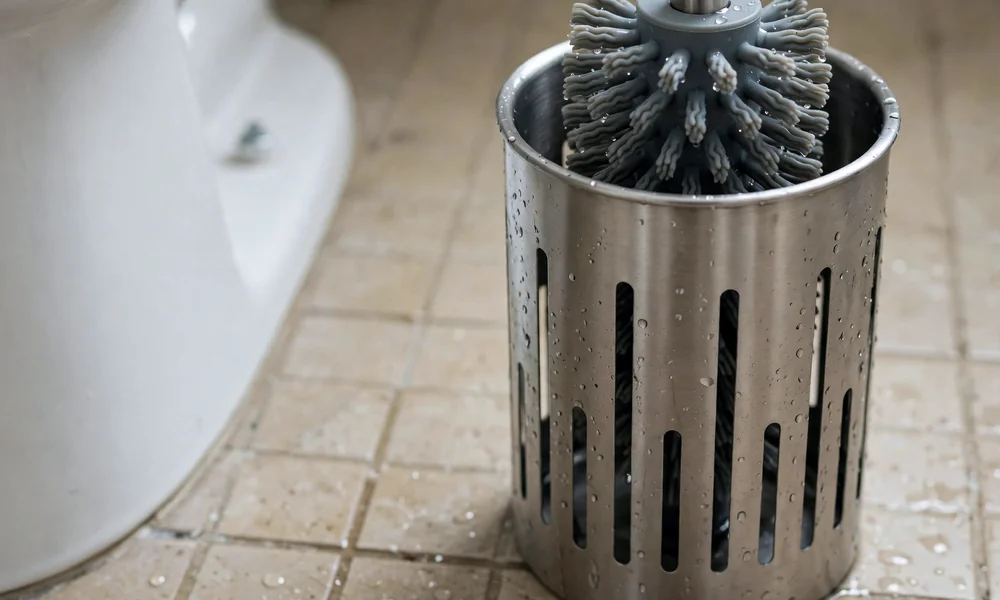
The best holders of 2026 are built around airflow. Look for slots, vents, or an open-top design that lets air circulate freely around the brush head, and a base that drains rather than seals. Stainless steel holders with vertical slots are the classic example: the brush dries within a few hours, the holder itself stays dry, and there is nowhere for dirty water to collect. The test is simple: after use, the brush should feel dry to the touch by the next morning, and the inside of the holder should smell of nothing at all.
Silicone Heads and Solid Handles
The best brush heads of 2026 are silicone, and the difference from old nylon bristles is immediate. Silicone bristles do not absorb water, so they dry fast and do not hold odours, and they rinse clean under the tap instead of trapping dirt in the centre of the head. The handle matters too: a solid stainless steel or heavy resin handle feels balanced in the hand and does not flex when you scrub, while a hollow plastic handle bends, cracks, and eventually snaps at the neck, usually while you are in the middle of cleaning.
Heavy Bases and Wall Mounts That Stay Put
The best holders stay where you put them. A freestanding holder needs a heavy, wide base, ideally weighted with a metal or ceramic core, so it cannot be knocked over by a child, a pet, or a careless foot in the night. A wall-mounted holder is even better in a small bathroom: it lifts the brush off the floor entirely, frees up floor space for cleaning, and keeps the brush out of reach of small children. Check the mount before you buy: a solid bracket with proper screws holds for years, while a suction cup or a sticky pad gives way within weeks in a steamy bathroom, usually at three in the morning.

The Worst Toilet Brush Holders of 2026
The worst toilet brush holders fail in ways that start small and grow. A smell you barely notice becomes a smell you cannot ignore. A brush that dried slowly stops drying at all. A holder that tipped over once starts tipping over weekly.
Sealed Cups That Trap Dirty Water
The worst holders of 2026 are sealed plastic cups with no vents, no drainage, and no way for the brush to dry. Every time the wet brush goes back in, a little more dirty water collects at the bottom, and because the cup is closed, that water never evaporates. Within a week it turns cloudy, within a month it smells, and within a few months the inside of the cup is stained in a way that no amount of scrubbing removes.
Frayed Bristles and Flimsy Handles
A bad brush announces itself every time you use it. The bristles are too soft to scrub properly, too short to reach under the rim, and they splay outwards after a few weeks so the brush pushes water around instead of cleaning the bowl. The handle is usually the next failure: thin hollow plastic that flexes under pressure, cracks at the neck, and eventually snaps, leaving you holding a stub while the head falls into the bowl. Cheap holders often make the problem worse by being too narrow, so the brush scrapes against the sides every time it goes in and out, bending the bristles further and shedding fibres onto the floor.
Light Bases That Tip and Stain
The worst holders are too light for their own good. A thin plastic cup with a narrow base tips over at the slightest knock, spilling dirty water across the bathroom floor and sending the brush skidding under the sink. Even when they stay upright, cheap plastic stains: the white cup turns yellow within months, the inside develops a brown ring at the waterline, and the whole thing starts to look grubby no matter how often you clean it. Some cleaning products are poor value in any home, and the worst cleaning products that waste money show the same pattern in a different aisle: a product that looks cheap and then keeps costing you, in replacements, in smells, and in time spent cleaning up after it.

Best vs Worst Side by Side
Put the two sides next to each other and the pattern is clear. A good holder costs more on the day you buy it, and then costs you nothing: no smells, no stains, no tipped-over spills, no brush replaced every few months. A bad holder costs less on the day, and then keeps charging you in small instalments of odour, cleaning, and replacement brushes, usually within a year. The smell test is the quickest check. Lift the brush out of a good holder and the inside smells of nothing. Lift it out of a bad one and the smell tells you everything you need to know about what has been growing in there.
The base tells the same story. The best holders are heavy, wide, or bolted to the wall, so they stay put when life happens around them. The worst are light, narrow, and top-heavy, so they fall over when a child brushes past or a pet investigates. A holder with no airflow is a holder that will smell, and no amount of scented cleaner will fix a design that traps dirty water.
The Verdict
The verdict is straightforward: spend the extra money on a holder with real ventilation, a draining or removable drip tray, a silicone brush head, and a heavy base or a proper wall mount. The best toilet brush holders of 2026 are not the most expensive ones in the shop, and they are not the flashiest; they are the ones built from honest materials, designed to dry properly, and stable enough to stay put. They repay the extra cost within a year through a bathroom that smells fresh, a brush that lasts, and a floor that stays clean.
The worst holders are a false economy in the most literal sense. They look like a bargain, they feel like a bargain when you pick them up, and then they trap dirty water, smell, tip over, and stain their way through your bathroom until you throw them away. If your budget is tight, buy the simplest good holder you can afford rather than the fanciest bad one: a plain vented stainless steel holder with a silicone brush will outlast a flashy sealed plastic set by years, and your bathroom will smell better from the first week.
Who Each Holder Is For
The best holders are for anyone who plans to stay in their home for more than a year, anyone with children or pets, and anyone who has already thrown away a smelly plastic holder once and does not want to do it again. They suit family bathrooms, where the brush is used daily, and small bathrooms, where a wall-mounted holder frees up precious floor space. If you clean the bathroom yourself, the case is even stronger, because a holder that dries properly and rinses clean turns a grim chore into a quick one.
The worst holders are, frankly, for nobody who has a choice. The only honest use for a bargain plastic cup is a short-term fix: a rental you are about to leave, a property you are selling, or a temporary bathroom while a renovation is planned. Even then, empty the water out weekly and rinse the cup, because a sealed holder will not wait politely before it starts to smell. For everyone else, the right move is the same: check for ventilation, check the weight, check the brush head, and buy the solid one.
A toilet brush holder is a small purchase that you live with every day, and the good ones earn their keep by vanishing into your routine. Choose ventilation, a silicone head, and a base that stays put, and your bathroom will stay fresher, cleaner, and calmer for years to come.


