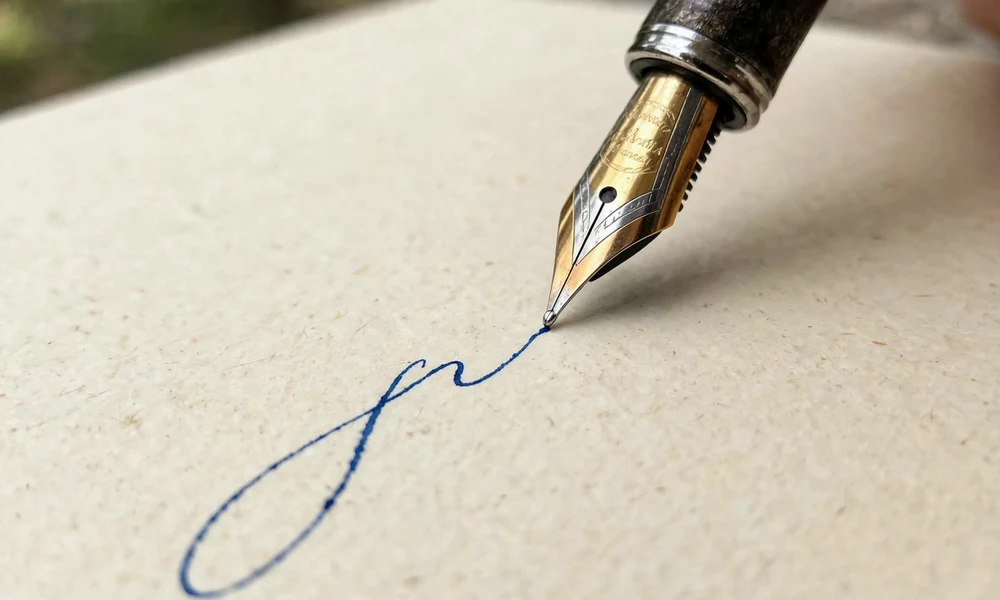
A fountain pen writes with liquid ink flowing through a nib, and once you have used one, an ordinary ballpoint can feel like a chore. The ink glides instead of dragging, the nib gives a little under your hand, and your writing starts to look like it belongs to you again. A bad fountain pen scratches, skips, or leaks in your pocket, while a good one starts the moment it touches paper and keeps going line after line. The best fountain pens of 2026 are the ones that make writing feel easy, whether you are signing letters, keeping a journal, or making a shopping list.
What Makes a Fountain Pen Good
The first thing to judge is the nib, the metal tip that touches the paper. A good nib is smooth in every direction and lays down an even line without pressing hard. A nib that catches, skips, or needs a heavy hand will put you off fountain pens altogether, so the first page is the test that matters most. The best pens are tuned before they leave the factory, and they write well straight out of the box.
The second thing is the ink flow. A fountain pen should feed ink steadily, neither flooding the page nor starving the line. A pen that writes too wet will smudge and bleed through thin paper, while one that writes too dry feels scratchy and faint. The best fountain pens of 2026 keep a steady flow from the first word to the last, even after a few days sitting unused in a drawer.
The third thing is the balance and the grip. A fountain pen is held differently from a ballpoint, and the best ones feel comfortable after a page or two, not just for a signature. A pen that is too heavy tires the hand, one that is too light feels hard to control, and a grip that is too thin or slippery makes long sessions a struggle. Hold the pen, write a full page, and notice whether your hand relaxes or tightens.
The Main Types of Fountain Pen
Cartridge pens are the simplest way in. They take a small sealed ink cartridge that slots into the barrel, and when it runs out you swap in a fresh one. They are clean, quick, and ideal for a first fountain pen, because there is no filling to learn and no mess to clean up. The trade-off is choice: you are limited to the ink colours your pen maker sells in cartridges. For most beginners, a cartridge pen is the one to buy.
Converter pens use the same body but replace the cartridge with a small refillable converter, so you can draw ink from a bottle. They give you the full range of bottled inks, from deep blues to warm sepia, and they cost less per page once you have the converter. The downside is the filling itself: you need to learn the twist or squeeze, and a careless fill can stain your fingers. For anyone who wants to try different inks, a converter pen opens the door.
Piston-filling pens hold their ink inside the barrel, drawn in by twisting a knob at the end that moves a piston. They hold far more ink than a cartridge, so they suit heavy writers who do not want to refill every few days. The trade-off is price and care: piston fillers cost more and need an occasional rinse to keep the mechanism clean. For a daily writer who fills up and forgets about it, a piston filler is the one that works.
Nibs: Fine, Medium, Broad and Beyond
A fine nib lays down a thin, precise line, which suits small handwriting, cheap paper, and anyone who writes in the margins. It uses less ink, dries faster, and is the safest choice for everyday paper. The trade-off is feel: a fine nib can feel firmer and less smooth than a broader one, especially on rough paper. If your writing is small and your paper is ordinary, a fine nib is the one to start with.
A medium nib is the middle ground and the most popular choice. It gives a smooth, generous line that shows off the character of the ink, and it forgives a slightly heavy hand. It suits most handwriting sizes and most decent paper, and it is the nib most people reach for when they buy their first good pen. The downside is the ink: a medium nib uses more ink and takes longer to dry, so left-handers should test it first.
A broad nib lays down a thick, expressive line that makes even ordinary writing look confident. It is the choice for signatures, headings, and anyone who wants their writing to have presence on the page. Broad nibs feel the smoothest of all, because the wider tip glides more easily, and they show off shading inks beautifully. The trade-off is practical: they use a lot of ink, dry slowly, and bleed on thin paper.
How to Choose Your First Fountain Pen
Start with your handwriting and your paper. If you write small and fast, on ordinary notebooks and office paper, a fine or medium nib in a light, well-balanced pen will serve you best. If you write large, slow letters in a journal, a medium or broad nib will feel better and show off the ink. There is no single best nib, only the nib that suits the way you already write, so choose for your real habits. If you are coming from other kinds of pen, our guide to the best pens of 2026 compares fountain pens with ballpoints, rollerballs, and gel pens, so you can see where a fountain pen fits.
Next, think about how you will fill it. A cartridge pen is the easiest start, with no learning curve and no mess, and you can always add a converter later when you want to try bottled ink. A piston filler is better if you write a lot and hate refilling. Do not overthink the mechanism on a first pen: the nib and the balance matter far more than how the ink gets in, and any good pen can be refilled in under a minute once you know how.

The Best Fountain Pens of 2026
The best everyday fountain pen is a light, reliable pen with a smooth fine or medium nib and a cartridge or converter fill. It starts every time, it does not leak in a pocket or a bag, and it writes well on ordinary paper without fuss. It is the pen you reach for without thinking, the one that lives on your desk or in your jacket. A good everyday pen does not need to be expensive: the best value pens of 2026 write as smoothly as pens costing five times as much.
The best pen for journaling has a little more character, often a medium or stub nib that makes the ink sing on good paper. Journaling is slow writing, done for pleasure, so the feel of the nib and the colour of the ink matter more than speed or convenience. A piston filler suits a journaler who writes every day, because the large ink capacity means fewer interruptions, and a beautiful pen makes sitting down to write feel like an occasion.
Fountain Pens for Journaling and Letters
Journaling is where a fountain pen earns its keep. The slow pace of writing by hand, the sound of the nib on paper, and the colour of the ink all make a journal feel like a place rather than a chore, and a good pen turns the daily page into a small pleasure. A medium nib on smooth paper is the classic combination, and a stub nib adds flair for headings and dates. The best journal pens never skip on the first word of the day.
Paper matters as much as the pen, and a fountain pen will punish thin, cheap paper with bleed and feathering. Look for paper made for fountain pens, with a smooth surface that holds the ink on top rather than soaking it in, and you will see the difference in a single line. A good notebook makes a modest pen look wonderful, while a bad notebook makes a wonderful pen look ordinary. Our guide to the best notebooks of 2026 covers the paper that handles wet ink without bleeding through.
Letters are the other natural home of the fountain pen, and a broad nib with a deep blue or black ink gives a letter a weight that a ballpoint never will. The slower pace suits a letter, because it makes you choose your words, and the result feels personal in a way that typed words do not. A stub nib adds a calligraphic touch to a signature or a heading, and if you enjoy that style, our guide to the best calligraphy pens of 2026 covers the nibs and inks that make lettering elegant.

Ink, Paper and Care
Ink is half the pleasure of a fountain pen, and the choice is wider than most people expect. Standard blue and black inks are the safe choices for work and for letters, drying quickly and behaving well on ordinary paper. Coloured inks, from deep green to warm sepia, make journaling and personal writing feel more alive, and shading inks that vary from dark to light within a single stroke are a quiet delight. Start with one reliable ink, then try a colour once you know your pen.
Cleaning is the chore that keeps a fountain pen writing well, and it is simpler than it sounds. Rinse the nib and feed under cool water when you change inks, and flush the pen properly every few weeks if you write every day, and the ink will flow as freely as it did on the first day. A pen left unused for weeks with ink inside will dry out and clog, so either write with it regularly or empty it before you put it away.
Common Mistakes to Avoid
The most common mistake is pressing too hard. A fountain pen needs almost no pressure: the weight of the pen and the flow of the ink do the work, and pressing hard will only spread the nib, scratch the paper, and tire your hand. Let the pen glide, keep a light grip, and trust the ink to flow. If your hand aches after a page, you are pressing too hard, and loosening your grip will improve both your writing and your comfort.
The second mistake is using the wrong paper. Thin, rough, or cheap paper will feather and bleed with a fountain pen, and the result looks worse than a ballpoint on the same page. Test a new pen on decent paper first, so you judge the pen rather than the paper, and keep a notebook made for fountain pens for the writing you care about. The right paper costs little and changes everything.
The Verdict
The best fountain pen of 2026 is the one you actually write with. Start with a reliable everyday pen in a fine or medium nib, fill it with an ink you love, and pair it with paper that does it justice. Write with it every day, keep it clean, and let it teach you what you like. A fountain pen is not a gadget: it makes writing slower, better, and more enjoyable, and the right one will be in your hand for years.