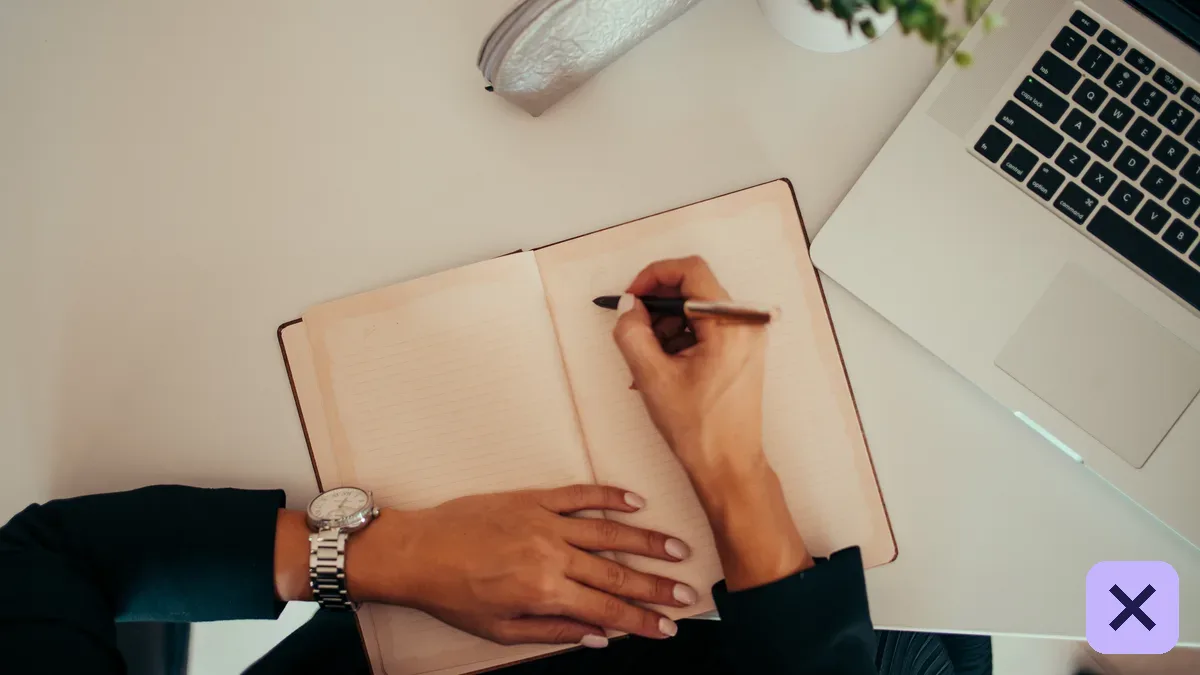
A notebook worth writing in is not the prettiest one on the shelf, and it is not the most expensive one either. It is the one whose paper takes your pen without a fight, whose pages lie flat when you open it, and whose binding still holds together on the last page. Everything else, the cover, the colour, the elastic band, is decoration. The writing experience is decided by paper, binding, and size, and once you know how those three work, choosing a notebook becomes simple.
Key takeaways
- Paper weight of 80 to 100 gsm suits most pens; below that, ink will show through, and above it, the notebook gets heavy.
- Test the paper with your own pen before you commit, and check the back of the page for ghosting and bleed-through.
- A notebook that lies flat, whether sewn, thread-bound, or spiral, is far more pleasant to write in than one that fights you.
- Choose the size for where you write: pocket for the coat, A5 for the desk, and larger formats only if you sketch or spread out.
- Number the pages and date the first entry; a notebook you can find things in is a notebook you will keep using.
Paper is the whole point
Paper decides whether writing feels good or feels like a chore. Two numbers matter most: weight and texture. Weight, measured in grams per square metre, tells you how thick and sturdy a sheet is. Most cheap notebooks use 70 to 80 gsm paper, which is fine for a ballpoint but will show ghosting from a gel pen and bleed from a fountain pen. Paper at 90 to 100 gsm handles almost any pen gracefully, and 120 gsm and above is a pleasure for fountain pens, though the notebook becomes noticeably heavier. If you write with only one pen, match the paper to that pen; if you switch pens, aim for the middle of the range.
Texture is the second half of the story. Smooth paper lets a pen glide, which feels fast and effortless, but it can also make handwriting look less controlled, and some inks take longer to dry on it. Slightly textured paper gives the pen a little grip, which slows you down just enough to keep your letters tidy, and it is usually kinder to pencil. Neither is better in the abstract; it depends on your hand. If you press hard when you write, a smoother sheet will feel better. If your writing is light and quick, a little texture will keep it legible. The only reliable test is to write a few lines yourself, on both sides of the page, and look at the back.
Ghosting, bleed-through, and feathering
Three faults ruin otherwise good paper. Ghosting is when you can faintly see writing from the other side of the page; it is annoying but liveable. Bleed-through is when ink actually soaks through, which ruins the reverse side entirely. Feathering is when ink spreads along the paper fibres and your lines look fuzzy. All three get worse with wet pens and cheap paper, and all three are easy to check: write a few lines, let the ink dry, and hold the page up to the light. A notebook that passes with your wettest pen will pass with everything else you own.
Binding: will it lie flat?
A notebook that will not stay open is a notebook you will stop using, however lovely its paper is. The binding decides this. Sewn and thread-bound notebooks lie flat naturally, open to a full spread, and last for years; they are the best choice for journalling and for anyone who writes for more than a few minutes at a time. Stapled notebooks are cheap and cheerful but fall apart once the staples rust or pull through. Perfect-bound notebooks, the kind with a glued spine like a paperback, look smart and hold up well, but they resist lying flat until the spine is well broken in. Spiral and wire-bound notebooks lie perfectly flat and fold back on themselves, which makes them ideal for taking notes while standing, though the wire can snag on bag linings and the pages can tear out too easily.
Size: pick for where you write
| Size | Best for | Paper feel | Watch out for |
|---|---|---|---|
| Pocket, A6 and smaller | Quick notes, lists, coat pocket | Often thinner paper | Cramped for long writing sessions |
| A5, the classic | Daily journalling, meeting notes, study | Widest choice of paper | Too big for a small bag |
| B5 and A4 | Sketching, mind maps, desk work | Generous writing space | Heavy to carry every day |
| Square and wide formats | Drawing, planners, scrapbooking | Roomy layouts | Awkward on a crowded desk |
Covers and durability
The cover is what takes the punishment. A notebook that lives on a desk can wear a soft paper cover happily, but one that travels in a tote bag alongside a water bottle and a set of keys needs more protection. Hard covers survive being crushed under a laptop; soft covers are lighter and more pleasant to hold, and they bend rather than crack. Leather and faux-leather covers age gracefully and protect the pages well, but they add weight and cost. A simple elastic closure keeps the notebook shut in a bag and doubles as a page marker in a pinch, while a ribbon marker is a small luxury that makes a daily notebook much easier to live with.
How to choose for your use
Daily journalling
For a journal, comfort matters more than anything else, because you will open it every day. Choose A5 or a little smaller, paper around 100 gsm, a sewn binding that lies flat, and a cover you enjoy picking up. Date the first page and number the pages as you go; a journal you can search is a journal you will reread, and rereading is half the pleasure. Keep the pen with the notebook, either in a loop on the cover or beside it on the table, so that writing never has a moment of friction to stop it.
Work notes and meetings
For work, speed and retrieval matter most. A5 with dotted or ruled pages is the standard for a reason: it fits on a meeting table, it scans well, and it holds a surprising amount of writing. Leave a margin on the left of each page for action items, and start each meeting on a fresh page with the date at the top. If you take notes at a desk for hours at a time, the light above your writing matters too; a good desk lamp that lights the page without glare will do more for your handwriting than any pen upgrade, and your eyes will feel the difference by the end of the day.
Sketching and creative work
Sketchers need heavier paper, at least 120 gsm, and a binding that opens fully flat so both pages of a spread are usable. Blank or very lightly dotted pages give the most freedom, and a slightly larger format, B5 or square, is worth the extra weight. Avoid thin ruled notebooks for art: wet media will bleed, pages will cockle, and the ruling will show through every drawing. If you mix writing and sketching, a dotted notebook at 100 gsm or above is the best compromise, and it will handle a light wash without falling apart.
What to check before you buy
- Write on both sides of a page with your usual pen and check the back for ghosting and bleed-through.
- Open the notebook flat in the middle and at the first and last pages; it should stay open on its own.
- Check the paper weight: 80 to 100 gsm for most pens, 120 gsm and above for fountain pens and wet ink.
- Hold the closed notebook in your hand and imagine carrying it every day; if it feels heavy now, it will feel heavier later.
- Look at the binding closely: stitching should be even, glue should not be cracked, and wires should be closed properly.
- Count the pages and check the ruling suits your handwriting size; small writing needs narrower lines, large writing needs room.

Making a notebook last
When a notebook is full, do not throw it away. Label the spine or the first page with the dates it covers and put it on a shelf. A shelf of finished notebooks is a record of months and years that no app can match, and you will be glad of it later. A notebook also makes a thoughtful present: a good one, chosen for the recipient’s writing habits rather than its looks, is one of the most useful gifts you can give. If you are buying for a student finishing school, it sits well among the best gift ideas for graduates, where a notebook that is actually pleasant to write in will be used long after the novelty gifts are forgotten.
Frequently asked questions
What paper weight is best for a notebook?
For most writers, 80 to 100 gsm is the sweet spot: thick enough to stop most pens from showing through, light enough to keep the notebook portable. Fountain pen users and anyone who writes with wet gel ink should look for 100 gsm and above. Below 80 gsm, expect ghosting with anything wetter than a ballpoint.
Is a hardcover or softcover notebook better?
Hardcover wins for bags and travel, because it protects the pages from crushing. Softcover wins for comfort and weight, and it is easier to hold open for long writing sessions. If the notebook lives on a desk, either is fine; if it travels, choose hardcover or a sturdy softcover with an elastic closure.
Why does my ink bleed through the page?
Bleed-through happens when the paper is too thin or too absorbent for the ink. Switch to a heavier paper, a drier pen, or both. Fountain pens with broad nibs are the worst offenders; try a finer nib or a drier ink before you blame the notebook.
How many pages should a notebook have?
For daily use, 180 to 240 pages is a good size: enough to last a few months without becoming a brick. Smaller notebooks of 80 to 100 pages suit travel and short projects. Very thick notebooks look impressive but are hard to hold open at the start and the end, so a medium size is usually the happier choice.
Are dotted notebooks only for bullet journalling?
Not at all. Dotted pages work for ordinary writing, lists, notes, and sketches, because the dots guide your lines without the visual clutter of ruling. Many people who switch to dots never go back, though ruled pages still suit anyone whose handwriting needs a firm line to follow.
Can I use a notebook for both writing and sketching?
Yes, if you choose the right paper. Look for a dotted or blank notebook at 100 gsm or above, with a binding that lies flat. It will handle pens, pencils, and light ink work happily. For watercolour or heavy markers, you will need a dedicated sketchbook with much heavier paper instead.
The bottom line
What makes a notebook worth writing in is not its brand or its price, but the fit between the paper, the binding, and your hand. Heavy enough paper for your pen, a binding that lies flat, and a size you will actually carry will beat a beautiful notebook that fights you on every page. Test before you buy, choose for the writing you really do, and then use it every day. The best notebook is the one that is full by the end of the season.