
A tote bag is the bag you reach for without thinking. It hangs by the door, holds whatever the day needs, and goes from the office to the market to the beach without a change of plan. The best tote bags of 2026 are the ones that survive that kind of daily use: strong handles, a base that does not sag, and a fabric that still looks good after a year of being stuffed, folded and carried. This guide explains what makes a tote worth carrying every day, how the main materials compare, and how to choose one that fits your routine rather than fighting it.
The tote’s appeal is its honesty. It is one open space with two handles, and it does not pretend to be anything else.
Key Takeaways
- For everyday use, a 15 to 20 litre tote is the sweet spot: big enough for a laptop, a book and a water bottle, small enough to carry comfortably on one shoulder.
- Heavy cotton canvas and full-grain leather are the most durable everyday choices, while woven straw and light cotton suit warm weather and lighter loads.
- Handles matter more than anything else: they should be long enough to sit on your shoulder, stitched through the body, and comfortable under a full load.
- A reinforced base and a lining with at least one zipped pocket turn a simple tote into a bag you can actually live out of.
- Buy the tote for the load you carry most days, not the biggest load you ever carry, and test it with your real belongings before you commit.
What Makes a Tote Bag Worth Carrying Every Day
A tote earns its place by being ready. It should open wide so you can see inside at a glance, stand up on its own when you set it down, and keep its shape when it is half full. The handles are the heart of it: they carry the whole load, so they need to be strong, comfortable and long enough to fit over a coat. Short handles that only work in the hand are fine for a shopping bag, but they are a nuisance on a bag you carry all day.
The base is the second thing that separates a good tote from a flimsy one. A reinforced base, stiffened with a board or a double layer of fabric, stops the bag sagging into a triangle and keeps your laptop upright instead of sliding to one end.
The Right Size for Daily Life
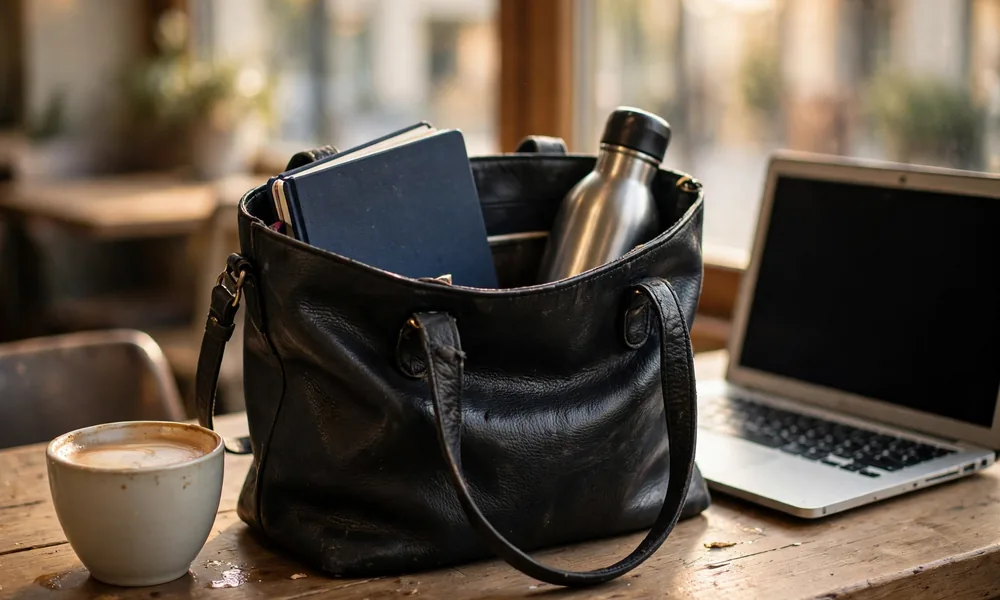
Size is personal, but there are sensible ranges. A small tote of around 10 litres holds a purse, a phone, keys and a book, and it works for errands and evenings. A medium tote of 15 to 20 litres is the everyday standard: it takes a 13 or 14 inch laptop, a notebook, a water bottle and a lunch box, which is the load most people carry to work. A large tote of 25 litres or more handles a full day out, a beach trip or a big shop, but it gets heavy fast, and a bag that heavy on one shoulder will ache by the afternoon.
Tote Bag Materials Compared
Material decides how a tote ages, how much it weighs, and what it can carry. Heavy cotton canvas is the classic everyday choice: tough, washable, and it softens nicely with use. Leather is the most durable and the smartest looking, but it is heavier and needs care. Woven straw and raffia are light and summery but cannot carry heavy loads and dislike rain.

| Material | Weight | Durability | Best For | Typical Price |
|---|---|---|---|---|
| Heavy cotton canvas | Medium | Very good | Everyday, work, shopping | $40–$140 |
| Full-grain leather | Heavy | Excellent | Work, smart everyday | $150–$400 |
| Woven straw or raffia | Light | Fair | Beach, summer, markets | $30–$120 |
| Coated canvas | Light | Good | Rainy days, commuting | $60–$180 |
| Recycled nylon | Light | Good | Light daily carry, travel | $50–$150 |
| Light cotton | Very light | Fair | Errands, folding away | $15–$50 |
Price is a rough guide, not a rule. A well-made heavy canvas tote for under a hundred dollars will outlast a fashionable leather-look bag at twice the price if the stitching and handles are better. Judge by the fabric weight, the handle attachment and the base, and our guide to the best gym bags of 2026 is a useful comparison if you want a bag that also handles training kit, since totes and gym bags share the same carry-everything logic.
How to Choose the Best Tote Bag in 2026
Start with the handles. Hold the tote by one handle and lift your normal daily load: the stitching should be reinforced where the handle meets the body, ideally stitched through to the lining or backed with rivets, and the handle should not twist or dig into your hand. Then check the length: slip the handles over your shoulder while wearing a coat. If they only just reach, they will be uncomfortable in winter. A handle drop of about 25 to 30 centimetres suits most people for shoulder carrying.
Next, look inside. A lining protects the fabric and stops small items snagging on raw seams, and at least one zipped pocket is essential for keys, a phone and a wallet, so they do not sink to the bottom. Finally, check the closure: an open top is easy to reach into, but a zip or a magnetic snap keeps your belongings safe on a crowded train. Choose the closure for the places you actually go.
Carrying a Tote Every Day Without the Ache
A tote carries its whole load on one shoulder, so how you pack it matters. Put heavy items, like a laptop and a water bottle, at the bottom and towards the centre, so the bag hangs straight instead of swinging. Keep the total weight under about five kilograms if you can: beyond that, a single-strap bag starts to pull your posture sideways, and your neck will tell you about it by the evening.
If your daily load is heavy, consider a tote with a detachable cross-body strap, which spreads the weight across your torso, or split the load between a tote and a small backpack. For work days when you carry food as well as files, our guide to the best insulated lunch bags for work in 2026 covers bags that keep a meal separate and fresh, so your tote stays clean and your lunch stays cool.
Tote Bags for Work, Markets and Travel
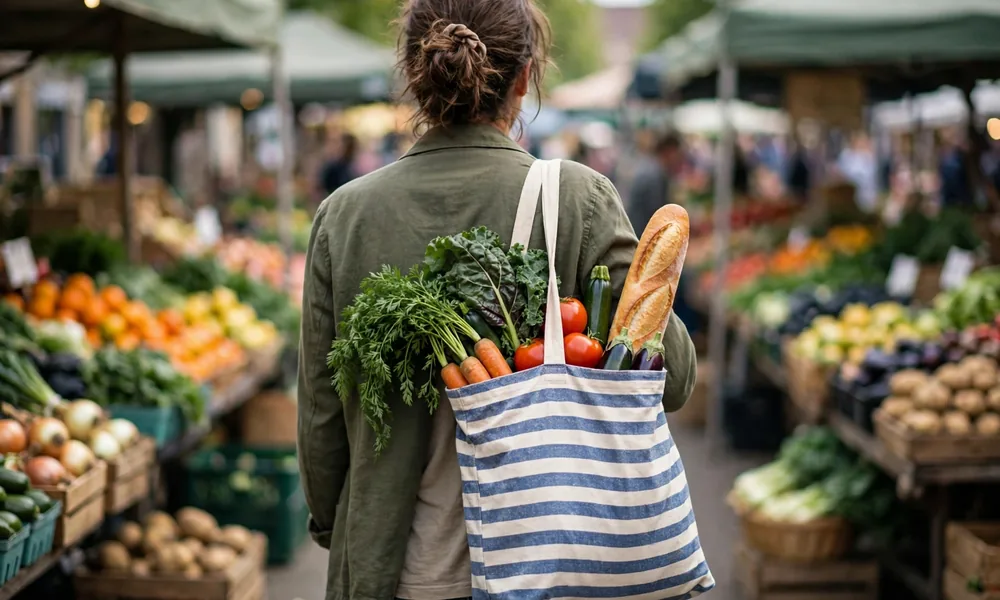
One tote rarely does every job perfectly, but a good medium tote comes close. For work, look for a structured shape, a padded laptop sleeve and a sober colour that suits an office. For the market, a larger, washable canvas tote with a flat base is ideal, because it stands open on a stall and holds awkward shapes like a baguette or a bunch of greens. For travel, a light, foldable tote packs flat in a suitcase and becomes your day bag at the other end.
The same logic applies to the rest of your everyday carry. A tote pairs well with a backpack when the load gets heavy or the weather turns, and our guide to the best travel backpacks for women in 2026 covers carry options that share the load across both shoulders on days when a single-strap bag would be too much.
Looking After Your Tote Bag
Canvas totes are the easiest to care for: most can be spot-cleaned with warm soapy water, and many can go through a gentle machine wash, though you should always check the label and remove any leather trim or base board first. Let a washed tote dry naturally, stuffed with towels so it keeps its shape, and never tumble dry it, because the heat can shrink the fabric and warp the base.
Leather totes need a wipe with a damp cloth and a conditioner every few months to keep the hide supple, and they should be kept out of prolonged rain. Straw and woven totes dislike water most of all: brush off dry dirt, spot-clean gently, and store them somewhere dry so the fibres do not go mouldy.
Common Mistakes When Buying a Tote Bag
The first mistake is buying a tote that is too big for your daily load: a half-empty large tote flops around, looks untidy and tempts you to carry things you do not need. The second is choosing thin fabric because the bag looks light and pretty, only to watch the handles tear within months. The third is ignoring the lining and pockets, and then spending every morning fishing for keys at the bottom of a dark bag.
Tote Bag Buying Checklist
- Pick 15 to 20 litres for everyday use, and measure your real daily load before going bigger.
- Choose heavy cotton canvas or leather for durability, or coated canvas if you commute in the rain.
- Check the handles are long enough for your shoulder over a coat, and stitched or riveted through the body.
- Look for a reinforced base so the bag stands up and keeps its shape when set down.
- Make sure there is at least one zipped interior pocket for keys, phone and wallet.
- Test the bag with your laptop, bottle and notebook inside before you buy it.
Frequently Asked Questions
What size tote bag is best for everyday use?
A 15 to 20 litre tote suits most people for daily use, holding a 13 or 14 inch laptop, a notebook, a water bottle and a lunch box. Smaller totes of around 10 litres work for errands, and larger ones over 25 litres suit beach days and big shops but get heavy quickly.
Can a tote bag carry a laptop safely?
Yes, if it has a padded laptop sleeve that fits your machine and a reinforced base that keeps the bag upright. A 13 or 14 inch laptop fits most medium totes comfortably.
Is canvas or leather better for a tote bag?
Heavy cotton canvas is lighter, washable and softens nicely with use, which makes it the better everyday choice for most people. Leather is more durable and smarter looking, but heavier and needs regular conditioning. For a work tote that must look polished, leather wins; for everything else, canvas usually does.
How do I clean a canvas tote bag?
Spot-clean with warm soapy water and a soft brush, and let it dry naturally. Many plain canvas totes can be machine washed on a gentle cycle, but remove any leather trim or base board first and never tumble dry, because heat can shrink the fabric and warp the base.
Are tote bags good for the beach?
Yes, a large canvas or straw tote is one of the best beach bags: it holds towels, sunscreen and a book, shakes out easily, and dries fast.
How long should a good tote bag last?
A well-made heavy canvas or leather tote should last three to five years of daily use, and often longer with basic care. Light cotton totes are really shopping bags and typically last a season or two, while straw totes last a few summers if they are kept dry.
The Bottom Line
The best tote bags of 2026 are the ones you stop noticing: strong handles, a base that stands up, a lining with a pocket for your keys, and a size that matches the load you actually carry. Choose heavy canvas for everyday ease or leather for a smarter finish, test the bag with your real belongings over your real coat, and look after it between outings. A good tote is not a fashion statement, it is a habit, and the right one will be hanging by the door every morning, ready for whatever the day holds.


