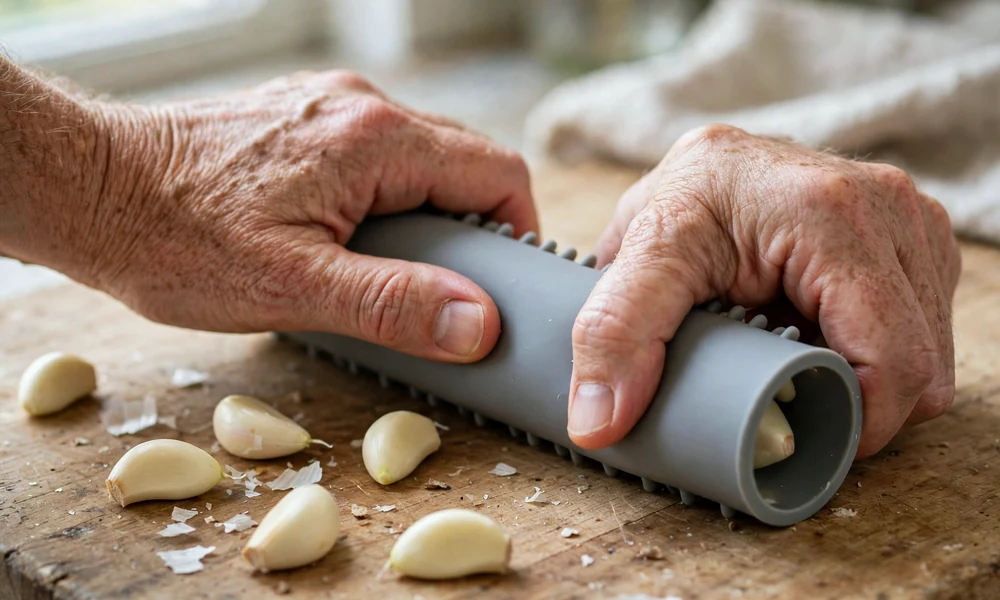
Peeling garlic by hand is the slowest part of cooking with garlic. The skins cling, the cloves stick to your fingers, and by the time you have peeled a whole bulb your hands smell of garlic for the rest of the evening. A garlic peeler fixes the dullest part of the job. It is a simple silicone tube or roller: you drop the cloves inside, roll it back and forth on the worktop for a few seconds, and the skins come away while the cloves stay whole. The best garlic peelers of 2026 do that job every time, without crushing the cloves, without tearing them, and without leaving you picking at skins with a fingernail.
What a Garlic Peeler Actually Is
A garlic peeler is not a garlic press, and the difference matters. A press crushes the clove through small holes and turns it into a paste. A peeler only removes the skin. The clove that comes out is whole, firm and ready to be sliced, chopped, smashed or roasted as it is. If you like your garlic crushed, a press is the right tool, and our guide to the best garlic presses of 2026 covers that ground. If you want whole cloves, with their flavour intact and their shape unharmed, a peeler is the tool to reach for.
Most peelers are made from food-grade silicone, and the design is deliberately simple. There are no blades, no moving parts and nothing to sharpen. The silicone grips the papery skin as it rolls, and the gentle pressure inside the tube loosens the skin from the clove. Because nothing cuts the clove, the garlic does not release its juices until you choose to cut it, which means less smell on your hands and less waste on the board. A good peeler feels soft and flexible in the hand but firm enough to hold its shape while you roll it.
The Two Main Kinds of Garlic Peeler
The silicone tube is the classic design and still the most common. It is an open-ended tube, usually about fifteen centimetres long, with small raised nubs on the outside for grip and a smooth or lightly textured inside. You drop in two or three cloves, put both palms on the tube, and roll it back and forth on the worktop. The skins crack and loosen, and you tip the cloves out, skins and all, then pick the clean cloves from the pile. A tube is best for everyday cooking, where you need a few cloves at a time and want the simplest possible tool.
The roller is the second kind, and it is really a firmer, shorter version of the same idea. Rollers are often made from thicker silicone or hard plastic with a silicone sleeve, and some have a handle or a ridged surface that gives more pressure. They suit people who peel a whole bulb at once, because the firmer body transfers more force and the cloves spend less time inside. A roller can also be easier to grip if your hands are wet or if arthritis makes a soft tube hard to hold, since the rigid shape does more of the work for you.
How to Choose: The Three Things That Matter Most
Start with the bore, the width of the tube. A peeler that is too narrow will not fit large cloves, and a peeler that is too wide will not grip small ones. Most cloves are between one and two centimetres across, and a tube with an inside width of about three centimetres handles the usual range. If you regularly cook with large elephant garlic or very small cloves from a home-grown bulb, look for a tube that flexes, since silicone that gives a little will hold both sizes. A rigid tube with a fixed bore is a gamble unless you know your garlic is always the same size.
Next, look at the silicone itself. It should be thick enough to hold its shape while you roll, but soft enough to flex around the cloves. Very thin silicone collapses under your palms and the cloves slip around inside without enough friction to loosen the skins. Very thick silicone feels sturdy but can be too stiff to grip the skins properly. The best peelers use a medium-weight silicone with small raised nubs or ridges on the outside, which stop your hands sliding and add friction where it helps, on the outside of the tube rather than against the clove.
Cleaning is fourth, and it is easy to overlook until the peeler starts to smell. Silicone absorbs garlic odour if it is left dirty, so the peeler needs to be easy to wash properly. Look for one that can go in the dishwasher, and check that it can be turned inside out or rinsed through easily, since skins and garlic juice collect inside the tube. A peeler that can be rinsed clean under the tap in ten seconds will be used far more than one that needs a bottle brush and a soak.
How to Use a Garlic Peeler Well
Trim the root end of each clove first. A quick snip with a knife, or a pinch with your fingers, opens the skin at the base and gives the peeler somewhere to start. You do not need to cut deeply; just remove the hard little root plate. Cloves with the root end left on are the ones that come out of the tube still wearing their skins, and the difference a small trim makes is surprising. It takes two seconds per clove and it is the single most useful habit in this guide.
Drop two or three cloves into the tube, put it on a flat surface, and roll it back and forth with both palms. Use a firm, even pressure and about ten to fifteen seconds of rolling. You will hear and feel the skins crackling inside. Tip everything out onto the board, pick out the clean cloves, and put any clove that is still wearing skin back in for another few seconds. Rolling too hard does not help; it bruises the cloves and pushes garlic juice into the silicone. Steady pressure and a little patience work better than force.
Work in small batches rather than filling the tube. Four cloves in a tube roll freely and rub against each other, which helps the skins come off. Eight cloves packed tight barely move, and the ones in the middle come out untouched. If you need a whole bulb, peel it in two or three batches and you will finish faster than if you try to do it all at once. The same rule applies to the peeler board: one clove at a time, rolled firmly under your palm, beats a handful of cloves sliding around together.
What a Peeler Does Not Do
What a peeler does not do is replace a knife. Peeled cloves still need slicing, chopping or smashing, and the quality of that cut decides how the garlic cooks. Thin slices fry golden and crisp; a fine chop melts into a sauce; a smashed clove flavours oil without burning. A sharp knife matters here, and our guide to the best santoku knives of 2026 explains what to look for in a blade that handles small, slippery jobs like garlic without crushing it. The peeler gets the skin off; the knife decides what happens next.
Cleaning, Drying and Storage
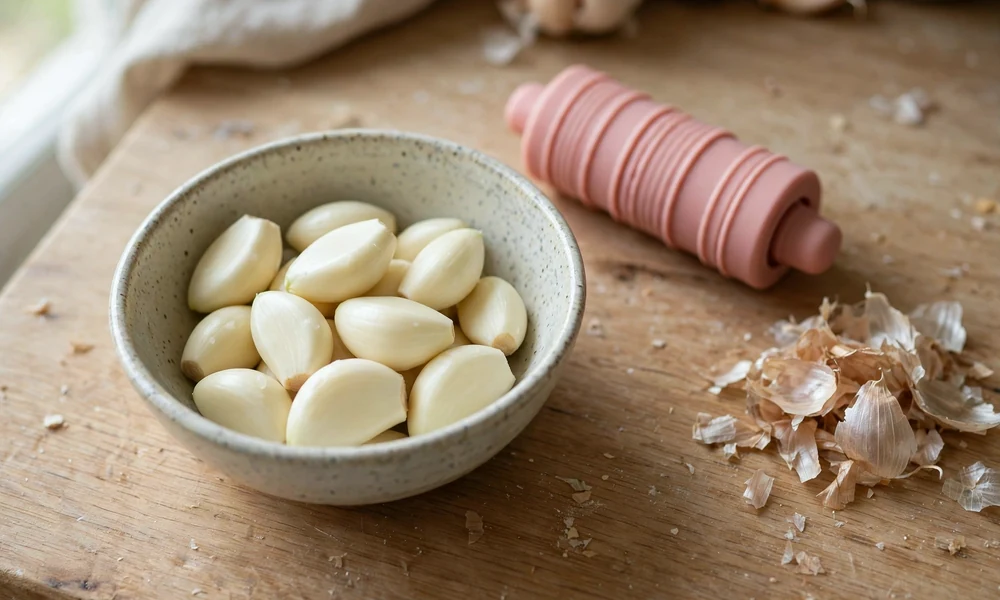
Rinse the peeler as soon as you finish. Garlic juice left inside a silicone tube dries into a sticky film that holds odour, and the longer it sits, the harder it is to remove. A rinse under warm water, with a quick rub of the inside, is usually enough. For a deeper clean, turn the tube inside out and wash it with soap, or put it in the dishwasher on the top rack. Most silicone peelers survive the dishwasher without harm, but check the maker’s guidance, since very thin silicone can warp over time in high heat.
Storage is simple, and that is part of the appeal. A silicone tube rolls up or lies flat, and it fits in a drawer, a utensil pot or a small hanging hook. Keep it near the chopping board rather than at the back of a drawer, since a tool you have to hunt for is a tool you will not use. Some cooks keep the peeler with the garlic itself, in the basket or bag where the bulbs live, so the two are always together when cooking starts.
Peeler, Press or Knife: When Each One Wins
The peeler wins whenever the recipe wants whole cloves. Roasted garlic, garlic confit, cloves simmered in a stew, or whole cloves fried gently in oil all need the clove intact, and only a peeler leaves it that way. A press would destroy the shape and a knife would take far longer. If the dish is built around whole cloves, the peeler is not a shortcut; it is the right tool for the job, and it is the fastest way to get a dozen clean cloves ready.
The rest of the prep drawer matters too. Garlic rarely appears alone, and the tools that sit beside the peeler decide how pleasant the preparation feels. A good zester earns its place the same way a peeler does, by removing a fiddly step, and our guide to the best zesters of 2026 looks at which ones grate citrus finely without clogging. Small prep tools are worth judging as a set: if the peeler, the zester and the knife all work well together, the whole job of getting dinner started becomes quicker and calmer.
What to Avoid When Buying a Garlic Peeler
Avoid peelers that are too small for real cloves. Some novelty peelers are made to look neat in a photograph and are too narrow for anything but the smallest cloves. Measure a typical clove from your kitchen before you buy, or choose a peeler that states its inside width. A peeler that only fits half your garlic will be used once and then left in the drawer, and the money saved on a small one is not worth the frustration.

Frequently Asked Questions
Does a garlic peeler really work, or is it a gimmick? It works, with the right technique. Trim the root end, use two or three cloves at a time, and roll with steady pressure for ten to fifteen seconds. The cloves that fail are usually the ones that went in untrimmed, soaking wet, or packed in too tightly. A peeler will not fix old, sprouted or soft garlic, but for firm, fresh cloves it removes the skins cleanly and quickly.
The best garlic peeler is the one that disappears into your cooking. It should sit near the board, take ten seconds to rinse, and turn a bulb of garlic into clean whole cloves without a second thought. Choose a tube with the right bore, silicone that grips without collapsing, and a length that fits your hands, and the small chore of peeling garlic will stop being the reason you cook without it.