
Top Hurricane Lanterns for Wind-Proof Light in 2026
The best hurricane lanterns for wind-proof light in 2026 are the ones that keep a real flame burning when everything else gives up. A hurricane lantern burns fuel, usually kerosene or lamp oil, with a wick feeding a flame inside a tall glass chimney that shields it from the wind. When a storm knocks out the power or the wind picks up on the porch, a hurricane lantern is still the most reliable light you can own. This guide compares the ones worth buying in 2026.
It helps to be clear about what a hurricane lantern is, and what it is not. The chimney protects the flame from gusts and draws air up past it, so it burns bright and steady. That is a different thing from the portable patio lanterns in our guide to the best outdoor lanterns of 2026, which are mostly decorative lights for a table or a hook, often running on candles or LEDs. It is also different from the battery-powered lanterns in our guide to the best camping lanterns for families, which are built for tents and trails. A hurricane lantern is a working light for wind, rain, and power cuts.
Key Takeaways
- Buy a lantern with a tall, well-fitting glass chimney: a loose or short one lets gusts straight in.
- Kerosene burns longest and cheapest, lamp oil burns cleanest with the least smell, and citronella oil adds insect protection for summer evenings outdoors.
- A heavy, wide base matters more than it looks: a lantern that tips over in a gust is a fire risk, not a light.
- Trim the wick flat before every burn, and keep the flame low — a tall flame smokes and soots the glass.
- One lantern lights a table; two or three spread around a porch or a room give even, shadow-free light.
Hurricane Lanterns 2026 at a Glance
| Lantern type | Best for | Burn time | Fuel | Standout strength |
|---|---|---|---|---|
| Classic kerosene storm lantern | Power cuts, storms | 20 to 30 hours | Kerosene | Longest burn, toughest build |
| Brass table hurricane | Dining tables, mantels | 12 to 20 hours | Lamp oil | Cleanest flame, best looks |
| Large cold-blast lantern | Porches, gardens | 25 to 40 hours | Kerosene | Brightest flame in wind |
| Citronella hurricane lantern | Summer evenings outdoors | 10 to 15 hours | Citronella oil | Keeps insects away |
| Compact candle hurricane | Small tables, bathrooms | 6 to 10 hours | Pillar candle | Simplest, no fuel to store |

What Makes a Hurricane Lantern Wind-Proof
The wind-proof claim is physics, not marketing, and it comes from the chimney. The flame sits inside a tall tube of glass, and the only air that reaches it comes up through vents at the base and out through the top, so a gust presses on glass, not on the flame. The chimney also creates a draught: hot air rises up the tube and fresh air is pulled in at the bottom, feeding the flame steadily. That is why a good hurricane lantern burns brighter in a breeze than in still air, and why one with a cracked or ill-fitting chimney dies in the first gust.
Two details decide it. The chimney should sit snugly with no gap at the base, and be tall enough that the flame never reaches its top. The best lanterns also have adjustable air vents: open for a brighter flame on calm evenings, closed down in wind. Cheap lanterns skip both, and their flames blow out exactly when you need them most.
The Five Types Worth Knowing
Classic Kerosene Storm Lantern
The classic storm lantern is the one most people picture: a steel tank, a wire frame, a glass chimney, and a handle on top. It is the workhorse, and the one to buy if you want light you can rely on. A full tank burns for twenty to thirty hours, and kerosene is cheap and keeps for years sealed. The light is warm and strong, enough to read by, and the lantern is built to be knocked about: dented, dropped, and rained on, it keeps working. The trade-offs are smell and soot, so use it outdoors or in a well-ventilated room.
Brass Table Hurricane
The brass table hurricane is the prettiest of the five, and the one that lives indoors. It has a heavy brass base, a slim glass chimney, and a flame that burns lamp oil, which is cleaner and almost odourless compared with kerosene. It suits a dining table or mantelpiece, giving a soft, flattering light. Burn time is twelve to twenty hours per fill, several dinners. The brass ages well, darkening slowly into a patina, and the whole thing is easy to clean. The weakness is wind: it is built for shelter, not for a gale on an open porch.
Large Cold-Blast Lantern
The cold-blast lantern is the big one, and the brightest. It has a larger tank, a wider chimney, and a draught system that pulls cold air in from outside the flame and feeds it up through the chimney. The result is a flame that burns hotter, brighter, and cleaner than a standard storm lantern, and stays lit in wind that kills everything else. It is the lantern for a large porch, garden, or workshop. The cost is size and weight: it is taller and heavier than a classic storm lantern, and it drinks more fuel.
Citronella Hurricane Lantern
A citronella hurricane lantern is a standard storm lantern filled with citronella oil instead of kerosene. The flame is the same warm light, but the oil gives off a citrus scent that insects dislike, making it the best choice for summer evenings outdoors. It will not keep every mosquito away alone, but two or three around a seating area make a real difference. Burn time is ten to fifteen hours per fill, and the oil costs more than kerosene, so it is a seasonal choice.
Compact Candle Hurricane
The compact candle hurricane is the simplest of all: a glass chimney over a pillar candle, with no fuel tank and no wick to trim. There is nothing to fill, nothing to spill, and nothing to smell. A good pillar candle burns for six to ten hours inside the glass, and the chimney shields the flame from draughts. Our guide to the best pillar candles for long, clean burns covers which candles last longest in a hurricane. The trade-off is brightness: a candle flame is softer and dimmer than a kerosene flame, so this is a lantern for atmosphere and small tables.

Fuel, Burn Time, and Wick Care
Kerosene is the standard for storm lanterns and the cheapest per hour of light; buy clear, refined kerosene, not dyed or scented kinds. Lamp oil is refined further, burns cleaner, and smells less, which is why it suits indoor lanterns, but it costs more. Never use petrol, white spirit, or any other volatile fuel: they burn too hot, they can flare, and they are a genuine fire risk.
A standard storm lantern burns twenty to thirty hours on a full tank, and a large cold-blast lantern can manage forty. A flame of about a centimetre gives the best balance of light and economy; taller just makes smoke and soot. Trim the wick flat and even before every burn, to about three millimetres above the burner, and replace it when it gets short or ragged. After lighting, let the lantern burn for a minute, then turn the flame down until it stops smoking: that is its best setting.
How to Choose the Right One
Start with where the lantern will live. For a power cut kit, buy a classic kerosene storm lantern: cheap, tough, and long-burning. For a dining table or living room, buy a brass table hurricane on lamp oil: clean, quiet, and beautiful. For a big porch or garden, buy a large cold-blast lantern. For summer evenings outside, add a citronella lantern or two. For a small table or bathroom, a compact candle hurricane is enough. Most homes end up with two: a storm lantern for emergencies and a table hurricane for evenings.
Then check the build. The base should be wide and heavy enough not to tip, and the handle should carry a full tank without bending. The glass should be thick, clear, and snug-fitting. The wick adjuster should turn smoothly, and the burner should be brass, not thin steel, which rusts. Look for a lantern you can take apart and clean: the chimney lifts off, the burner unscrews, and the tank opens wide enough to fill without a funnel.
Never leave a burning lantern unattended, never hang one where it can swing into curtains or dry leaves, and never fill one while it is lit or still hot. Fill it outdoors, wipe up spills, and store fuel sealed away from the house.
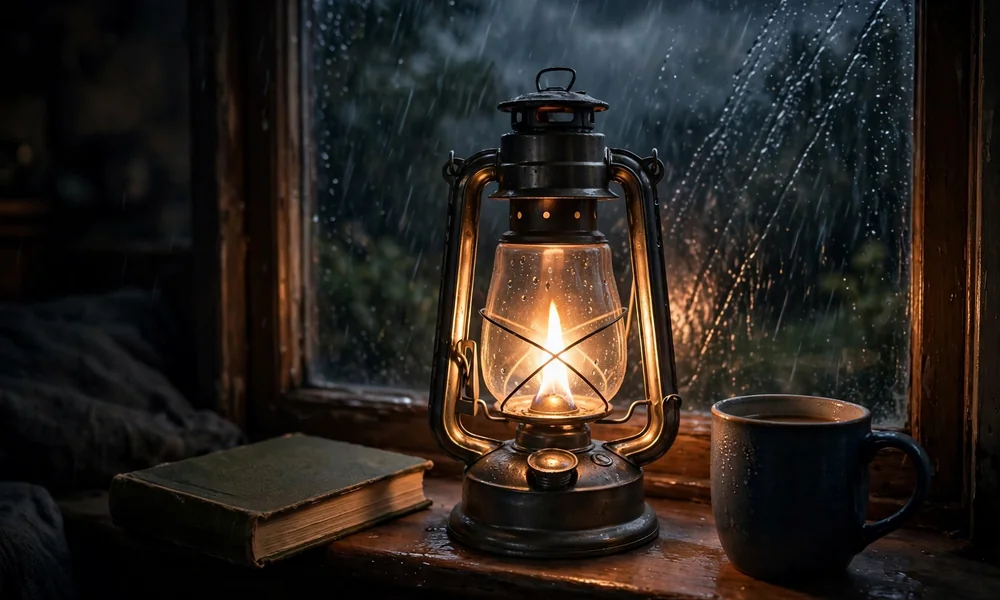
Hurricane Lantern Checklist
- Glass chimney fits snugly, tall enough that the flame never reaches its top.
- Wide, heavy base that keeps the lantern upright in a gust and on an uneven surface.
- Adjustable air vents, so you can open the flame up on calm evenings and close it down in wind.
- Brass burner and a wick adjuster that turns smoothly, with spare wicks available for the model.
- Tank large enough for at least fifteen hours, with a wide mouth for spill-free filling.
- Strong carry handle and hanging hook, for table, hook, or hand.
Frequently Asked Questions
How long does a hurricane lantern burn on one fill?
A standard kerosene storm lantern burns twenty to thirty hours on a full tank. A large cold-blast lantern can reach forty, a brass table hurricane on lamp oil manages twelve to twenty, and a candle hurricane lasts six to ten hours.
Can I use a hurricane lantern indoors?
Yes, with care. Use lamp oil rather than kerosene indoors, since it smells less and soots less. Keep the room ventilated, keep the flame low, never leave it burning unattended, and keep it away from anything flammable. Never use one in a small, sealed room.
What fuel should I use in a hurricane lantern?
Use clear, refined kerosene for storm lanterns, lamp oil indoors, and citronella oil only outdoors in summer. Never use petrol or white spirit: they burn too hot and can flare.
Why does my hurricane lantern smoke and soot the glass?
Almost always the flame is too high or the wick is uneven. Trim the wick flat to about three millimetres above the burner, light the lantern, let it burn for a minute, then turn the flame down until the smoke stops. Dirty fuel and an ill-fitting chimney cause the same problem.
How do I stop the flame blowing out in wind?
Check the chimney first: snug, with no gap at the base and no cracks. Close the vents down in strong wind, keep the flame moderate, and shelter the lantern behind a wall in hard gusts. A cold-blast lantern holds its flame best in a gale.
How should I store a hurricane lantern?
Empty the tank before storing it, and burn off the last fuel so the wick does not go stale. Clean the glass, oil the burner lightly against rust, and store the lantern upright in a dry place with spare wicks and sealed fuel.
The Bottom Line
A hurricane lantern is one of the few things in a home that gets better the worse the weather gets. For most people, the right buy is a classic kerosene storm lantern for emergencies, plus a brass table hurricane on lamp oil for evenings. Choose one with a tall, snug glass chimney, a heavy base, and a brass burner, fill it with the right fuel, keep the wick trimmed, and it will light your home through storm after storm.


