Outdoor Lanterns That Light the Patio Without the Glare in 2026
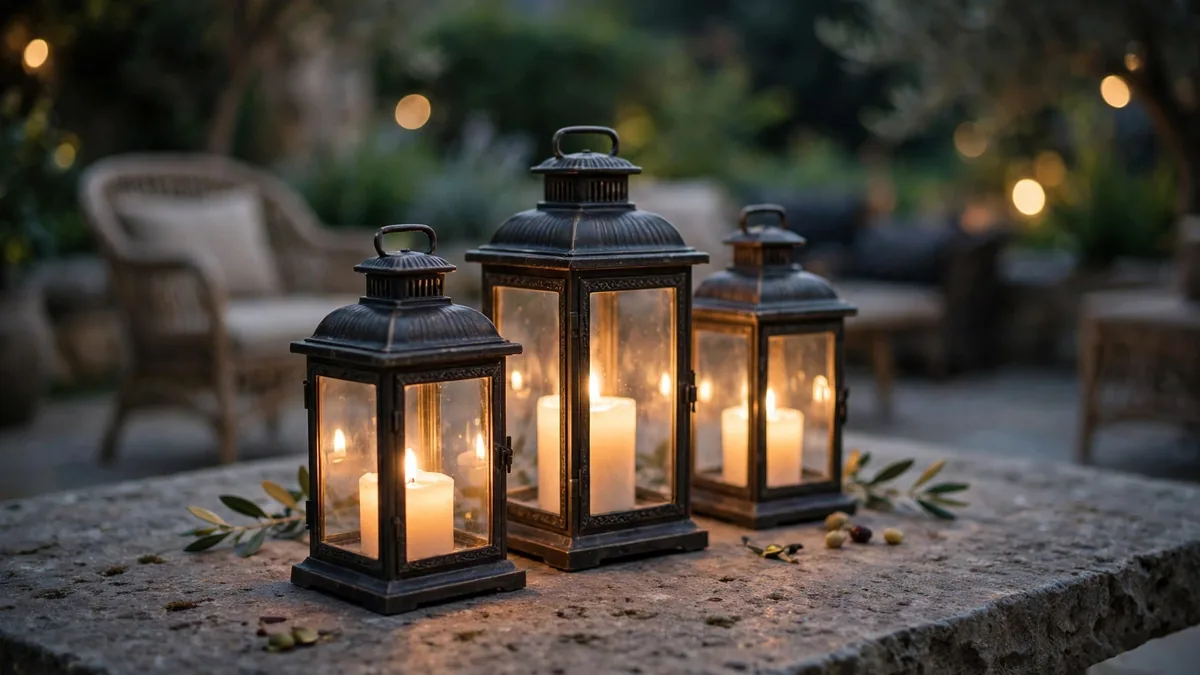
Outdoor lanterns are the difference between a patio you leave at dusk and a patio you stay on until late. The right lantern gives you a warm pool of light to eat, talk, and read by, without the harsh white glare that makes everyone squint. The wrong one is a bare bulb in a pretty cage.
These are the outdoor lanterns worth buying in 2026, chosen for the light they actually give rather than the way they look in a photograph. We judged them on warmth and evenness of glow, weather resistance, ease of lighting and carrying, and whether they suit a table, a hook, or the ground beside a chair.
Key Takeaways
- Choose the lantern for the job: a tall floor lantern drowns a small table, and a table lantern vanishes on a big patio.
- Warm light beats bright light outdoors: a soft amber glow flatters faces and food, while a cold white bulb creates glare and hard shadows.
- Frosted or shaded glass matters more than the bulb: it spreads the light and stops you staring at the flame.
- Buy for your weather: a pretty open lantern fills with rain, and a light one blows off the table in the first gust.
- Two or three small lanterns beat one big one: spread-out light is gentler and leaves no dark corners or blinding hot spots.
Outdoor Lanterns 2026 at a Glance
| Best for | Lantern type | Light source | Standout strength |
|---|---|---|---|
| Best overall | Classic table lantern | Candle or LED | Warm, even glow |
| Best for dining | Hanging lantern | LED or candle | Light from above |
| Best for big patios | Tall floor lantern | LED pillar candle | Steady light by seating |
| Best for paths | Stake lantern | LED candle | Marks the way, no wiring |
| Best for windy gardens | Storm lantern | Oil or LED | Flame stays alive in wind |
| Best for ambience | Cluster of small lanterns | Tealight or LED | Soft light, no glare |
What a Patio Lantern Is Really For
A patio lantern does three jobs at once, and only one of them is giving light. First, it lights the table and the faces around it so you can see your food and each other. Second, it marks the patio as a place to be after dark.
That is why glare is the enemy. A lantern that lets you see the bare bulb or flame is doing its job badly, however pretty the frame. Good lanterns hide the source and show you the light instead, through frosted glass, a shade, or a flame set deep inside. A lantern is portable light you can move, hang, or carry, while fixed lighting is wired into the house or garden — our guide to the best outdoor lights of 2026 covers porches, paths, and patios from that angle.
The Six Lantern Types Worth Knowing
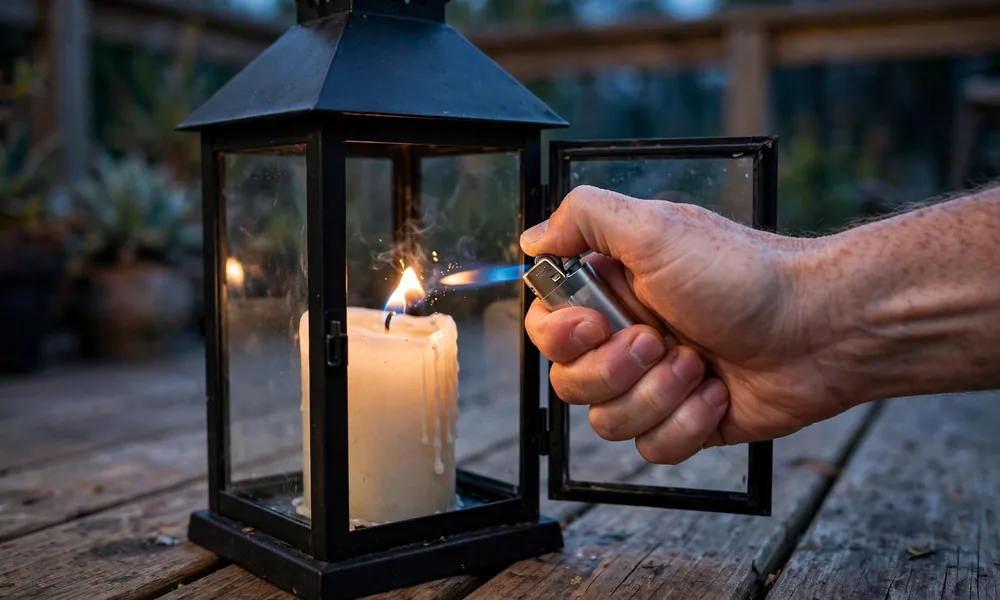
The classic table lantern is the default: a metal frame, glass panels, a handle on top, and room for a pillar candle or an LED equivalent. It sits on the table, moves to the bench when dinner ends, and comes indoors when it rains. Buy one with a hinged door or lift-off top.
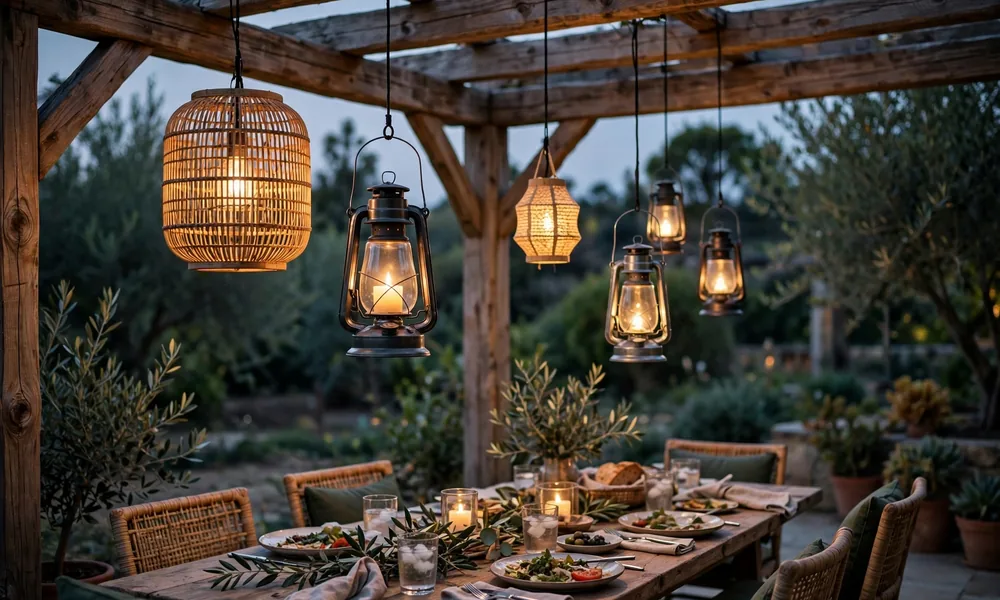
The hanging lantern does the same job from above, hanging from a pergola beam, a hook, or a branch, and lighting the table without taking up any of it. It suits a crowded table, but it needs a fixing you trust: full of glass and wax, it is heavy, and a bending hook drops it on the table.
The tall floor lantern is for big patios. Standing half a metre or more, it sits beside a chair or at the corner of a sofa and throws warm light across the group. It works best in pairs, one at each end of the seating, so nobody sits in shadow.
The stake lantern is the quiet workhorse: a small lantern on a spike pushed into soil or gravel, usually solar powered, marking paths, steps, and the edge of a lawn. One does almost nothing; a run of them, spaced a metre or two apart, turns a dark walk home into a safe one.
The storm lantern is the one to buy if your garden catches the wind. Built like the old oil lamps, with a sealed glass chimney and a heavy base, it keeps its flame alive in weather that blows every other candle out. Modern versions run on LED as well as oil.
The cluster of small lanterns is the cheapest way to transform a patio. Five or six tealight lanterns along a wall, a step, and a table give softer light than any single big lantern, and if one blows out the evening barely notices.
Candle, LED, or Solar: Picking Your Flame
Real candles give the best light. A real flame flickers, and that flicker makes a patio feel alive in a way no steady bulb can match. The trade-off is work: candles need lighting, trimming, and replacing, and they blow out in wind unless the lantern protects them. If you love the ritual, candles are worth it.
LED candles are the practical answer, and the good ones are genuinely good now. Look for warm white, around 2200 to 2700 kelvin, and a flicker mode that imitates a real flame rather than strobing. The best run a whole evening on one charge, and many come with a remote. Cheap LEDs betray themselves with a cold blue cast, so check the colour temperature on the box.
Solar lanterns suit the parts of the garden you forget about. They charge by day and glow at dusk with no switch and no battery to remember, ideal for paths, steps, and corners you only pass through. They are weaker than candle or mains-charged LED lanterns and fade on cloudy weeks, so do not make them your only dining light. Our guide to the best solar lights of 2026 covers the panels, batteries, and placements that work.
Size, Height, and Placement
Size is where most lantern purchases go wrong, and the mistake is almost always buying too small: a tealight lantern disappears on a patio table the moment the plates come out, so a dining table needs a lantern at least 25 centimetres tall.
Materials and Weatherproofing
Powder-coated steel is the workhorse: strong and rust-resistant while its coating stays intact, so check the joints and feet where rust starts. Stainless steel and aluminium suit wet gardens better, while wood and rattan belong under a roof — left in the open they swell and rot.
Glare: The Problem Most Lanterns Get Wrong
Glare is the most common complaint about outdoor lanterns, and it is almost always a design problem, not a bulb problem. Clear glass with a bare bulb behind it is a spotlight pointed at your eyes. Frosted or seeded glass, or a metal shade, spreads the light, so the lantern glows instead of glaring. If yours glares, a frosted LED bulb or a shorter candle set deeper in the body will often fix it.
Colour temperature is the other half of glare. Anything above 3000 kelvin looks cold and clinical outdoors, and the blue-white end makes skin look grey and food unappetising. Warm white, between 2200 and 2700 kelvin, flatters everything it touches. Distance helps too: a lantern two metres away gives gentle light, while the same lantern half a metre from your face is a torch.

Where to Put Lanterns on the Patio
Start with the table, where the evening happens. One medium lantern at each end of a dining table, or a single large one in the centre with two small ones flanking it, gives even light without a hot spot. Keep them low enough to see over: a lantern that blocks the view of the person opposite is a wall, not a light.
Then light the seating: a floor lantern beside each end of a sofa or a pair of chairs anchors the group. Finally, light the way back — a stake lantern or two on the steps, one by the door, and one where the path turns. And if the seating needs attention, our guide to patio furniture that turns your garden into a second living room covers the chairs, sofas, and layouts lanterns are meant to light.
What to Avoid
Avoid lanterns with clear glass and a bare bulb: they glare by design. Avoid lanterns so light they blow over in a breeze — a fallen lantern is broken glass and spilled wax, and a lit candle in one is a fire risk. Avoid lanterns with no way to open them, and avoid the cheapest thin metal: it dents at the first knock, rusts within a season, and rattles in the wind.
Before You Buy: A Short Checklist
- Measure the table and seating first, and buy lanterns sized to the space, not the shelf.
- Check the colour temperature is warm white, 2200 to 2700 kelvin, so the light flatters rather than glares.
- Look for frosted, seeded, or shaded glass that hides the flame and spreads the light evenly.
- Test the weight and handle: you should be able to carry it one-handed when lit.
- Check the door opens wide and the candle or battery is easy to reach and replace.
- Buy for your weather: sealed storm glass for wind, rust-proof metal for rain, shelter for wood or rattan.
Frequently Asked Questions
Are outdoor lanterns safe to leave burning overnight? No, not with a real flame. Blow candles out before you go inside and never leave a lit lantern unattended. LED lanterns are the safe choice for light that stays on after bedtime.
How many lanterns do I need for a patio? Three is a good start for a small patio: one on the table and one at each end of the seating. A large patio needs five or six, spread out for even light. Start with three and add more where you find dark corners.
Can I use outdoor lanterns in the rain? Yes, if built for it: a cap, sealed glass, and a draining base cope with a shower, while an open lantern fills with water and drowns the candle. Bring wood and rattan lanterns inside.
What is the best light colour for a patio? Warm white, 2200 to 2700 kelvin. It flatters skin, makes food look appetising, and keeps the evening relaxed. Cold white above 3000 kelvin looks harsh outdoors and causes the glare most people complain about.
Do solar lanterns work in winter? They work, but weakly: short days mean less charge, so a lantern that glows all evening in July may fade after an hour in December. Treat solar as path light in winter, and use candle or battery LED lanterns for the table.
How do I stop lanterns attracting insects? Warm light attracts fewer insects than cold white light, and a citronella candle helps a little. The best fix is placement: put the brightest lantern a few steps from the table, so insects gather there instead of over dinner.
The Bottom Line
The best outdoor lantern of 2026 lights the patio without anyone noticing the light itself: warm, low, and spread out, with the flame hidden behind glass that glows instead of glaring. It is sized to the table, heavy enough to stay put, and built for the weather it will face.
Start with three: a table lantern for dinner, a floor lantern for the seating, and a small one for the steps home. Choose warm white, frosted glass, and a solid frame.