Best Potting Benches 2026
A garden without a potting bench is a garden worked on the ground, on a knee, or on a kitchen table that was never meant to hold soil. Pots tip over, compost spills across the patio, and every repotting job ends with a backache and a sweeping-up session that takes longer than the job itself.
Get the bench right, though, and the whole rhythm of gardening changes: seedlings move from tray to pot at waist height, tools and twine are within reach, and the mess stays in one place that can be brushed clean in a minute. These are the best potting benches of 2026, chosen for height, worktop space, storage, and the way they stand up to wet soil and weather.
Key Takeaways
- A deep soil bin and a lower shelf matter more than a pretty finish, since most potting work is messy and needs somewhere for compost and pots to live.
- A sink is a luxury worth paying for only if you have a water supply nearby, while a dry bin and a hose hook suit most gardens better.
- Cedar and treated softwood cope with damp soil far better than untreated pine, and metal frames need a rust-proof finish to survive outdoors.
- Measure the space before you buy, because a bench that blocks a path or crowds a greenhouse door will be worked around, not worked at.
Potting Benches 2026 at a Glance
| Best for | Bench type | Worktop height | Standout strength |
|---|---|---|---|
| Best overall | Wooden bench with soil bins | 90 cm | Roomy top, bins, and a lower shelf |
| Best for small gardens | Compact folding bench | 85 cm | Folds flat against a wall |
| Best for serious growers | Bench with sink and tap | 92 cm | Water on tap and easy wash-down |
| Best for beginners | Simple open table bench | 86 cm | Cheap, sturdy, and easy to clean |
What a Potting Bench Is Really For
A potting bench is a workbench for the garden, and it does three jobs at once. First, it raises the work to waist height, so repotting, sowing, and dividing plants happen standing up instead of kneeling on wet ground. Second, it holds everything the job needs: the bag of compost, the stack of pots, the trowel, the twine, and the tray of seedlings waiting their turn. Third, it contains the mess, so soil stays on the bench and in the bin instead of spreading across the patio or the kitchen floor.
It is worth knowing how a potting bench differs from its close cousins. A garden bench is made for sitting, and our guide to the best garden benches of 2026 covers seats for small yards. A potting bench is made for working, with a flat top, storage below, and usually a raised back or shelves above. A workshop bench, meanwhile, is built for sawing and clamping, and our guide to the best workbenches of 2026 covers that heavier, indoor kind of work. The potting bench sits between the two: sturdier than a table, gentler than a workshop bench, and shaped around soil, water, and plants.
Getting the Height and Size Right
Height is where most potting bench purchases go wrong. The worktop should sit at about waist height for the person who will use it most, usually 85 to 95 centimetres from the ground. Too low and you will hunch over every seedling; too high and your shoulders will ache after ten minutes of sowing. If two people of very different heights share the bench, aim for the middle of that range and keep a sturdy step nearby for the shorter gardener.
Width follows the same logic. A bench 120 centimetres wide suits most gardens, with room for a soil bin on one side and a clear working patch on the other. A bench under 90 centimetres wide is cramped for anything beyond a single tray of seedlings, while a bench over 150 centimetres wide needs a large garden and two people to move it. Depth matters too: 50 to 60 centimetres gives enough room for a tray, a pot, and a trowel without elbows knocking against the back rail.
The Main Types of Potting Bench
Potting benches fall into a handful of types, and each suits a different kind of gardener. The right choice depends less on taste than on how much you grow and where the bench will stand.
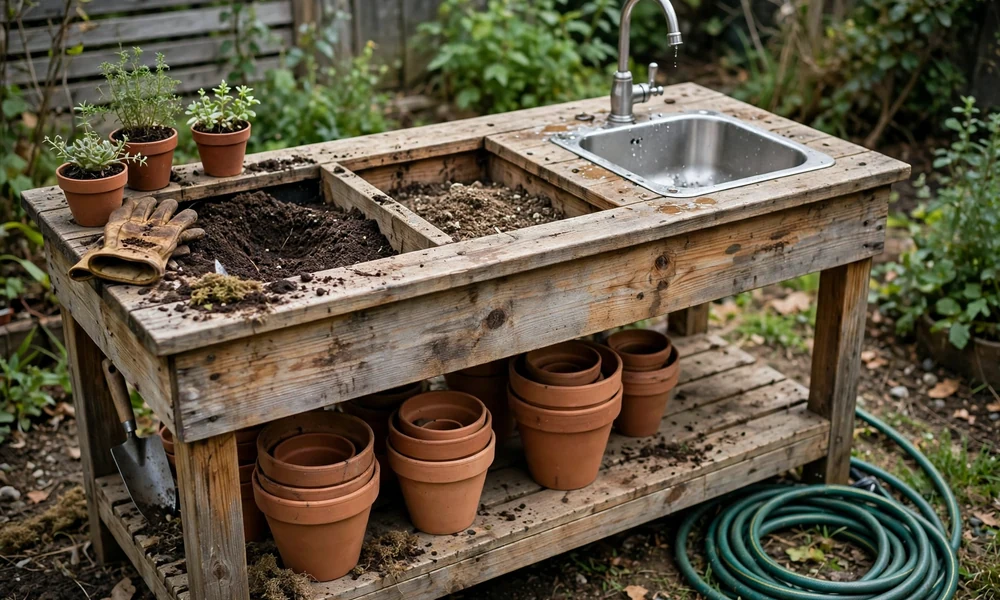
The wooden bench with soil bins is the safest choice for most gardens: a wide worktop, one or two recessed bins for compost, and a lower shelf for pots. Its strength is that everything stays to hand. Its weakness is weight, since a solid wooden bench is not something you will move every week.
The bench with a sink and tap is the choice for serious growers. Running water at the bench means you can wash pots, rinse roots, and clean tools without carrying muddy trays back to the house. It needs a water supply and a drain, so it suits a bench placed near an outdoor tap, and it costs more than a dry bench. If the plumbing puts you off, a hose hook and a bucket do most of the same work for far less money.
The compact folding bench is the answer to a small garden or a balcony. It folds flat against a wall or a fence when it is not in use, then opens into a worktop at waist height. Folding benches are usually smaller and lighter than fixed benches, so they suit a few pots and a tray of seedlings rather than a full afternoon of repotting.
Materials and Build Quality
Cedar is the classic choice for a potting bench, and it earns its price. It resists rot, smells pleasant, and weathers to a soft grey if it is left untreated. Treated softwood is the sensible middle ground: it costs far less than cedar, and the treatment keeps it sound for years, but check that the treatment is safe for food plants if you grow herbs and vegetables on it.
Metal frames suit gardeners who want a bench that will not warp. Powder-coated steel is sturdy and easy to wipe clean, but the coating must be intact: a chip that exposes bare steel will rust in a damp garden within a season. A wooden top on a metal frame is often the best of both worlds, combining a warm, forgiving work surface with legs that will not twist.
Soil Bins, Sinks, and Storage
A potting bench without storage is just a table. Count your pots before you shop, measure the tallest stack, and buy a bench with a lower shelf or a cupboard that fits them with room to spare. A deep soil bin is the single most useful feature on any bench: it holds a bag of compost at working height, so you can scoop straight into a pot without lifting a heavy bag onto the worktop.
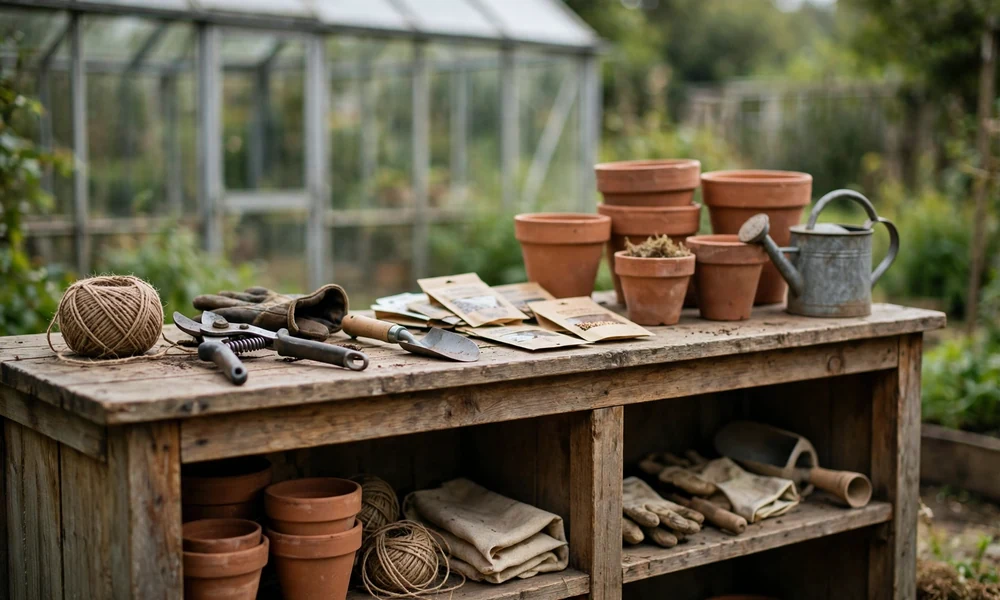
Shelves above the worktop suit light things: seed packets, labels, string, and small hand tools. Keep heavy things low, where they cannot fall onto seedlings, and keep sharp things in a hook or a holder rather than loose on the worktop. A row of hooks on the back rail is the cheapest storage a bench can have, and it keeps secateurs and trowels off the surface where they blunt each other.
Common Mistakes to Avoid
The most common mistake is buying the bench before measuring the space: people remember the width of the patio and forget the swing of the greenhouse door, then discover the bench blocks it. The second is choosing a worktop that is too low, which turns every job into a backache. The third is buying a bench with no storage, so pots and tools end up piled on the worktop and there is nowhere left to work. The fourth is placing the bench in full shade, where it stays damp and seedlings stretch. The fifth is ignoring drainage, so water pools on the worktop and rots the wood from the top down. Finally, do not buy a bench you cannot get into the garden: measure the side gate and the path first, and check whether it arrives assembled or flat-packed.
Before You Buy: A Short Checklist
- Measure your waist height, and buy a bench with a worktop at 85 to 95 centimetres.
- Measure the space, including the swing of nearby doors and the width of the side gate.
- Count your pots and your tools, and check them against the shelves and the soil bin.
- Check the weight limit for the worktop and for each shelf.
- Look for a soil bin deep enough for a bag of compost, and a worktop that sheds water.
- Test the joints for wobble, and check that the fixings are stainless steel.
- Decide whether you need a sink, and confirm there is a water supply and a drain nearby.
Frequently Asked Questions
How tall should a potting bench be? The worktop should sit at about waist height, usually 85 to 95 centimetres from the ground. That height lets you work standing up without hunching, and it keeps heavy pots at a comfortable lifting height.
Do I need a potting bench with a sink? Not usually. A sink is worth it if you grow a lot and have an outdoor tap nearby, but a hose hook and a bucket cover most jobs. A deep soil bin is a better use of the money for most gardeners.
What wood is best for a potting bench? Cedar is the best choice if the budget allows, since it resists rot naturally. Treated softwood is a good cheaper option, provided the treatment is safe for food plants when you grow herbs and vegetables.
Can a potting bench stay outside all winter? Yes, if it is made for the outdoors. Clear the soil bin, brush the worktop clean, and cover it or move it under shelter if you can. A bench left full of damp compost through winter will rot faster than a clean, dry one.
Is a potting bench different from a garden bench? Yes. A garden bench is a seat, while a potting bench is a workbench with a flat top, storage, and usually a raised back or shelves. The two look similar from a distance, but they are built for very different jobs.
The Bottom Line
The best potting bench of 2026 is the one that fits your height, your pots, and your garden, and then quietly makes every gardening job easier. It is tall enough to work at standing up, wide enough for a soil bin and a clear patch of worktop, and sturdy enough that you never think about it while you work.
Start with the tape measure, not the catalogue. Measure your waist, the space, and the side gate, count the pots, and then choose the type that fits: a wooden bench with soil bins for most gardens, a sink bench for serious growers, a folding bench for a small space, or a slatted bench for the greenhouse. If you are still building out the rest of your kit, our guide to garden tools that last more than a season covers the trowels and secateurs that will live on the bench, and our guide to why raised garden beds grow better vegetables explains where the seedlings you pot up will end up growing.