Meat Thermometers That Read True in Seconds in 2026
A meat thermometer that reads true in seconds is the difference between a steak that is perfect and a steak that is ruined. You cannot tell doneness by looking at the outside, by pressing the meat, or by cutting it open, because cutting lets the juices run out and pressing tells you almost nothing. The only way to know what is happening inside a roast, a steak, or a chicken is to measure it, and a good meat thermometer does that in two or three seconds, accurately, every time.
The stakes are real. Undercook a chicken and you risk food poisoning; overcook a steak and you have wasted good meat and good money. A thermometer that reads a few degrees high will have you serving meat that is still raw in the middle, while one that reads a few degrees low will have you cooking everything past the point of no return.
Key Takeaways
- An instant-read thermometer is the most useful type for most cooks: it gives a true reading in two to three seconds and works for steaks, chops, roasts, and whole birds.
- Accuracy matters more than speed: a fast reading you cannot trust is worse than a slow one you can, so look for accuracy within one degree.
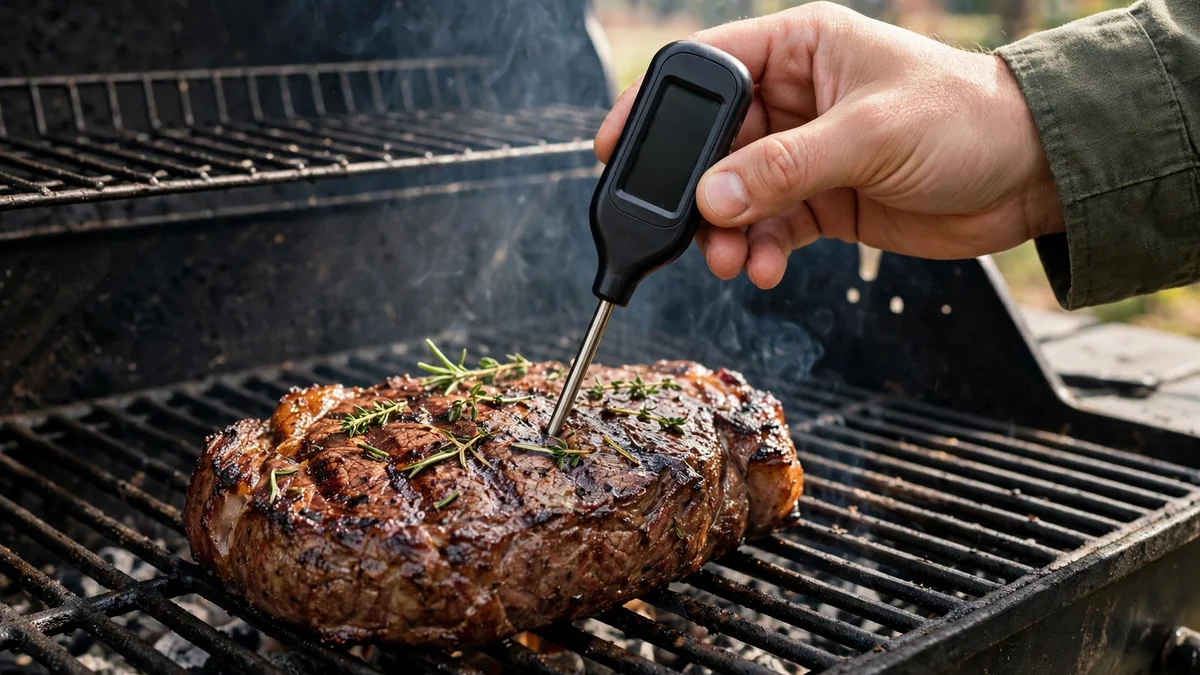
- Insert the probe into the thickest part of the meat, away from bone, fat, and the pan, or the reading will mislead you.
- A leave-in probe is the best choice for roasts and low-and-slow cooking, because it watches the temperature and alarms at your target.
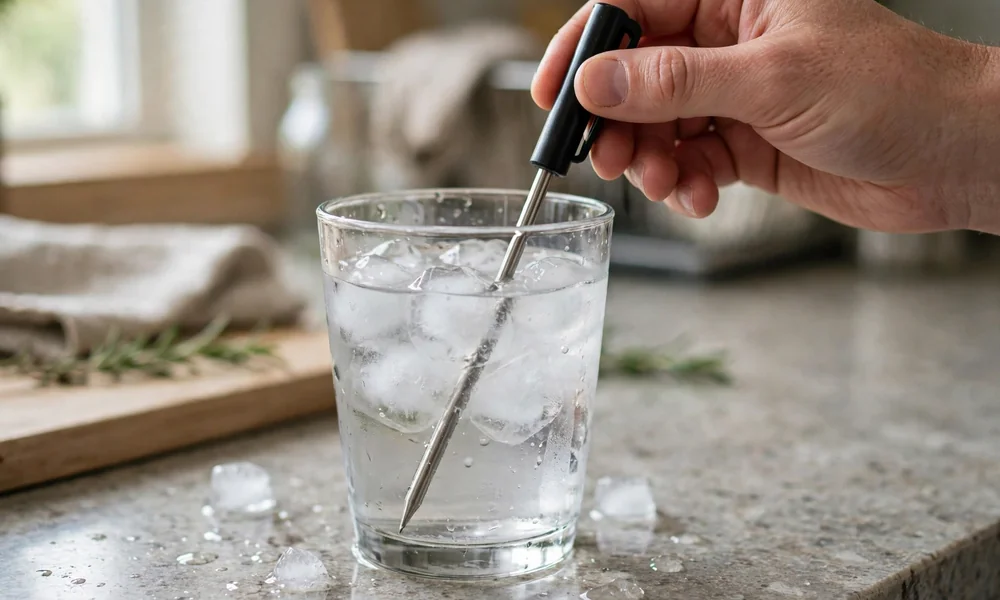
- Test your thermometer in iced water before you trust it: it should read 0 degrees Celsius, or 32 degrees Fahrenheit.
Why Guessing Doneness Fails
Most cooks have a system for judging doneness, and most of those systems are unreliable. Colour is the worst guide of all: a burger can look brown on the outside and still be undercooked inside, and a steak can look pink and be perfectly safe, because colour depends on the meat, the heat, and the age of the cut as much as on temperature. The finger test, where you press the meat and compare it to your palm, is a party trick, not a measurement. Cutting the meat open is the most damaging option, because it lets the juices escape.
Temperature is the only reliable measure, because the safety of meat and the quality of meat are both decided by temperature. Chicken is safe at 74 degrees Celsius through the thickest part, beef steak is medium-rare at around 54 degrees, and a pork roast is done at 63 degrees with a short rest. Those numbers are precise, and only a thermometer can tell you when you have reached them.
The Main Types of Meat Thermometer
There are three main types of meat thermometer, and each suits a different kind of cooking. Instant-read thermometers are the most popular: a thin metal probe folds out of a handle, you push it into the meat, and the display gives you a reading in two to three seconds. They are best for steaks, chops, burgers, and checking a roast near the end of cooking, and they are not meant to stay in the oven.
Leave-in probe thermometers are built for roasts and slow cooking. A probe stays in the meat inside the oven or on the grill, connected by a heat-resistant cable to a display outside, or wirelessly to a unit on the counter. You set a target temperature, and the thermometer alarms when the meat reaches it, so you can walk away without hovering over the oven.

Accuracy: The Only Number That Matters
Accuracy is the whole job of a meat thermometer, and it is where cheap models fail. A good instant-read thermometer is accurate to within one degree, and the best manage half a degree. A cheap one can be off by three or four degrees, which is enough to turn medium-rare into medium, or a safe chicken into an unsafe one.
Check accuracy before you trust a new thermometer, and check it again every few months. The ice-water test is simple: fill a glass with ice, add cold water, stir, and put the probe in the middle without touching the sides or the bottom. It should read 0 degrees Celsius, or 32 degrees Fahrenheit.
How to Use a Meat Thermometer Properly
Technique matters as much as the thermometer itself, and most wrong readings come from bad placement rather than a bad device. Push the probe into the thickest part of the meat, with the tip at the centre, where the temperature is lowest. Keep the probe away from bone, which conducts heat and reads hot, away from pockets of fat, and away from the pan or the grill grate, which will give you the temperature of the metal rather than the meat.
Take the reading at the right moment. For a steak or a chop, check near the end of cooking, when the outside looks done. For a roast, check in two or three places, because the temperature varies through a large joint. And remember carryover cooking: meat keeps cooking after it leaves the heat, rising by three to five degrees as it rests. Pull a steak off a few degrees before your target and let it rest for five minutes.
The Safe Temperatures Worth Knowing
Safe temperatures are not a matter of opinion, and they are worth learning by heart. Chicken and turkey need 74 degrees Celsius through the thickest part, with no pink meat near the bone and clear juices. Minced beef, pork, and lamb need 71 degrees, because mincing spreads bacteria through the meat. Whole cuts of beef, lamb, and pork can be cooked lower: 54 degrees for rare, 57 for medium-rare, 63 for medium, and 71 for well done. Fish is done at 63 degrees, when it flakes easily.
These numbers are the reason a thermometer is a safety tool as well as a cooking tool. A roast that looks done can still be undercooked in the middle, and a chicken that has been in the oven for the recommended time can still be unsafe if the oven runs cool. The best grills in the world cannot fix that uncertainty, and the best grills for backyard cooking in 2026 all cook better when you pair them with a thermometer you trust.

Instant-Read vs Leave-In: Which Should You Buy?
If you buy one thermometer, buy a good instant-read model. It is the most versatile tool in the kitchen, it works for everything from a steak to a whole turkey, and it is the one you will reach for every time you cook meat. Look for a reading in under three seconds, accuracy within one degree, a display you can read in low light, and a probe long enough to reach the centre of a large roast.
A leave-in probe is the second thermometer worth owning, and the best choice if you cook roasts, whole birds, or low-and-slow barbecue. It watches the temperature for you, alarms at your target, and lets you cook without opening the oven door every ten minutes, which keeps the heat in and the cooking even. If you grill often, a leave-in probe plus an instant-read thermometer covers everything, and it pairs naturally with the best BBQ tools for grilling in 2026.
| Type | Best For | Speed | Accuracy | Price Range |
|---|---|---|---|---|
| Instant-read digital | Steaks, chops, checking roasts | 2 to 3 seconds | Within 1 degree | Mid to high |
| Leave-in probe | Roasts, whole birds, slow cooking | Continuous | Within 1 degree | Mid to high |
| Wireless probe | Smoking, grilling, oven roasts | Continuous | Within 1 degree | High |
| Dial thermometer | Backup, occasional use | 15 to 20 seconds | Within 2 degrees | Low |
| Infrared gun | Surface temperatures only | Instant | Surface only | Mid |
One type to avoid for meat is the infrared gun. It measures surface temperature, not internal temperature, so it can tell you how hot the pan is but nothing about whether the chicken is safe inside. It is not a meat thermometer.
Care, Calibration, and When to Replace
A meat thermometer is a precision instrument, and it needs a little care. Clean the probe after every use with hot soapy water, and dry it before you put it away, because a dirty probe carries bacteria from one piece of meat to the next. Never submerge the body of a thermometer that is not waterproof, and never leave an instant-read thermometer in a hot oven.
Replace a thermometer that drifts more than a degree in the ice-water test and cannot be calibrated, one whose display is fading, or one whose probe is bent or loose. And remember that a meat thermometer is only one kind of thermometer in the kitchen: an oven that runs hot or cold will throw off even the best probe reading, so if your roasts keep coming out wrong, our guide to why an oven thermometer fixes uneven baking in 2026 explains how to check the real temperature inside your oven.
Your Meat Thermometer Checklist
- Accuracy within one degree, verified by the ice-water test before first use and every few months after.
- Reading speed under three seconds for an instant-read model, so the meat does not cool while you wait.
- Probe long enough to reach the centre of a large roast, inserted into the thickest part away from bone and fat.
- Display you can read at a glance, even in low light or outdoors at the grill.
- Leave-in probe or alarm if you cook roasts, whole birds, or low-and-slow barbecue regularly.
- Easy to clean, waterproof where possible, with a folding or covered probe for safe storage.
Frequently Asked Questions
How accurate should a meat thermometer be?
Within one degree is the standard worth paying for, and the best models manage half a degree. A thermometer that is off by three or four degrees can turn medium-rare into medium, so test every new thermometer in iced water before you trust it.
Where do I put the probe in the meat?
In the thickest part, with the tip at the centre, away from bone, fat, and the pan. Bone conducts heat and reads hot, and the pan gives you the temperature of the metal. For a thin steak, insert the probe from the side so the tip sits in the middle.
What temperature is chicken safe to eat?
Chicken and turkey are safe at 74 degrees Celsius through the thickest part, with no pink meat near the bone. Minced meat needs 71 degrees, while whole cuts of beef, lamb, and pork can be cooked lower because searing kills surface bacteria.
Can I leave an instant-read thermometer in the oven?
No. Instant-read thermometers are designed for a quick check and should not stay in a hot oven, or the handle and electronics will be damaged. For a roast that cooks for an hour or more, use a leave-in probe, which is built to stay in the meat.
How do I test if my meat thermometer is accurate?
Fill a glass with ice, add cold water, stir, and put the probe in the middle without touching the sides or the bottom. It should read 0 degrees Celsius, or 32 degrees Fahrenheit. If it reads more than a degree out, calibrate it if you can, and replace it if you cannot.
Is a wireless meat thermometer worth it?
If you cook roasts, smoke meat, or grill for a crowd, yes. A wireless probe watches the temperature for you and alarms at your target. If you mostly cook steaks and chops, a good instant-read thermometer is all you need.
The Bottom Line
The best meat thermometer in 2026 is the one that reads true in seconds and that you actually use every time you cook meat. A good instant-read model, accurate to within a degree and verified in iced water, will save more meals than any other kitchen tool at its price. Add a leave-in probe if you cook roasts, learn the safe temperatures, and stop guessing.