Best Beach Chairs 2026
A good beach chair is the difference between a long, lazy afternoon by the sea and an hour of shifting around on a towel, brushing sand off your back and wishing you had brought something to sit on. The wrong chair sinks into soft sand, tips when you lean back, or folds up on you at the worst moment. The right one disappears beneath you: steady, comfortable, and easy to forget while you watch the waves.
These are the best beach chairs of 2026, chosen for comfort, stability on sand, weight, durability, and how easy they are to carry from the car to the water. Whether you want a low sling chair for sunbathing, a tall chair with armrests for reading, or a backpack chair you can hike down a boardwalk with, there is a chair here that fits.
Key Takeaways
- Buy the chair for how you actually spend time at the beach, because a low sling chair suits sunbathers while a tall chair with armrests suits readers and anyone with stiff knees.
- Wide feet or a low frame stop a chair sinking into soft sand, and a chair that is stable on a lawn can still wobble badly on a dune.
- Aluminium frames are light and resist rust, while steel frames are cheaper and heavier, and wood looks beautiful but needs care after salt water.
- Check the weight limit and the seat height before you fall for a colour, because a chair rated for far less than you weigh will sag and wear out fast.
- A canopy, a cup holder, and a pocket for a book sound like extras until you are squinting into the sun with nowhere to put your drink.
Beach Chairs 2026 at a Glance
| Best for | Chair type | Seat height | Standout strength |
|---|---|---|---|
| Best overall | Low sling chair | 20 cm | Light, steady, and easy to relax in |
| Best for reading | Tall chair with armrests | 45 cm | Upright back and room for a book |
| Best for sun protection | Canopy chair | 30 cm | Shade that moves with the sun |
| Best for long walks | Backpack chair | 25 cm | Carries like a rucksack, hands free |
| Best for lounging | Wooden lounger | 30 cm | Reclines flat for a proper nap |
| Best for families | Wide chair with cooler pocket | 35 cm | Room for drinks, snacks, and a towel |
What a Beach Chair Is Really For
A beach chair does three jobs at once. First, it lifts you off the sand, which is cooler in the morning, hotter at midday, and never quite as comfortable as it looks. Second, it holds you at an angle you can stay in for hours, whether that means sitting upright with a book or lying nearly flat with your eyes closed. Third, it carries easily, because a chair that is a struggle to haul across a car park will stay in the boot.
It helps to know the difference between a beach chair and its close cousins. A camping chair is built for grass and hard ground, and our guide to the best camping chairs of 2026 covers those sturdier, taller seats in detail. A beach chair is a different animal: lower, lighter, and designed for sand, salt, and sun.
Getting the Height Right
Seat height is where most beach chair purchases go wrong. A low chair, with a seat about 20 centimetres off the sand, is wonderful for sunbathing and for stretching your legs out in front of you, but it can be hard to stand up from, especially with stiff knees or a bad back. A tall chair, with a seat 40 to 45 centimetres high, is far easier to get in and out of, and it suits anyone who plans to sit upright and read.

The Main Types of Beach Chair
Beach chairs fall into a handful of types, and each suits a different kind of beach day. The right choice depends less on taste than on how far you walk, how long you sit, and how much shade you need.
The low sling chair is the safest choice for most beachgoers: a simple fabric seat stretched across a light frame, low to the ground and easy to carry. Its strength is comfort at a low price, since the sling moulds to your back. Its weakness is getting up again, so it suits younger legs and shorter stays.
The tall chair with armrests is the best choice for readers and for anyone who struggles to stand up from the ground. Armrests give you something to push against, and a cup holder in the armrest keeps a drink off the sand. The trade-off is weight, since a taller frame with armrests is heavier to carry.
The canopy chair is the answer to a beach with no shade. A small canopy over the head keeps the sun off your face and shoulders, and it usually folds flat with the chair. Canopy chairs are slightly heavier than plain chairs, but on a cloudless day the shade is worth every extra gram.

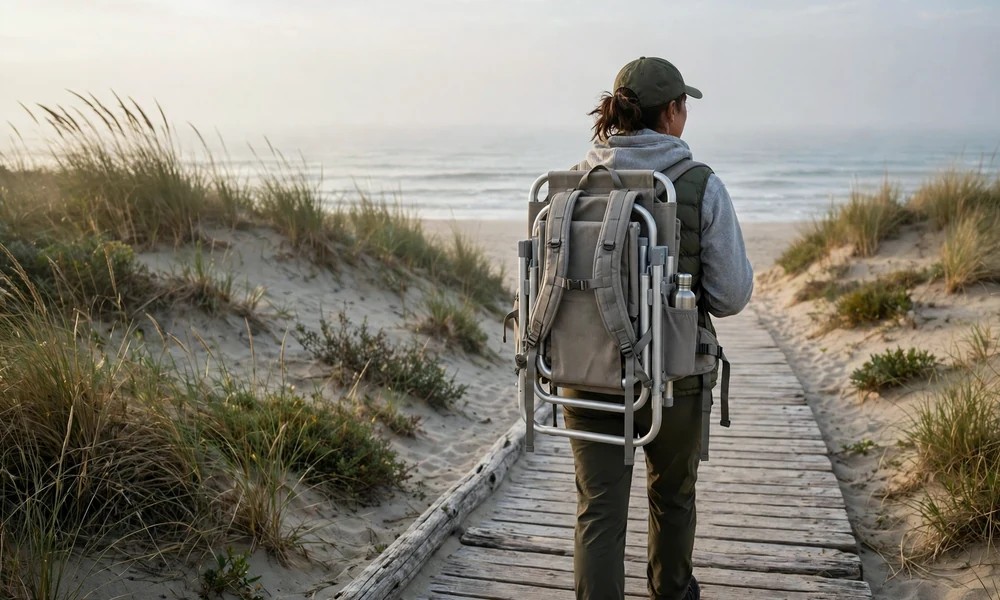
The backpack chair is the flexible option. Straps let you carry it like a rucksack, leaving your hands free for a cooler, a bag, and a child. If you walk a long way to your favourite stretch of sand, a backpack chair is the only sensible choice. Our guide to the best beach tents of 2026 covers shade for the whole family, and a backpack chair pairs well with a tent when you are carrying everything yourself.
Frames, Fabric, and Weight Limits
Aluminium is the classic beach chair frame, and it earns its popularity. It is light, it does not rust, and it is strong enough for most people. Steel frames are cheaper and feel solid, but they are heavier and will rust if the coating chips and salt water gets in, so check the joints after every trip.
Fabric matters more than most people expect. Polyester and Textilene dry quickly, resist mildew, and shrug off sand, while cotton canvas feels softer but stays damp and fades in strong sun. Whatever the fabric, check the stitching at the corners, where the seat takes the most strain, and look for a fabric you can hose down at the end of the day.
Weight limits are not a suggestion. A chair rated for 100 kilos will sag and creak under a heavier sitter, and the fabric will tear at the seams sooner than you expect. Buy a chair rated comfortably above your weight, and check the limit for the seat and for any side table or cooler pocket too.
Carrying, Folding, and Storage
A beach chair that is hard to carry is a chair you will stop using. Look for a chair that folds flat in one motion, with a strap or a carry bag so you can sling it over your shoulder. Backpack straps are the gold standard for long walks, while a simple shoulder strap is enough for a short stroll from the car park.
Shade, Pockets, and Extras
A canopy is the most useful extra a beach chair can have, and it is worth paying for. It shades your head, neck, and shoulders, which are the parts that burn first, and it folds away when the sun drops. If your chair has no canopy, a wide-brimmed hat is the next best thing, and the best patio umbrellas of 2026 covers larger shade for gardens and patios, which uses the same principles on a bigger scale.
Common Mistakes to Avoid
The most common mistake is buying the cheapest chair on the shelf: the fabric tears, the frame bends, and you buy another one next summer. The second is ignoring the weight limit, which is the fastest way to break a chair. The third is choosing a tall chair for a soft, sandy beach, where it will sink and tilt. The fourth is forgetting shade, and spending the afternoon squinting. The fifth is buying a chair you cannot carry comfortably, so it stays at home. Finally, do not buy a chair with a canopy you cannot fold, or you will leave the canopy behind and lose the point of it.
Before You Buy: A Short Checklist
- Sit in the chair first, and check that you can stand up from it without a struggle.
- Check the weight limit, and buy a chair rated comfortably above your weight.
- Look for wide feet or a low frame, so the chair stays steady on soft sand.
- Test the fold, and make sure you can carry it with one hand or on your back.
- Check the fabric: quick-drying, sand-resistant, and easy to hose down.
- Decide whether you need a canopy, a cup holder, and a pocket, and pay for the ones you will use.
- Rinse the frame after salt water, and store the chair dry over winter.
Frequently Asked Questions
What is the best type of beach chair for bad knees? A tall chair with armrests, with a seat about 40 to 45 centimetres high. The armrests give you something to push against, and the height means you do not have to climb up from the ground.
Do beach chairs sink in soft sand? Tall chairs with narrow feet can sink, yes. Low chairs and chairs with wide feet spread your weight and stay steady. Test any chair on soft, dry sand before you rely on it.
Can I use a beach chair on a patio? Yes, most beach chairs work well on a patio or a lawn, though a wooden lounger suits a patio best. For the water itself, our guide to the best pool floats of 2026 covers inflatables and loungers for swimming, while a patio umbrella is the better shade choice for sitting out at home.
How do I stop a beach chair rusting? Rinse the frame with fresh water after every salty day, dry it fully before storing, and check the joints for chips in the coating. Aluminium frames resist rust best, while steel frames need more care.
What should a beach chair weigh? A good low sling chair weighs about 3 to 4 kilos, a tall chair with armrests about 5 to 6 kilos, and a wooden lounger considerably more. Lighter is better if you walk far, but the lightest chairs are not always the sturdiest.
The Bottom Line
The best beach chair of 2026 is the one that fits how you spend your time by the sea, and then quietly disappears beneath you. It is low enough to relax in or tall enough to stand up from, steady on soft sand, light enough to carry without a struggle, and tough enough to survive salt, sun, and sand for years.
Start with an honest look at your beach days, not the catalogue. Think about how far you walk, how long you sit, whether you read or nap, and whether you need shade. Then choose the type that fits: a low sling chair for sunbathing, a tall chair for reading, a canopy chair for shade, a backpack chair for long walks, or a wooden lounger for a long, lazy afternoon.